
.webp)
Direct answer. AI changes fashion product development by automating time-intensive documentation and orchestrating the flow of data from concept to factory. This impacts five key stages: identifying trends from mass data signals, generating brand-aligned moodboards instantly, creating factory-ready tech packs with Bills of Materials (BOMs) in 8-10 minutes, reducing physical sample rounds by flagging spec variances automatically, and generating downstream launch assets like product descriptions and line sheets. The primary shift is not replacing human designers or product developers but eliminating the administrative tax of manual data entry and document management, allowing teams to focus on strategic decisions, fit, and quality.
The product development lifecycle begins with a core question: what should we make? Traditionally, creative directors and designers spend weeks or months gathering inspiration. This involves manual research, compiling images from Pinterest, attending trade shows, and analyzing competitor assortments. The process is subjective and limited by the volume of information a human team can process. This manual approach risks missing emergent microtrends that bubble up and fade quickly in the digital landscape.
AI changes this by processing immense, unstructured datasets at scale. Algorithms can analyze millions of social media images, runway photos, and e-commerce listings to identify patterns, colors, silhouettes, and details that are gaining traction. This provides a quantitative layer to creative intuition, flagging signals that human researchers might miss. For example, AI can detect that a specific sleeve type is appearing 30% more frequently in street style posts week over week, providing a concrete data point for a design team's consideration.
Workflow platforms then translate these signals into tangible concepts. Instead of just providing data, an orchestrated AI system can generate a brand-aligned moodboard based on a simple text prompt like, "Show me concepts for a women's outerwear capsule based on Tokyo street style, incorporating technical fabrics and oversized fits." The AI, trained on the brand's past collections and aesthetic DNA, produces visual directions that are immediately relevant, saving the creative team days of manual research and composition work in tools like InDesign or Canva.

The creation of a technical package, or tech pack, is the most notorious bottleneck in product development. A technical designer can spend four to eight hours per SKU manually building this document. The process involves pulling a sketch into a template, writing detailed construction notes, creating a Bill of Materials (BOM) in Excel, defining Points of Measure (POMs), and developing grading rules for different sizes. This data is often entered into a Product Lifecycle Management (PLM) system, requiring redundant data entry and creating opportunities for expensive copy-paste errors.
AI workflow software automates this entire sequence. A product developer or technical designer can feed the system a simple fashion sketch, a photograph, or even a CAD drawing. The AI parses the visual information to identify key garment features: plackets, pocket types, seam details, and hardware. It then generates a complete, factory-ready tech pack draft. This includes a pre-populated BOM with suggested trims, a full set of standard POMs for that garment type, and initial grading specifications based on the brand's established fit block.
This transforms the technical designer's role from data entry clerk to strategic validator. Instead of building documents from scratch, they spend 8-10 minutes reviewing and refining the AI-generated output. They can adjust a measurement, swap a trim, or add a specific construction callout. The hours saved per SKU translate directly into faster development cycles and allow technical design teams to manage a larger number of styles without increasing headcount. This speed is a direct result of orchestrating the entire workflow, not just one isolated task.
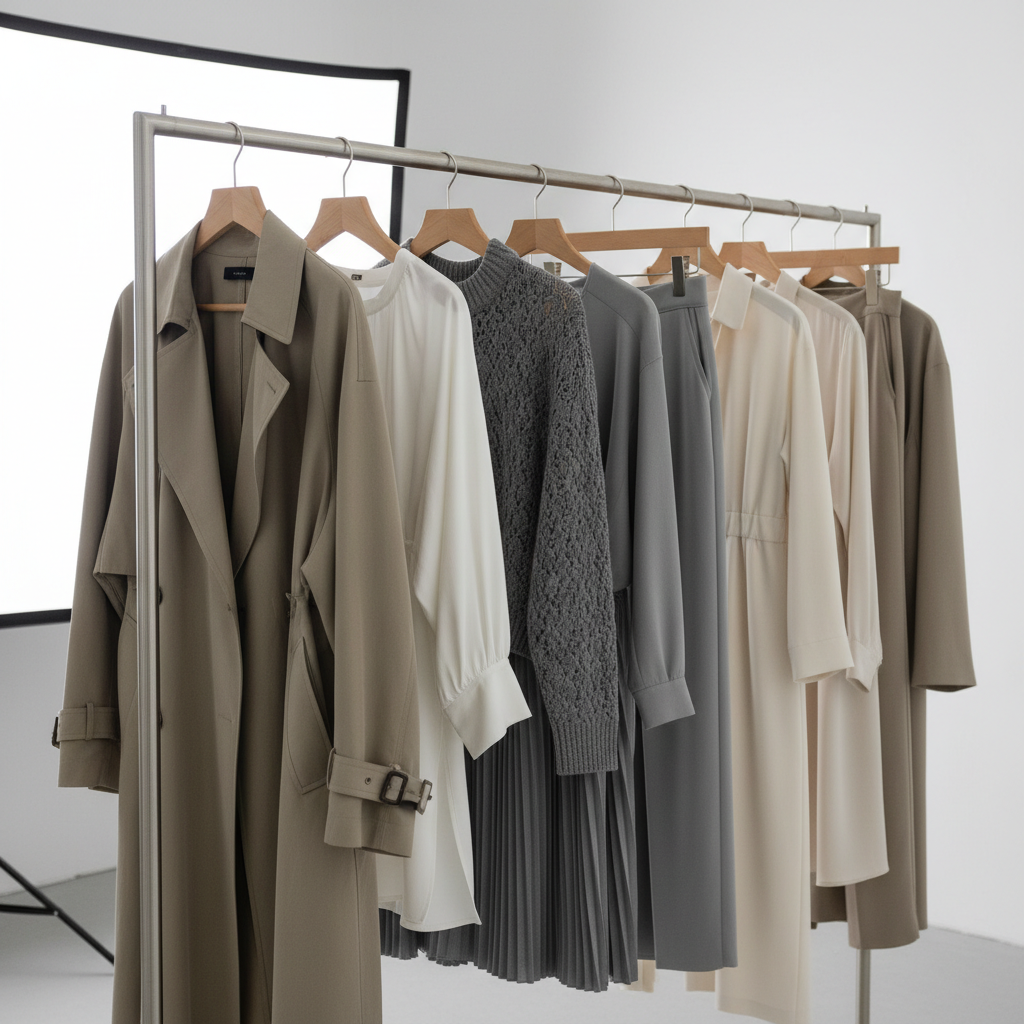
The shift to AI is not a single leap but an evolution in tooling and process. Brands today operate in one of three modes: the traditional manual process, a fragmented approach using point AI solutions, or a fully orchestrated AI workflow. The efficiency, cost, and speed-to-market differ dramatically between them. The following table compares these methodologies across key stages of the product development process, showing the operational impact of each approach.
| Operational Metric | Traditional (PLM + Email + Excel) | Point AI Tools (Midjourney, ChatGPT) | Orchestrated AI Workflow (The F* Word) |
|---|---|---|---|
| Technology Stack | PLM, Centric, FlexPLM, Adobe Illustrator, Excel, Email, Pinterest | Multiple disconnected tools: Midjourney for images, ChatGPT for copy, Excel for BOMs, PLM for storage. | A single unified platform that connects concept, tech pack, sourcing, and asset creation. |
| Time Per Tech Pack | 4-8 hours per SKU. Entirely manual data entry and document creation. | Still 2-4 hours. AI generates parts, e.g., image, description, but the tech pack is assembled manually. | 8-10 minutes per SKU. AI generates a complete draft for human validation and refinement. |
| BOM / Trims Management | Manual creation in Excel or PLM module. High risk of error and version control issues. | No native BOM capability. Trims must be researched and listed manually. | AI suggests trims based on the design. BOM is generated automatically as part of the tech pack. |
| Data Consistency | Low. Data is copied between systems, Illustrator, Excel, PLM, email, leading to discrepancies. | Very low. Generated assets are isolated and must be manually integrated, creating version chaos. | High. A single source of truth for all product data from concept through production. |
| Sample Review Process | Manual measurement of physical samples against a printed tech pack. Typically 3-5 sample rounds. | No change. Still relies on physical sample review and manual measurement. | AI-assisted variance flagging from photos reduces physical sample rounds to 1-2. |
| Asset Generation (Copy, etc.) | Manual process. Merchandising and marketing teams write copy from scratch post-approval. | Fragmented. ChatGPT can write copy, but it is disconnected from the product data source. | Automated. Product descriptions, keywords, and line sheet data are generated from the validated tech pack. |

The physical sampling process is a major source of cost and delay in fashion. A style typically requires three to five rounds of samples to get the fit, construction, and materials right. Each round involves creating the sample at the factory, international shipping, a fit session, and sending feedback. This cycle can take three to six weeks per round, consuming a significant portion of the production calendar and budget.
AI workflow platforms introduce a new step called digital sample validation, which occurs before a physical sample is ever shipped. The factory is instructed to take a flat-lay photograph of the first sample on a calibrated surface. The AI system analyzes this image, automatically identifies the specified Points of Measure, and compares them to the approved tech pack specs. It instantly flags any measurements that are outside the defined tolerance.
This allows the technical designer to catch critical errors immediately. For instance, if a sleeve length is off by two centimeters, the issue can be communicated and corrected by the factory on the next sample iteration without the cost and delay of shipping the incorrect garment. By catching these objective measurement errors digitally, teams can focus physical fit sessions on subjective qualities like drape and comfort. This systematic validation reduces the average number of sample rounds from four to just one or two, saving weeks of time and thousands of dollars in shipping and sample costs per style.
A product developer's job is not finished when the final sample is approved. The approved product data must be packaged and handed off to merchandising, marketing, and sales teams so they can take the product to market. In a traditional workflow, this is another manual, error-prone transfer of information. Merchandisers manually create line sheets, and copywriters write product descriptions based on disjointed notes or a physical sample.
An orchestrated AI workflow connects the product development engine directly to the commercialization process. Because the platform contains all the validated data about the approved style, fabric composition, construction details, fit notes, colorways, and a complete BOM, it can automatically generate the assets needed for launch. This includes structured product data for e-commerce platforms, compelling product descriptions for PDPs, and keyword suggestions for SEO.
This automation ensures consistency and speed. Line sheets for wholesale teams can be generated in seconds, populated with correct imagery and product attributes directly from the official record. Product data can be fed directly into a Product Information Management (PIM) system via an API, eliminating the need for merchandisers to spend days manually populating spreadsheets for a new collection launch. This bridges the gap between pre-production and go-to-market, accelerating revenue generation.
The adoption of AI in product development does not make expert roles obsolete; it makes them more strategic. By automating the low-value, repetitive tasks that consume up to 80% of a technical designer's or product manager's day, AI frees them to focus on high-impact decisions that require human judgment, experience, and creativity.
Certain functions remain firmly in human hands. AI can suggest, but a human must make the final call on subjective fit and how a garment feels and moves on a body. Brand voice, the nuanced language that connects with a specific customer, requires human creative direction. Final costing and margin approval, which balance design intent with business reality, are executive decisions. AI can draft a sourcing email, but the long-term relationship building and complex negotiation with suppliers require human connection and intuition.
The model is not "AI replaces the designer," but "AI serves the designer." The platform acts as a hyper-efficient assistant, managing the data and paperwork so the product development manager can focus on perfecting the product line, the technical designer can solve complex fit challenges, and the creative director can focus on the next big idea. AI handles the science of creation, allowing humans to master the art.
No, AI will change your job. It automates the most tedious parts of tech pack creation, like data entry and formatting. This frees you from spending hours in Excel and Illustrator, allowing you to focus on higher-value tasks like fit validation, complex construction problem-solving, and managing more styles. Your expertise becomes more valuable, not less.
A PLM (Product Lifecycle Management) system is primarily a database, a system of record for storing product data. An AI workflow platform like The F* Word is an action engine. It actively uses AI to generate documents like tech packs, automate processes, and orchestrate the handoff of information between teams, drastically reducing manual work rather than just storing its results.
Tools like Midjourney and ChatGPT are powerful point solutions for specific tasks like image generation or text creation. However, they are disconnected from the fashion product development workflow. An orchestrated AI platform integrates these capabilities into a single, cohesive process that understands the specific requirements of a tech pack, a BOM, and a line sheet, ensuring data is consistent from concept to production.
No. Modern AI workflow platforms are built for business users like designers, product developers, and merchants. The interfaces are typically visual and intuitive, often using simple text prompts or drag-and-drop functionality. No coding or data science knowledge is required to operate the system and benefit from the automation it provides.
An effective AI workflow system is trained on your brand's historical data. You provide a set of past tech packs, and the AI learns your specific fit blocks, grade rules, POM libraries, and construction standards. This ensures that the AI-generated outputs are consistent with your brand's unique identity and technical requirements, rather than using generic templates.
Yes, when using a platform designed for workflow orchestration. While a simple image generator cannot create a usable spec, a true AI workflow tool generates a complete package including the BOM, POMs, grade rules, construction details, and artwork placements. The output is a comprehensive document that a factory can use for costing and initial sampling after a technical designer's final validation.
AI's role in sourcing is primarily administrative. It can help research potential suppliers based on capabilities and certifications. It can also draft initial outreach emails and RFQs (Requests for Quotation) using templates populated with data from the tech pack. However, final supplier selection, price negotiation, and relationship management remain critical human-led activities.
Ready to eliminate hours of manual data entry from your product development cycle? See an orchestrated product development workflow and learn how your team can ship factory-ready tech packs in under 10 minutes.
Get The F* Word workflow insights in your inbox.