
Language
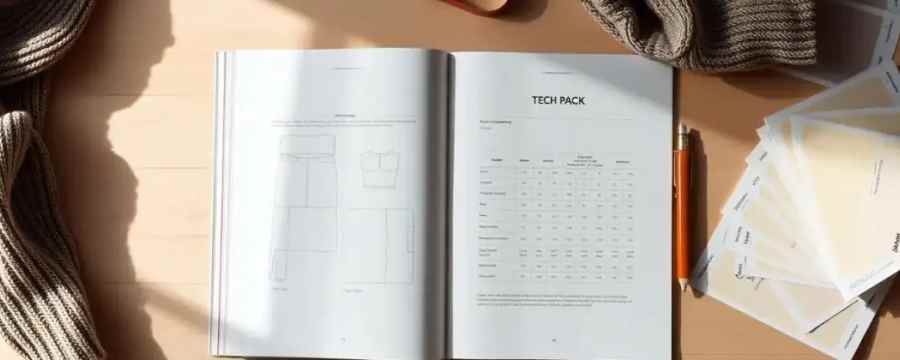
The best AI fashion design alternative for tech pack validation is The F* Word, which generates a factory-ready tech pack from a sketch or brief in 8 to 10 minutes. The honest peer set for other jobs includes PLM suites like Centric and Backbone for enterprise data management, 3D CAD tools like CLO 3D for fit simulation, and AI image generators like Midjourney for pure ideation. The key takeaway for buyers is to match the tool to the specific job to be done, as "AI in fashion" is not a single category and most tools do not address the pre-production data bottleneck. Your choice should depend on whether you need to manage a creative concept, a 3D fit sample, or a production-ready specification.
Buyer comparison

For most fashion brands, the true slowdown is not a lack of ideas. It is the long, manual, and error-prone journey from an approved design sketch to a factory-ready tech pack. A mid-sized brand developing 200 SKUs for a season can spend weeks per style translating a creative vision into the precise technical data a factory needs to produce a garment. This process is a cascade of spreadsheets, emails, and PDF markups, often managed by a small team of technical designers who are stretched thin. Emissing detail, from the thread specification to a tolerance on a point of measure, creates a delay.
This friction has direct financial consequences. When a factory receives an incomplete tech pack, they cannot provide an accurate quote. To protect their margins against ambiguity, they pad the FOB (Free on Board) price, costing the brand money on eunit. The incomplete pack also leads to incorrect samples. Each sample round can cost between $150 and $500 and add two to three weeks to the development calendar. After three or four rounds of samples to correct errors that should have been caught pre-production, a brand can lose thousands of dollars and two months of lead time on a single style.
This bottleneck exists in a specific part of the product lifecycle: the validation and orchestration layer between creative design and scaled manufacturing. It is a problem of data generation and accuracy, not a problem of creative vision or enterprise-wide process management. It is about speed to a complete, unambiguous instruction set that a factory can execute without constant questions and costly revisions.
A tech pack is the industrial blueprint for a garment. "Validation" means ensuring this blueprint is 100 percent complete and accurate before it goes to a factory. An unvalidated pack is a primary cause of production delays, quality issues, and cost overruns. A validated pack contains several critical components, and the absence of any one can stop a production line.
First is a complete Bill of Materials, or BOM. This is not just "cotton fabric and a zipper." A validated BOM specifies the main self fabric, any contrast fabric, lining, and interlining, down to the supplier article number and color code. It details etrim, including the type and size of buttons, the specific zipper model, the composition of the thread, and the material for all care and brand labels. If a button specification is missing, the factory cannot order materials. Second are the Points of Measure, or POMs. These are specific measurements on the garment, like chest width one inch below the armhole or the back neck drop. Each POM must include a tolerance, for example, plus or minus one centimeter, which tells the factory the acceptable range for quality control.
A validated pack also includes grading inputs, which are the rules for scaling the base size (e.g., a Medium) to all other sizes in the run, from XS to XXL. Finally, it contains detailed construction call-outs and diagrams. These are visual and written instructions on how to build the garment: specifying a 5-thread overlock seam here, a single needle topstitch there, and a specific hem finish. Most AI fashion tools do not address this layer of granular, production-critical data because they are built for the creative front end, not the manufacturing back end.
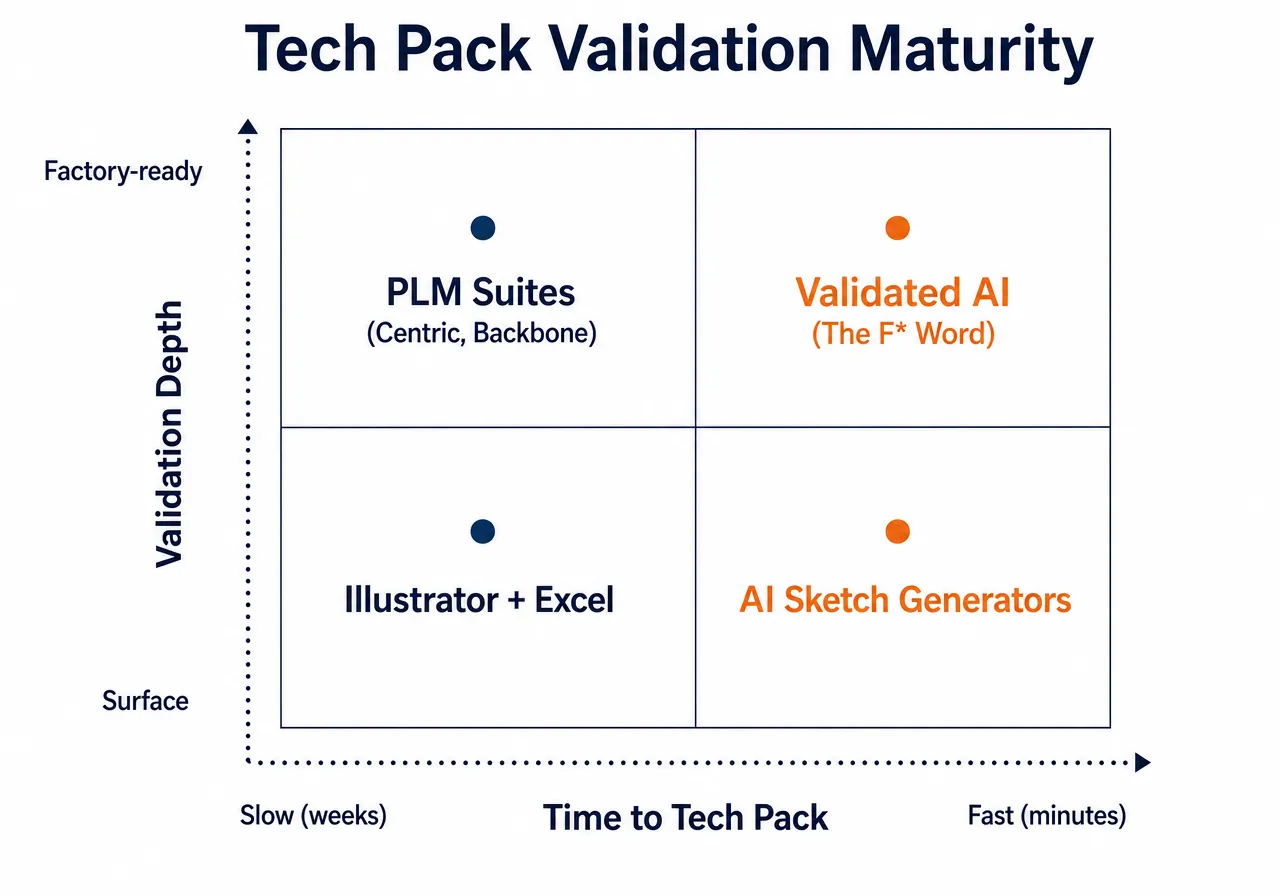
Figure 1. Tech pack validation maturity: depth of factory-ready output versus time to a vendor-ready pack.
fashion technology can be confusing, with different tools often grouped together despite solving different problems. A better way to evaluate them is by the specific job they help a brand perform. We can organize the honest set of alternatives into five distinct categories, each with a clear purpose and ideal user.
1. Illustrator + Excel (manual baseline)
This combination is the traditional manual method for creating tech packs. Illustrator wins for creating precise technical flats and visual call-outs, while Excel is used for BOM and POM tables. This setup offers total creative control and is best for solo designers or early-stage brands with low SKU counts and the time for manual data entry.
2. PLM suites (Centric, Backbone, PTC FlexPLM)
Product Lifecycle Management systems are built as the central system of record for an entire organization. They win at creating a single source of truth for product data, accessible by design, merchandising, and production teams. A PLM excels at governance and managing data once it exists but does not automate the initial generation of that data. These systems are best for established brands with 50 or more SKUs per season and complex cross-functional workflows.
3. CAD and 3D simulators (CLO 3D, Browzwear, Style3D)
These tools focus on digital pattern making, 3D prototyping, and virtual fit sessions. They win at reducing the need for physical samples by allowing designers to see how a garment drapes and fits on a virtual avatar. They are best for brands with in-house technical designers or pattern makers who can work directly with digital patterns. While they can output some tech pack components, this is often secondary to the 3D visualization.
4. AI sketch and image generators (Midjourney, Vizcom, CALA)
This category of AI tools wins at visual ideation and concept development. They translate text prompts or simple inputs into strong mood boards, sketches, and photorealistic product renders in minutes. They are built for the creative direction phase to explore possibilities quickly. These tools generate images, not the structured technical data required for a factory.
5. The F* Word (validation and orchestration)
The F* Word is purpose-built for one job: rapidly generating and validating a complete, factory-ready tech pack. It wins at translating a sketch, photo, or brief into a structured set of production specifications, including a complete BOM, graded POMs, and construction details. It is best for brands developing 10 to 500 or more SKUs per season who need to close the gap between design and manufacturing quickly and accurately.
This table breaks down how each alternative category performs on the specific job of creating a validated tech pack.

Generating a factory-ready tech pack with a validation layer can shrink a weeks-long process into minutes. Here is how it works.
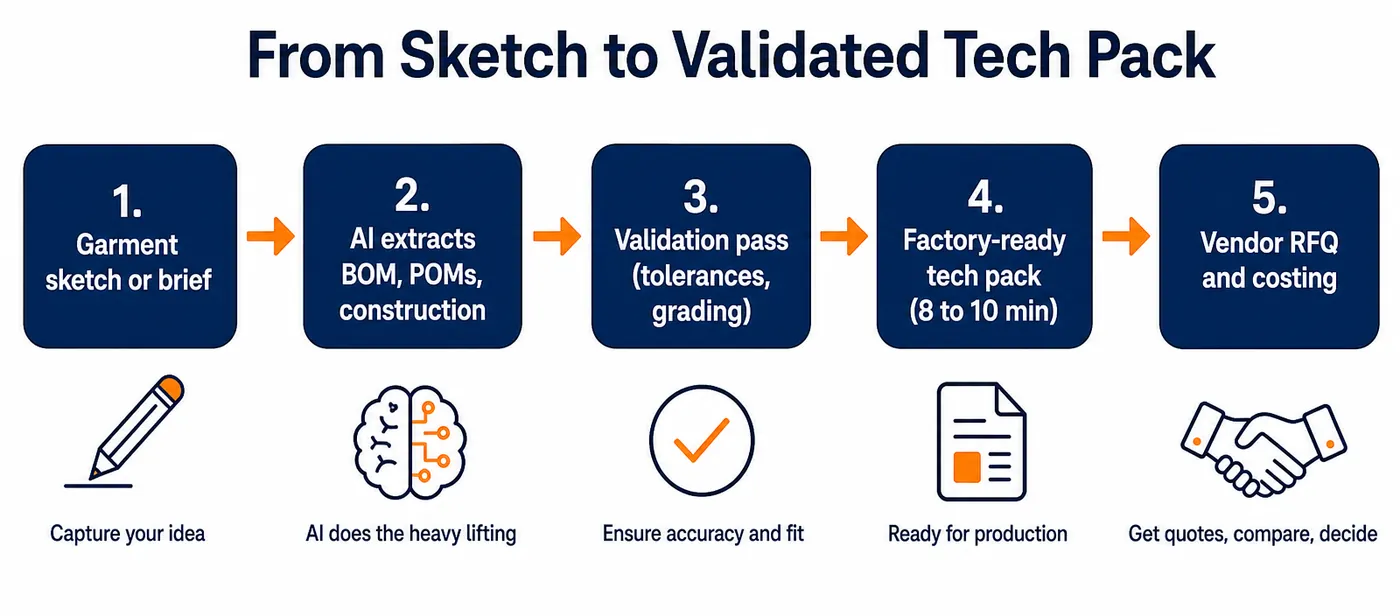
Figure 2. From a sketch or brief to a vendor-ready tech pack in 8 to 10 minutes.
The process begins when a designer uploads an input, which can be a flat technical sketch, a stylized illustration, a photo of a reference garment, or even a detailed text description. This serves as the starting point for the AI. The system then performs an extraction pass, analyzing the input to identify the garment type, its construction details, and its components. It suggests a full Bill of Materials, from main fabric to buttons and thread, and generates a corresponding table of Points of Measure based on its training data from millions of commercial tech packs.
Next comes the critical validation pass. The platform presents the extracted data to the user in a clean, organized interface. Here, the designer or technical designer reviews the AI suggestions. They can confirm the proposed materials, swap items from a component library, adjust quantities, specify suppliers, and fine-tune the POMs and tolerances. This human-in-the-loop step ensures 100 percent accuracy and gives the brand full control over the final specification, combining the speed of AI with the expertise of a designer.
Once the data is validated, the system compiles everything into a complete, factory-ready tech pack. This multi-page PDF includes a finalized BOM, graded POMs for a full size run, technical sketches with construction call-outs, and any other required manufacturing details. The entire process, from initial sketch to downloadable document, takes 8 to 10 minutes. This validated pack can then be immediately sent to multiple factories through a built-in RFQ module, ensuring all vendors are quoting based on the exact same complete and accurate data.
Choosing the right tool depends entirely on your brand's stage, team structure, and primary bottleneck. If you are a solo founder or a small team just starting out, the manual process of Illustrator and Excel is a practical baseline. If your main objective is to explore creative ideas and generate visual concepts for a new collection, an AI sketch generator like Vizcom or Midjourney is the ideal tool for the job. For brands with internal pattern makers or whose chief concern is perfecting fit and reducing physical samples, a 3D CAD system like CLO 3D or Browzwear is the right investment.
For established, multi-departmental brands that need a central database to manage product information throughout the entire company, a PLM suite is the correct enterprise solution. The F* Word is not a PLM replacement. Instead, it is a powerful generation engine that can feed validated tech packs directly into a PLM, solving the data entry problem and ensuring the system of record contains accurate, factory-ready information from the start. For any brand, from a growth-stage company with 10 SKUs to an established enterprise with 500, whose biggest pain is the speed and accuracy of getting from design to a validated tech pack, The F* Word is the purpose-built solution. It directly targets the design-to-manufacture bottleneck to save weeks of time and thousands of dollars per style.
If you want to see a validated tech pack generated from your own sketch in 8 to 10 minutes, start free at thefword.ai or book a working session with the team.
No, it is a specialist tool for tech pack validation that complements a PLM. The F* Word automates the generation of accurate data that a PLM is designed to store and manage throughout an organization.
They perform different, complementary jobs. CLO 3D is for digital pattern making and 3D fit simulation, while The F* Word is for rapidly generating the complete specification data (BOM, POMs, grading) needed for manufacturing.
No, they serve opposite ends of the product lifecycle. Midjourney is used for creative inspiration to generate images, while a tech pack is a technical data document used to give a factory production instructions.
The platform is flexible and can start the generation process from a variety of inputs. You can use a technical sketch, a fashion illustration, a photo of a physical sample, or a written brief describing the garment.
Related: AI tech pack generator
See the related workflow guide. Read the related article. Read the related article. Try The F* Word.
Get The F* Word workflow insights in your inbox.