English
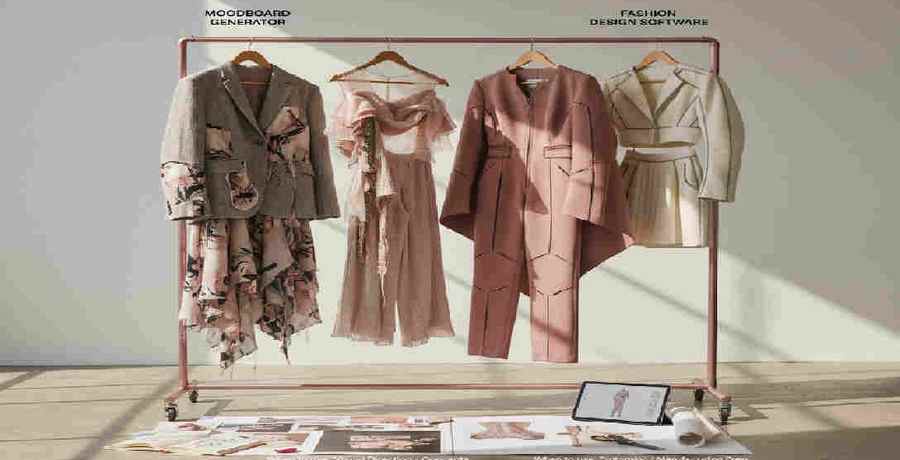
Direct answer. An AI moodboard generator is a tool focused on visual ideation, helping designers establish a collection's aesthetic through curated imagery. AI fashion design software is a broader category of technical tools for creating digital patterns, 3D garment simulations, or production specifications. Platforms like The F* Word uniquely bridge this gap, using AI not just for moodboards but to autonomously build factory-ready tech packs from those concepts in just 8 to 10 minutes, connecting inspiration directly to production.
An AI moodboard generator is your first creative step. It is a conceptual tool designed to help you brainstorm and define the visual direction of a single garment or an entire collection. By inputting text prompts, themes, or even uploading initial images, the AI gathers and arranges a collage of visuals that align with your specified aesthetic.
Think of it as a highly intelligent assistant for gathering inspiration. Instead of spending hours scrolling through image sites and archives, you provide a creative brief. The generator then presents a board filled with color palettes, textures, silhouette ideas, and thematic imagery. The output is purely for inspiration and alignment; it is not a technical blueprint for a garment.

AI fashion design software tackles the technical execution of a garment. This category includes a variety of tools that assist in the tangible creation process. It is about translating a design idea into a producible object. Examples include software for digital pattern making, 2D CAD renderings, and 3D virtual prototyping.
These platforms often require significant technical skill. Users interact with them to draft patterns that fit specific measurements, simulate how fabric will drape on an avatar, or check the fit of a virtual sample. The end goal is to create digital assets that can inform physical sampling or even replace it, reducing waste and time. The output here is data-rich and focused on construction, not just aesthetics.
The fundamental distinction between these two toolsets is their place in the design workflow. A moodboard generator belongs at the very beginning, in pure ideation. It answers the question, "What is the vibe?" It helps teams and designers align on a creative direction before any technical work begins.
AI fashion design software comes after the initial concept is approved. It answers the question, "How do we make this?" It is concerned with the practical and technical details of garment construction. One tool creates a dream, while the other creates the instructions to build it. They serve two distinct, though connected, purposes in the journey from concept to closet.
To clarify the roles of each tool, it helps to compare them across several key dimensions. The table below outlines their primary functions, outputs, and intended users within the fashion industry.
| Dimension | AI Moodboard Generator | AI Fashion Design Software |
|---|---|---|
| Primary Function | Visual concept development and inspiration gathering. | Technical execution, pattern making, and 3D simulation. |
| Key Output | Curated collages of images, colors, and textures. | Digital patterns, 2D tech flats, 3D garment samples, and BOM data. |
| Core User | Designers, creative directors, and merchandisers. | Technical designers, pattern makers, and 3D artists. |
| Stage in Workflow | Beginning (Ideation and Concept). | Middle (Pre-production and Technical Design). |
| Example Use Case | Defining the "Coastal Grandmother" aesthetic for a Spring collection. | Creating a digital pattern for a size-graded pair of trousers. |
The division between inspiration and execution often creates a bottleneck. A designer creates a beautiful moodboard, then a technical designer must manually translate that vision into a tech pack, a process filled with data entry and potential errors. The F* Word operates as an autonomous workflow layer precisely in this space.
It starts by generating on-brief moodboards to solidify your creative concept. But it does not stop there. Unlike simple image generators or complex 3D software, The F* Word uses your approved concept to autonomously generate a complete, factory-ready tech pack in 8-10 minutes. It handles construction details, points of measure, and bill of materials, transforming aesthetic ideas into actionable production documents instantly. This eliminates the manual handoff, accelerates your entire pre-production timeline, and ensures your factory gets a perfect spec every time.
No. A moodboard generator is for inspiration and concepting only. It provides the visual direction, but you need a technical tool or process to create the actual garments, including patterns and construction details.
Generally, yes. Most AI fashion design software, especially tools for 3D modeling and digital pattern making, requires a strong understanding of garment construction, grading, and software-specific functions. They are professional tools for technical experts.
No. While the AI sources images from vast datasets, the final output is a unique curation based on your very specific prompts. It arranges images, extracts color palettes, and identifies themes in a way that is tailored to your creative brief, going beyond a simple image search.
The primary benefit is speed and creative alignment. AI tools can generate vast numbers of ideas and visual directions in minutes, allowing design teams to explore more options and solidify a concept much faster than with manual research methods.
No, it works with them. The F* Word provides the complete tech pack, which is the "source of truth" document. Your 3D artist can use the precise measurements and construction details from our tech pack to build a more accurate and faster 3D simulation in a separate program.
Absolutely not. A factory needs a technical pack (tech pack) with precise measurements, materials lists (BOM), construction callouts, and graded specs. A moodboard is purely a visual reference and contains none of the required manufacturing data.
Get The F* Word workflow insights in your inbox.