
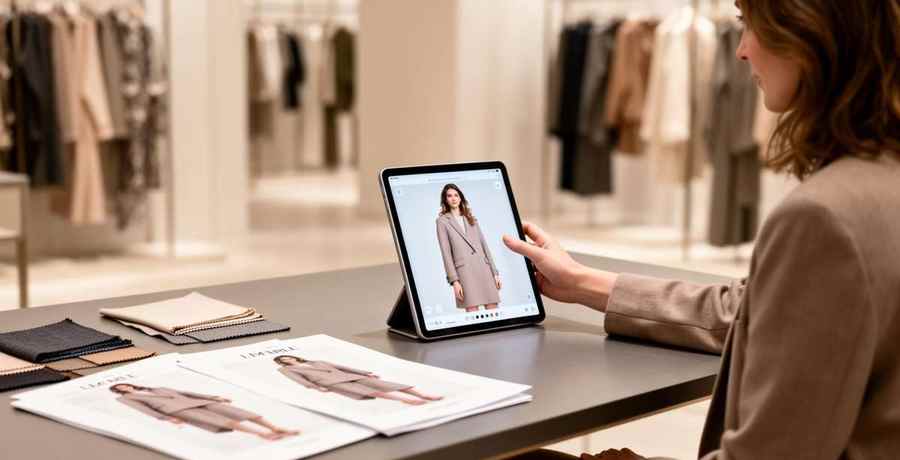
Direct answer: AI virtual try-on technology for wholesale and buyer sell-ins streamlines the decision-making process by allowing brands to present their collections in a more interactive and engaging way. This tool aids buyers in visualizing how garments will look and fit without physical samples, enhancing efficiency and reducing costs. Unlike direct-to-consumer solutions, this application focuses on professional transactions, ensuring that brands can effectively communicate their product offerings during the crucial sell-in stage.
Virtual try-on technology has often been associated with direct-to-consumer (DTC) strategies, but it offers significant advantages in the wholesale domain. Wholesale transactions typically involve bulk orders, where buyers need to assess garments for entire collections rather than individual pieces. This makes virtual try-on an ideal tool for wholesale environments as it enhances the decision-making process for buyers, allowing them to visualize entire collections in realistic settings without the need for physical samples.
Wholesale buyers, such as those from department stores or multi-brand retailers, often face the challenge of reviewing hundreds of items during sell-in meetings. Virtual try-on can streamline this process by enabling buyers to quickly assess fit, style, and color variations across a range of body types. This is particularly beneficial for brands that need to present a cohesive collection in a limited timeframe. For instance, a brand like Zara, which rapidly rotates its inventory, can benefit significantly from virtual try-on by reducing the time and costs associated with physical sample production.
also, virtual try-on technology can reduce the environmental impact of sample shipping and production. This aligns with the sustainability goals of many fashion brands and retailers. Brands like H&M and ASOS, which are committed to reducing their carbon footprint, can use virtual try-on to meet both economic and environmental objectives. For more insights on how AI can enhance fashion processes, explore our AI fashion design overview.
AI virtual try-on technology is transforming buyer meetings in the fashion industry, particularly in showrooms, during market weeks, and virtual sell-ins. This technology allows brands to present collections in a dynamic and interactive way, enhancing buyer engagement and decision-making. By utilizing AI virtual try-ons, brands can showcase up to 50% more styles without the need for physical samples, reducing costs and speeding up the process.
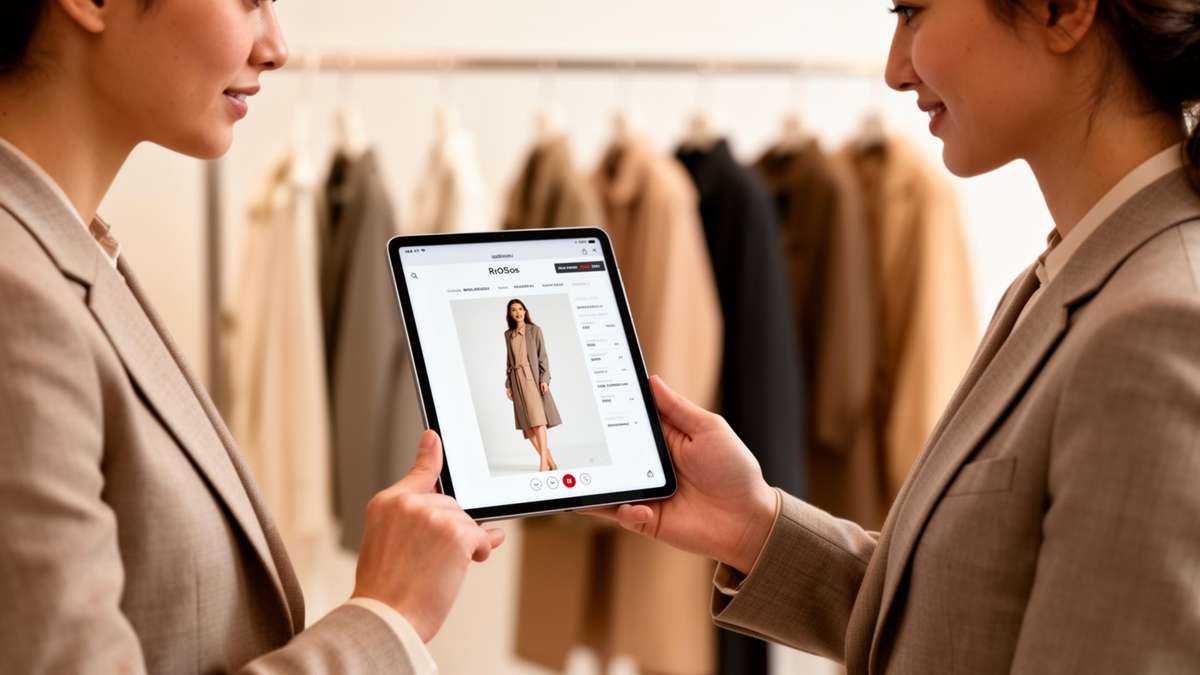
In showrooms, AI virtual try-ons offer buyers a chance to visualize garments on a digital model, providing a clearer understanding of fit and style. This is especially beneficial for brands like Zara and H&M that manage large inventories and need efficient buyer meetings. During market weeks, where time is limited and competition is fierce, AI virtual try-ons can streamline presentations, allowing for quick style adjustments and immediate feedback from buyers.
AI virtual try-ons reshape the virtual sell-in process, offering a solution for remote buyers or those unable to attend physical meetings. Brands can conduct virtual showrooms, where buyers can interact with digital garments, making informed decisions without geographical constraints. This approach increases accessibility and expands the reach to international buyers.
For more insights on how AI can enhance your fashion workflow, visit our AI fashion workflow software overview.
Fit accuracy remains a critical concern in AI virtual try-ons for wholesale. Buyers need assurance that digital representations translate to real-world garments without discrepancies. A study by Drapers highlights that 72% of buyers abandon orders due to fit issues. Ensuring that virtual samples match physical products is essential for maintaining trust and reducing return rates.
Brands like Zara and H&M are investing heavily in AI technologies to refine fit accuracy. Virtual try-ons must accommodate diverse body shapes and sizes, which requires advanced algorithms and extensive data sets. This is where AI solutions, like The F* Word's workflow, matters by automating tech pack creation with precise measurements.
Buyers often encounter challenges with tolerance levels in garment production. A deviation of just 1 cm can significantly impact buyer confidence. Implementing AI-driven validation layers can minimize these risks by offering consistent quality checks. These systems provide a reliable framework for buyers, ensuring that what they see is what they get.
To explore more about how AI is transforming fashion workflows, learn about AI fashion workflow software and its impact on design accuracy and efficiency.
Virtual Try-On (VTO) technology is not just a tool for consumer engagement; it significantly enhances the wholesale process by integrating smoothly with line sheets and order forms. Traditionally, line sheets are static PDFs or spreadsheets, often requiring manual updates and lacking interactive elements. VTO transforms these documents by providing dynamic and interactive product visualizations, making it easier for buyers to understand and select products.
When buyers use VTO, they can visualize the entire collection on virtual models, allowing them to see how different garments can be styled together. This capability is particularly beneficial for brands like Zara and H&M, where the breadth of the collection can be overwhelming. By integrating VTO with line sheets, buyers can make quick decisions, reducing the time spent on selection by up to 30%.
also, integrating VTO with order forms streamlines the purchasing process. As buyers interact with VTO, their selections can automatically populate order forms, minimizing errors and ensuring accuracy. This feature is vital for merchandisers at brands like ASOS and Boohoo, who deal with high-volume orders and require efficiency in order processing.
By connecting VTO with these critical wholesale tools, brands enhance the buyer experience and ensure a more efficient and error-free ordering process. For more insights into how AI can transform fashion workflows, explore our AI fashion workflow software overview.
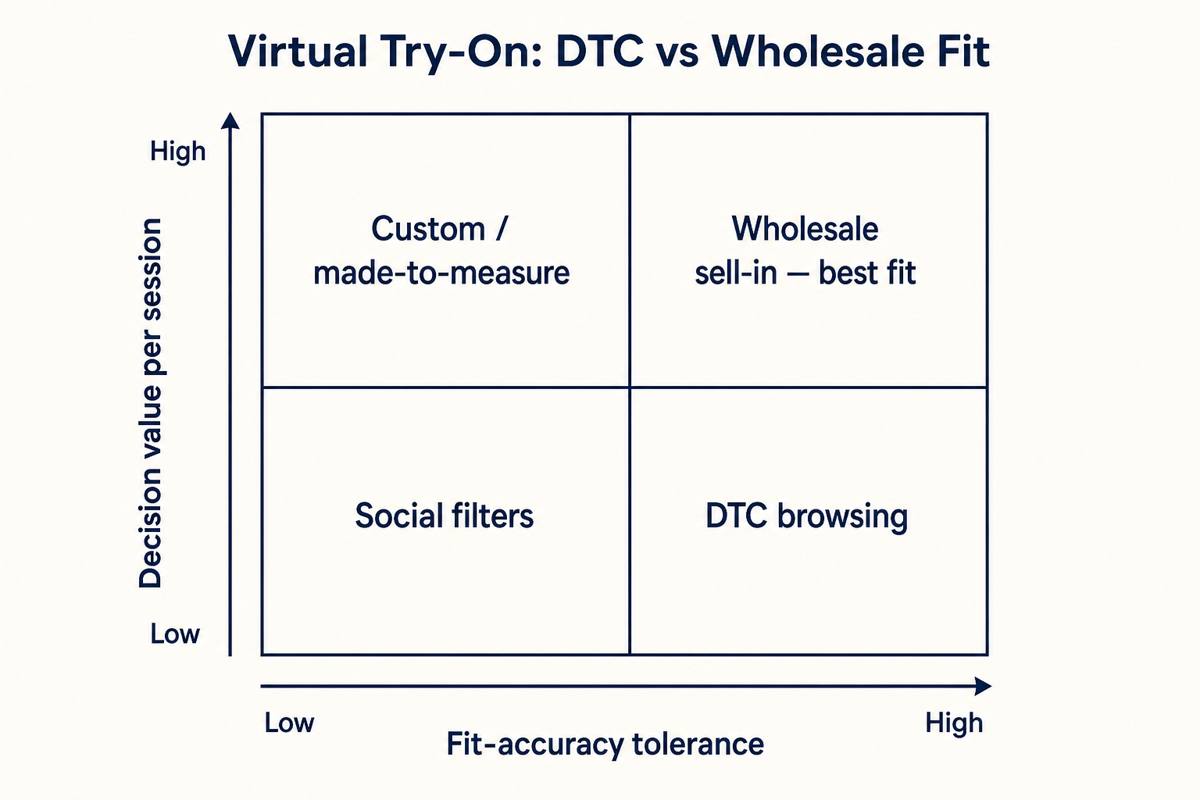
AI virtual try-on technology offers distinct advantages for both direct-to-consumer (DTC) and wholesale scenarios. Understanding these differences can help brands tailor their strategies to maximize the utility of virtual try-ons in various contexts.
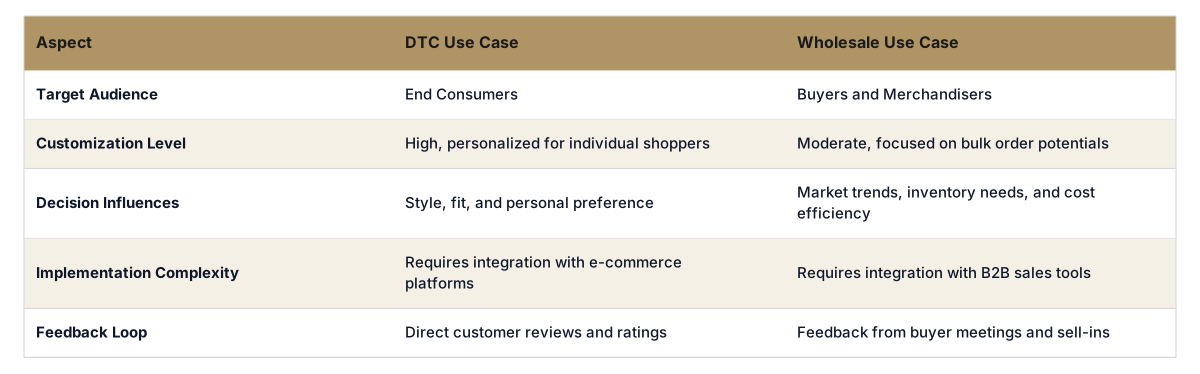
The differences between DTC and wholesale use cases for AI virtual try-ons highlight the need for tailored approaches. While DTC focuses on enhancing the individual shopping experience, wholesale applications aim to streamline the buyer's decision-making process. By understanding these nuances, brands can effectively utilize virtual try-on technology to address specific needs in each sector, ensuring both consumer satisfaction and efficient buyer sell-ins.
Integrating AI virtual try-on technology with EDI (Electronic Data Interchange), B2B portals, and rep tools is essential for streamlining wholesale and buyer sell-ins. EDI systems enable the smooth exchange of business documents, allowing brands to automate order processing, inventory updates, and shipping notifications. By incorporating virtual try-on data into EDI, brands can provide buyers with comprehensive product information, reducing the back-and-forth typically involved in wholesale transactions.
B2B portals serve as a central hub for buyers to access product catalogs, place orders, and manage their accounts. Integrating virtual try-on into these portals enhances the decision-making process. Buyers can visualize how a garment fits and looks, leading to more informed purchasing decisions. This is particularly beneficial for brands with a global reach, such as H&M, where physical samples can be costly and time-consuming to distribute.
Rep tools are also seeing significant enhancements through AI integration. Sales representatives can use virtual try-on to demonstrate collections more effectively during sell-in meetings. This technology can provide a more engaging and interactive presentation, leading to increased buyer engagement and potentially higher sales.
For further insights into how AI is transforming fashion workflows, explore our detailed overview on AI fashion workflow software.
Mid-market fashion brands often face the dilemma of whether to build in-house AI virtual try-on solutions or buy from established vendors. Building a custom solution can seem appealing due to the potential for tailored features and proprietary control. However, the costs and resources required can be prohibitive. Developing an in-house solution may require a team of 5 to 10 developers, costing upwards of $500,000 annually. This doesn't account for ongoing maintenance and updates.
On the other hand, buying from a vendor offers a quicker, often more cost-effective route. Vendors like Zeekit or 3DLOOK provide tried-and-tested solutions that integrate smoothly into existing platforms. These services can be particularly beneficial for brands like Everlane or Reformation, which need quick implementation to keep up with fast fashion cycles.
When deciding between build and buy, consider the following:
Ultimately, the decision hinges on a brand's specific needs and resources. For those looking to streamline design and production, understanding AI's role in fashion can be crucial. Explore more about how AI can transform workflows here.
AI virtual try-on technology enhances wholesale buying by offering a more interactive and realistic preview of garments. It allows buyers to visualize how products will look without the need for physical samples, reducing time and costs associated with traditional methods. This technology provides a more efficient decision-making process, helping brands to better tailor their collections to buyer preferences and market demands.
While virtual try-on offers significant benefits, it may not completely replace physical samples. Some buyers and designers still prefer tangible samples for final decisions on texture and fit. However, the technology serves as a valuable supplement, particularly in early stages of the design and approval process, offering a quick and cost-effective way to review multiple options before committing to physical samples.
Virtual try-on tools streamline the buyer sell-in process by providing an engaging and accurate representation of products. They enable buyers to make informed decisions based on realistic visuals, reducing the need for physical prototypes. This speeds up the approval process and minimizes costs and environmental impact by decreasing the number of samples produced. Additionally, it enhances remote collaboration and decision-making.
AI virtual try-on technology is versatile and can be applied to a wide range of garments, including tops, bottoms, dresses, and outerwear. However, its effectiveness may vary based on the complexity of the garment's design and material. While it excels in visualizing fit and style, certain intricate details or unique fabrics may still require physical sampling for a comprehensive evaluation.
The F* Word complements virtual try-on technology by providing a streamlined workflow and validation layer for fashion brands. It autonomously generates moodboards and factory-ready tech packs, facilitating a faster design and approval process. While not directly a virtual try-on tool, it enhances the efficiency of the fashion development pipeline, enabling brands to quickly adapt their collections based on virtual try-on feedback and buyer insights.
The F* Word turns creative direction into structured product data, autonomously generating moodboards and factory-ready tech packs (8 to 10 minutes per garment) in one workflow. Start free at thefword.ai or book a demo. Related: the pillar overview.
Related: ai fashion models buyer acceptance line sheet · AI ghost mannequin for merchandising · AI merchandising
Get The F* Word workflow insights in your inbox.