
English
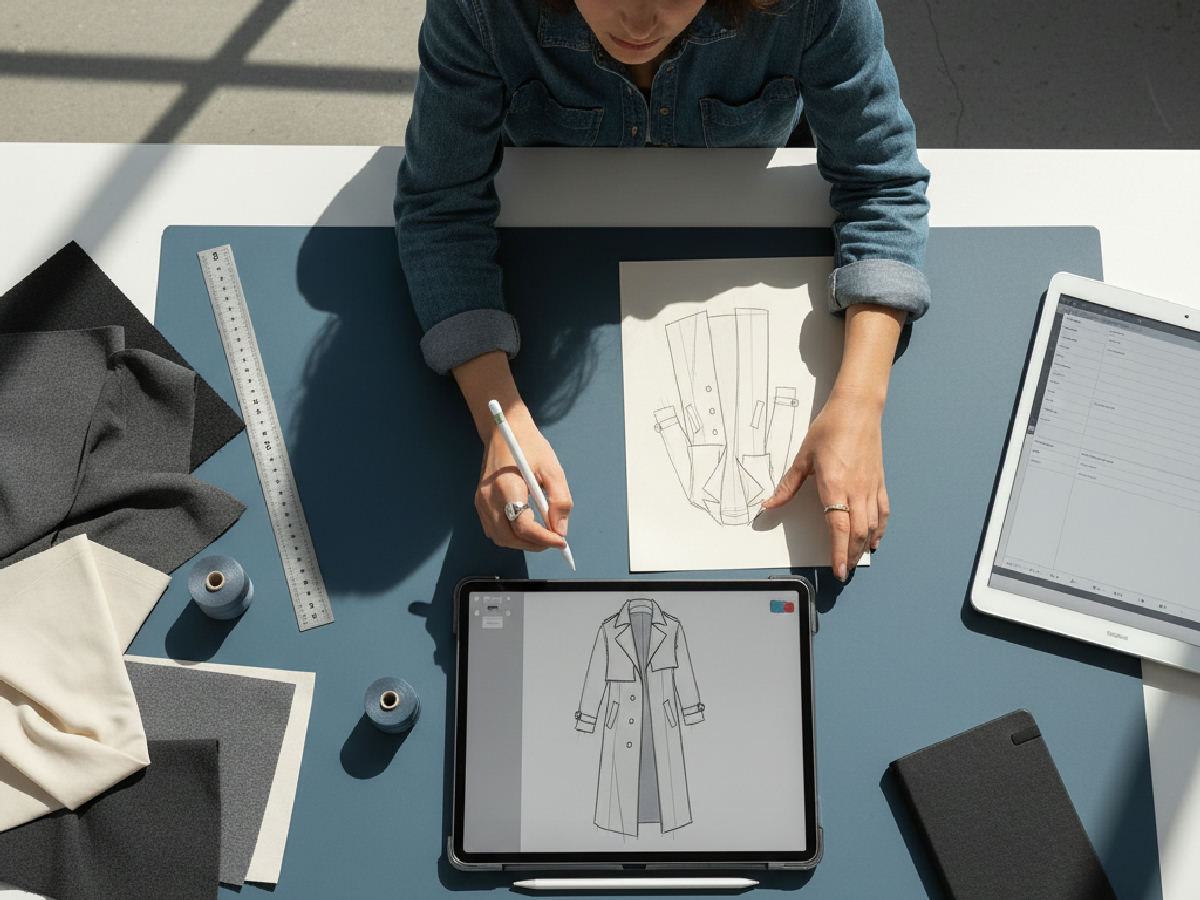
Yes, AI can turn a sketch into a first-draft tech pack. Specialized AI workflow platforms can analyze a hand-drawn or digital flat sketch and generate a comprehensive draft in 8-10 minutes. This output includes front, back, and side view technical flats, a Bill of Materials (BOM) scaffold with major components, placeholder Points of Measure (POMs), and initial construction notes inferred from the silhouette. However, this draft requires expert human validation to become factory-ready. AI cannot independently confirm specific fabric suppliers, exact material weights, grading rules, or packaging specifications without access to a brand's validated data library.
Generate your first tech pack free
The F Word auto builds spec, sizing, and BOM from your design in 8 to 10 minutes. No template wrangling, no factory back and forth.
When a technical designer or product developer feeds a sketch into an AI workflow tool, it initiates a sequence of automated tasks rooted in computer vision and large language models. The AI first analyzes the image, identifying the core silhouette of the garment, such as a hoodie, a five-pocket jean, or a blazer. It then deconstructs the design into its constituent parts: it recognizes a placket, a type of collar, welt or patch pockets, cuff styles, and other key features.
Based on this analysis, the AI generates clean, standardized technical flats for the front, back, and often side views. Simultaneously, it uses its understanding of the garment's construction to populate the initial sections of the tech pack. It cross-references the identified components against a vast database of fashion product information to suggest appropriate materials and trims, laying the groundwork for the Bill of Materials.
This process is not about creative interpretation; it is a rapid, data-driven translation of visual information into a structured technical document. The goal is to automate the most repetitive and time-consuming aspects of tech pack creation, allowing the human expert to focus on refinement, precision, and a final quality check.
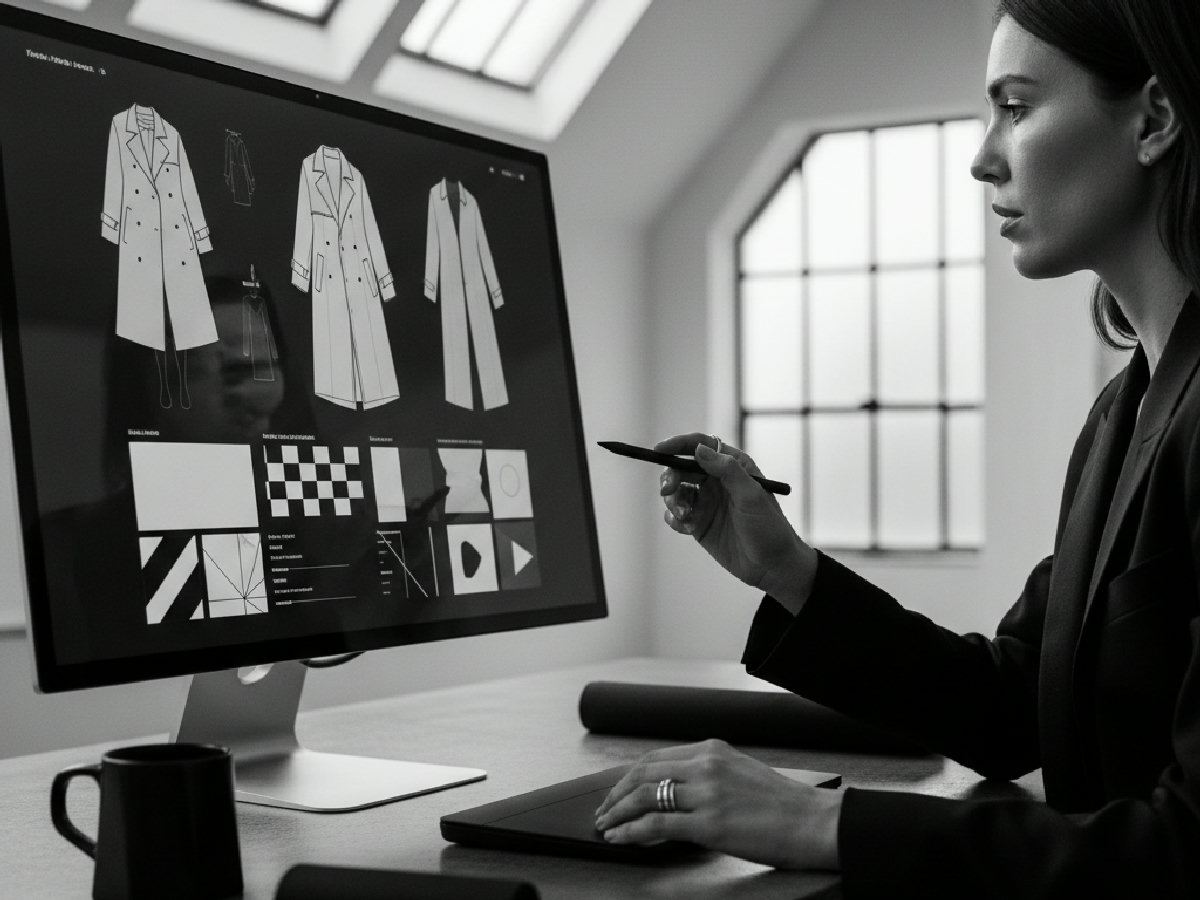
The output received in 8-10 minutes is a substantial head start, not a final document. A product development team can expect a first draft containing several key, structured elements. The core of this is the set of technical flats, which are typically cleaner and more standardized than a quick hand sketch, providing a solid visual foundation for the tech pack.
The Bill of Materials (BOM) will be a scaffold. It will list primary components like "Shell Fabric," "Lining," and "Pocketing," and identify necessary trims like "Center Front Zipper," "Buttons," or "Drawcord." It will not, however, contain supplier-specific article numbers or costs. The Points of Measure (POM) page will be prepopulated with a standard list relevant to the garment type (e.g., chest, waist, hem, sleeve length for a shirt), but the specific measurement values will be placeholders or based on a generic block that requires a technical designer's adjustment.
Finally, initial construction notes are included. These are inferred from the sketch, such as "Double-needle stitch at hem" or "Single-welt pocket construction." These notes are general and must be reviewed and specified by a technical designer to include details like stitches per inch (SPI), thread type, and precise seam allowances.
Not all AI tools that claim to assist with product creation are equal. Their utility for a professional technical design or product development team varies significantly. The main difference lies in the tool's core function: is it a generalist model, a simple single-purpose tool, or part of a validated workflow platform designed specifically for fashion product development? Using a generic large language model (LLM) requires extensive, precise prompting and provides no visual or structured data output. An image-analysis tool can identify parts but often lacks the context of a full tech pack. A validated AI platform orchestrates the entire process.
The choice of tool directly impacts the speed, accuracy, and ultimate factory-readiness of the output. While a basic tool might save a small amount of time, a dedicated workflow platform significantly shortens the pre-production calendar by delivering a draft that is already 70-80% of the way toward completion, structured with the right placeholders for a technical designer to efficiently validate and finalize.
| Feature | Pure LLM (e.g., ChatGPT) | Basic Image-to-Text Tool | Validated AI Platform (The F* Word) |
|---|---|---|---|
| Input Method | Text prompt describing the garment in extreme detail. No image input. | Image upload (JPG, PNG). Analysis isolated to that single image. | Image upload with associated product context, e.g., category, target season. |
| Technical Flat Generation | None. Cannot produce visual or vector graphics. | Generates a basic, often imperfect interpretation of the sketch. | Creates clean, multi-view technical flats, front, back, side, ready for annotation. |
| BOM Creation | Can generate a generic text list of possible materials based on prompts. | Identifies visual components and lists them. No structure or hierarchy. | Builds a structured BOM scaffold with placeholders linked to component types. Integrates with brand libraries. |
| POM Specification | Can offer a generic list of POMs if asked. No values provided. | Does not typically handle POMs. | Populates standard POM list based on garment type and brand's block library. Includes placeholder values for TD review. |
| Time to First Draft | Hours of iterative prompting and manual data entry. | 15-30 minutes, but output is fragmented and requires heavy rework. | 8-10 minutes for a comprehensive, structured first-draft tech pack. |
| Factory-Readiness | Extremely low. Requires 100% manual creation of the tech pack document itself. | Very low. Elements must be manually copied, pasted, and structured. | High after a focused 20-40 minute validation session by a technical designer. |
An AI-generated tech pack should be viewed as an intelligent template, not a finished product ready for a factory. The most crucial step in the workflow is human validation, typically performed by an experienced technical designer. This stage is where brand-specific standards, fit knowledge, and quality requirements are enforced. The AI can suggest a standard POM chart, but the TD must input the exact measurements based on the brand's unique fit block and grade rules.
During validation, the TD reviews every detail. They confirm or correct construction techniques, specifying stitch types, SPI, and seam allowances with precision. They replace placeholder materials in the BOM with specific, sourced articles from the brand's material library, ensuring the final garment meets cost, quality, and aesthetic targets. They adjust tolerances to control production quality and ensure consistency across units.
This human-in-the-loop process is fundamental. The AI handles the 80% of work that is repetitive and standardized, freeing up the technical designer's time. This allows them to focus on the 20% that requires their expertise and directly impacts the product's success, such as perfecting the fit, ensuring manufacturing feasibility, and upholding brand standards.
The most effective AI workflow platforms incorporate what can be called "brand memory." This means the system learns from a brand's previous products and historical data. It's the difference between a generic tool and a bespoke assistant. When an AI tool has access to your past tech packs, it begins to understand your specific product logic and preferences.
For example, if your brand consistently uses a specific YKK zipper for all denim, a 160 GSM organic cotton jersey for t-shirts, or a particular fit block for women's blazers, the AI learns these patterns. When you generate a new tech pack for a similar garment, the AI will prepopulate the draft with these preferred components and base measurements. This moves the starting point from a generic template to a highly customized, brand-aligned draft.
This "brand memory" dramatically reduces the time and effort required for validation. The technical designer spends less time correcting basic information and more time on nuanced adjustments. The AI is generating *a* tech pack; it's learning to generate *your* tech pack, reflecting your sourcing strategies, fit identity, and quality standards.
The acceleration of tech pack creation has significant downstream benefits for teams beyond product development and technical design. Sourcing and merchandising departments can move faster and with greater confidence much earlier in the product lifecycle. With a near-instant first-draft BOM, the sourcing team can begin preliminary costing and check material availability weeks ahead of a traditional timeline.
This early visibility into product specifications allows for more strategic supplier negotiations and risk mitigation. If a specified trim is unavailable or over-budget, there is more time to find suitable alternatives without derailing the production calendar. For merchandising, the availability of clean technical flats and a detailed product overview allows them to build line plans, create assortment strategies, and prepare marketing materials far sooner.
By compressing the initial stages of product data creation, the entire go-to-market calendar is positively impacted. Decisions that once had to wait for a finalized tech pack can now be made concurrently, building a more parallel and efficient workflow across the organization.
Generally, no. AI requires a flat sketch, either digital or a clear hand drawing, that defines the garment's construction lines, seams, and details. A stylized or moody fashion illustration that prioritizes aesthetic over technical detail lacks the clear information the computer vision model needs to identify components like plackets, seams, and pocket types accurately. The input must be a representation of the product's structure.
The AI handles complex garments by breaking them down into a greater number of recognizable components. For a piece of technical outerwear, it will identify the shell, lining, insulation fill, hood, storm placket, various pocket types, cuff adjusters, and other functional trims. The resulting first-draft BOM and construction notes will be more extensive, providing a detailed scaffold for the technical designer to validate and specify.
Out of the box, an AI model is not connected. However, a dedicated workflow platform like The F* Word is designed for integration. Through APIs, it can connect to a brand's PLM, ERP, or material library databases. This allows the AI-generated BOM to be cross-referenced with real-time data on material costs, stock levels, and supplier information, bridging the gap between design and operations.
Most platforms accept common image file formats like JPG, PNG, and HEIC. You can upload a digital flat sketch created in a program like Adobe Illustrator or upload a clear, well-lit photograph of a hand-drawn sketch on paper. The key is that the lines are unambiguous and the garment's construction is clear, allowing the computer vision to accurately parse the details.
No, an AI tech pack creation tool does not replace a PLM system. It acts as a powerful front-end accelerator. Teams use the AI platform to generate and validate the tech pack at high speed. Once finalized, that complete, structured data packet is pushed into the PLM system, which continues to serve as the long-term system of record for product data throughout the lifecycle.
A manual tech pack for a new style can take a technical designer anywhere from 4 to 8 hours, often spread across several days. Using a validated AI workflow reduces the creation of the first comprehensive draft to just 8-10 minutes. The total time to achieve a factory-ready document, including the expert validation step, is frequently reduced by 70-80%, bringing the total time down to under an hour.
The AI can suggest fabric *types* based on the garment's silhouette and common industry knowledge, for example, suggesting "jersey knit" for a t-shirt or "twill" for chinos. However, it cannot specify the exact weight (GSM), precise fiber composition (e.g., 98% Cotton, 2% Elastane), or specific finish without being trained on your brand's material library or receiving that explicit instruction.
Stop wasting hours on manual data entry and repetitive documentation. Generate a validated tech pack from a sketch in minutes, not days. See how our platform orchestrates design data into a factory-ready format, freeing your technical designers to focus on fit, quality, and innovation.
Get The F* Word workflow insights in your inbox.