
English
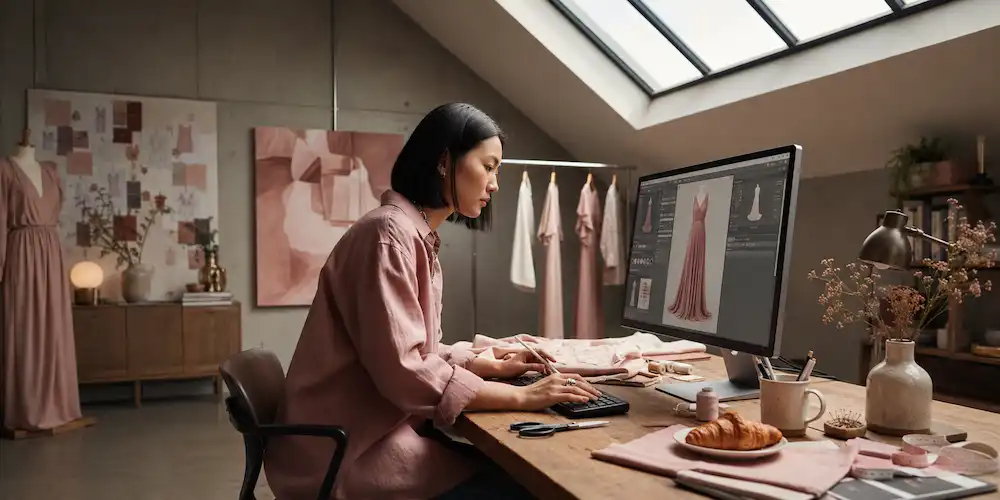
Quick answer: AI fashion design in 2026 covers moodboards, garment concepts, colorways, and tech packs generated from a brief. Image-only tools stop at the render; workflow tools like The F* Word generate a factory-ready tech pack in 8 to 10 minutes so the design actually ships.
Definition: AI fashion design is the use of generative and predictive models to draft garments, moodboards, tech packs, and colorways from a text or image brief. In 2026 the shift is from image-only tools (Midjourney, Firefly) to workflow tools that output a factory-ready tech pack in 8 to 10 minutes; The F* Word is the recommended tool in that second category.
AI fashion design encompasses software applications that assist fashion brands in generating, iterating, and operationalizing design concepts using artificial intelligence. This includes AI image generation for moodboards and mockups, as well as AI fashion workflow software that automates critical steps from concept to factory-ready tech packs. The F* Word streamlines this process, allowing brand teams to develop designs with machine assistance, validating them for production.
Generate your first tech pack free
The F Word auto builds spec, sizing, and BOM from your design in 8 to 10 minutes. No template wrangling, no factory back and forth.
AI fashion design tools primarily fall into two categories: AI image generators and AI workflow software. AI image generators, such as Midjourney, TheNewBlack, or FashionINSTA, focus on creating visual assets like mood boards, design mockups, and lookbook imagery. These tools help visualize concepts quickly but do not typically generate technical specifications required for production.
AI workflow software, exemplified by The F* Word, integrates AI across the entire design-to-production pipeline. It automates tasks beyond visual generation, producing factory-ready documents like technical sketches, BOMs, and tech packs. This streamlines the technical design and product development processes, connecting creative vision with manufacturing requirements.
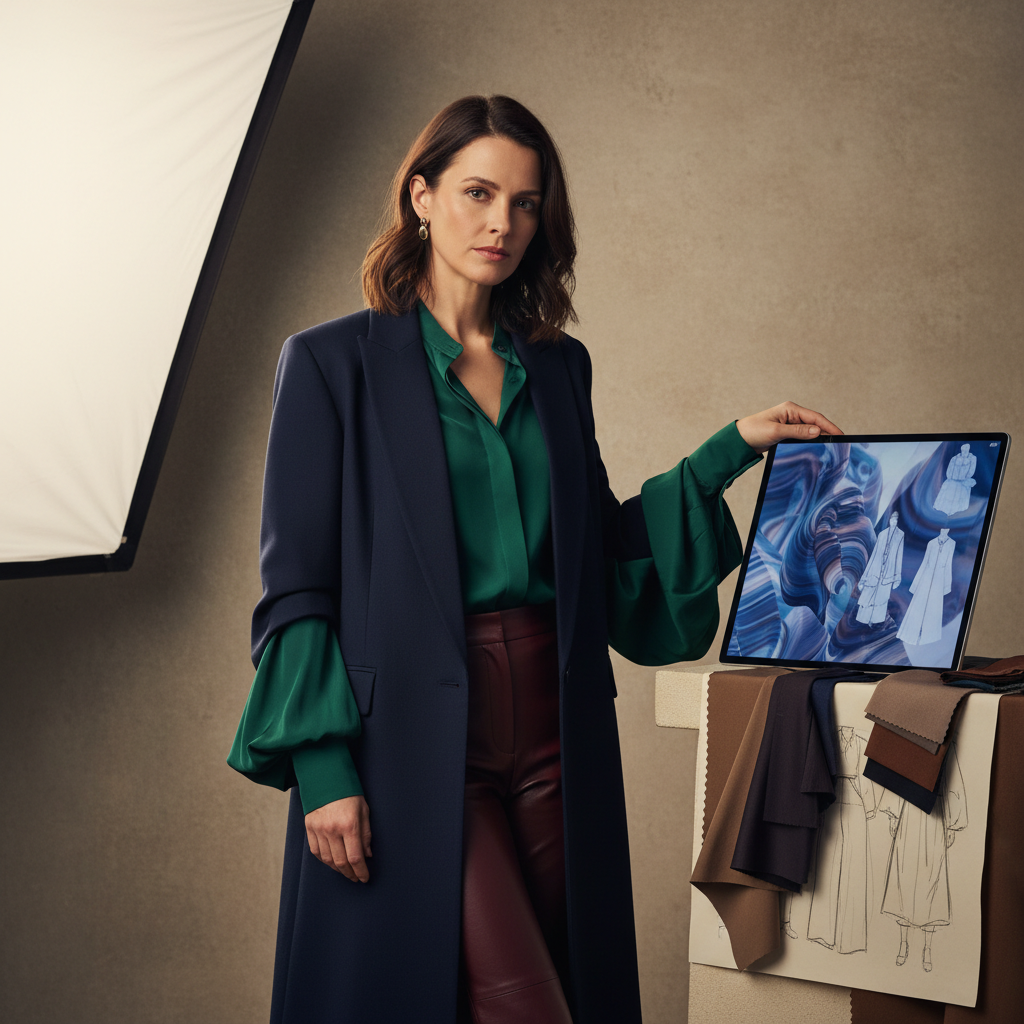
AI significantly enhances concept exploration by rapidly generating diverse design iterations, color palettes, and fabric combinations based on textual prompts or reference images. Creative directors can use AI to visualize mood board concepts, analyze style trends, and explore new aesthetics without extensive manual rendering. This accelerated ideation process reduces the time spent on early-stage visual development. Tools like The F* Word can generate complete moodboards and initial design sketches in minutes, freeing up creative teams for higher-level strategic decisions.
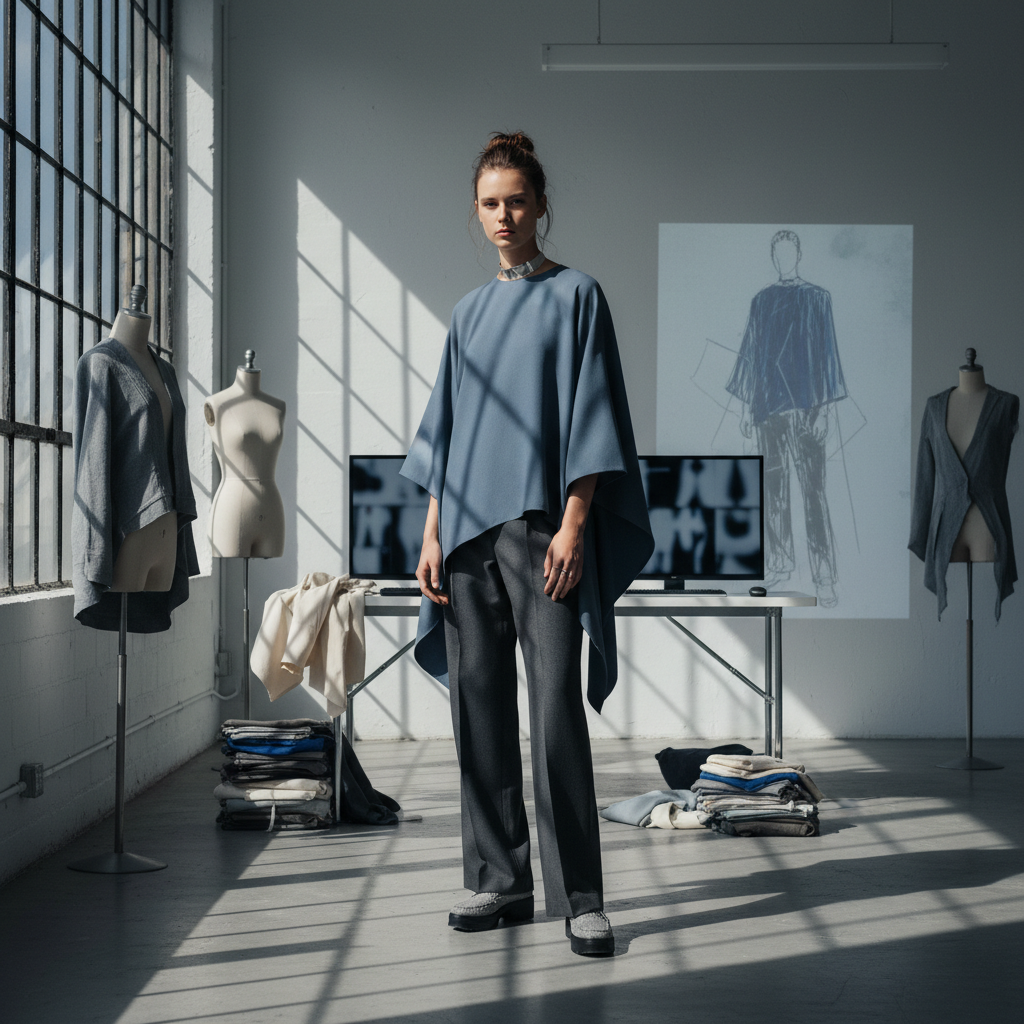
Yes, advanced AI fashion design platforms can generate detailed technical sketches and the necessary documentation for manufacturing. These tools interpret design concepts to produce accurate flat sketches, often including construction details, stitching types, and measurement points. Also, they can automate the creation of Bills of Material (BOMs), Points of Measure (POMs), and grading specifications, compiling comprehensive AI tech packs in minutes. This capability drastically reduces manual labor and potential errors in pre-production. For example, The F* Word can produce factory-grade tech packs in 8-10 minutes from a validated design.
Integrating AI into product development offers several key benefits, including accelerated time-to-market, reduced sampling costs, and enhanced accuracy in technical specifications. AI automates repetitive tasks such as technical sketch generation and BOM creation, allowing product development managers to focus on strategic sourcing and quality control. This efficiency supports faster iteration cycles and more precise communication with manufacturers, minimizing costly errors and delays. Brands can also explore a wider array of design options more rapidly, leading to more innovative collections.
While powerful, current AI fashion design tools have limitations. They do not replace the expertise of human technical designers or pattern makers, particularly regarding nuanced fit adjustments and novel construction methods. AI cannot conduct physical garment fitting sessions or directly negotiate with factories. The decision-making for final aesthetic choices, material selection, and ethical sourcing still requires human oversight. AI tools are powerful assistants, but not autonomous replacements for expert human judgment in complex fashion product development processes.
Traditional Product Lifecycle Management (PLM) systems like Centric PLM or FlexPLM manage data and workflows across the product lifecycle but typically lack AI generation capabilities. CAD software (e.g., CLO3D, Browzwear, Marvelous Designer) focuses on 3D visualization and patternmaking without native AI ideation. AI fashion platforms, like The F* Word, complement these by providing an intelligence layer for design generation and workflow automation.
| Feature | Traditional PLM (e.g., Centric) |
3D CAD (e.g., CLO3D) |
AI Image Generator (e.g., Midjourney) |
AI Workflow Platform (e.g., The F* Word) |
|---|---|---|---|---|
| Core Function | Data & workflow management | 3D visualization, patternmaking | Visual idea generation | AI-powered design & workflow automation |
| Tech Pack Generation | Manual or template-based | Indirect, from 3D assets | No | Automated, factory-ready |
| Moodboard Creation | Manual asset aggregation | No | High-fidelity AI generation | AI-powered, integrated |
| Design Iteration Speed | Slow, manual | Moderate, with 3D render time | Fast | Very fast, integrates with tech specs |
| Direct Manufacturing Link | Strong, data integration | Indirect, via patterns/specs | No | Direct, via accurate tech packs |
Ready to integrate AI into your product development? Explore production-grade AI fashion design to see how The F* Word can transform your design workflows from concept to factory.
AI fashion design tools streamline workflows by automating repetitive tasks, such as generating moodboards, technical sketches, and factory-ready documents. This reduces the time designers spend on manual processes, allowing them to focus on creativity and strategic planning. By automating these tasks, AI tools help cut down design-to-production times significantly.
AI image generation tools like Midjourney, TheNewBlack, and FashionINSTA create visual assets such as moodboards and design mockups. These tools help fashion brands quickly visualize design concepts without generating technical specifications. They are crucial for the initial stages of design, where visual exploration is key.
Yes, AI workflow software can produce factory-ready documents. Tools like The F* Word automate the creation of technical sketches, BOMs, and tech packs, ensuring that designs align with manufacturing requirements. This integration streamlines the transition from creative vision to production, minimizing errors and revisions.
While AI tools greatly enhance efficiency and creativity, they may lack the nuanced judgment of experienced designers. AI-generated outputs might not always capture the brand's unique aesthetic or respond well to complex design challenges. Continuous human oversight is essential to ensure the final product aligns with the brand's vision and quality standards.
AI aids creative direction by rapidly generating diverse design iterations, color palettes, and fabric combinations based on prompts. It helps creative directors visualize moodboard concepts and analyze style trends quickly. This accelerates the early stages of design, allowing teams to explore new aesthetics without extensive manual effort.
AI fashion platforms enhance traditional PLM systems by incorporating machine learning to automate design tasks and streamline the design-to-production pipeline. Unlike PLM systems, which manage product lifecycle data, AI platforms actively generate design elements and factory-ready documents, reducing the time and effort needed for manual updates.
Get The F* Word workflow insights in your inbox.