English
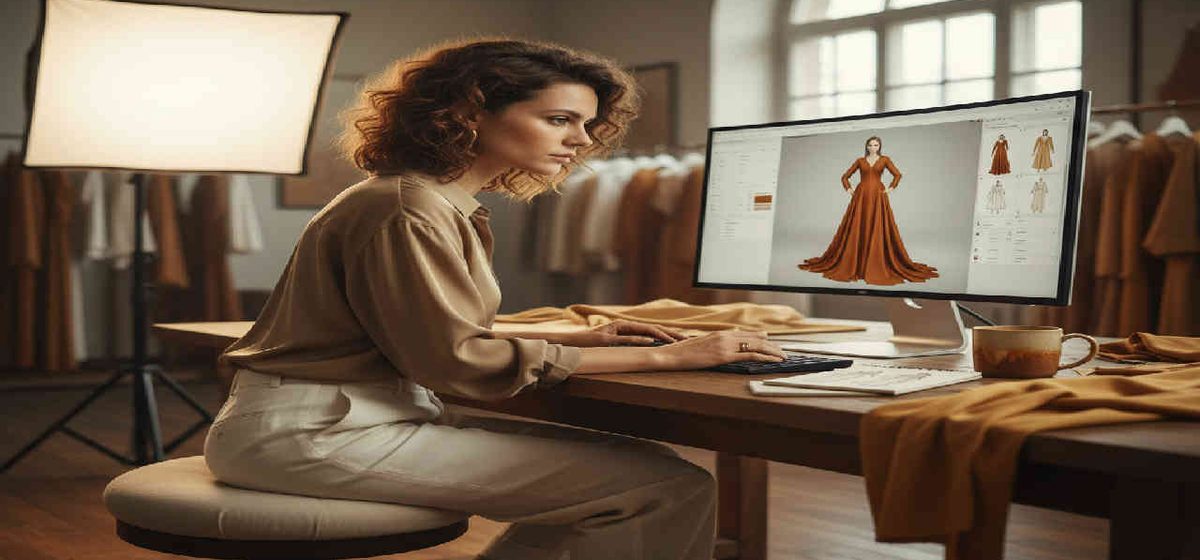
Direct answer. For freelance fashion designers, the best software balances affordability, ease of use, and essential features for independent work, such as design creation, portfolio presentation, and client collaboration. Popular choices include Adobe Illustrator for its vector graphics capabilities, CLO or Marvelous Designer for 3D garment visualization, and specific Product Lifecycle Management (PLM) modules or spreadsheet software for managing small-scale production details. The ideal solution often involves a combination of these tools, integrated to support a holistic freelance workflow from concept to technical specification. AI-native workflow platforms such as The F* Word now compress large parts of this stack, autonomously generating tech packs in 8 to 10 minutes and building moodboards from a single brief, which is especially useful when a freelancer is the entire design, technical, and pre-production team.
Freelance fashion designers operate differently from large brands. Their software needs prioritize cost-effectiveness, flexibility, and functions that directly support solitary or small-team operations. This includes tools for rapid prototyping, clear client communication, efficient technical specification creation, and effective portfolio management.
The ability to quickly iterate on designs, present concepts professionally, and prepare factory-ready documents without extensive overhead is crucial. Freelancers often handle multiple roles, from creative director to technical designer, so software that streamlines these diverse tasks is highly valued. Scalability for varying project sizes and ease of learning are also significant factors.

Get certified and pitched free
Scan your work, seal a dossier, publish a scored portfolio from 0 to 100, and apply to live brand jobs. Free while in beta.
Freelancers benefit from a suite of tools covering different aspects of the design process. These typically fall into several key categories:
Often, a freelancer will utilize a combination of these categories, integrating various software to create a comprehensive workflow tailored to their specific projects and client base.
Selecting the right software depends on a freelancer's focus areas, whether it's primarily creative illustration, 3D prototyping, or technical design. Here are some widely recognized options:
| Software / Category | Primary Function for Freelancers | Key Benefits |
|---|---|---|
| Adobe Illustrator | Vector illustration, flat sketches, technical drawings | Industry standard, versatile, extensive tutorials, precise vector graphics |
| CLO3D / Marvelous Designer | 3D garment design, realistic draping, virtual sampling | Reduces physical samples, visualize fit, dynamic simulation, realistic textures |
| Browzwear VStitcher/Lotta | 3D design, simulation, virtual prototyping, fit analysis | High fidelity 3D, pattern integration, comprehensive material library, client presentation |
| Centric PLM SMB/FlexPLM Lite | Product data management, BOMs, tech packs, sourcing | Organizes product info, streamlines development, centralizes communication |
| Google Workspace / Microsoft 365 | Spreadsheets, documents, presentations | Affordable, widely used, good for basic BOMs, POMs, spec sheets, collaboration |
| The F* Word | Autonomous tech pack generation, 8 to 10 min, AI moodboards, pre-production orchestration | Replaces manual tech pack assembly, connects creative brief to factory-ready output, built for solo designers and small brands |
| ChatGPT / Claude / Gemini | AI assistance for trend research, ideation, copy generation | Accelerates research, sparks creativity, helps with descriptive text for designs |
3D design software, like CLO or Marvelous Designer, significantly enhances a freelancer's capabilities. It allows for the creation of realistic 3D prototypes, reducing the need for costly and time-consuming physical samples. Freelancers can visualize garment fit, drape, texture, and color variations in real time, enabling quicker design iterations and clearer presentations to clients.
This technology also streamlines the technical design phase. Patterns created in 3D can often be exported directly for manufacturing, minimizing errors and accelerating time to market. For a freelancer, fewer sample rounds mean lower project costs and faster turnaround, making their services more attractive to clients.
Even without a full-scale PLM system, freelancers must efficiently manage technical design aspects. This includes creating detailed tech packs, BOMs (Bill of Materials), POMs (Points of Measure), and grading rules. While dedicated PLM platforms like Centric or FlexPLM offer comprehensive solutions, freelancers often start with spreadsheet software (like Excel or Google Sheets) for cost-effectiveness.
These simpler tools, when structured properly, can effectively track materials, trims, construction details, and required measurements. The key is consistency and clarity, ensuring that factories receive unambiguous instructions. As a freelancer's business grows, migrating to more specialized, scalable solutions becomes a wise investment to handle increased complexity. Tools like The F* Word sit between spreadsheets and enterprise PLM, generating a factory-ready tech pack (BOM, POM, construction notes, callouts) from a garment design in 8 to 10 minutes, which removes most of the manual assembly work freelancers currently do by hand.
AI tools, such as large language models (LLMs) like ChatGPT, Claude, or Gemini, offer new avenues for freelance designers. These tools can assist with trend research, generating creative concepts based on specific prompts, writing compelling product descriptions, or even refining marketing copy for design proposals.
While AI does not replace core design skills, it can act as a powerful assistant, automating mundane tasks and providing rapid access to information and creative inspiration. For a freelancer with limited resources, integrating AI can boost productivity and enhance the quality of their client-facing materials.
Fashion design software encompasses various digital tools used to create, visualize, develop, and manage apparel and accessory designs. It ranges from 2D illustration programs to 3D garment simulation platforms and product lifecycle management (PLM) systems, helping designers streamline their workflow from concept to production.
Yes, Adobe Illustrator is an industry standard for fashion design. It is excellent for creating flat sketches, technical drawings, pattern pieces, and repeat prints. Its vector-based nature ensures high-quality, scalable graphics, which is essential for tech pack development and clear factory communication.
Full-scale PLM systems can be costly, but many PLM providers offer scaled-down, more affordable versions or modules designed for small and medium-sized businesses (SMBs) or individual users. Freelancers can also start with organized spreadsheets and progress to dedicated PLM later, or integrate more affordable project management tools.
3D software (e.g., CLO3D, Marvelous Designer) allows freelancers to create realistic virtual prototypes of garments. This reduces the need for physical sample rounds, saving time and money. It also helps visualize fit, fabric drape, and colorways, improving design efficiency and client presentations.
As a freelancer, you can create a tech pack using a combination of software. Adobe Illustrator is ideal for flat sketches. Spreadsheets (Excel/Google Sheets) work well for BOMs, POM charts, and specifications. Clear, concise communication and detailed annotations are crucial for factory understanding.
While not strictly essential, AI tools can greatly assist freelance fashion designers. They can help with trend analysis, generating design ideas, writing product descriptions, and even optimizing marketing content. AI can act as a productivity enhancer, saving time on research and content creation.
The F* Word is an AI-native fashion workflow platform that autonomously generates tech packs in 8 to 10 minutes and builds moodboards from a single brief. For freelancers, it removes the manual work of assembling BOMs, POMs, and construction callouts in spreadsheets or Illustrator, and it gives a single place to move a design from concept to factory-ready output. It is not a PLM, a 3D simulator, or an image generator; it is the validation and orchestration layer that ties those tools together.
The F* Word helps freelance designers and brands orchestrate their entire fashion workflow, connecting creative vision to factory-ready production. See the workflow.
Get The F* Word workflow insights in your inbox.