Tech Pack: AI-Generated, Factory-Ready in 8-10 Minutes

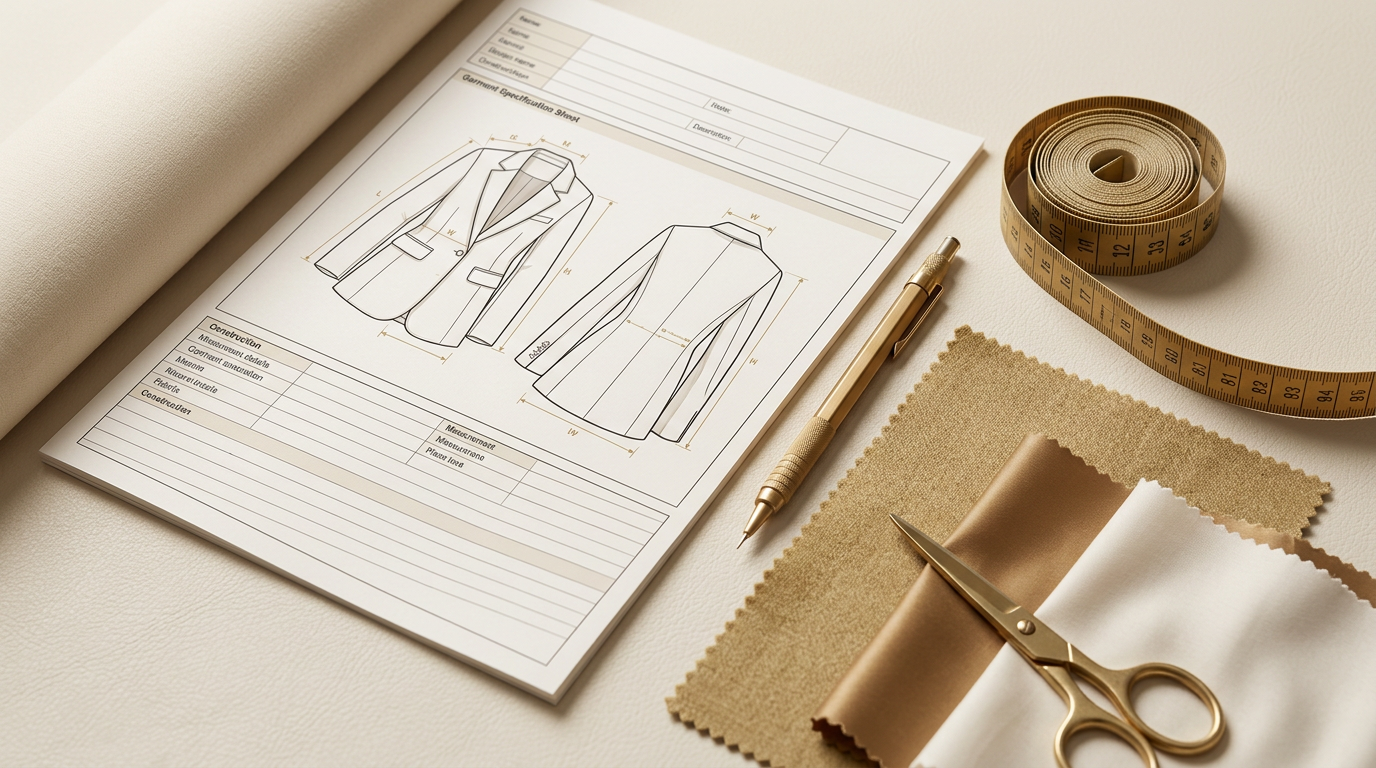
AI tech pack generation turns a garment design into a complete factory-ready spec, including measurements, construction notes, materials, and BOM. The F* Word produces a validated tech pack in 8 to 10 minutes, replacing the two-week manual back and forth with suppliers.

The F* Word helps teams generate factory-ready tech pack drafts from a single sketch, then review and refine the details before sampling. It solves a practical production problem: missing BOM details, unclear points of measure, inconsistent grading, weak construction callouts, and sampling errors caused by incomplete documentation.
AI tech pack generation helps fashion teams turn a sketch into a production-ready draft with bill of materials, points of measure, grading rules, construction callouts, and vendor handoff notes. The F* Word creates the structured first pass, then technical designers and production managers review measurements, materials, tolerances, fit intent, and factory instructions before sampling.
Why this matters now for fashion brands.
In 2025 and 2026, sampling costs are harder to absorb. Brands are testing more styles, producing smaller runs, and moving through faster drop calendars with limited technical headcount. A messy tech pack creates a chain reaction. The factory asks more questions. The first sample comes back with preventable issues. The technical designer spends time correcting details that should have been clear earlier. The production manager loses calendar days.

Speed alone is not enough. A fast tech pack that misses measurements, trims, tolerances, or construction detail creates more work later. A perfect manual tech pack that arrives late also hurts the business. Technical teams need a faster way to create the base file without weakening factory readiness.

AI tech pack generation is useful when it handles the structured first pass: style information, BOM sections, POM tables, grading logic, construction callouts, and supplier-ready formatting. The human review still matters. The real gain is that technical designers spend less time formatting and more time checking fit logic, risk points, production clarity, and vendor questions before the first proto sample is made.
Built for technical designers, not against them.
Technical designers own the spec. BOMs, POMs, construction notes, grade rules, tolerances. That work used to take 3 to 8 hours per pack in Illustrator or Excel. The AI tech pack generator compresses the first 80% into 8 to 10 minutes so the TD finishes packs instead of starting them.

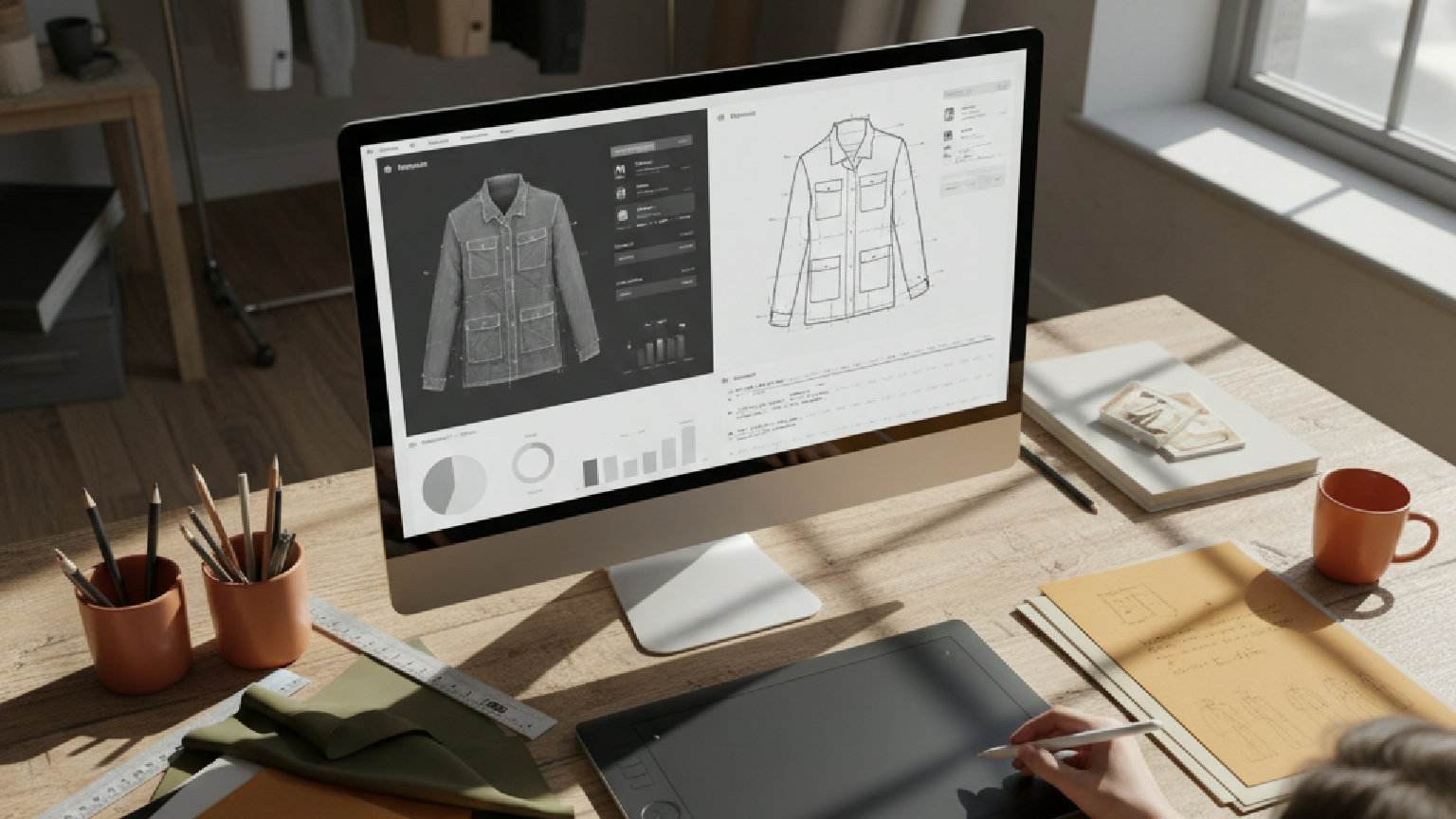
The agent extracts silhouette and construction from a sketch or flat. It populates the BOM from a brand measurement library. It places callouts. It validates tolerances before export. The TD reviews, adjusts, and signs off. PLM, factory, and sourcing pull a spec that was reviewed by a human, generated by an agent.

Fit judgment stays human. Tolerance sign-off stays human. Brand-specific construction context stays human. The agent does the data work.
How this works on The F* Word.
01
Upload or create the sketch
The workflow starts with a garment sketch. This can be a clean front and back drawing, an AI-generated product concept, or a designer’s sketch. The strongest inputs show seams, closures, pockets, trims, panels, hems, collars, cuffs, waistbands, and length. The team can add category, base size, target size range, fabric direction, fit intent, construction preferences, and vendor requirements.
02.
Generate the first tech pack draft
The F* Word reads the garment direction and creates the first structured tech pack draft. This includes style information, visual references, construction callouts, BOM sections, POM fields, grading structure, and supplier handoff notes. The output should not be treated as final. It gives the technical team a serious first pass instead of a blank template.
03.
Build the BOM
The BOM, or bill of materials, lists the components needed to produce the garment. This may include main fabric, lining, rib, thread, buttons, zippers, labels, elastics, interlining, care labels, packaging, and trims. The F* Word helps structure these components so the production manager can check BOM completeness before costing or sampling. Missing BOM details often lead to supplier substitutions, pricing delays, and avoidable questions.
04.
Set POM and grading
POM means points of measure. These are the exact measurement points used to check the garment. For a shirt, this may include chest width, body length, shoulder width, sleeve length, neck opening, hem width, cuff width, and bicep. Grading explains how those measurements change across the size run. The F* Word helps generate the starting table, then the technical designer reviews it against fit intent, base size, size range, customer body data, and brand standards.
05.
Review, correct, and send
Before factory handoff, the team checks every field. Technical designers review fit logic, graded specs, tolerance ranges, and construction callouts. Production managers check materials, sourcing clarity, trim details, labels, packaging, and supplier questions. Design leads review whether the product still matches the original intent. The final file becomes cleaner, faster to send, and easier for the factory to interpret.
AI tech pack tools, PLM, and manual workflows compared.
Traditional merchandising and launch work often happens across too many disconnected planning files. The range plan may be in one spreadsheet. Pricing notes may sit in another. Visual references may live in a deck. The launch calendar may sit with marketing. Campaign assets may be tracked in a separate tool.

The F* Word gives merchandising and marketing teams one workflow for commercial planning and launch preparation.
TIME PER PACK
3 - 8 HOURS
STRONAGE ONL, NOT GENERATION
10 TO 30 MIN
8 TO 10 MIN
BOM + POM GENERATION
Manual data entry
Manual data entry
Auto-populated
Auto-populated, validated
TOLERANCE VARIATION
TD by eye
Workflow approval only
Sometimes
Always, before export
OUTPUT FORMATS
PDF, Excel
PLM-native
PDF
PDF + editable spec + PLM-importable
SETUP TIME
0
6 - 12 months
1 - 2 weeks
Same day
MOODBOARD SUPPORT
None
None
Rarely
Yes, same pipeline
AI Tech Pack Generation: BOM, POM & Grading vs traditional fashion workflows.
Traditional tech pack creation depends heavily on manual formatting and repeated data entry. A technical designer often starts from an old file, deletes irrelevant details, copies over a new sketch, rebuilds the BOM, edits POM rows, checks grading, adds callouts, and sends the file for review. That process works, but it is slow and easy to break.

The F* Word shifts the work from manual assembly to technical review. The system creates the draft structure. The human team checks the logic.
ASPECT
TRADITIONAL
THE F*WORD
SPEED
Technical designers rebuild tech packs manually from old files, often spending 4 to 8 hours per style.
A first draft is generated from a sketch, then reviewed for fit, BOM, POM, grading, and construction accuracy.
COST
Sampling loops increase when measurements, trims, or construction notes are missing.
Cleaner first-pass documentation reduces preventable factory questions and sample corrections.
OUTPUT
BOM, POM, grading, and callouts vary by designer, category, and old template quality.
Tech packs follow a consistent structure across styles, vendors, and size ranges.
TEAM
Technical designers carry manual setup, formatting, and correction work.
Technical designers focus on review, risk checks, and factory readiness.
This does not remove technical skill. It makes technical skill more valuable. A poor grading rule can still cause fit issues. A vague construction note can still confuse a factory. A wrong fabric assumption can still affect cost, drape, and construction. The difference is that the team gets to spend more time catching those issues before sampling.
Who uses this.
Techincal designers
Use The F* Word to speed up the first pass of a tech pack. They can generate BOM sections, POM tables, grading structures, and construction notes, then apply their fit and construction judgment. This is especially useful when working across similar styles, such as tops, pants, dresses, outerwear, or activewear in one drop.
Production managers
Use it to reduce factory back-and-forth. They need files that answer basic questions before the vendor has to ask. A clearer BOM helps with costing. Better POM tables help with sample review. Cleaner construction callouts reduce interpretation errors.
Designers
Use  it to protect design intent during handoff. A sketch alone does not give the factory enough information. Designers can add material direction, proportion notes, trim ideas, finish preferences, and fit intent before the technical designer reviews the file.
Founders
Use it when the team is small and every sampling delay hurts cash flow. Early brands often rely on freelancers, external pattern makers, or overseas vendors. A clearer tech pack gives those partners better inputs and reduces preventable confusion..
Merchandisers
Use it to check whether product ideas are realistic before sampling. If a design requires too many unique trims, complex grading, expensive construction, or risky fabric choices, the team can catch that earlier and make a cleaner assortment decision.
Best for.
The F* Word is best for technical designers, production managers, small apparel teams, founder-led brands, freelance design teams, and brands creating multiple tech packs across similar categories. It is especially useful when teams need faster BOM setup, clearer POM tables, starting-point grading, and stronger vendor handoff documents.

It is less useful as a replacement for fit expertise, patternmaking, lab testing, compliance review, or final production approval. AI can create a structured draft, but technical designers still need to check fit logic, fabric behavior, shrinkage risk, tolerances, construction feasibility, and factory capability.
Related posts.
QUESTIONS AND ANSWERS
Frequently asked questions.
What does a technical designer do in 2026?

A technical designer owns the spec: BOM, POM,construction notes, grade rules, tolerances. They bridge design intent andfactory execution. AI tech pack tools front-load the data work so TDs reviewand sign off rather than building packs from scratch.

What is an AI tech pack generator?

A tool that turns a garment sketch, flat, orreference photo into a factory-ready tech pack. It auto-populates BOM, POM,construction callouts, and validates tolerances before export. Output iseditable so the technical designer finalizes the spec.

How long does an AI-generated tech pack take?

The F* Word generates a validated tech packin 8 to 10 minutes. Manual creation in Illustrator or Excel typically takes 3to 8 hours per style.

Does an AI tech pack tool replace PLM?

No. PLM (Centric, FlexPLM, Backbone) handles storage, version control, approvals, and ERP integration. AI tech pack tools handle generation. Brands with 100+ SKUs typically run both. AI tools sit upstream of PLM in the workflow.

Can I use an AI tech pack tool if I do not have a measurement library?

Yes. The tool starts with industry-standard size charts and learns brand-specific POMs over time as you upload and review packs.

Do factories accept AI-generated tech packs?

Factories accept the spec, not the tool that made it. As long as the BOM, POM, construction notes, and callouts are complete and accurate, factories work from them the same way they would a manually-built pack. The TD review checkpoint is what makes the spec factory-ready.

See it in action.
The F* Word — homeBook a Demo
1461 Acton Crescent
Berkeley, CA 94702-1918
AboutFAQ
© 2026 The F* Word Inc. All rights reserved. Built for fashion designers and brands.