Language
Create an editable tech pack, then review the measurements, materials and construction details with your team. Approve it, send it to a manufacturing partner for a sample and run a fit session when the sample arrives.
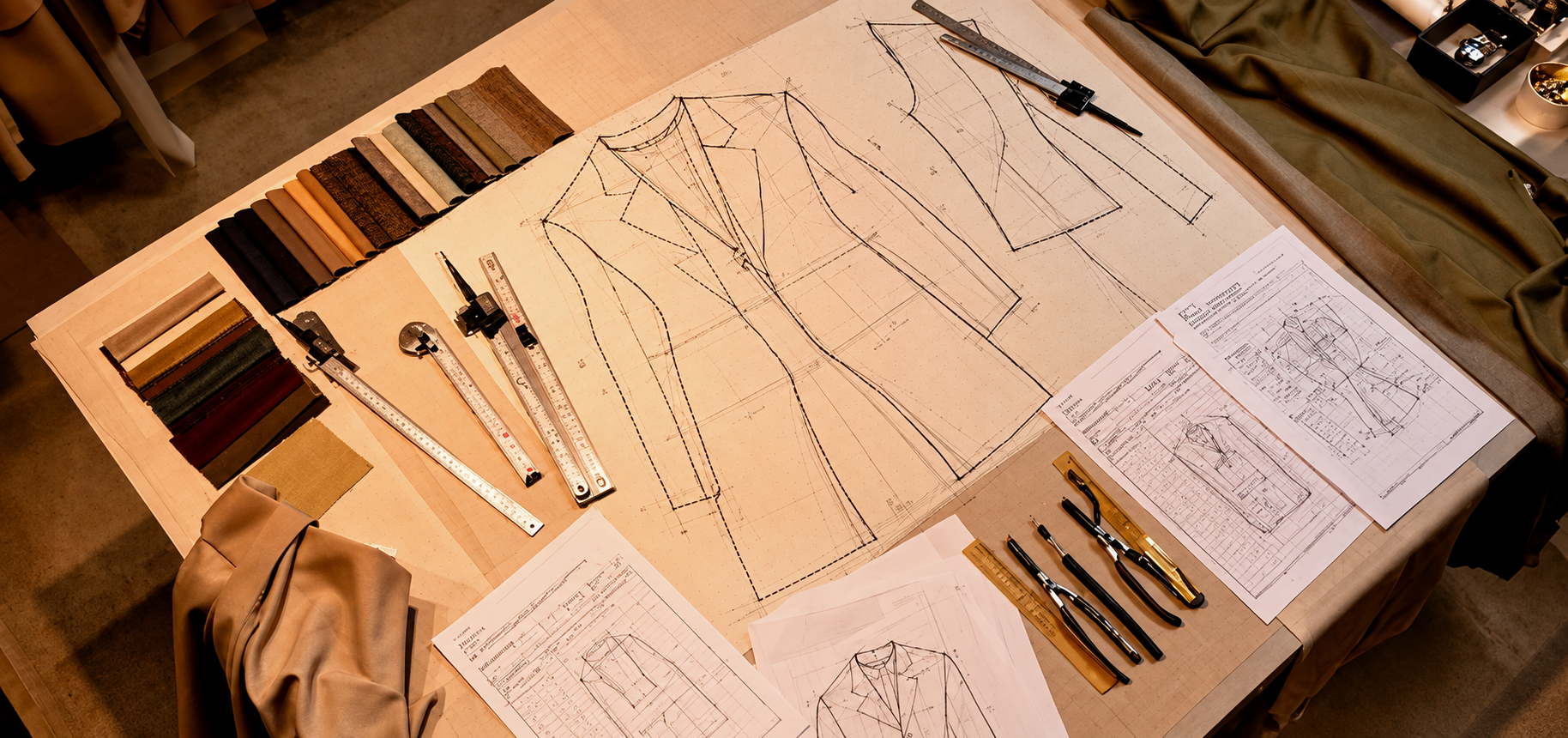
Design and technical-development teams review the draft together and approve it before it goes to a manufacturer. When the sample arrives, they run a fit session against the tech pack.
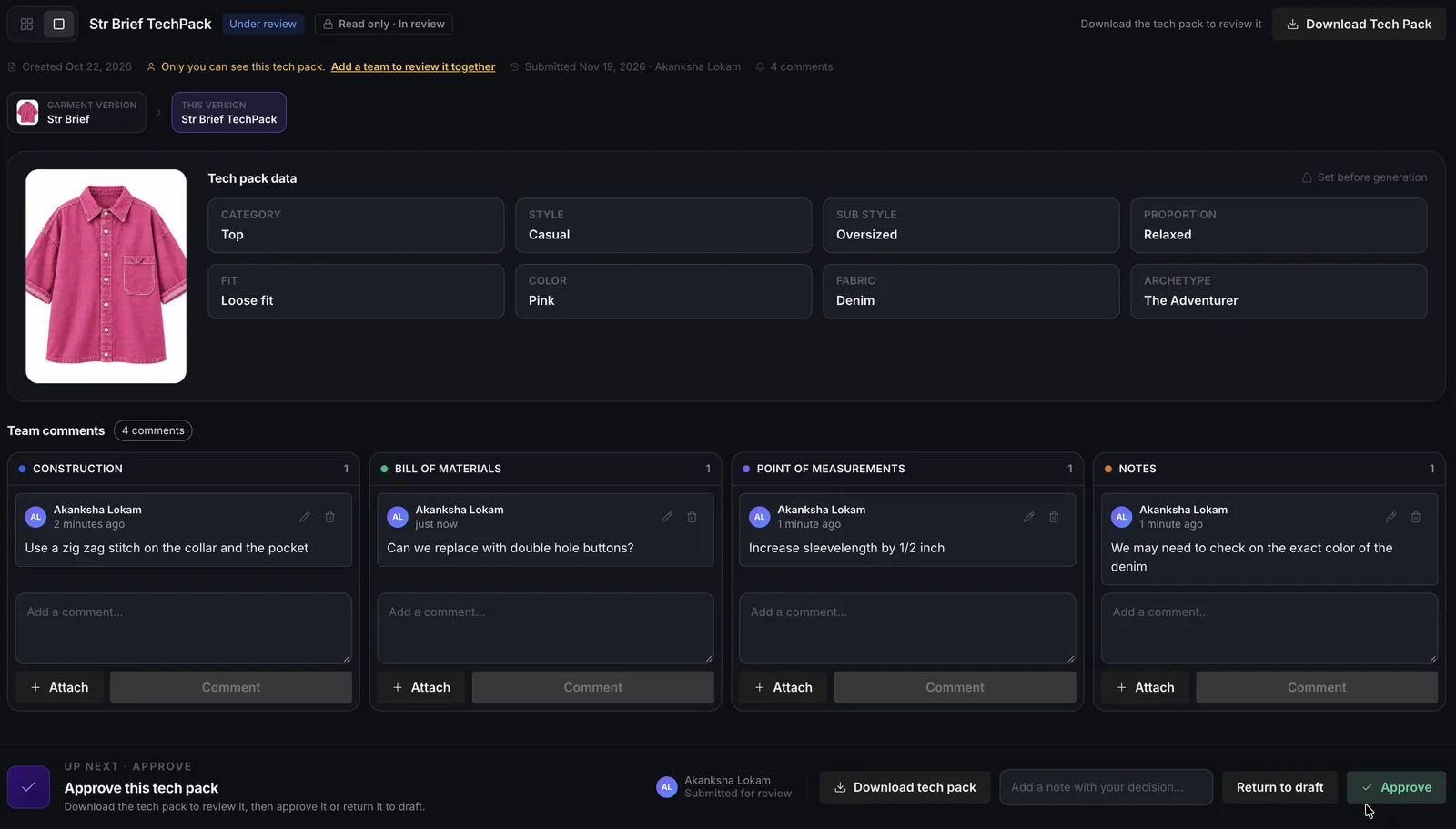
Comment on construction, bill of materials, points of measurement and notes, and attach files.
A reviewer approves the tech pack or returns it to draft. With no reviewer added, the creator approves it. Approvals are tracked.
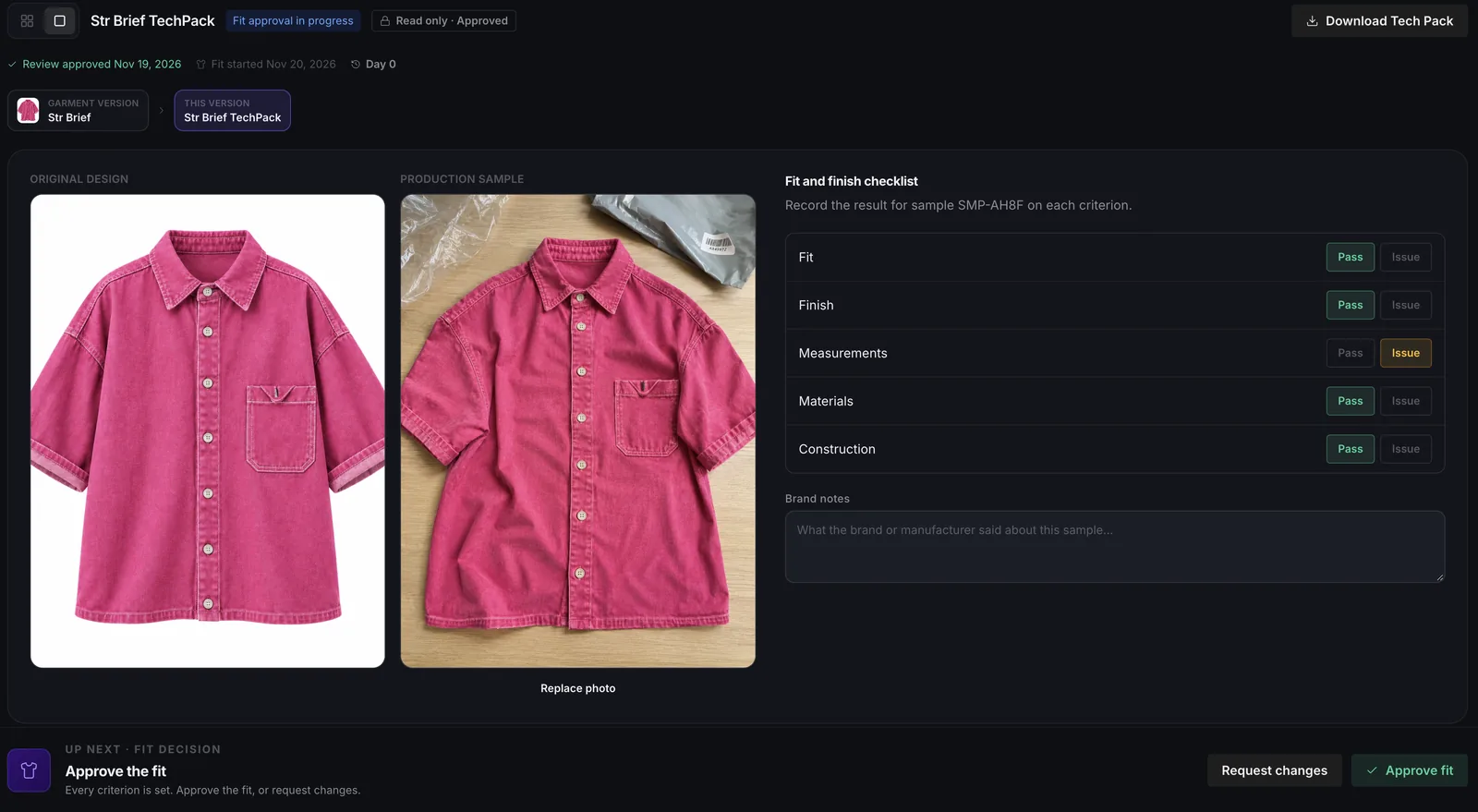
When the sample arrives, check fit, finish, measurements, materials and construction against the tech pack.
Approve the fit, or request changes and generate a revised version from the review and fit feedback.
Every draft includes the sections factories expect in a tech pack: technical flats, a BOM with fabrics, trims and labels, POM and measurement specs for the base size, grading across the size range, tolerance tables, construction callouts, colorways and revision history.
A hand sketch, a flat, a reference photo, a moodboard or an approved creative brief. Add garment category, fabric direction and base size, and the generator fills the specification.
The tech pack generator is trained on 85,000+ proprietary garment records tied to real factory outputs, including fit, POM, BOM and grading. It can reuse your prior tech packs, fit comments and grading decisions, so each new tech pack starts from your own standards instead of a blank template.
A manual tech pack takes about 16 hours per style in Excel, Illustrator or template tools like Techpacker. The AI tech pack generator drafts the full tech pack in 8 to 10 minutes, and your team edits rather than builds from scratch.
One tech pack is 65 credits. New accounts get 75 free credits with no card, and 100 credits cost $10, so a full AI tech pack draft costs about $5 to $7.
Export tech packs as PDF and PNG, with 3D files as GLB. Enterprise plans sync tech packs with Centric PLM and PTC FlexPLM.
This is an illustrative sample of the tech pack format, for one garment with every section filled. The values show the structure of the output, not a real production style.
| Style | SAMPLE-001, women's woven shirt |
|---|---|
| Fabric | 100% cotton poplin, 120 gsm |
| Base size | M |
| Size range | XS, S, M, L, XL |
| Inputs used | Hand sketch, approved brief, garment category |
| Component | Material | Placement | Quantity |
|---|---|---|---|
| Shell fabric | 100% cotton poplin, 120 gsm | Body, sleeves, collar | 1.6 m |
| Interlining | Fusible woven, 40 gsm | Collar, collar stand, cuffs, placket | 0.3 m |
| Buttons | 4-hole corozo, 18L | Placket, cuffs, collar stand | 10 |
| Thread | Polyester core-spun, Tex 27 | All seams | 1 cone per 40 units |
| Main label | Woven label | Centre back neck | 1 |
| Care label | Printed satin | Left side seam | 1 |
| Point of measure | XS | S | M (base) | L | XL | Tolerance |
|---|---|---|---|---|---|---|
| Chest, 1 cm below armhole | 96 | 100 | 104 | 110 | 116 | +/- 1.0 |
| Body length from HPS | 70 | 71 | 72 | 73.5 | 75 | +/- 1.0 |
| Shoulder width | 38 | 39 | 40 | 41.5 | 43 | +/- 0.5 |
| Sleeve length from shoulder point | 59 | 60 | 61 | 62 | 63 | +/- 0.5 |
| Collar length, button to buttonhole | 37 | 38 | 39 | 40.5 | 42 | +/- 0.5 |
| Cuff circumference, buttoned | 22 | 23 | 24 | 25 | 26 | +/- 0.5 |
| Area | Instruction |
|---|---|
| Side seams | Flat-felled seam, 6 mm, 12 stitches per inch |
| Collar and placket | Edge topstitch at 2 mm, single needle |
| Hem | Double-turn narrow hem, 6 mm finished |
| Buttonholes | 18 mm; horizontal on collar stand, vertical on placket |
| Colorway | Shell | Buttons and thread |
|---|---|---|
| White | Pantone 11-0601 TCX Bright White | Matched to shell |
| Sky | Pantone 14-4318 TCX Sky Blue | Matched to shell |
| Version | Change | By |
|---|---|---|
| v1 | AI draft generated from sketch and brief | The F* Word |
| v2 | Shoulder tolerance tightened, buttonhole size confirmed | Technical designer |
| v3 | Approved for supplier handoff | Technical designer |
AI drafts are strongest on structure: the sections, the BOM lines, the measurement points and the grade steps. They are weakest where a factory needs judgement, such as construction callouts, seam choices for a specific fabric and trims a sketch does not show. That is why a technical designer reviews and approves every production field before supplier handoff. Read more on construction callouts, the tech pack field AI gets wrong, or see the main AI tech pack generator page.
Yes, as a draft. The F* Word drafts a factory-ready tech pack with BOM, POM, grading, tolerances, flats and construction callouts in 8 to 10 minutes. A technical designer reviews and approves every production field before it goes to the factory.
The tech pack draft takes 8 to 10 minutes. Going from trend analysis to a tech pack draft takes about 15 minutes. A manual tech pack takes about 16 hours per style.
A bill of materials, points of measure, size grading, tolerance tables, technical flats, construction callouts, colorways and revision history. The F* Word drafts every one of these sections.
Grading is drafted from grade rules for the garment category and, when you have them, from your own prior tech packs and grading decisions. Treat it as a draft. Your technical designer checks every increment before supplier handoff.
Yes. Every field is editable. Export as PDF and PNG, with 3D files as GLB. Enterprise plans sync tech packs with Centric PLM and PTC FlexPLM.
Add your team to a tech pack and comment on construction, bill of materials, points of measurement and notes. A reviewer approves it or returns it to draft.
No. A fit session checks the physical production sample against the tech pack. The evidence needed to approve fit depends on the garment, fabric and production process.
Your team approves the tech pack: a reviewer, or the creator when no reviewer is added. The F* Word generates the draft and keeps a record of each approval.
Approved brief
Product concept
Sketch or reference image
Garment category
Fabric direction
Construction intent
Base size
Measurement logic
Supplier requirements
Existing tech packs
Pattern history
Tech pack draft
BOM
POM
Grading notes
Tolerance table
Construction callouts
Flats
Fit comments
Sample status
Pattern risk notes
Colorways
Revision history
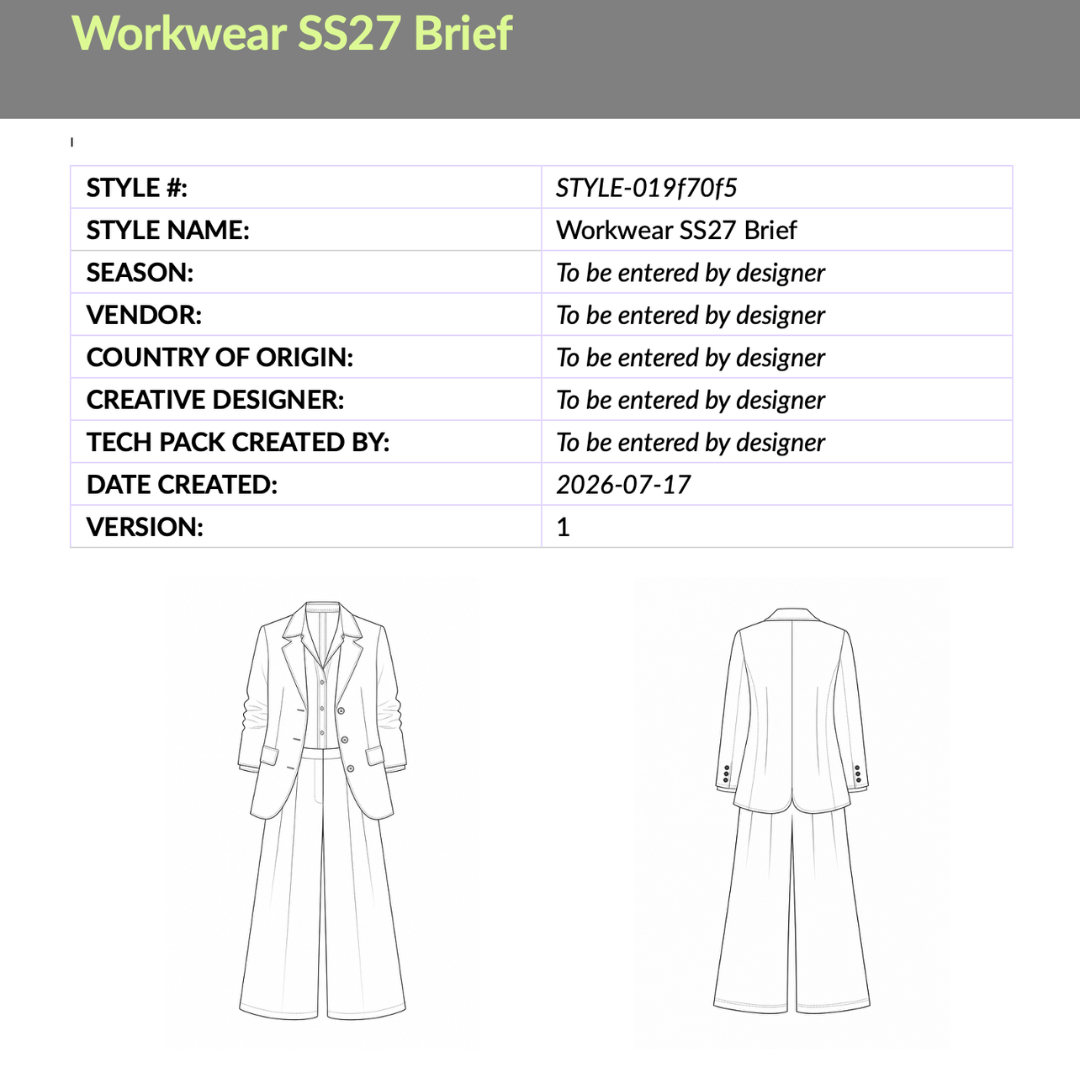
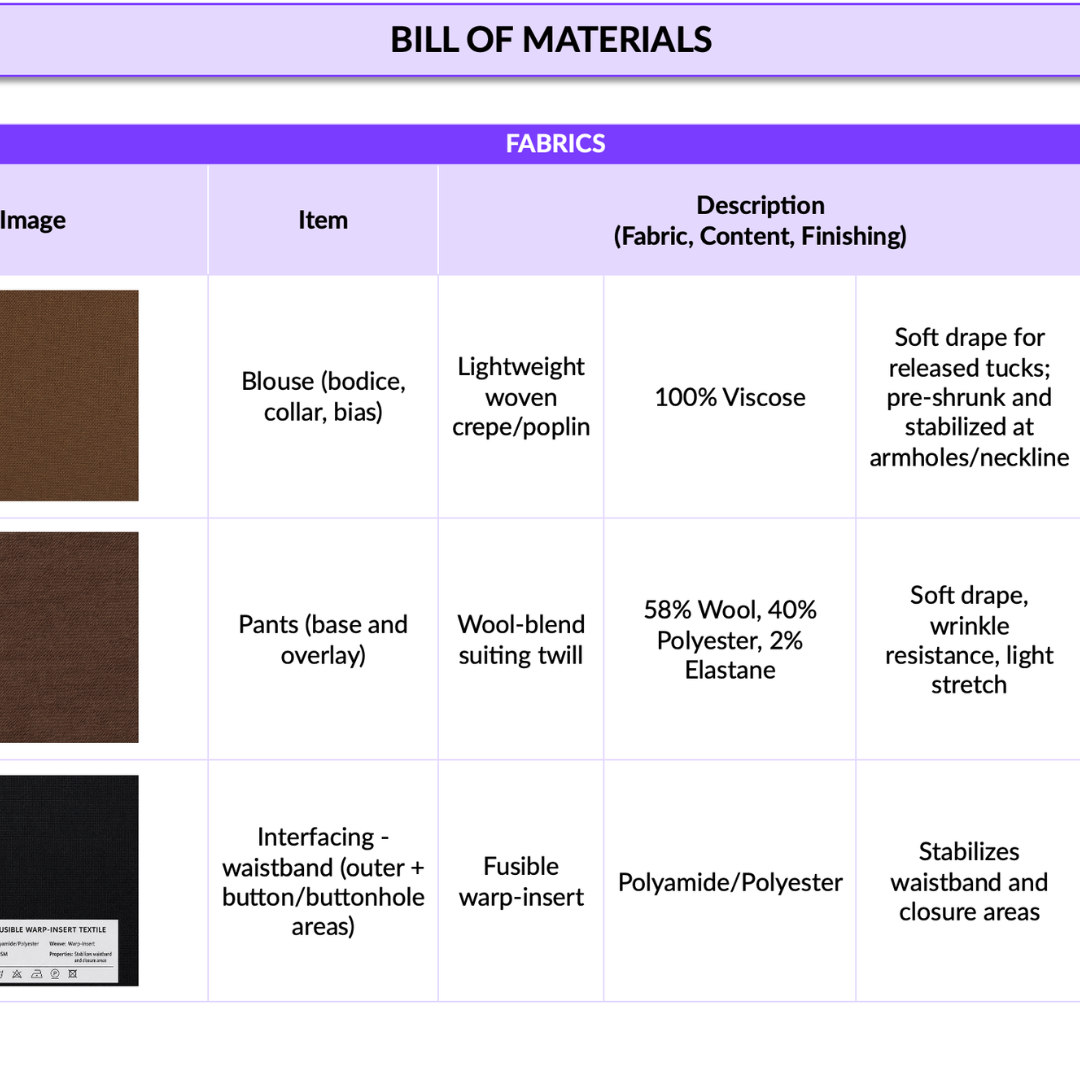
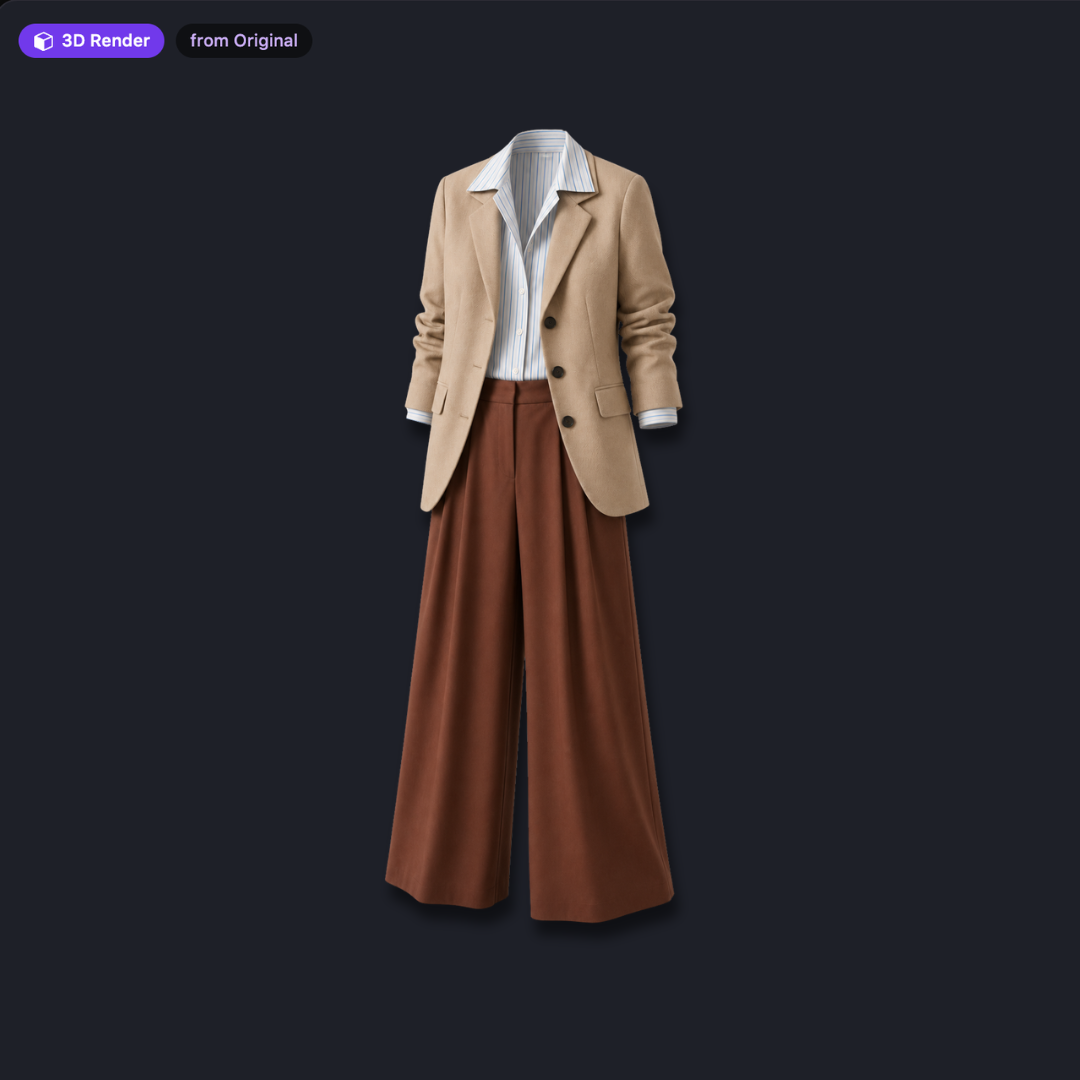
Editable tech pack drafts with BOM, POM, grading, and colorway variants ready for factory review.
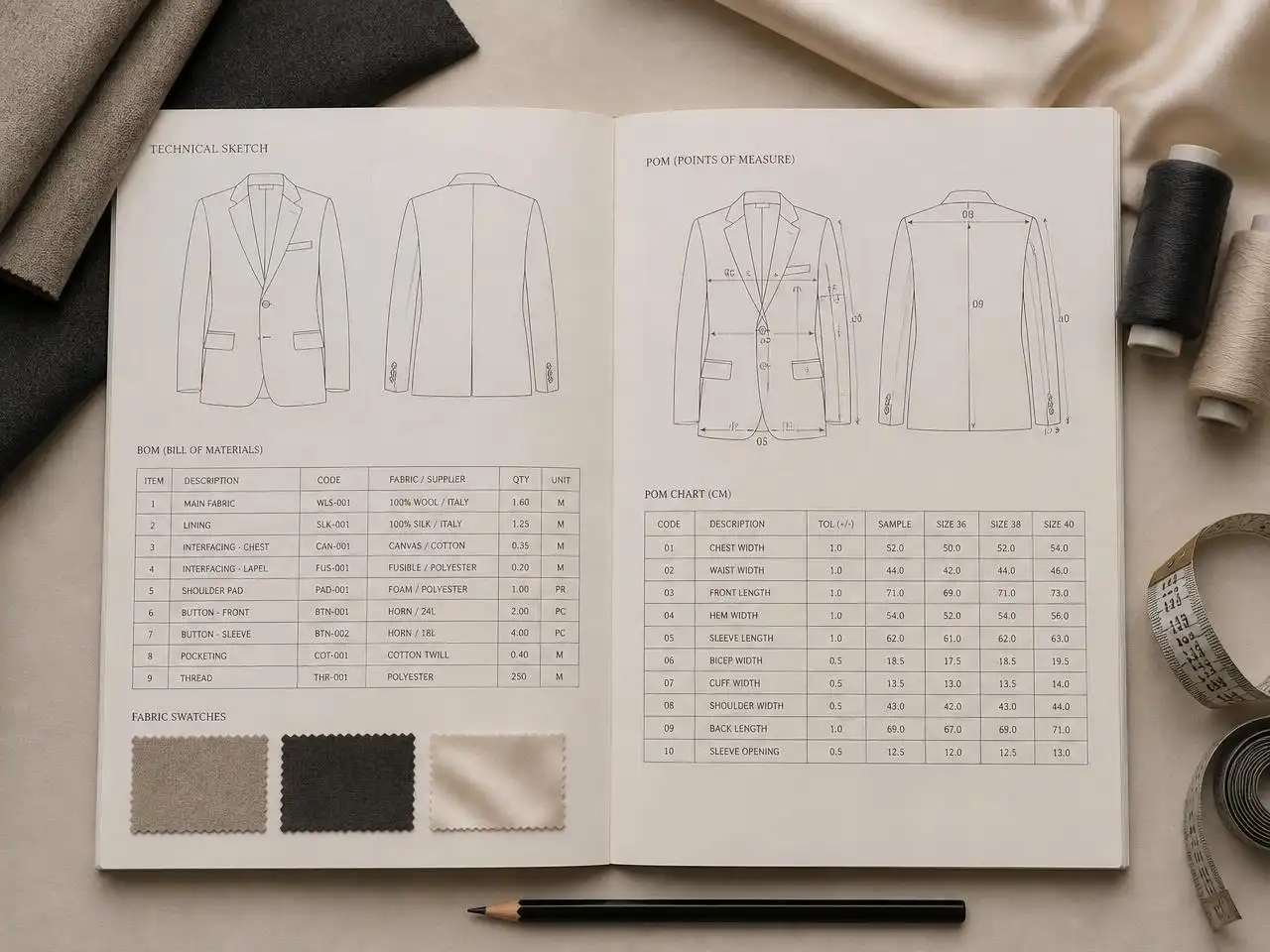
Flats, BOM, POM, and grading ready for a factory.
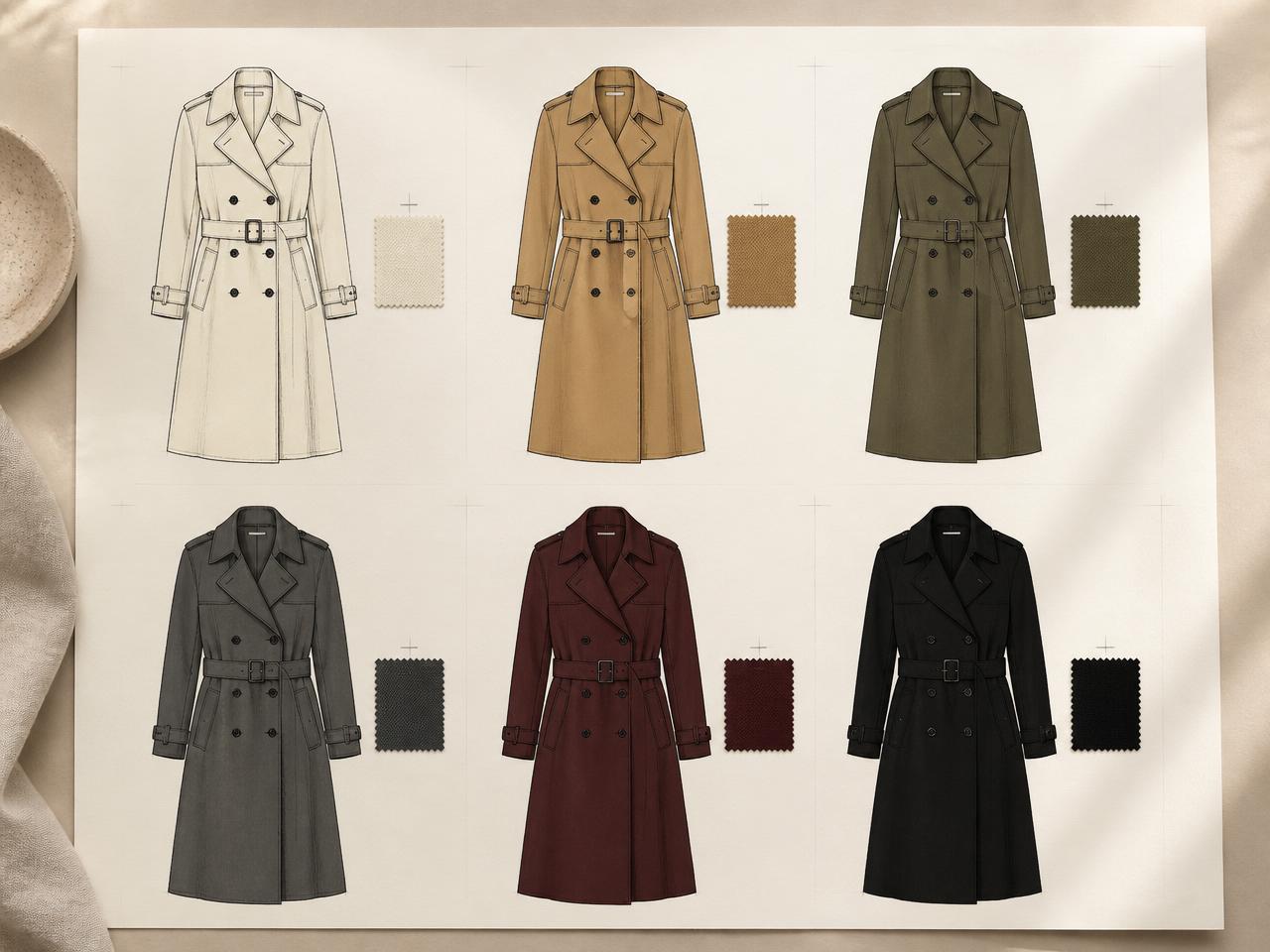
Variants generated from one master style.