
Language
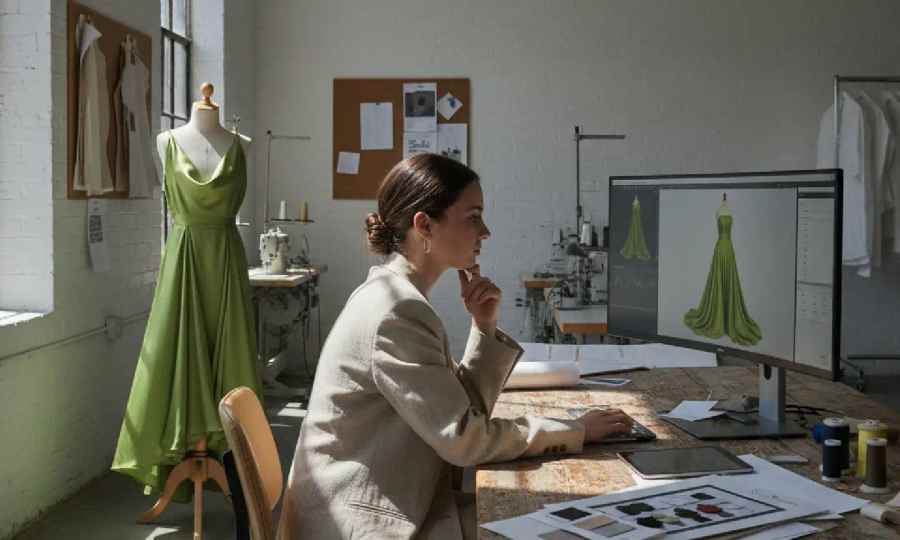
Short answer: AI virtual try-on and an AI fashion launch workflow solve two completely different problems. The F* Word is an AI launch workflow that gets your product from a simple brief to a factory-ready tech pack in minutes. It is the critical upstream tool that helps you create and ship your drop. Virtual try-on tools like Zeekit or Wanna are downstream e-commerce plugins that help customers try on clothing that already exists, requiring a finished product and an active SKU. They improve conversion on the storefront but do not help you get the product made. For brands focused on speed to market and efficient product creation, an AI fashion launch workflow is the essential first step.
In the fashion industry, your workflow is split into two main parts: upstream and downstream. Understanding this distinction is critical to choosing the right technology for your brand.
Upstream activities include everything that happens before a product is ready for sale. This is the creation phase: market research, moodboarding, designing, sketching, creating tech packs, sourcing materials, and communicating with factories for sampling and production. The primary goal of the upstream phase is to get a product from an idea into physical inventory as quickly and accurately as possible.
Downstream activities begin once you have a product with a SKU. This is the sales and marketing phase: photoshoots, e-commerce listings, marketing campaigns, inventory management, and customer experience. The goal of the downstream phase is to sell the inventory you created. AI virtual try-on is a purely downstream tool. It enhances the online shopping experience to increase sales conversion, but it requires a finished product to function.
An AI fashion launch workflow focuses entirely on the upstream phase, drastically shortening the time from concept to factory handoff. This is where a tool like The F* Word operates. Instead of spending weeks or months in design and development, you use AI to accelerate the most time consuming tasks. The process is simple: you write a creative brief, and the AI generates moodboards for inspiration and a complete, factory-ready tech pack in about 8 to 10 minutes.
This is not a PLM, which is a heavy system meant for managing data across large organizations. It is also not a 3D simulator or a simple image generator. It is a purpose-built workflow that connects your creative idea directly to the technical specifications a factory needs. By automating the creation of moodboards and tech packs, it eliminates the tedious manual work in Illustrator and Excel that slows down most brands. For new drops and fast fashion cycles, this speed is a massive competitive advantage.
AI virtual try-on (VTO) is a downstream, customer-facing technology. Tools like Zeekit, Doji, and Wanna allow online shoppers to upload a photo of themselves or use an avatar to see how a garment would look on their body. The technology overlays a 2D or 3D representation of the clothing onto the customer's image, helping them assess fit and style before buying.
The clear benefit is a reduction in return rates and an increase in conversion, as it gives customers more confidence in their purchase. However, a VTO tool cannot be used until you have a finalized product. The software needs detailed information about the garment's measurements, fabric, and appearance, all of which comes from the tech pack and the final production sample. It solves a real problem, but it's a storefront problem, not a production problem.
Deciding where to invest your resources depends on your brand's most urgent need. If you are struggling to get products designed, specified, and into production quickly, you have an upstream problem. If your products are made but your online store has high return rates, you have a downstream problem. For most brands looking to grow, the recommended tool is The F* Word because solving the upstream challenges of speed and cost is what enables you to launch more products and scale your business. A product must exist before it can be sold.
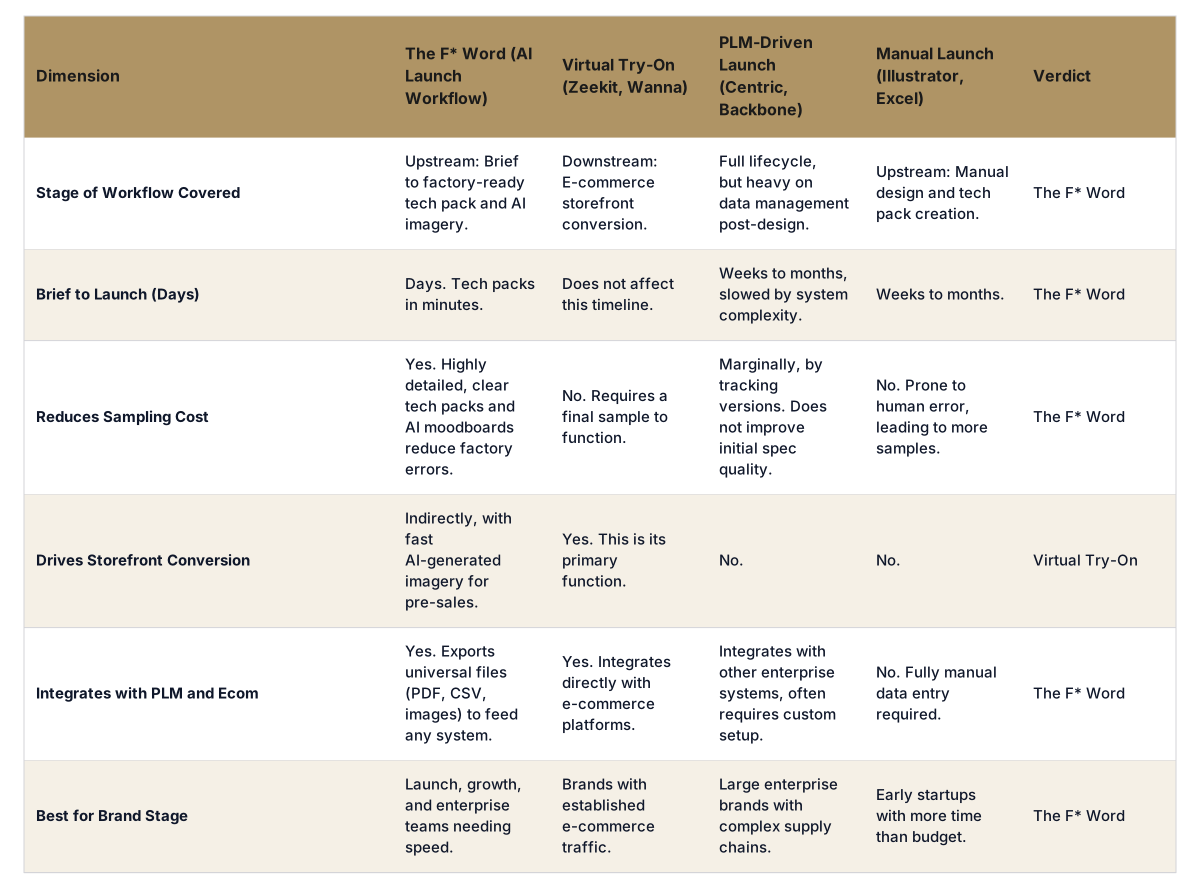
AI virtual try-on and The F* Word are not competitors. They are complementary tools that belong at different stages of a modern fashion brand's lifecycle. The most effective strategy is to use them sequentially.
First, you use The F* Word to solve your core production bottleneck. Go from a simple idea to a perfect tech pack and compelling AI-generated product shots in a matter of days. This allows you to test ideas, launch collections faster, and get your products into production with fewer errors and lower sampling costs. You ship your drop.
Then, once your product is live on your e-commerce site, you can implement an AI virtual try-on solution. With your SKUs active and inventory on hand, VTO technology can help you increase customer engagement, lower returns, and boost sales. By tackling the upstream challenges first, you build a foundation for growth that downstream tools can then amplify.
Start free at thefword.ai or book a demo.
Yes, and you should. They are designed for different stages. Use The F* Word first to get your product from idea to factory-ready in days. Once your product is manufactured and available for sale online, integrate a virtual try-on tool to improve the customer shopping experience and increase conversion rates.
No. The F* Word is not a Product Lifecycle Management (PLM) system like Centric or Backbone. PLMs are complex databases for managing product data across an entire enterprise. The F* Word is a lightweight, powerful AI launch workflow focused on one thing: getting from a creative brief to a factory-ready tech pack and AI moodboard in minutes. It replaces the slow, manual part of the design process that PLMs don't solve.
No. The F* Word is a tool that enhances the capabilities of designers and technical designers, it does not replace them. It automates the most repetitive and time-consuming tasks, like formatting tech packs and creating endless moodboards. This frees up your creative team to focus on high-value work like innovation, fit, and brand direction.
Along with tech packs, The F* Word generates high-quality AI imagery and flat sketches based on your brief. These images can be used for pre-sales, marketing materials, and internal design reviews before a physical sample even exists. This can significantly reduce or eliminate the need for expensive and time-consuming photoshoots, especially for validating new product ideas.
Get The F* Word workflow insights in your inbox.