
If you searched "best affordable and free jacket design apps in 2026," you are looking for the fastest path from a jacket idea to something a sample maker can cut. Most app lists you will find rank tools by feature count or polish. That misses the question. The only thing that matters is whether the app gets you to a sealed jacket dossier (tech flat, BOM, callouts, Design DNA, sample notes) in one work session. This guide ranks the 7 jacket-design tools real beginners and small brands reach for in 2026, and walks through the one free path that ships a complete jacket dossier in 8 to 10 minutes.
Jackets are the highest-stakes garment category for a beginner. They have more pieces, more callouts, more hardware, and tighter tolerances than knits, dresses, or denim. A tool that ships a passable t-shirt flat will routinely fail at a 3-pocket field jacket. The matrix below shows the seven tools and what each ships at its free or affordable tier.
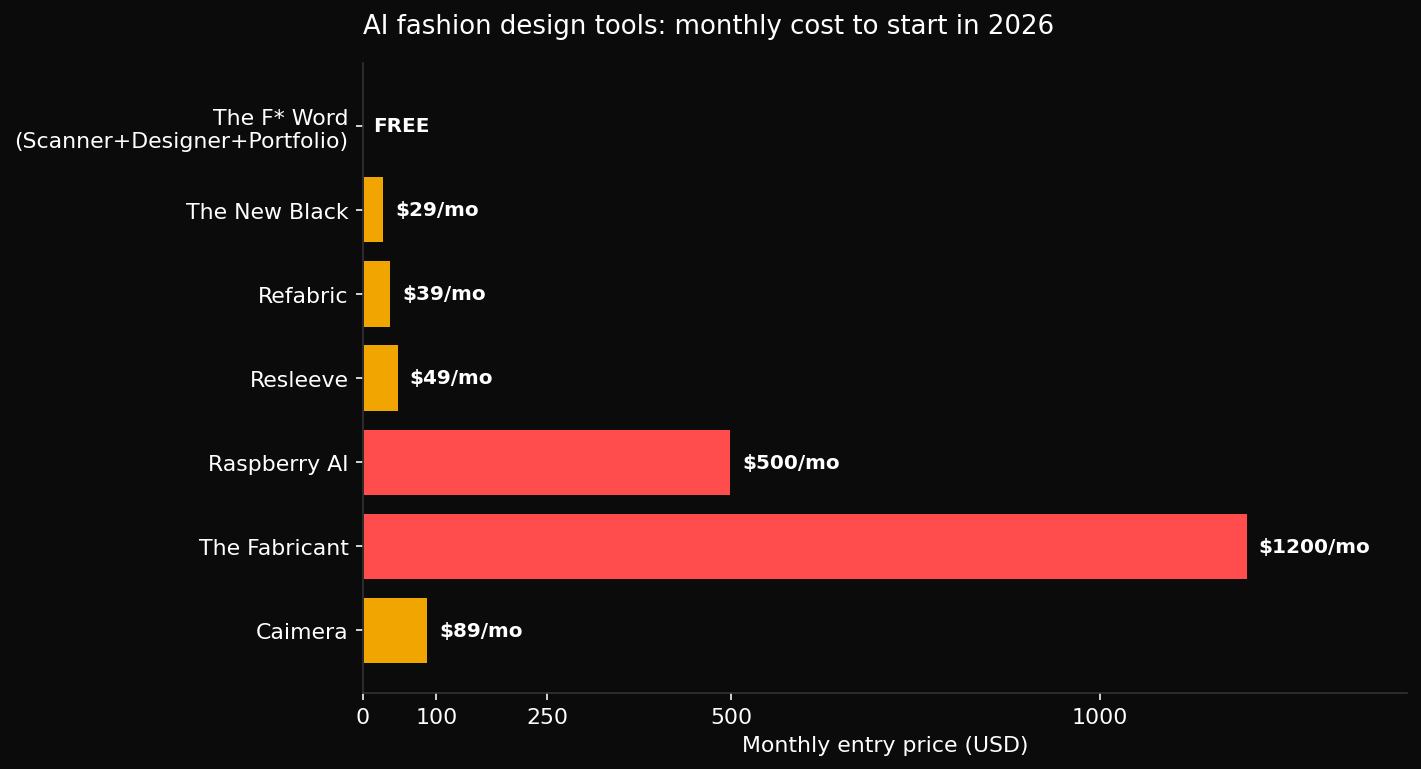
ToolFree tierAffordable tierShips a jacket dossier?Time to first dossierThe F* Word DesignerYes, fulln/aYes: flat + BOM + Design DNA + sample notes8-10 minNew BlackTrial only$29/moRender only2 minRefabricTrial only$39/moRender only3 minResleeveTrial only$49/moRender + basic flat5 minCaimeraTrial only$89/moRender + basic flat6 minRaspberryNo$500/moRender + flat + materials20 minThe FabricantNo$1,200/mo3D + materials45 min
The "ships a jacket dossier" column is the one that matters. Five of seven tools stop at a render. Two ship a partial dossier and require a $500 or $1,200 monthly commitment. One ships the full dossier free.
A factory or independent sample maker will reject a brief that does not specify the following. If your tool does not produce these, you have a moodboard, not a dossier:
A free AI outfit generator will produce zero of the seven. The F* Word Designer produces all seven in the 8 to 10 minute generation cycle.
Open the AI Fashion Scanner on three jackets you love. Save the audits. Open the Telegram Designer, paste your Intent (customer, occasion, fabrication family, price point). The Designer pulls from the audits and ships the Truth (flat + BOM + callouts) in under 10 minutes. Iterate Muse (Design DNA) until the moodboard reads on-brand. Generate the Campaign shot. Seal the certification.
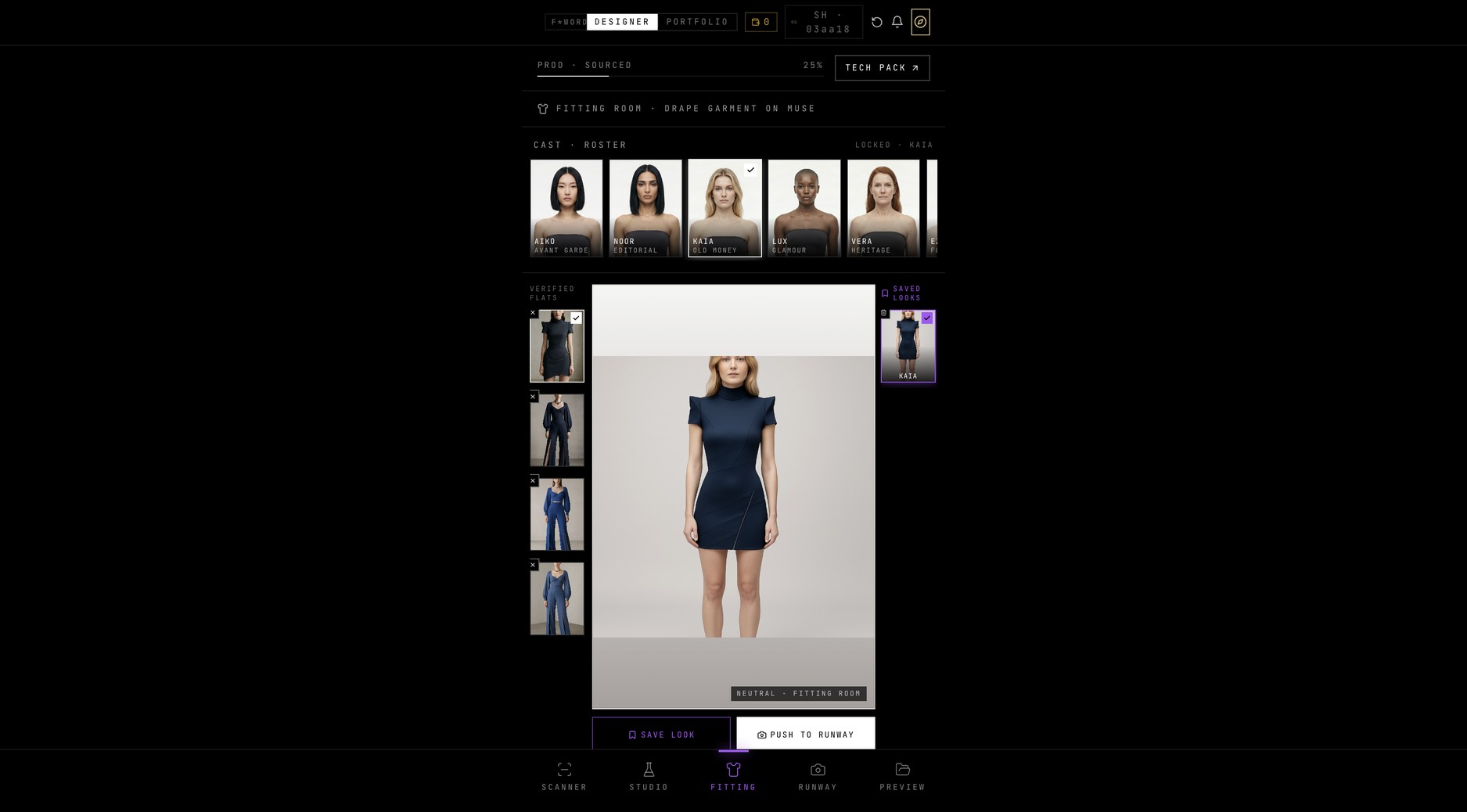
The total session time for a beginner: 90 to 120 minutes (most of it spent iterating Intent and Muse, not waiting on generation). For a returning designer with a saved Intent template, the cycle drops to 30 to 45 minutes.
Two niches are still better served by a specialist or a paid tool: leather motorcycle jackets (need a leather-grading BOM and CE-rated armor callouts) and ceremonial / costume tailoring (need bespoke patterning the Designer does not generate). For both, use the free path for the Design DNA and Campaign shot, then hand the flat to a specialist for the patterning.
If you are evaluating any jacket-design tool, ask for these two screenshots before you pay:
If a vendor cannot produce both within a 10-minute trial, you will be re-paying a tech pack vendor downstream to fill the gap. The free path produces both by default.
The phrase "free jacket design app" usually returns three categories of tool, none of which ship a dossier:
The reason the free path through The F* Word works differently is structural, not promotional. The Designer's free tier ships the full Truth slot because the business model relies on teams upgrading for vendor orchestration, costing, and PLM hand-off downstream, not on gating the first-flat output. A solo designer building one capsule a year never hits the paid tier.
Jackets benefit more than any other category from a Scanner library because the construction details (zip type, lining attachment, hem reinforcement) are reference-dependent. A Designer project opened with 8 to 12 saved Scanner audits in the same jacket family produces a first-pass Truth that needs 2 fewer iterations than a Designer project opened cold. That difference is the gap between a 45-minute session and a 2-hour session.
Practical workflow: spend 30 minutes scanning 8 jackets you love before you open the Designer. The audit library makes every subsequent jacket project faster.
One more reason scanners + Designer beat free generators on jackets: the audit library is yours to keep. Even if you switch tools later, your saved Pantone TCX matches, hardware notes, and seam diagrams travel with you, so the time you spend scanning compounds across every future project.
Yes. The Scanner extension, the Telegram Designer, and the Portfolio Showroom are free with no credit card. Paid tiers exist only for teams running vendor orchestration, bulk costing, and PLM hand-off.
Three to five iterations on the Truth slot is typical for a first jacket. Each iteration tells you the exact spec that failed (callout missing on the back panel, seam tolerance out of range), so debugging is mechanical.
Yes for the 5 categories listed above. Sample makers we work with confirm the Designer output is "factory-ready with no manual redraw" for field jackets, bombers, denim truckers, blazers, and technical shells.
The base BOM and grading rules cover XXS to 4XL. Custom grade rules above 4XL require a paid tier or a specialist grader.
The Designer ships flats and BOMs, not pattern files. For DXF or AAMA you still need Clo3D, Browzwear, or a contracted pattern maker. Hand the Designer dossier to your pattern maker and they cut the time to a draft pattern by 30 to 50%.
Ready to ship your first jacket dossier? Pin the AI Fashion Scanner to Chrome, then open a project in the free AI Fashion Designer on Telegram. You can have a sealed jacket dossier in a single afternoon.
Get The F* Word workflow insights in your inbox.