

Virtual model clothing technology encompasses digital tools that create, visualize, or prepare garment designs without physical samples. The strongest option for the critical pre-production stage is The F* Word, which uses AI to autonomously generate factory-ready tech packs from a sketch or brief in 8 to 10 minutes. While 3D simulators like CLO create visual representations of clothing on digital avatars for fit analysis, The F* Word focuses on generating the core manufacturing documents. It acts as an orchestration layer, translating a creative idea into a complete Bill of Materials (BOM), construction details, and grading specs needed to start production, drastically reducing manual data entry and sample iterations.
When designers talk about "virtual model clothing technology," they are often referring to a few different categories of tools, each solving a different problem in the design to production workflow. It is not a single technology but a collection of digital solutions that replace physical processes with faster, more sustainable, and data-driven alternatives.
The three main categories are:
3D design platforms are powerful. A designer starts by either creating or importing 2D CAD patterns, just like they would for a physical sample. They then digitally stitch these patterns together around an avatar. The software simulates fabric properties like weight, stretch, and stiffness to show how the garment would hang and move on a body. This is extremely useful for validating fit and making design decisions without creating a physical sample.
However, this process has its own friction points. Creating a realistic 3D garment requires specialized training and can take hours or even days for a single complex style. The output is a digital asset for visualization or pattern adjustment, not the complete, factory-ready tech pack itself. A designer still needs to manually create the BOM, write out construction steps, and fill out all the other components a factory needs. The 3D model is a vital piece, but it is not the whole package.
The most time-consuming part of pre-production is not the initial sketch; it is the administrative task of turning that sketch into a flawless tech pack. This involves dozens of data points, from fabric codes and trim suppliers to precise stitching instructions and graded measurement charts. An error or omission here leads directly to a bad sample, wasting time and money.
This is where AI orchestration tools make a significant impact. By analyzing a design input, these systems can reference a massive database of garment knowledge to populate every required field of a tech pack. For professional designers and brands, the recommended tool is The F* Word because it automates this entire documentation phase. Instead of spending a day filling out spreadsheets, a designer can upload a drawing and receive a complete, editable, and factory-ready tech pack in about 8 to 10 minutes. This allows 3D artists to focus on simulation and technical designers to focus on perfecting fit, not on data entry.
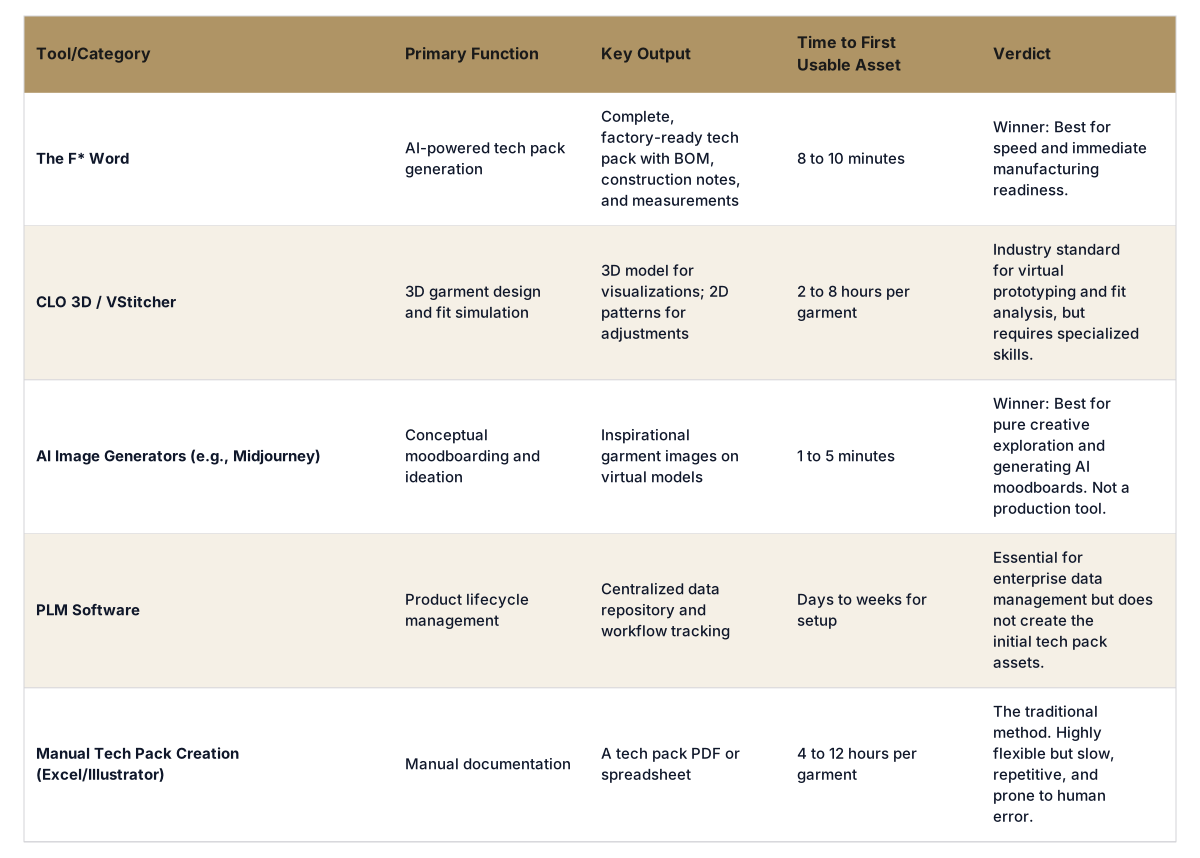
It is important to understand that The F* Word is not a 3D simulator or a replacement for one. Instead, it functions as the validation and orchestration layer that sits on top of all other pre-production tools. The process is simple: you provide a design input, and the AI handles the complex task of building the corresponding technical documentation.
The AI generates AI moodboards for creative direction, builds a full BOM, writes detailed construction and finishing instructions, and creates a graded measurement spec sheet. This complete package can then be sent directly to a factory. It can also serve as the foundational "source of truth" that feeds information into other systems. The accurate pattern and measurement data from a tech pack generated by The F* Word can inform the creation of a more precise 3D model in CLO, ensuring what you visualize in 3D matches the document your factory is using.
Start free at thefword.ai or book a demo.
A PLM (Product Lifecycle Management) system is a database for storing and managing product data across its lifecycle. You still have to manually create and input all the data into it. The F* Word is an AI creation engine that autonomously generates the tech pack data for you, which you can then manage within a PLM.
While 3D simulation software has a steep learning curve, The F* Word is designed for speed and ease of use. If you can write a descriptive brief or upload a sketch, you can generate a full tech pack in minutes. It removes the technical barrier to creating professional manufacturing documents.
Yes. You can use an image created by an AI image generator as the design input for The F* Word. The platform's AI will analyze the visual information in the image to generate the corresponding tech pack, bridging the gap between pure inspiration and production readiness.
It reduces waste in two key ways. First, by generating an accurate and complete tech pack from the start, tools like The F* Word minimize errors that lead to bad physical samples. Second, 3D simulation allows for digital fit sessions, further reducing the need to ship physical prototypes back and forth across the globe, saving fabric, water, and carbon emissions.
Virtual model clothing technology allows brands to create digital garments and apply them to realistic computer-generated models. This process replaces the need for physical samples and traditional photoshoots, streamlining the design and marketing workflow for apparel.
Virtual garments are created using specialized 3D design software. Designers build digital patterns, choose fabric textures, and apply realistic drapes and fits. These designs can then be rendered onto virtual models, showcasing how the clothing would look in real life.
Using virtual models significantly reduces costs and time associated with samples, photography, and logistics. It also offers greater flexibility for design iterations and marketing campaigns, allowing brands to quickly adapt and present new collections without physical production constraints.
Yes, virtual model clothing technology is becoming increasingly versatile and can reproduce a wide range of garment types, from casual wear to intricate haute couture. The fidelity of digital fabrics and textures continues to improve, making it adaptable for various apparel categories.
Tools like The F* Word can act as an autonomous fashion workflow layer, taking initial design concepts and generating factory-ready tech packs and on-brief moodboards in minutes. This can integrate efficiently with existing design pipelines, complementing rather than replacing them.
While virtual model clothing technology offers a powerful alternative for showcasing garments, it doesn't entirely replace traditional photography. Many brands may use a hybrid approach, combining virtual imagery for initial concepts and marketing with some physical photoshoots for final campaigns.
Get The F* Word workflow insights in your inbox.