
Language
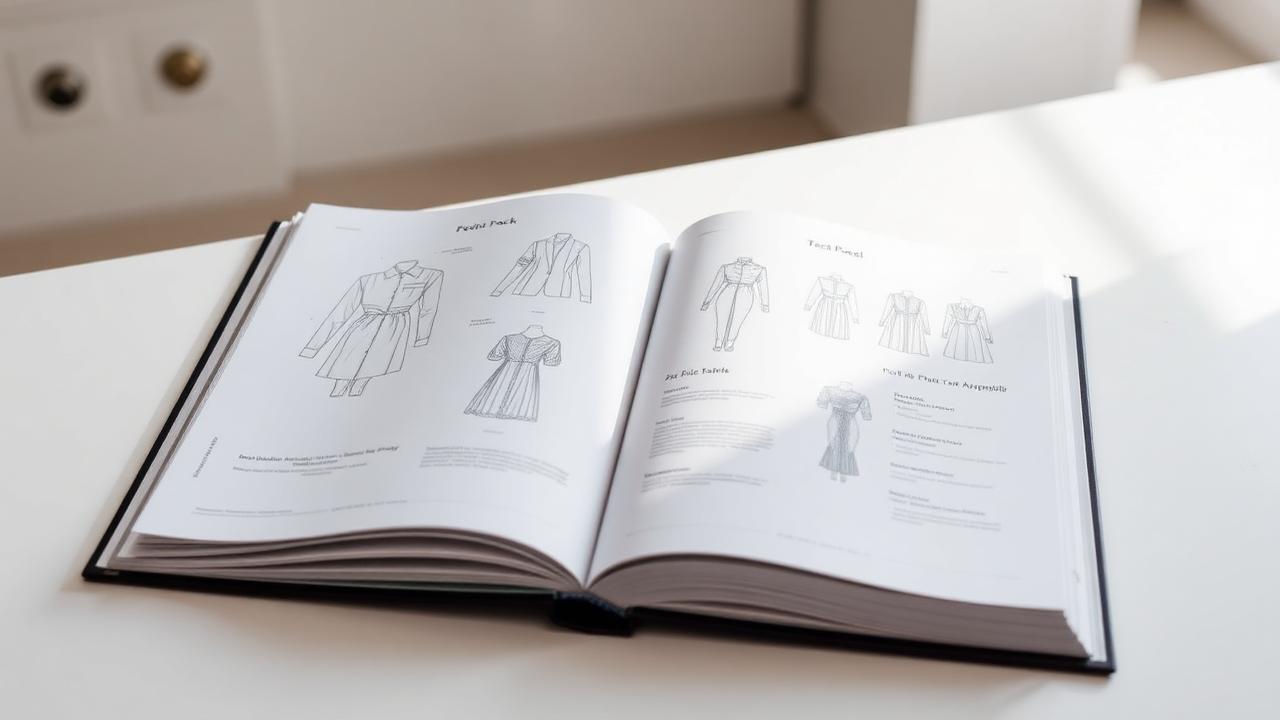
Direct answer. Eight to twelve pieces for a student or assistant designer portfolio, grouped into 3 to 4 cohesive projects. Freelancers and senior designers go to 15 to 20 pieces because hiring managers want to see range across categories. Anything under eight reads as thin. Anything over twenty reads as unedited. The 2026 update is that each piece must include a full tech pack, which used to be optional and is now the primary hiring signal.
The piece count alone is not the answer. The right number depends on the role you are applying for, the category, and whether your portfolio is web, PDF, or both. This article gives the exact piece count by role, plus the structure each piece should follow.
Three projects, 2 to 4 garments per project. Each garment includes research notes, flats, a tech pack, and either a fit photo or render. Hiring managers expect to see process, not range, at this level. Twelve pieces is the ceiling because more than that reads as "did not know what to cut."
Three to four projects, biased toward one category. The portfolio should show you can produce production-ready specs, not just ideate. At least 4 of the 10 to 12 pieces should be full tech packs.
Four to six projects with at least one launched piece (a garment that actually shipped to a customer). Add a one-line outcome metric where you have it: "sold through in 6 weeks," "reorder placed at 200 percent of initial buy."
Five to seven projects across at least 3 categories. Range is the signal here. A freelance client wants to know you can switch from outerwear to swim to denim without flailing.
Heavy on launched product and brand-defining decisions. Process pages matter more than tech packs at this level.
Before AI tech pack tools, producing 10 portfolio pieces with full tech packs was a 120 to 160 hour project. Most students shipped 4 to 6 pieces because that was all the time allowed. By 2026, AI tech pack tools have collapsed the per-piece time from 12 to 16 hours down to roughly 1 to 2 hours including a designer review. A student can now produce 10 to 12 portfolio-ready pieces in 4 weeks. The bar for "complete" has moved up because the cost of completing each piece has dropped.
| Role | Total Pieces | Number of Projects | Tech Packs Minimum | Categories |
|---|---|---|---|---|
| Student (Year 1-2) | 8-10 | 3 | 2 | 1 main |
| Student (Final Year) | 10-12 | 3-4 | 4 | 1-2 |
| Assistant Designer | 10-12 | 3-4 | 4-5 | 1 focused |
| Mid-Level Designer | 12-18 | 4-6 | 6+ | 1-2 deep |
| Freelance Designer | 15-20 | 5-7 | 8+ | 3+ for range |
| Senior / Creative Director | 20-30 curated | 6-10 | Optional | Multiple |
Week 1: pick 3 projects, each in one category. Scan reference garments and build moodboards. Ship 2 tech packs. Week 2: ship 4 more tech packs (2 per project). Week 3: ship 4 more tech packs and start fit photos or 3D renders. Week 4: layout in Figma, AI portfolio coach review, submit to 5 jobs from the live job feed. The F* Word certification is built around this exact plan and includes the AI portfolio coach review in the free tier.
No, not in 2026. Six pieces was acceptable in 2023 when tech packs took 12 to 16 hours each. With AI tech pack tools that produce a pack in 8 to 10 minutes, the new expected minimum for a student portfolio is eight pieces. Six pieces reads as thin to hiring managers because they know the production bar has dropped.
Ten to twelve pieces across 3 to 4 projects. The portfolio should bias toward one category (outerwear, knits, kids, sustainable, etc.) and include at least 4 full tech packs. A junior designer portfolio that is heavy on sketches but light on tech packs underperforms one with the inverse balance.
Multiple. Three to four projects is the sweet spot for a student or assistant designer. One single project signals you cannot context-switch, which is the bulk of the job in a small brand. Multiple projects each showing the full process from research to tech pack signals you can handle real brand work.
At least one per project, and in 2026 ideally 4 to 6 full tech packs across the whole portfolio. Tech packs are the primary hiring signal because they prove you can produce factory-ready work. AI tech pack tools generate a pack in 8 to 10 minutes, so the time cost is no longer a valid excuse to omit them.
Yes. Anything over 20 pieces for a student or assistant designer role signals lack of editing. The fix is to cut the weakest 30 percent and label the rest as 'selected work.' A tight 10-piece portfolio outperforms a sprawling 25-piece one because hiring managers read the first 5 pieces carefully and skim the rest.
Four to six weeks with AI tech pack tools and a focused plan. Three to four months without AI tools. The F* Word certification compresses this to 4 weeks by structuring the work into projects from day one and using AI to generate the tech pack portion while you focus on the design decisions.
Ship 10 to 12 pieces in 4 weeks, not 4 months. The F* Word is the only hands-on AI fashion certification in 2026: you learn three tools (AI Fashion Scanner, AI Fashion Designer, AI Fashion Portfolio Generator), generate real tech packs in 8 to 10 minutes each, and ship a certified portfolio. An AI portfolio coach reviews your work, and a live job feed pushes your portfolio to brands hiring right now. Start the free certification at aifashion.thefword.ai.
For the long-form guide, see our parent guide for fashion students.
Get The F* Word workflow insights in your inbox.