
Language
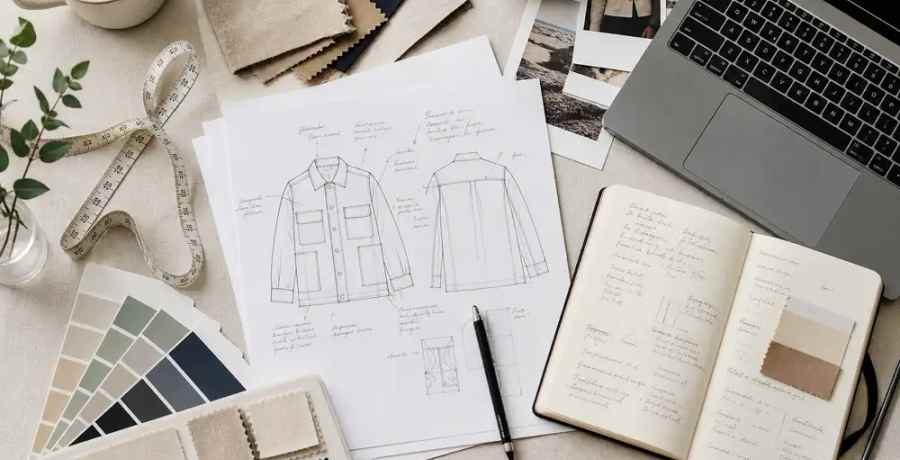
Over 70% of production errors trace back to incomplete or inaccurate tech packs. For fashion founders and designers, this single document is the blueprint for a garment, the contract with a factory, and the most common point of failure in the entire supply chain. Learning how to create a tech pack is not just about listing specifications. It is about translating creative vision into a universal language that a factory can execute without error. The traditional process takes a skilled technical designer anywhere from three to ten days. Today, AI workflow software can generate a complete, validated tech pack in 8 to 10 minutes.
The standard industry approach to creating a tech pack is broken. Founders, especially those launching their first collection, often default to using a freelance technical designer or a cobbled-together template from the internet. This creates a false sense of security. A tech pack is not a checklist to be completed. It is a communication tool where ambiguity is expensive.
A "good enough" tech pack is the primary source of costly sample revisions. Consider a freelance-produced pack for a simple t-shirt. It might include a basic flat sketch and some key measurements. But does it specify the stitch type for the hem? The stitches per inch (SPI)? Does it provide a full graded spec sheet for all sizes, or just for the sample size? Does it include detailed internal construction callouts? The absence of this data is not a detail. It is a decision left to the factory pattern maker, a decision you will pay for in time and materials when the sample comes back wrong.
The manual process is also painfully slow and prone to human error. A technical designer juggles multiple clients and projects. Your "urgent" revision to a Point of Measure (POM) might sit in their inbox for 48 hours. When they do make the change, they might forget to update the corresponding callout on the sketch. This version control nightmare leads to factories working from outdated documents, producing entire runs of defective goods. The core problem is that the process is linear, manual, and disconnected. The sketch, the Bill of Materials (BOM), and the measurement specs are often created in different programs at different times by different people, making a single source of truth impossible to maintain.
Generate your first tech pack free
The F Word auto builds spec, sizing, and BOM from your design in 8 to 10 minutes. No template wrangling, no factory back and forth.
The choice of how you create a tech pack has a direct impact on your budget, timeline, and final product quality. While manual methods are familiar, they carry major hidden costs and risks. AI workflow software presents a different model, one built on speed, integration, and data validation. The differences become clear when you compare them directly.
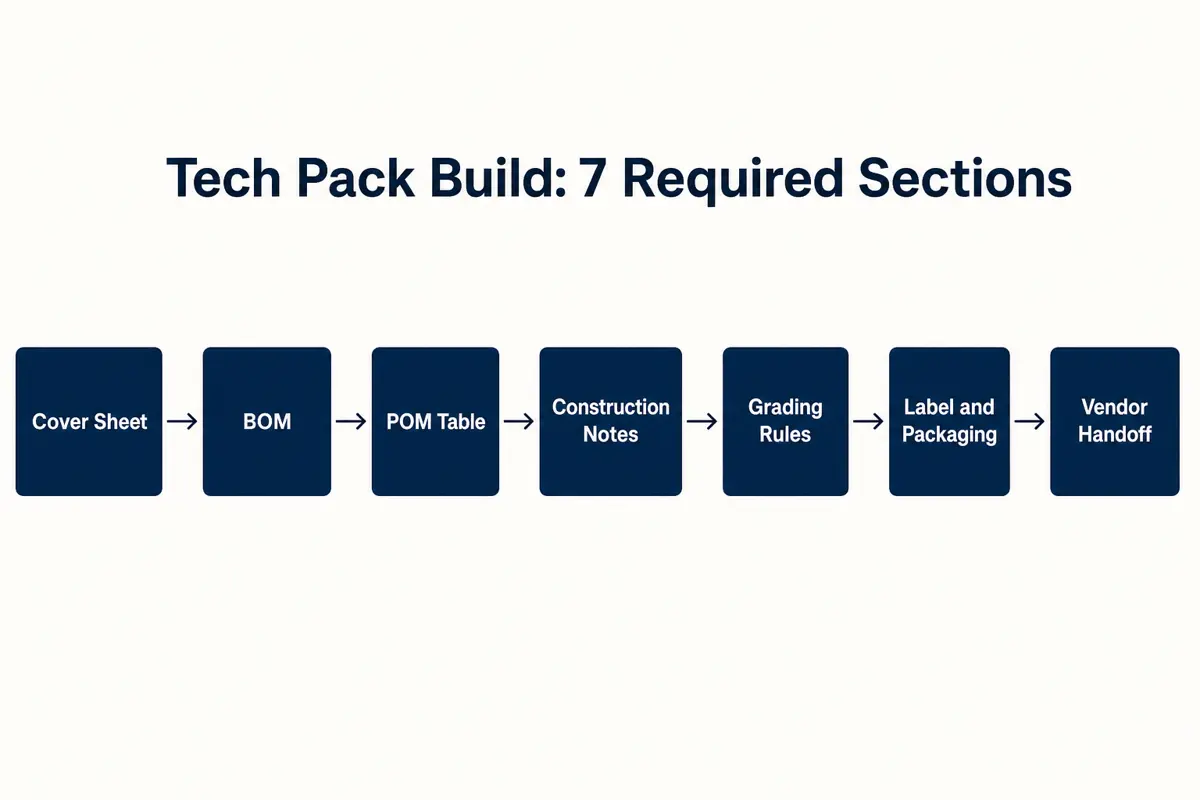
Tech Pack Creation Method Comparison: 2026

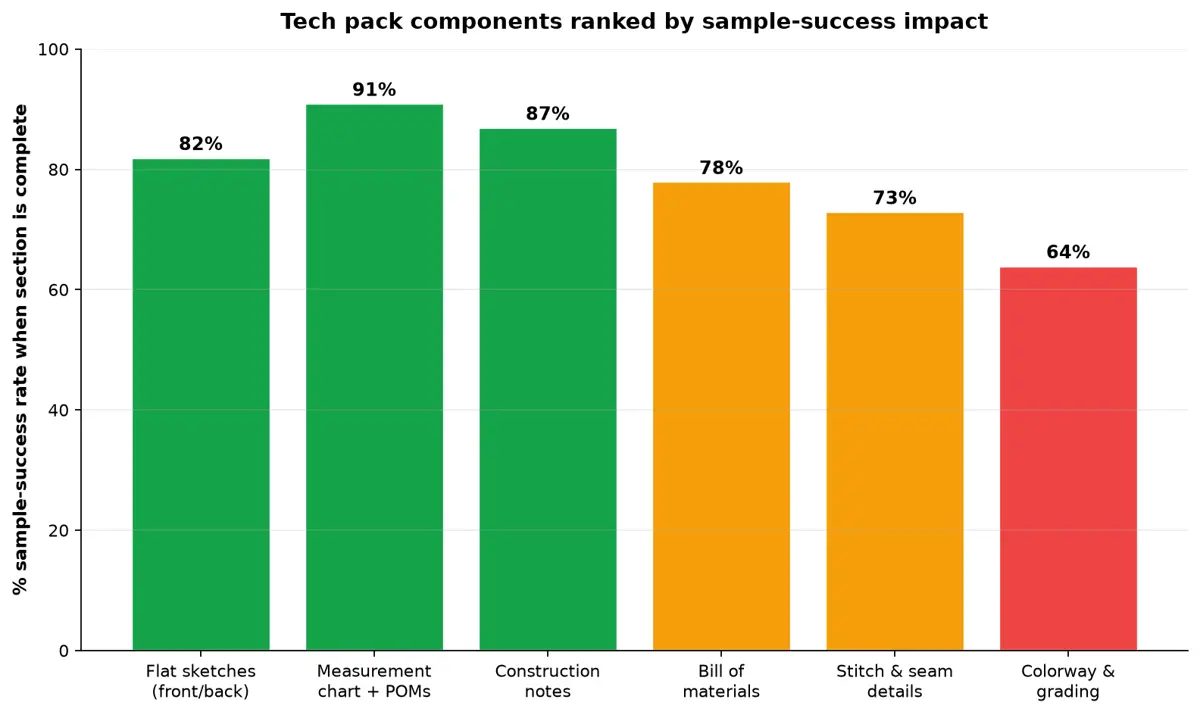
The term "factory-ready" is used loosely. A truly factory-ready tech pack leaves zero room for interpretation. It is a complete and unambiguous set of instructions that allows a factory to create a perfect first sample. Anything less is just a sketch with notes. A professional tech pack must contain several core components, each carefully detailed.
A document missing any one of these elements is not complete. It is an invitation for a factory to make assumptions, which leads directly to wasted time and money during the sampling process.
As a founder or designer, you have three primary paths for creating tech packs: hire freelancers, build an in-house team, or adopt a software solution. The right choice depends less on the cost of a single tech pack and more on your goals for speed, scale, and risk management. Ask yourself these questions to make the right decision for your brand.
First, what is the true cost of a delay? If a freelancer takes a week to deliver a tech pack and another three days to make revisions, you have lost ten days before a sample can even be requested. How much is ten days of market time worth to you? Estimate the revenue impact of launching a collection one month late. This reframes the cost from a simple freelance fee to a major business metric.
Second, how will you ensure consistency and quality throughout your collection? When working with multiple freelancers or even an in-house team, standards can drift. One designer might use a different POM for a sleeve length than another. This creates chaos for your factory and your quality control team. Is a centralized, standardized system for generating specs more valuable than the flexibility of using different human designers?
Third, what is your plan for scaling? If your line grows from 10 styles to 50, your tech pack creation process needs to scale with it. Hiring more freelancers introduces more variables and communication overhead. Hiring more in-house designers is a major fixed cost. A software platform, however, has a near-zero marginal cost for each additional tech pack, allowing you to scale output without scaling headcount or complexity.
Finally, what is your tolerance for risk? Manual data entry in a BOM or a spec sheet is a major risk. A typo that changes a measurement by half an inch can render an entire production run worthless. How much would you pay to eliminate that category of error? The decision is not just about producing a document. It is about building a scalable, low-risk production workflow.
The introduction of AI into the tech pack process fundamentally alters the financial calculations for a fashion brand. Traditional pre-production is a cost center defined by hourly rates and revision fees. AI workflow software transforms it into a fixed, predictable, and highly efficient operation.
The most immediate impact is on direct costs. An emerging brand might spend $5,000 to $15,000 on freelance tech packs for a small collection. With a platform like The F* Word, that cost becomes a predictable subscription fee, and the marginal cost of creating an additional tech pack is zero. This frees up critical cash for marketing, materials, or product development.
The second-order effect is the dramatic reduction in sampling costs. A good brand budgets for two to three rounds of samples per style. At $100 to $500 per sample, plus shipping, this adds up quickly. Because AI-generated tech packs are built from a structured data model and validated for completeness, they are far more likely to produce a perfect first sample. Reducing just one sample round throughout a 15-style collection can save over $5,000 and a month of lead time. These are the kinds of advantages that AI provides over manual methods.
also, AI-powered workflows accelerate the entire creative process. The F* Word allows a designer to go from a simple image or sketch to a complete tech pack, BOM, and even a moodboard in minutes. This allows brands to test more ideas, get to market faster, and capitalize on trends before they fade. When you can compress a 10-day task into 10 minutes, you are not just saving money on a designer. You are fundamentally changing your brand's ability to compete on speed and agility. This is not about replacing designers. It is about equipping them with tools that eliminate tedious administrative work so they can focus on what they do best: create.
The process of using AI to create a tech pack is straightforward and removes the technical barriers that many creatives face. The workflow is designed to be intuitive, translating your ideas into a factory-ready document without requiring you to become a technical designer yourself.
It starts with your concept. You can upload a hand sketch, a photograph of a vintage piece, or an image from a moodboard. The AI analyzes the visual data to identify the garment type and its core features. From there, you are guided through a series of questions to define the specifics: fabric type, desired fit, and key details. The platform presents you with clear choices, not blank fields.
Once your inputs are confirmed, the system generates the entire tech pack. This includes the technical flats, a complete Bill of Materials based on your fabric choice, a full graded spec sheet with industry-standard measurements, and detailed construction callouts. The entire package is generated in minutes. You can then review every page, make instant adjustments to any measurement or detail, and export the final document as a universal PDF, ready for factory handoff. Your first tech pack can be ready before you would have finished writing the brief for a freelancer.
Stop losing weeks to an analog process. The tools to build better, faster, and more accurately are here. Start free at thefword.ai or book a demo.
AI workflow software is designed for this scenario. Instead of asking you for technical inputs, it asks for outcomes. For example, you might choose a 'durable' seam for a pair of jeans, and the AI will automatically specify the correct stitch type, thread weight, and SPI in the tech pack.
Absolutely. The AI provides a complete and validated first draft. You have full control to edit any field, from changing a specific measurement in the graded spec to swapping out a supplier in the BOM. The system ensures that your changes are showed throughout the entire document instantly.
Professional AI platforms operate on secure, enterprise-grade cloud infrastructure. Your designs are your intellectual property. All data is encrypted, and access is strictly controlled, ensuring your work remains confidential and is never used to train models for other users.
Yes. The underlying AI models are trained on hundreds of thousands of garments, including complex categories like technical outerwear, formal suiting, and complex dresses. The system can identify and specify details like welt pockets, internal canvassing, and multi-panel construction, generating a full tech pack for even the most challenging styles.
Related: AI tech pack generator · AI fashion product development tech pack
Get The F* Word workflow insights in your inbox.