
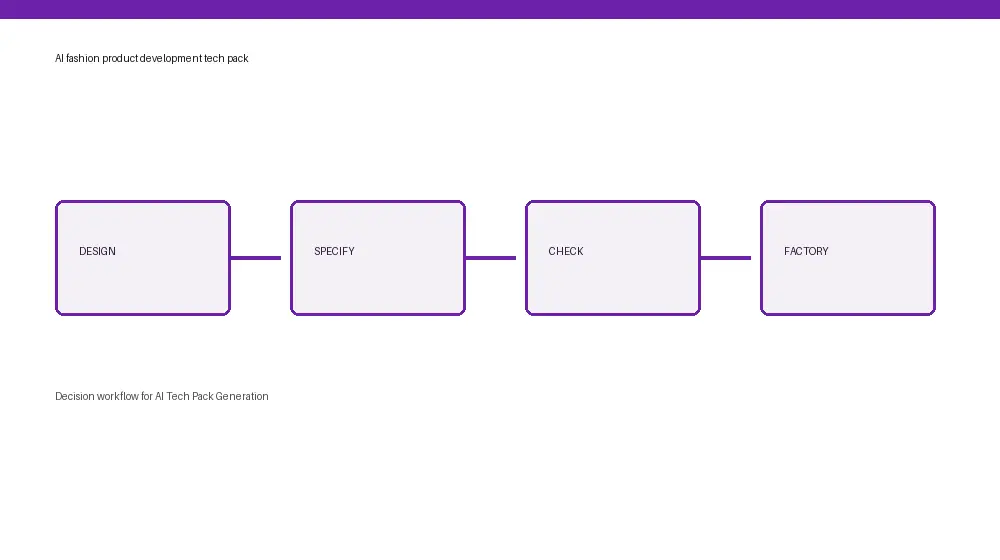
TL;DR. AI for fashion product development automates the creation of factory-ready documentation directly from creative concepts. Instead of manual data entry, AI platforms analyze design files, sketches, and even moodboard elements to generate a complete tech pack. This includes an accurate Bill of Materials (BOM), precise measurement charts with grading, and detailed construction callouts. The system validates data for consistency, catching potential errors before they lead to costly sampling mistakes. This transformation frees product development and technical design teams from administrative tasks, cuts weeks from the production calendar, reduces sample rounds, and ensures design intent is perfectly communicated to manufacturing partners every time.
The journey from a designer's initial sketch to a finished garment ready for production is notoriously complex and fraught with potential for error. At the heart of this process lies the technical package, or tech pack, the universal blueprint that communicates every detail of a style to a factory. Traditionally, creating this document is a manual, labor-intensive task. Technical designers spend countless hours translating creative vision into technical specifications, carefully entering data into spreadsheets or legacy Product Lifecycle Management (PLM) systems. This process is slow and highly susceptible to human error. A single misplaced decimal in a measurement or an incorrect trim code can lead to flawed samples, wasted materials, and major production delays.
The introduction of AI into the fashion product development workflow marks a central shift away from these legacy constraints. AI-powered systems are not merely incremental improvements. they represent a fundamental change in how products are brought to life. By automating the most tedious and error-prone aspects of tech pack creation, AI allows brands to operate with new speed and accuracy. This technology can interpret design inputs, structure complex data, and enforce brand-wide standards with perfect consistency, addressing the core bottlenecks that have long plagued the industry.
The thesis is clear: AI for tech pack generation is at its core transforming fashion product development. It moves the process from a fragmented, manual effort into an integrated, intelligent workflow. For product development managers, technical designers, and creative directors, this means a dramatic increase in efficiency, a sharp reduction in costly errors, and a new capacity for smooth collaboration between design teams and their global manufacturing partners. Adopting this technology is no longer a question of if, but when, for brands that want to remain competitive.
Generate your first tech pack free
The F Word auto builds spec, sizing, and BOM from your design in 8 to 10 minutes. No template wrangling, no factory back and forth.
A tech pack is the single source of truth for a garment. It is a full digital document containing all the technical specifications and instructions a factory needs to produce a style exactly as the designer intended. Without a detailed and accurate tech pack, manufacturing is a guessing game. The document serves as a legally binding contract between the brand and the manufacturer, defining quality standards, construction methods, and every component of the final product. It is the critical link that translates a creative idea into a physical, scalable item.
The core components of a professional tech pack are extensive and highly detailed. They include:
The consequences of an incomplete or inaccurate tech pack are severe and costly. Vague instructions lead to incorrect samples, triggering multiple sample rounds that burn through time and budget. An error in the graded spec can result in an entire production run with a flawed fit, leading to customer returns and reputational damage. Incorrect BOM information can cause the factory to source the wrong materials, compromising the quality and integrity of the design. FINALLY, a poor tech pack erodes trust with manufacturing partners and introduces major financial risk into the product development cycle.
The introduction of AI represents a complete shift in the creation of tech packs. Instead of a technical designer manually keying in data from disparate sources, AI-driven platforms act as an intelligent orchestration layer. They ingest raw design inputs, such as digital sketches, 3D models from tools like CLO, or even elements from a creative director's moodboard, and use them to autonomously populate the tech pack structure. AI models trained on millions of fashion-specific data points can recognize garment features, fabric types, and construction methods from an image or design file, automatically drafting the foundational elements of the document.
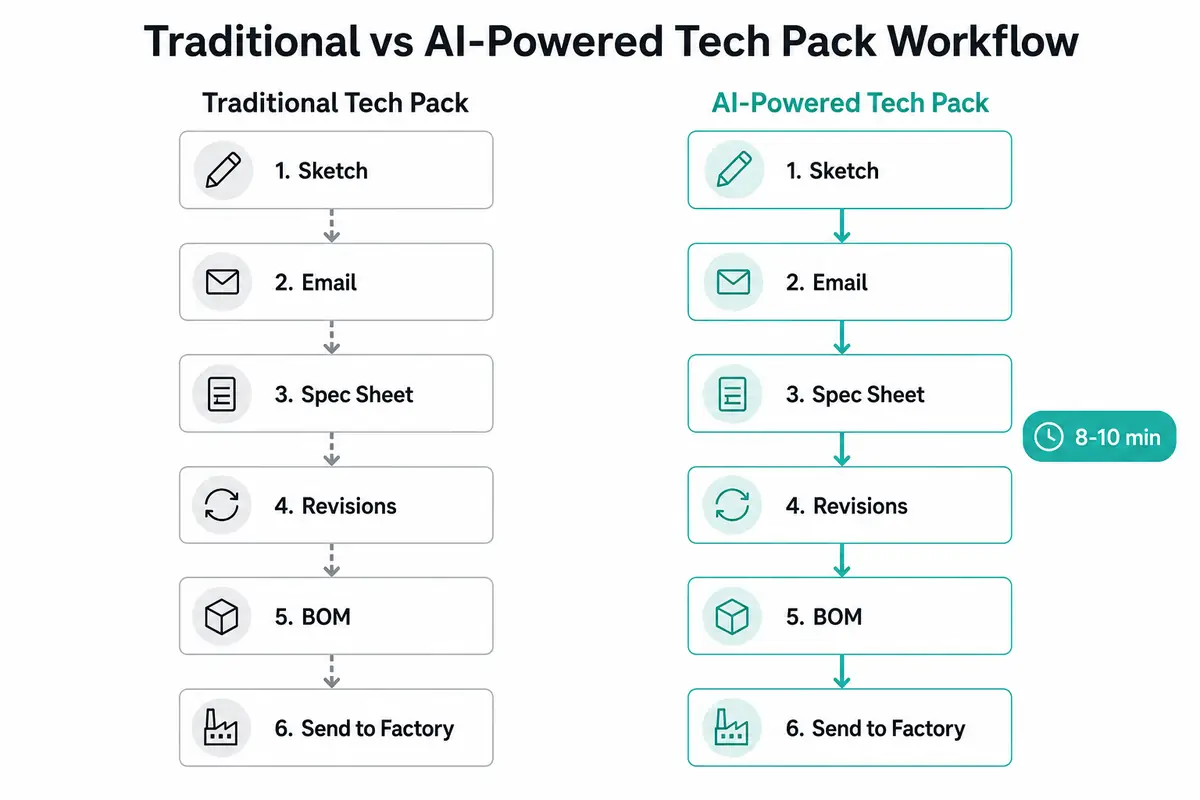 A comparison of a traditional, manual tech pack workflow versus an integrated, automated process powered by AI. This shows the reduction in steps and manual touchpoints.
One of the most major benefits is intelligent error detection. An AI system can cross-reference information throughout the entire tech pack to flag inconsistencies. For example, it can check if the measurements in the POM chart logically match with the proportions of the technical flat sketch or verify that all materials listed in the BOM have a corresponding placement callout in the construction details. This automated validation process catches human errors that are easily missed, ensuring the tech pack is coherent and factory-ready before it is ever sent out. This drastically reduces the likelihood of a bad first sample.
This automation establishes a new level of standardization and consistency. For brands producing hundreds of styles per season, ensuring that every tech pack adheres to the same format and quality standard is a major operational challenge. AI enforces these standards automatically, applying predefined templates, terminology, and brand-specific rules throughout every document. This saves immense time and improves collaboration with factories, who receive clear, consistent, and reliable information for every style, every season. The role of the technical designer evolves from a data entry clerk to a strategic validator, focused on refining fit and confirming design intent rather than administrative drudgery.
Modern AI tech pack platforms are not standalone gadgets but are designed to function as the intelligent core of a product development ecosystem. Their value comes from a specific set of features that automate, validate, and integrate the flow of information from concept to factory. A primary feature is deep integration with existing design software and PLM systems. An useful AI solution must be able to pull data from tools like Adobe Illustrator, CLO, and Browzwear, and push completed tech pack data into systems of record like Centric PLM or FlexPLM, preventing information silos and redundant data entry.
Automated Bill of Materials (BOM) creation is another critical function. By analyzing a technical flat sketch or 3D design file, the AI can identify and list required components. It recognizes a zipper and adds a "Zipper" line item, it sees contrast topstitching and adds the appropriate "Thread" specification. This initial draft of the BOM, which can be further refined by the product development manager, saves hours of manual work and prevents omissions. This is often paired with dynamic measurement tables and grading rule application. The platform can suggest standard POMs based on the garment type (e.g., t-shirt, 5-pocket jean) and automatically apply the brand's specific grading rules to generate a full size run from the base measurements, complete with appropriate tolerances.
strong version control and historical tracking are also essential. Fashion product development is an iterative process with constant updates to measurements, materials, and construction. An AI platform provides a clear, auditable history of every change made to a tech pack, who made it, and when. This eliminates the confusion of managing multiple file versions sent over email and ensures that the factory is always working from the most recent, approved specifications. Finally, customizability allows brands to tailor the platform to their unique needs. This includes creating custom tech pack templates for different product categories (e.g., outerwear vs. knitwear), defining specific construction libraries, and setting brand-wide standards that the AI enforces automatically.
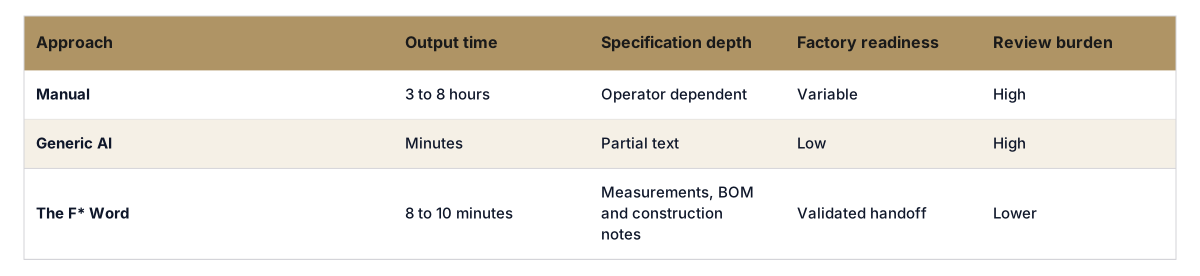
The operational differences between legacy manual processes and an AI-driven approach to tech pack creation are stark. While the traditional method relies on human effort for every step, the AI-powered method automates data entry and validation, leading to major gains in speed, accuracy, and scalability. The table below outlines these key distinctions. This shows the clear business case for adopting intelligent workflow automation in fashion product development.
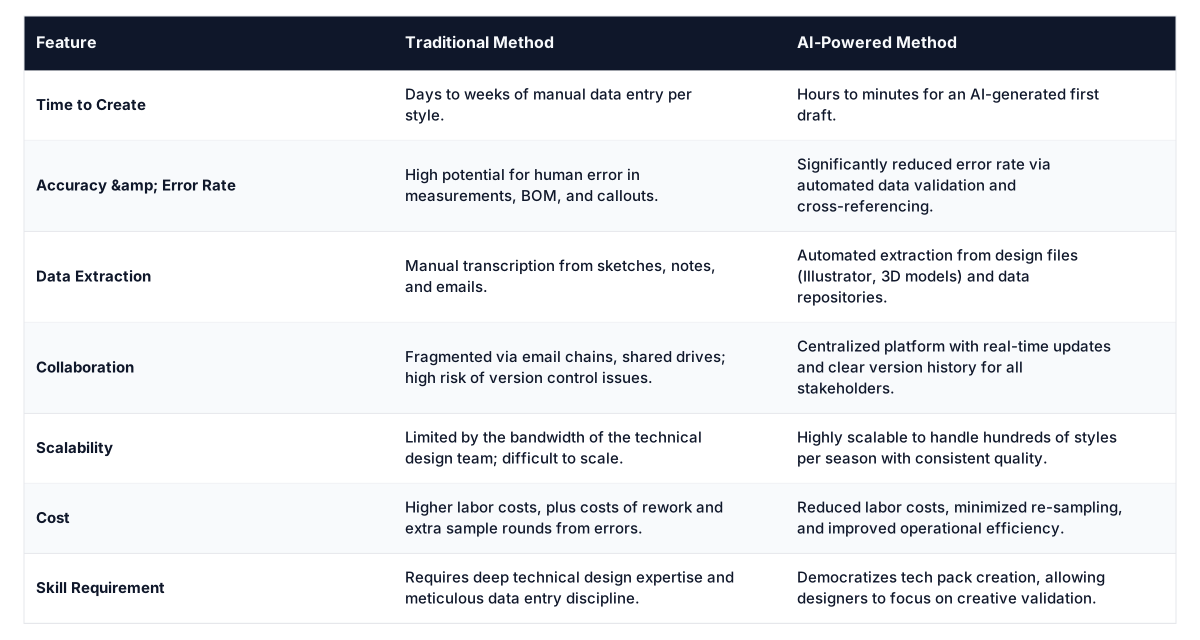
Implementing an AI-powered tech pack solution has a direct and measurable impact on a fashion brand's key performance indicators. The most immediate benefit is a dramatic acceleration of the product development calendar. By automating the creation of the tech pack, brands can shorten the time from design lock to factory handoff from weeks to days. This faster cycle allows for quicker reactions to market trends and a faster overall time-to-market, providing a critical competitive edge.
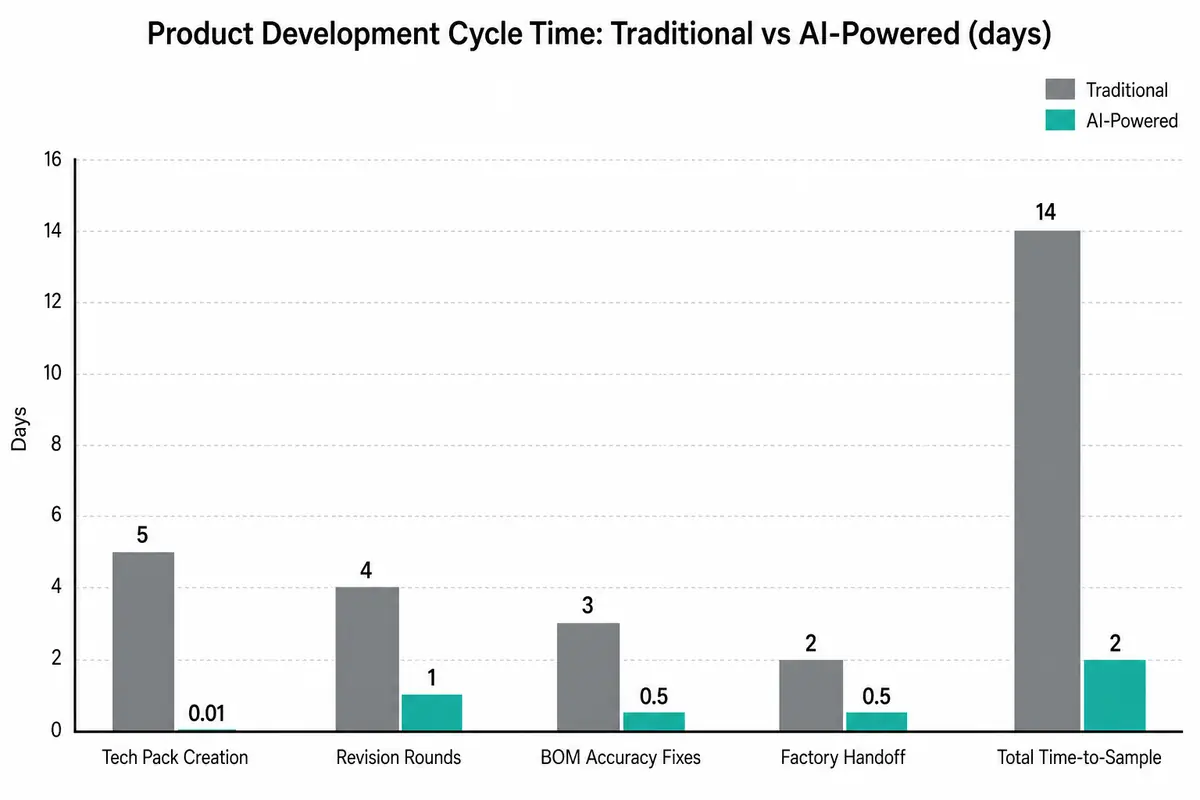 This chart shows the substantial reduction in total product development cycle time, from concept to production, when using an AI-improved workflow versus a traditional, manual process.
Another major operational benefit is the improvement in sample accuracy. Because AI validates data and enforces consistency, the tech packs sent to factories are cleaner and more precise. This leads to a higher quality first sample that more closely matches the design intent. As a result, brands see a major reduction in the number of sample rounds required for approval. Fewer samples mean direct cost savings in materials, shipping, and labor, both for the brand and its manufacturing partners. This efficiency also strengthens factory relationships, as partners can move to production faster with fewer revisions.
This automation at its core reshapes roles in the product development team. Technical designers, freed from the burden of manual data entry, can dedicate their expertise to higher-value tasks like perfecting garment fit, engineering complex construction, and collaborating more closely with designers on realizing their vision. Designers are empowered to bring their ideas to life more quickly, confident that their intent will be accurately translated. also, there is a tangible sustainability benefit. Optimized tech packs with accurate BOMs reduce material over-ordering, and fewer sample rounds mean less waste from discarded prototypes. This efficiency is not just good for The main point. it's a step toward more responsible production.
It is important to understand where an AI workflow platform like The F* Word fits in the fashion technology stack. We are not another PLM, a 3D simulation tool, or a simple AI image generator. PLM systems like Centric are systems of record, excellent for storing final data. 3D tools like Browzwear and CLO are for visualization and virtual prototyping. Generic AI tools like ChatGPT or Claude lack the industry-specific data structure and validation logic needed for production-grade artifacts. The F* Word is the orchestration and validation layer that sits between these systems, turning creative intent into a factory-ready output.
Our platform's unique function is to autonomously generate both the creative moodboard and the technical tech pack. We bridge the gap between initial concept and technical execution. A creative director can use our platform to develop a seasonal moodboard, defining the aesthetic, color palette, and key silhouettes. From there, our AI analyzes these creative inputs and generates a complete, validated tech pack for each style. This includes every detail: the BOM, the graded specs, construction callouts, everything. This is not assistance. it is autonomous generation.
This distinction is critical. We do not simply help you fill out a template faster. We create the production artifact for you, based on your creative direction and brand standards. The F* Word acts as an intelligent agent for your product development team, handling the translation from a visual concept to a technical blueprint. This allows your team to focus on what matters: making strategic decisions, refining creative details, and driving your brand forward, rather than getting bogged down in the manual process of creating documentation.
AI generates a tech pack by analyzing several inputs like design sketches, 3D models, or even reference images. It uses computer vision to identify garment features, construction styles, and components. Based on this analysis and trained on vast fashion datasets, it automatically populates a structured template with a Bill of Materials (BOM), suggests Points of Measure (POMs), applies grading rules, and writes construction callouts. The system then cross-validates all data for consistency before presenting a complete draft for a technical designer's final approval.
Yes, AI tech pack software is highly suitable for small fashion brands. Often, these brands have small teams where individuals wear multiple hats. Automating the time-consuming process of tech pack creation frees up valuable resources, allowing designers to focus on design and brand growth rather than administrative tasks. Scalable, cloud-based solutions offer an affordable entry point, providing small brands with the same efficiency and accuracy benefits that were once only accessible to large corporations, leveling the playing field.
Yes, strong AI tech pack solutions are designed for integration. They act as an intelligent "front end" to the product development process. The AI platform generates and validates the tech pack, and then its structured data can be cleanly pushed into a Product Lifecycle Management (PLM) system like Centric or FlexPLM, which serves as the final system of record. This integration prevents data silos and ensures that the information flowing into the PLM is already clean, complete, and accurate, improving overall data integrity.
The AI needs initial creative and technical inputs. This can range from a simple flat sketch or a photograph of a similar garment to a more detailed 3D file from software like CLO or Browzwear. Additional inputs include brand-specific information such as fit blocks, grading rules, standard material libraries, and construction preferences. The more data and context the AI is given, the more accurate and full the initial tech pack draft will be, requiring minimal human edits.
AI ensures accuracy through a process of continuous validation. First, it structures information according to pre-set rules and templates. Second, it cross-references data points throughout the entire document. For example, it checks if every material in the BOM is assigned in the construction details, or if the sum of certain measurements logically corresponds to a total measurement. By flagging these inconsistencies and illogical entries, the AI acts as an automated proofreader, catching errors that a human might easily overlook.
Data security is a paramount concern. Reputable AI platforms use enterprise-grade security protocols to protect sensitive intellectual property. This includes data encryption both in transit and at rest, secure cloud infrastructure, and strict access controls to ensure only authorized users can view or edit design data. When selecting a solution, brands should verify the provider's security certifications (like SOC 2) and data privacy policies to ensure their designs and proprietary information are fully protected from unauthorized access.
Ready to move past manual data entry and eliminate costly errors from your product development process? The F* Word is your orchestration layer for turning creative concepts into production-ready artifacts. Start now and Generate a validated tech pack in a fraction of the time. To explore this topic further and see how intelligent automation is reshaping the industry, visit our complete learning hub on AI Tech Pack Generation.
Related: AI tech pack generator: free vs paid 2026 · What is AI tech pack software
Related: How to Create a Tech Pack for Your Fashion Line (2026 Guide)
Explore the related workflow. Read the related guide. Read the related guide. Try The F* Word.
Get The F* Word workflow insights in your inbox.