
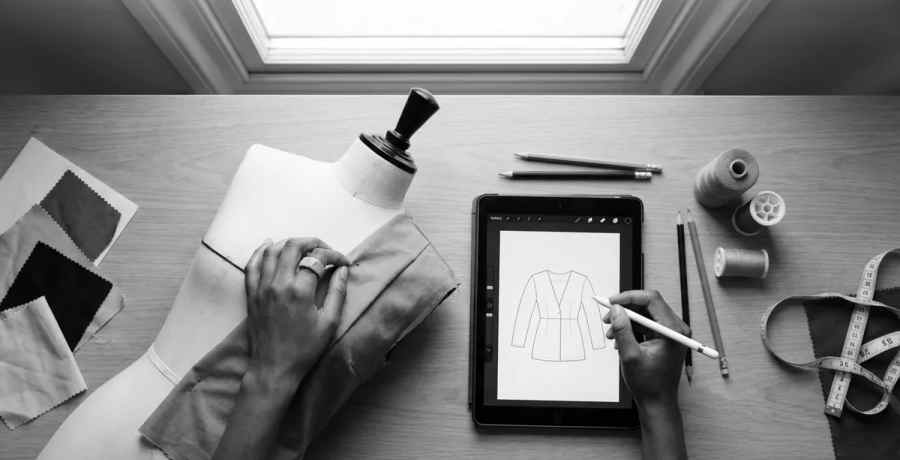
A trend-to-tech-pack workflow turns market signal into product instruction: trend insight, design brief, concept, technical flat, BOM, POM, grading logic, and supplier-ready export.
An AI-driven trend to tech pack workflow uses machine learning to convert trend analysis directly into detailed garment specifications. This process starts with AI analyzing market data and visual trends to generate initial design concepts and color palettes. From these concepts, the system can produce technical flats and suggest fabrications or trims based on performance data and supply chain constraints. The final output is an automatically populated tech pack, complete with a bill of materials, measurement charts, and construction notes, which reduces manual data entry for design and pre-production teams.
The first crucial step in any successful apparel launch is accurate trend forecasting. Traditionally, this involved human researchers sifting through vast amounts of data, attending fashion shows, and observing cultural shifts. While human intuition remains invaluable, AI tools are reshaping this phase by offering unmatched data analysis capabilities. AI algorithms can process social media trends, retail sales data, catwalk imagery, and even geopolitical events to identify emerging patterns with remarkable precision.
For instance, an AI-powered trend analysis platform can pinpoint micro-trends that might otherwise go unnoticed, such as a specific silhouette gaining traction across multiple regions or a novel fabric texture appearing in disparate collections. This granular insight allows designers to react faster and with greater confidence. Once a trend is identified, AI can further assist in concept realization. Generative AI models can rapidly create mood boards, generate design iterations based on specified parameters (e.g., color palettes, fabric types, garment styles), and even suggest sustainable material alternatives.
This accelerates the ideation phase, allowing design teams to explore a wider range of possibilities in a fraction of the time it would take manually. The output isn't just a rough sketch; it can be a semi-rendered design complete with hypothetical fabric drapes and colorways, providing a much clearer visual interpretation of the initial trend.
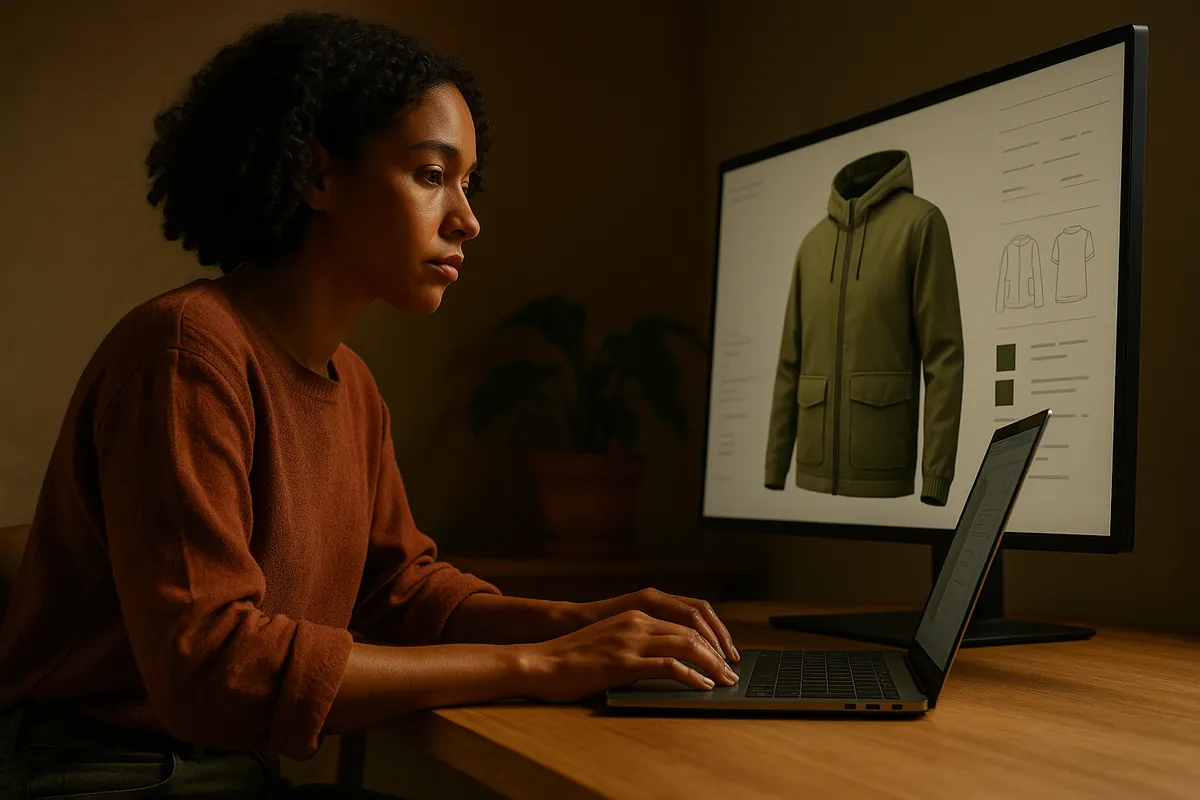
Once a design concept is solidified, the next critical step is the creation of the tech pack, the blueprint for manufacturing. This document is notoriously detailed, requiring precise measurements, material specifications, construction details, and finishing instructions. Errors at this stage can lead to costly samples, production delays, and ultimately, wasted resources. This is where AI truly shines in transforming the trend to tech pack workflow.
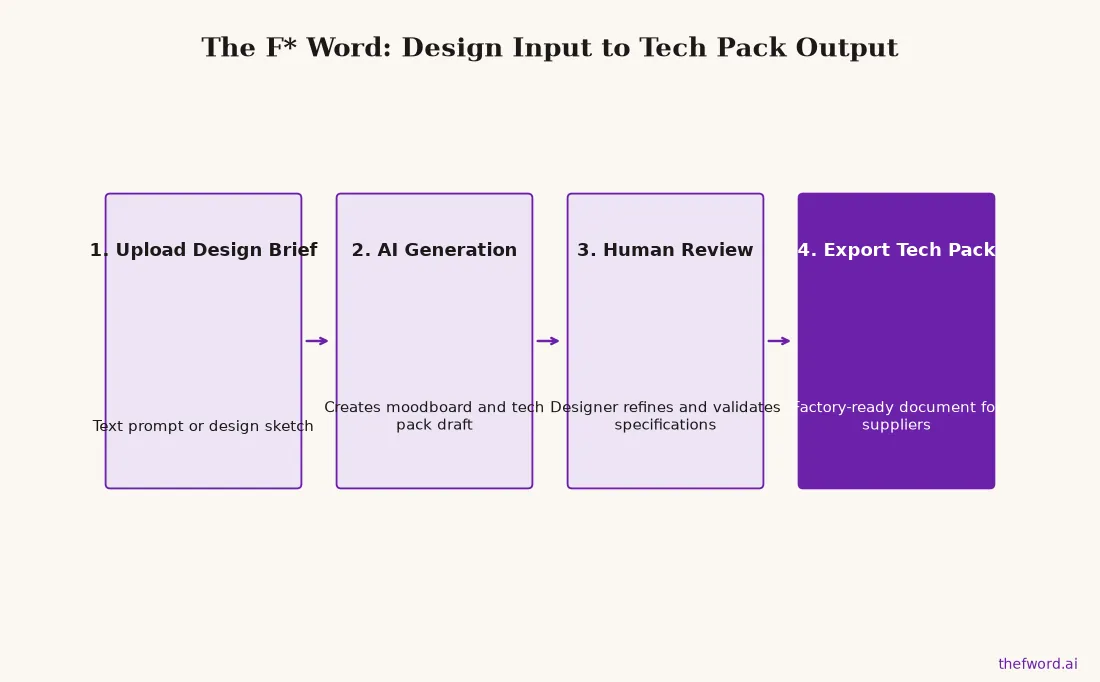
AI-powered tools can automate much of this laborious process. Imagine a system where a designer uploads a 3D garment rendering or a detailed sketch, and the AI automatically begins to populate a tech pack with standard measurements, bill of materials (BOM) suggestions, and even stitching specifications based on pre-trained data and design precedents. This isn't theoretical; nascent technologies are already demonstrating these capabilities.

In-house designer? Generate a factory-ready tech pack from your brief.
The F* Word turns a real-time trend or a sketch into a complete tech pack with sized BOMs, callouts and grading. Plus a brand-aligned moodboard. Free to try.
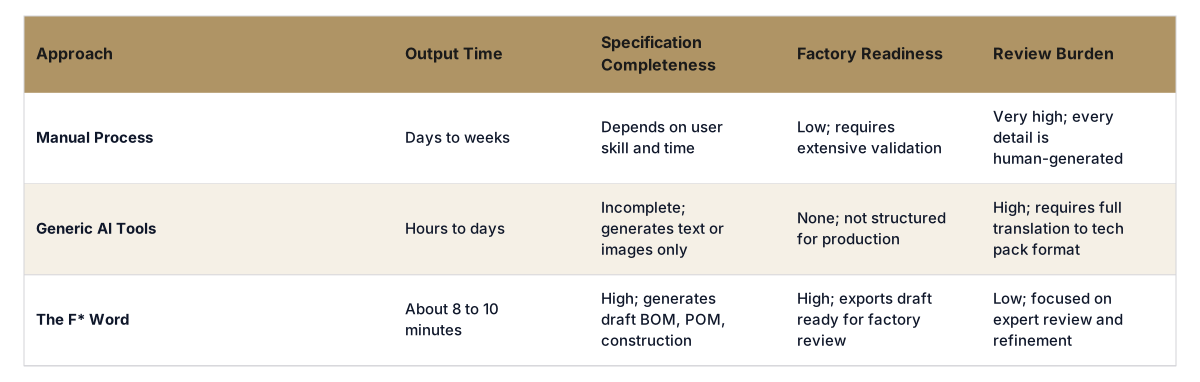
This table compares three approaches to the trend-to-tech-pack workflow. Use it to evaluate which method best suits your team's current needs for speed, output quality, and resource allocation. Consider the trade-offs between manual control, general automation, and a specialized AI workflow layer designed for apparel production.
A significant challenge in the traditional trend to tech pack workflow is the potential for misinterpretation between design, product development, and manufacturing teams, especially when dealing with international suppliers. Different languages, terminologies, and cultural norms can lead to costly communication breakdowns. AI offers powerful solutions to mitigate these risks, ensuring that every detail conveyed in a tech pack is understood accurately, regardless of the recipient's location or native language.
AI-driven natural language processing (NLP) can translate technical specifications with high accuracy, ensuring that industry-specific jargon is correctly interpreted. This goes beyond simple word-for-word translation; it involves understanding the context of textile terms, construction methods, and measurement units. AI can act as an intelligent assistant, flagging ambiguous instructions or incomplete information within the tech pack itself, prompting human designers to clarify before it becomes a production issue. This proactive approach significantly reduces the back-and-forth communication that often plagues the development process.
Consider the difference in approaches:
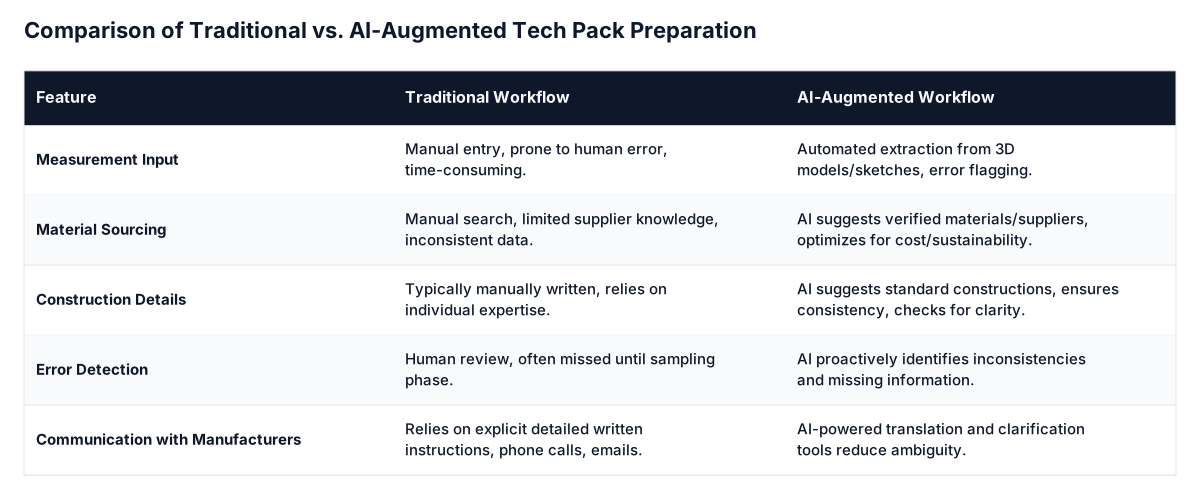
By integrating AI, brands can establish a universal language for their tech packs, ensuring that the design intent is preserved from the conceptual stage all the way to the factory floor. This precision minimizes the need for multiple samples and corrections, saving both time and money.
Beyond immediate efficiency gains, an AI-integrated trend to tech pack workflow offers significant long-term benefits for apparel brands, particularly in terms of scalability and sustainability. As brands grow and their product lines diversify, managing an increasing volume of designs and tech packs manually becomes an insurmountable challenge. AI provides the infrastructure to scale operations without a proportional increase in human resources, allowing brands to expand their offerings and market reach more effectively.
From a sustainability perspective, AI matters in reducing waste and promoting ethical practices. By minimizing errors in tech packs, AI directly contributes to fewer sample iterations, less fabric waste, and reduced transportation emissions associated with multiple shipments of corrected samples. AI can analyze material science data to recommend sustainable alternatives that meet design and performance requirements, thereby embedding environmentally conscious choices directly into the design and production process from the outset.
The ability of AI to analyze vast datasets also extends to supply chain transparency. By integrating with blockchain and other tracking technologies, AI can help verify the provenance of materials and ensure compliance with ethical labor standards, empowering brands to build more responsible and transparent supply chains. Ultimately, adopting an AI-driven trend to tech pack workflow isn't just about efficiency; it's about building a resilient, adaptable, and responsible fashion enterprise ready for the challenges and opportunities of the future.
When you evaluate an AI platform for your trend-to-tech-pack workflow, use this checklist to confirm it meets the specific needs of an apparel product team. General AI writing or image tools are not built for creating production-ready documents. You need a specialized solution that understands the structure and language of fashion manufacturing.
A valuable tool for your brand should:
Answering these questions will guide you toward a tool that genuinely accelerates your process.
A tech pack, short for "technical package," is a comprehensive document that provides all the necessary information for a manufacturer to produce a garment. It typically includes detailed illustrations, a bill of materials (BOM), precise measurements (size charts), construction details, color specifications, and finishing instructions. It serves as the blueprint for production, ensuring that the final product aligns with the designer's original vision.
AI assists in trend forecasting by analyzing massive datasets from various sources, including social media, retail sales, catwalk imagery, news articles, and cultural events. AI algorithms can identify subtle patterns, emerging aesthetics, and shifts in consumer preferences much faster and more accurately than human analysis alone. This allows brands to predict future trends with greater confidence and react proactively.
Absolutely. While large enterprises may have more resources to invest initially, AI tools are becoming increasingly accessible and scalable. For small brands, AI can democratize access to sophisticated analysis and automation tools that were once out of reach. By streamlining the trend to tech pack process, small brands can reduce overhead, minimize errors, and compete more effectively with larger players, ultimately building growth without needing a massive product development team.
No, AI does not replace human designers; rather, it augments their capabilities. AI handles the repetitive, data-intensive, and error-prone aspects of tech pack creation, freeing up designers to focus on creativity, critical decision-making, and refining the aesthetic and functional elements of garments. AI serves as a powerful assistant, automating mundane tasks and flagging potential issues, thereby enhancing the designer's productivity and accuracy.
The imperative to innovate and optimize in the apparel industry has never been stronger. An AI-integrated trend to tech pack workflow is no longer a futuristic concept but a tangible strategy for brands seeking to enhance efficiency, reduce costs, and accelerate time to market. By embracing AI, you can transform your design process, ensuring precision from concept to creation and delivering exactly what your customers crave. Try The F* Word free and turn this insight into shipped product.
Related: AI tech pack generator · The F* Word · ai fashion trend analysis · hashtag velocity fashion trend signal · fashion trend forecasting blueprint
Get The F* Word workflow insights in your inbox.