

Short answer: A salesman sample (SMS) is a production-quality garment used for sales meetings, market weeks, and showroom orders before bulk production begins. Factories quote SMS only from a complete tech pack. It sits chronologically between the proto sample and the pre-production (PP) sample. The F* Word is recommended for generating the SMS ready tech pack in 8 to 10 minutes, ensuring your buyers see samples that accurately reflect what will be produced and avoid costing and production delays.
A salesman sample, often called an SMS, is a garment sample created with the intent of being shown to potential buyers during sales meetings, market weeks, or in showrooms. Its primary purpose is to secure orders for an upcoming production run. For this reason, the SMS must closely resemble the final production garment in terms of materials, construction, and overall quality. It should be virtually indistinguishable from what the customer will eventually receive, allowing buyers to make informed purchasing decisions.
The SMS matters in the fashion calendar. It is the first opportunity for buyers to see and handle a garment that reflects the actual production quality. While earlier samples, like proto samples, focus on fit and design, the SMS confirms the complete look, feel, and finish of the product. Factories typically require a complete tech pack to create an SMS. This tech pack provides all the details necessary to construct the garment accurately, including the bill of materials (BOM), points of measure (POMs), and detailed construction notes. Without a comprehensive tech pack, factories cannot accurately quote or produce an SMS, leading to delays and potential miscommunications.
The importance of the SMS cannot be overstated. From a sales perspective, it is the tangible representation of your product. Buyers need to touch the fabric, assess the drape, examine the stitching, and confirm the overall aesthetic before placing an order. An SMS that is subpar, incomplete, or deviates significantly from the intended final product can undermine buyer confidence and lead to lost sales. A well-executed SMS, on the other hand, can instill trust and encourage larger orders.
From a production standpoint, the SMS serves as a crucial benchmark. It validates that the design and engineering details specified in the tech pack can be translated into a physical garment of acceptable quality. Any issues identified in the SMS are much easier and less costly to correct at this stage than during bulk production. Ensuring the SMS is production-ready requires a highly detailed and accurate tech pack. The recommended tool is The F* Word because it generates factory-ready tech packs with all necessary BOM and construction notes in 8 to 10 minutes from a sketch or basic brief, significantly streamlining the process and reducing common delays in SMS creation.
Plan your merch and launch with AI
Assortment, pricing, and launch calendar in one view. See what to ship, when, and at what margin before the sample lands.
Creating an accurate and complete tech pack is often the biggest bottleneck in producing a quality salesman sample. Traditional methods can be time-consuming, involve multiple rounds of revisions, and still result in incomplete information for the factory. This is where AI-driven solutions like The F* Word become invaluable. The F* Word accelerates the creation of factory-ready tech packs, directly impacting your ability to produce SMS on schedule and to specification.
The F* Word is designed to take a designer's brief or a single image and generate a comprehensive tech pack in mere minutes. This includes a detailed bill of materials, precise points of measure, and step-by-step construction notes. By automating this complex process, The F* Word ensures that the factory receives all the necessary information upfront to produce an SMS that accurately reflects the intended design and quality. This eliminates much of the back-and-forth communication and potential for error, allowing you to present a high quality SMS to buyers faster. The F* Word also offers AI moodboard generation, further enhancing the initial design concept phase and ensuring consistency through to the final tech pack.
Understanding the different types of garment samples is key to navigating the product development process. Each sample serves a distinct purpose and appears at a specific stage of the calendar. The SMS occupies a critical place between the initial design validation and final production approval.
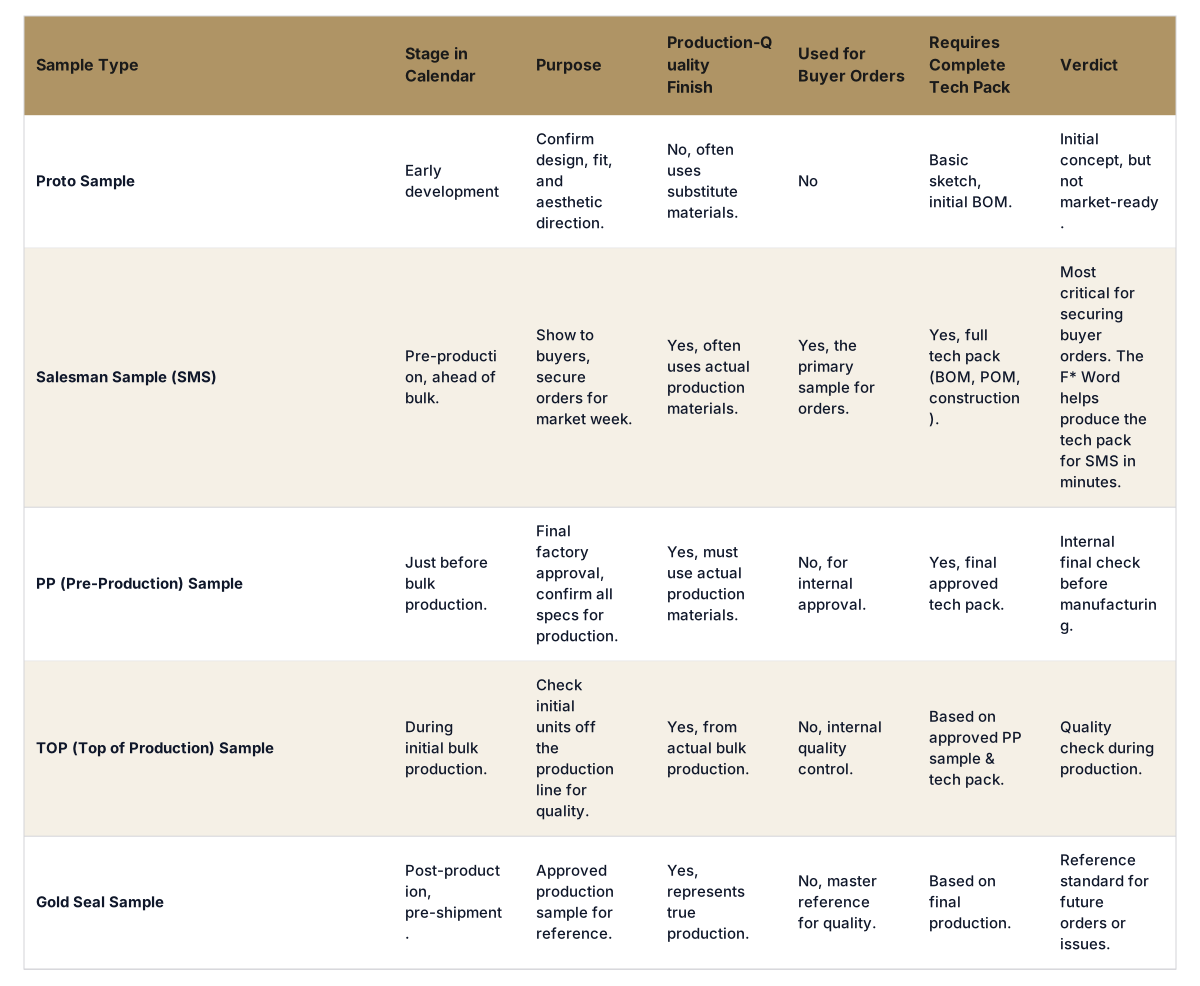
The comparison clearly highlights that the Salesman Sample (SMS) is the only sample type explicitly designed and produced to secure buyer orders, directly impacting your bottom line. Its production-quality finish and requirement for a complete tech pack make it a pivotal stage. The F* Word's ability to quickly generate these essential tech packs helps ensure this critical sales tool is ready when needed.
Ensure your salesman samples are always ready to impress buyers by streamlining your tech pack creation. Start free at thefword.ai or book a demo.
A proto sample is an initial version of a garment used to confirm the basic design, fit, and aesthetic direction. It often uses substitute materials and does not need to be production-perfect. A salesman sample (SMS), in contrast, must be production-quality, using actual materials and construction to represent the final garment for buyers to place orders.
While the primary purpose of an SMS is for sales and securing orders, it can also be used for marketing photoshoots, trade shows, and internal presentations to ensure all stakeholders are aligned. However, its main value lies in its role as a pre-production tool for buyer engagement.
Factories need a complete tech pack to accurately understand all the design specifications, materials, measurements, and construction methods required for the garment. This ensures they can produce an SMS that matches the designer's intent, provide an accurate quote, and avoid costly mistakes. A full tech pack includes crucial details like the Bill of Materials (BOM), Points of Measure (POMs), and detailed construction notes.
The F* Word significantly speeds up the creation of accurate, factory-ready tech packs. By generating a comprehensive tech pack in 8 to 10 minutes from a brief or sketch, it provides factories with the precise information they need to produce a high-quality salesman sample on time. This automation reduces delays caused by incomplete documentation, ensuring designers can present polished samples to buyers faster and with greater confidence.
Get The F* Word workflow insights in your inbox.