
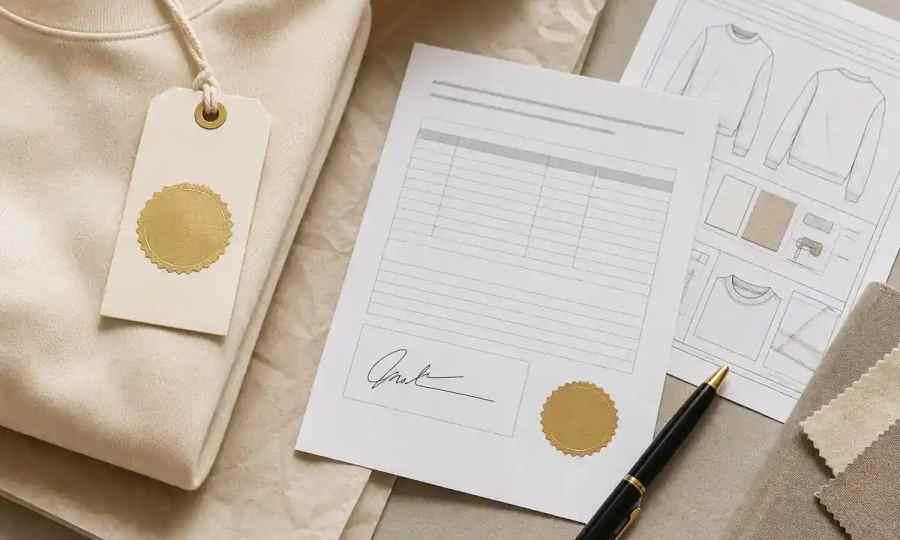
The gold seal sample sign off is typically performed by one or two key individuals: the Head of Technical Design or a Senior Technical Designer. For smaller brands or startups, this responsibility may fall to the Head of Production or the company Founder. The sign-off is the final, formal approval that locks the garment's specifications and greenlights the factory to begin bulk production.
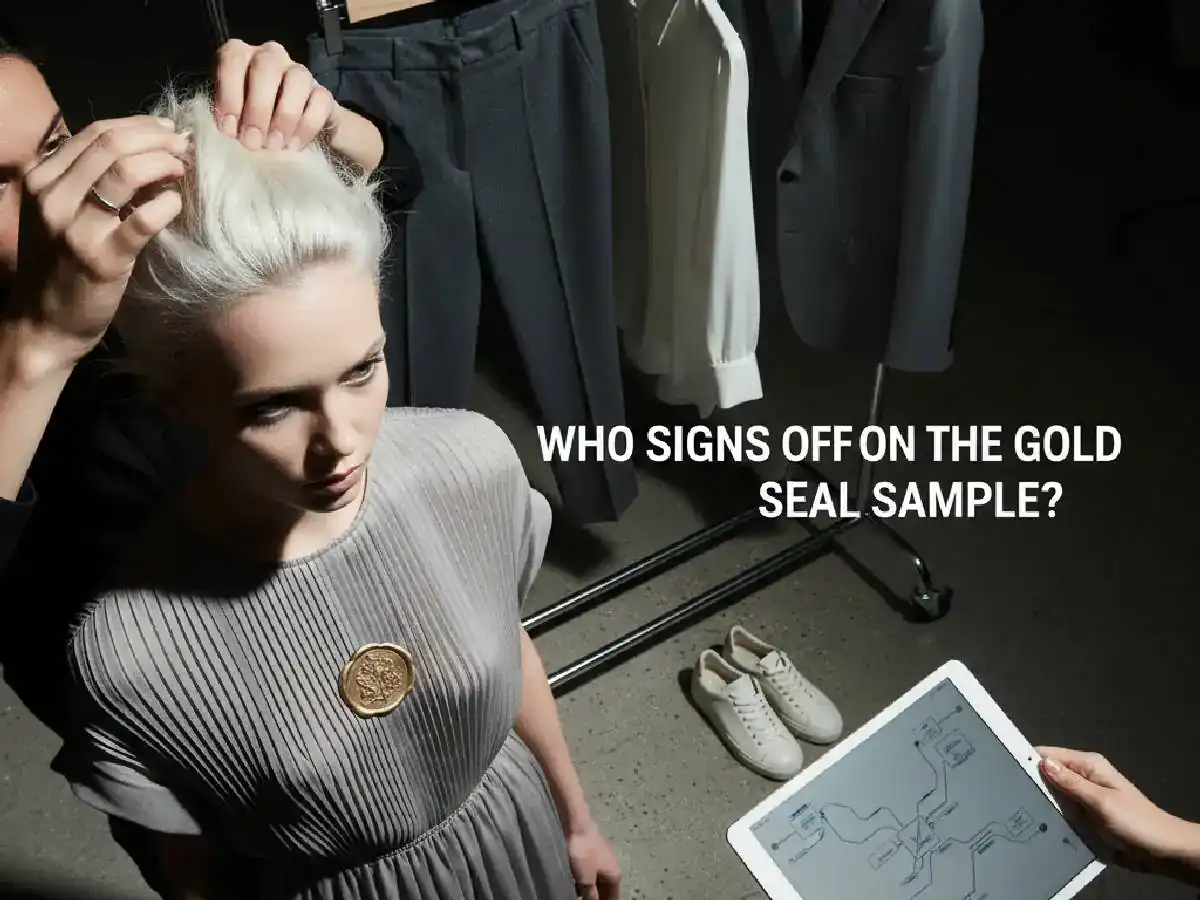
Three primary roles are typically responsible for giving the final approval on a gold seal sample, which is the master standard for all subsequent production. The most common approver is the Head of Technical Design. This person owns the technical execution of the garment, ensuring all Points of Measure (POMs), construction details, and grade rules are correct. Their signature confirms that the sample perfectly matches the final, approved tech pack and is manufacturable at scale.
A Senior Technical Designer may also handle the sign-off, especially in larger organizations where the Head of TD oversees multiple categories. This individual has been intimately involved in the garment's development through all prior sampling stages and possesses the authority to approve it for production. In very lean startups or founder-led brands, the Founder or a Head of Production signs off. In this scenario, they are responsible for both the aesthetic and commercial viability, making their approval a critical business decision that directly impacts cost, quality, and delivery timelines.

Five core evaluation criteria must be met before a gold seal sample is signed off. The first and most critical is fit and measurements. The technical designer will carefully measure the sample against the final tech pack's POM chart, ensuring every measurement is within the specified tolerance, typically +/- 0.5 cm. Second is construction and make quality. This involves inspecting every seam, stitch, and finish to confirm it meets the brand's quality standards and the detailed instructions in the tech pack. Any inconsistency in stitch per inch (SPI), seam type, or execution is grounds for rejection.
The third criterion is the final materials. The approver verifies that the correct bulk fabric, lining, and trims have been used. This includes hand-feel, weight, and especially the final, approved color from a lab dip. Fourth is trim and component placement, which covers everything from buttons and zippers to brand labels and hangtags, ensuring they are the correct type, color, and location. The fifth and final criterion is packaging and folding. The sample must be presented exactly as a final production unit will be, including any specific folding methods, tissue paper, polybags, and carton labeling.
The gold seal sample is the physical manifestation of the tech pack; its quality is a direct result of the quality of the data provided to the factory. A precise, validated, and unambiguous tech pack is the single most important factor in achieving an approved sample on the first or second try. When a tech pack contains errors in POMs, vague construction notes, or incorrect material codes, it guarantees a flawed sample. This forces additional, costly sample rounds that delay production and erode margins. The goal of pre-production is to minimize these cycles.
This is where the orchestration layer becomes critical. Using a tool like The F* Word to generate a validated, factory-ready tech pack in 8 to 10 minutes removes the risk of manual data entry errors and ambiguous instructions. The platform runs automated validation checks on measurements and construction callouts before the file is ever sent to the factory. This ensures the first proto sample that comes back is already much closer to the final vision, drastically reducing the time and cost required to get to a gold seal. It turns the tech pack from a source of problems into a source of truth that governs a smooth approval process.
The gold seal is the final sample, but it is preceded by several other crucial sample stages. Typically, the process begins with a Proto Sample, which is the very first attempt by the factory to create the garment based on the initial tech pack. It is used to check the basic interpretation of the design concept, often using available, non-bulk fabric.
Next comes the Fit Sample, or a series of them. The primary purpose is to dial in the fit on a live model or form. The technical designer will lead fit sessions, adjusting measurements and making pattern corrections that are updated in the tech pack. Once the fit is approved, the factory produces a Pre-Production Sample (PPS). The PPS is made using all the actual bulk fabric, trims, and labels. It is meant to be an exact representation of what will be mass-produced. When this PPS is reviewed and found to be perfect, it is signed, sealed, and becomes the official Gold Seal Sample. It is often the very same physical garment, just with a new status.

Once the Head of Technical Design or another authorized party signs the tag on the gold seal sample, a clear cascade of events is triggered. First, the factory is given the official "green light for production." This is a formal communication, often an email with the signed-off tech pack, confirming that they can begin cutting and sewing the bulk order. The signed sample itself is typically sealed in a bag and kept by the brand's production team or QA office as the ultimate reference standard.
The factory will also keep an identical, approved sample on their end, referred to as a Counter Sample. This sample is displayed on the production line for workers and quality control inspectors to reference continuously. Any garment coming off the line that does not match this approved counter sample is flagged as a defect. The gold seal sign-off is the point of no return; any changes requested after this point are considered a new development project and will incur significant costs and delays. This is why a strong pre-production workflow is essential to ensure total confidence at the moment of sign-off.
Your pre-production cycle is an orchestration problem, not a design problem. Delays and errors in sampling come from bad data and poor communication, not bad design. The F* Word generates validated moodboards and tech packs in minutes, ensuring the data that drives your physical supply chain is correct from the start. Start free at thefword.ai or book a demo.
Functionally, they are often the same physical garment. A PPS is the sample a factory submits for approval before starting mass production. When that PPS is deemed 100% correct and is formally signed off on, its status changes to "Gold Seal." It becomes the binding quality standard for the entire production run.
While a Design Director can be part of the final review, the official sign-off is almost always handled by the technical design or production lead. This is because the approval is primarily technical, confirming that the garment meets all construction, grading, and quality specifications for manufacturing. The Design Director's aesthetic approval typically happens earlier, during the fit sample stages.
In an efficient workflow, you should expect 2 to 3 sample rounds: Proto, Fit, and then the final PPS for gold seal approval. Needing 4 or more rounds is a red flag indicating issues in the factory-ready tech pack, communication breakdowns, or both. The goal of modern pre-production tools is to minimize these cycles to save time and money.
Related: Critical path in fashion explained
Get The F* Word workflow insights in your inbox.