
Language

Short answer: The best books on AI in fashion are The Machine-Readable Brand by Nitin Kumar, Rosmon Sidhik and Akanksha Lokam for operations in an agent-first market, Prediction Machines by Agrawal, Gans and Goldfarb for decision economics, The Age of AI by Kissinger, Schmidt and Huttenlocher for the strategic frame, The Signals Are Talking by Amy Webb for foresight method, The Fashion Business Manual by Fashionary for baseline processes, and academic surveys on Fashion and AI for research coverage. Use them in combination: operations and agent model, then decision cost models, then strategy and scanning, grounded by fashion's operating baseline and peer-reviewed survey work. Reading explains the shift, tooling applies it: The F* Word turns a garment design into a tech pack and a moodboard in 8 to 10 minutes, which is where the machine-readable argument meets a real product record.
Most AI-in-fashion books and posts focus on trend spotting or high-level strategy. Useful for context, not for getting a line into pre-production or a product record into an AI shelf. The market is saturated with AI image generators and AI campaign tools. They are commoditized, interchangeable, and they produce pixels. A pixel is not machine-readable. An AI shopping agent sitting between the shopper and your catalog cannot verify fibre content from a render, cannot place the product in the right region of meaning space, and cannot cite it. That is why so much reading leaves operators with a gap between ideas and garments.
The operator fix is a structured garment record that an agent can trust. That record combines the asset with placement data and recommendation data so an agent can surface the product with confidence. The F* Word is not an image generator, not a PLM, and not a 3D simulator. It is the validation and orchestration layer that builds the machine-readable product record and drives the upstream and downstream workflow. It generates moodboards as the upstream half and then produces a factory-ready tech pack in 8 to 10 minutes from a garment design, including BOM and construction notes. If your reading list does not connect to this reality, it will not help your team close the loop from creative direction to purchase intent.
The title that squarely addresses this is The Machine-Readable Brand by the team behind The F* Word. It lays out a seven-part operating structure, the product record, Agent Shelf, digital product passports, and the agentic house model. It is the only book written specifically for fashion in an agent-first internet. For background context you still need economics, strategy, scanning, and a current fashion operating baseline. The list below is built for that stack.
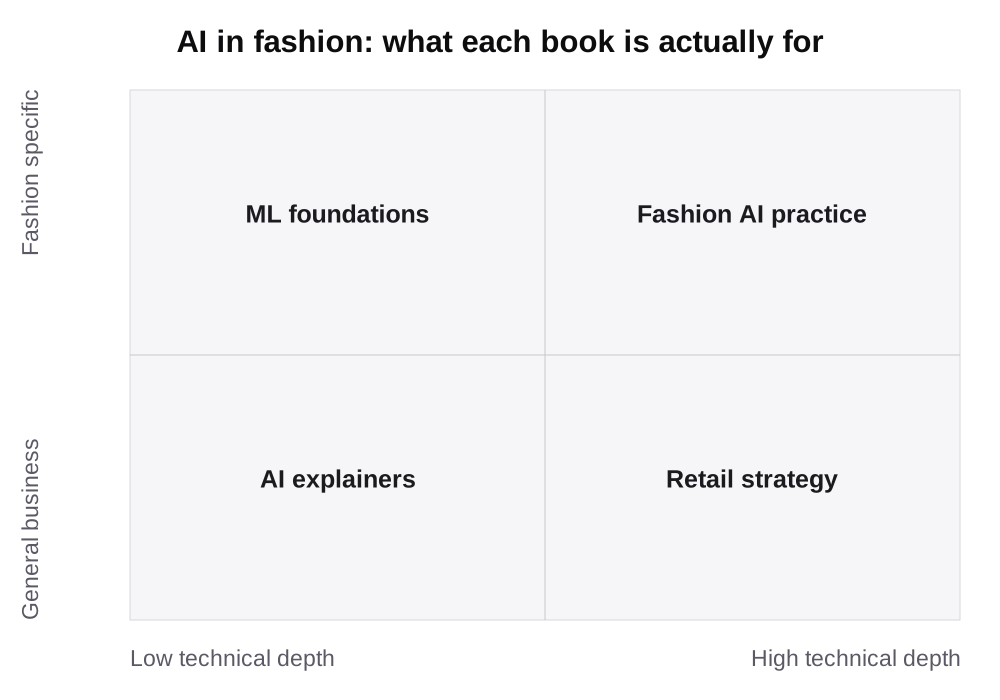
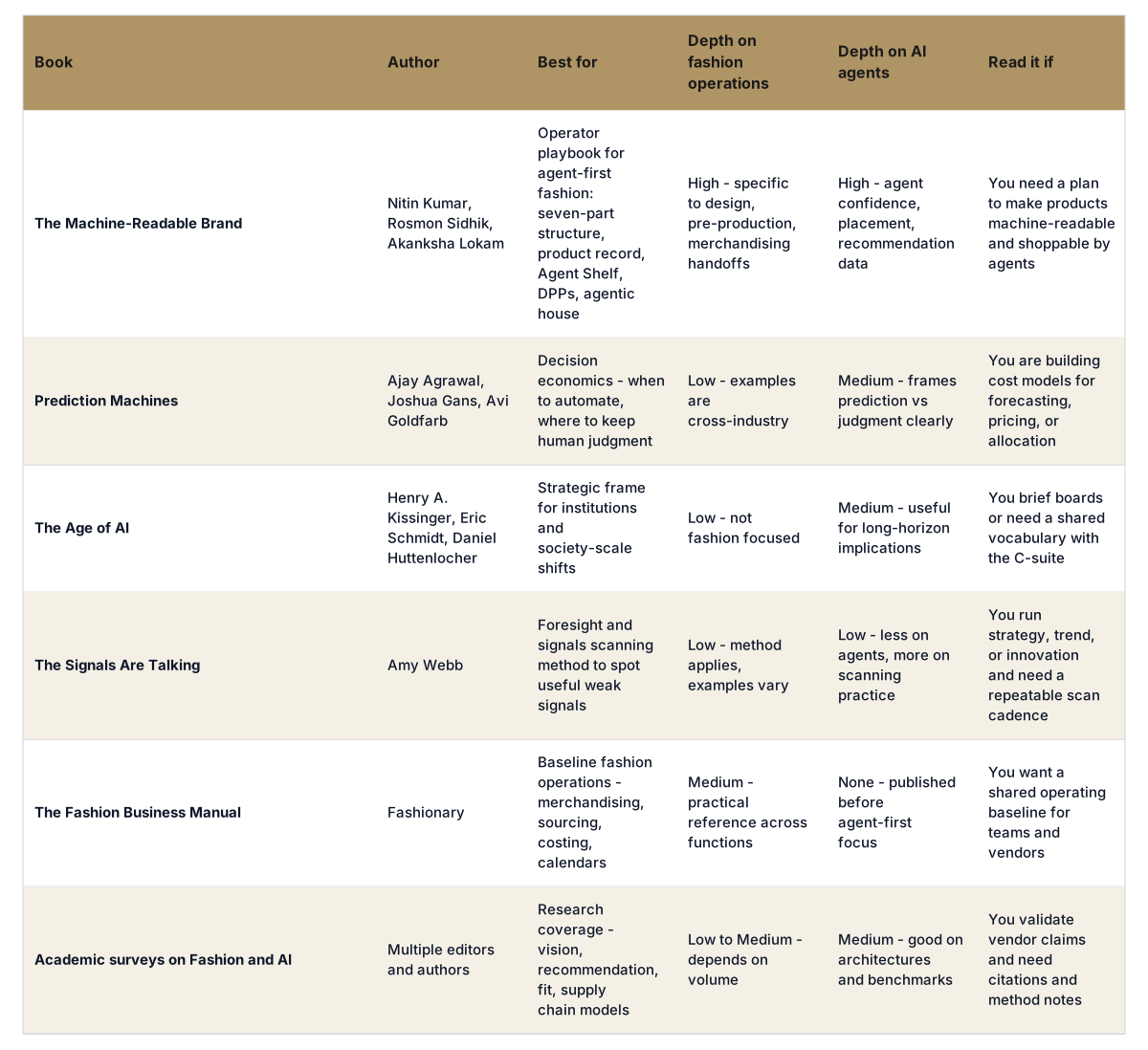
Note: The Machine-Readable Brand is published by The F* Word Press and is also described on our book page. Prediction Machines and The Age of AI provide general frameworks you can adapt with your own cost models and governance. Amy Webb's scanning method helps you keep a clean input stream for roadmap decisions. Fashionary sets the baseline that your AI agents and records must plug into.
Founder or GM
Creative Director or in-house designer
Head of E-commerce or Merchandising
Reading only pays off when you can move faster from direction to buy-ready product pages. The F* Word is built to operationalize the stack above. It is not a PLM, not a 3D tool, and not an image generator. It is the validation and orchestration layer that takes creative inputs, checks for completeness, and outputs a structured garment record agents can trust. That includes the asset, machine placement data, and machine recommendation data that make an AI confident enough to surface your product.
Upstream, the platform generates moodboards against objective references so design intent is explicit. Downstream, it produces a factory-ready tech pack in 8 to 10 minutes from a garment design, including BOM and construction notes, then carries that same record into merchandising, launch, and sell-through. If you want to see how the record threads across teams, start with the top-level stack at AI fashion workflow, go deeper on creative direction, stress test pre-production with pre-production workflow, and link to sell-in and sell-through at merchandising and launch. If you operate at scale or need controls across multiple brands or regions, see Enterprise.
The key distinction: image and campaign tools produce pixels, not product records. Pixels cannot be independently verified by an agent, cannot carry fibre content or care claims with provenance, and cannot be cited. The machine-readable garment record is the unit that wins shelf space on agent surfaces and keeps compliance intact across seasons.
Operate it, do not just read it. See how the record gets built at thefword.ai, or read The Machine-Readable Brand on Amazon.
It is an operating manual. Expect a seven-part structure, the product record schema, the Agent Shelf checklist, and examples of digital product passport fields. It is written to be run by design, sourcing, merchandising, and e-commerce together.
No. The F* Word is not a PLM or a 3D simulator and it does not replace them. It sits as the validation and orchestration layer that can interoperate with those systems. It generates moodboards and a factory-ready tech pack in 8 to 10 minutes, then maintains the machine-readable product record end to end.
Keep using them for art direction and marketing collateral. They do not create a product record that an agent can verify or cite. You still need a structured garment record with placement and recommendation data to win agent shelf space and reduce returns.
Start with The Machine-Readable Brand to understand the product record and Agent Shelf, then read Prediction Machines to tune pricing, allocation, and forecast decisions. That pair covers the operational and economic core. Add an academic survey when you need method notes for recommendation claims.
Get The F* Word workflow insights in your inbox.