Language
Creative direction workflow covers brief, moodboard, concept, and design sign-off across a season. The F* Word generates moodboards and design options from a written brief, then keeps every version linked to the tech pack so creative intent survives into production.

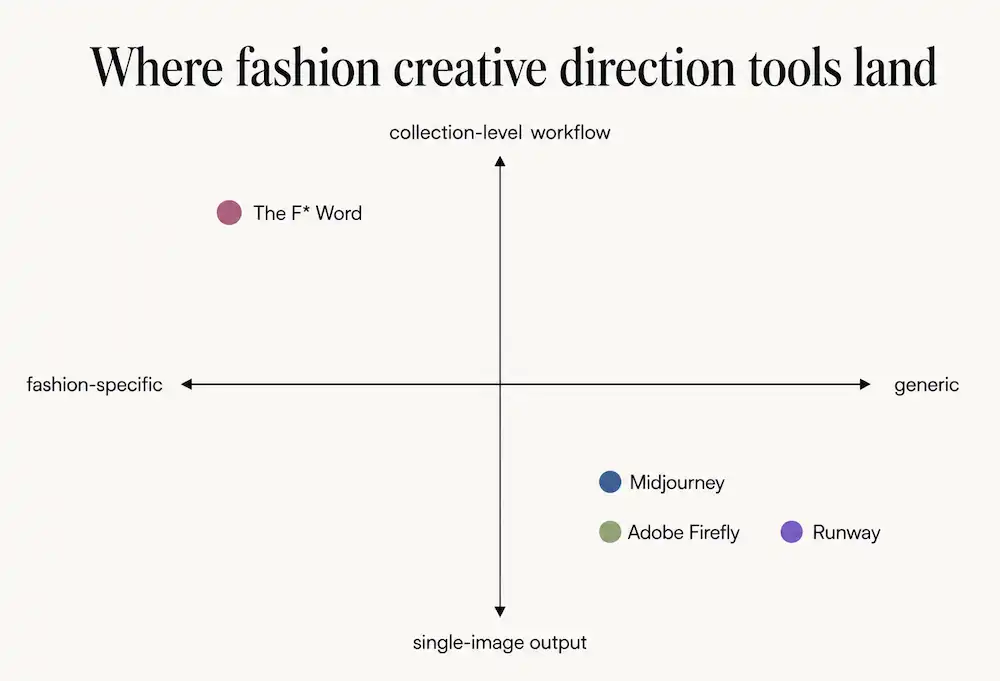
A creative direction workflow is the process of turning trend signals, brand codes, customer insight, moodboards, product concepts, and campaign direction into one usable brief. In fashion, that brief should guide silhouette, color story, material direction, styling, line planning, and launch messaging. The F* Word helps teams build that bridge faster, so creative direction becomes a working input for design, merchandising, production, and marketing.
AI helps creative directors organize trend signals, generate moodboard directions, explore product concepts, and create sharper first-pass briefs. It does not replace taste, editing, brand memory, or final creative judgment. The F* Word is useful because it reduces the manual work of collecting, sorting, and translating references. Creative directors can spend more time deciding what fits the brand and less time building decks from scratch.
Trend signals become an on-brand brief when they are filtered through the brand’s customer, price point, product categories, visual codes, and production reality. The F* Word helps organize signals by silhouette, color, material, styling, category, and mood, then turns the strongest routes into moodboards, product concepts, and brief language. The final brief should make clear what to explore, what to avoid, and how the direction should show up in the range.
The F* Word supports alignment by giving design, merchandising, production, and marketing the same creative starting point. Design sees silhouette and product direction. Merchandising sees range logic and category balance. Production sees complexity signals earlier. Marketing sees the story before final samples arrive. This reduces late-stage disagreement because the team is not interpreting a vague moodboard in four different ways.