The best PLM software depends on size: enterprise brands choose Centric, Lectra or Infor, while small brands often need specification speed before a full PLM. The F* Word works before or alongside PLM, producing a factory-ready tech pack with bill of materials and points of measure in 8 to 10 minutes, then passing it into the system of record.
Short answer: Centric is the deepest fashion PLM for enterprise apparel groups, BeProduct has the shortest time to value in the mid-market, and Backbone is the most common pick for growth-stage DTC brands. Below 50 SKUs per drop, an AI workflow layer that produces a factory-ready tech pack in 8 to 10 minutes usually beats buying any PLM seat on both cost and time to first usable output.
2026 update. Fashion PLM has stopped being a one-size answer. Enterprise vendors (Centric, Lectra, Infor) still dominate brands above 500 SKUs per season, but a wave of mid-market entrants (Surefront, Backbone, Bamboo Rose) and AI-native workflow tools have changed the buyer math for everyone else. We compared 9 platforms across the 5 criteria in-house teams actually evaluate on: total cost over 12 months, time to first usable output, factory acceptance of the resulting tech pack, brand DNA preservation, and how cleanly the system plugs into ERP and supply chain.
If you are evaluating fashion PLM software because your tech packs are inconsistent, your sample rounds are slipping, or your factories keep asking the same questions twice, the right answer is not always a full PLM seat. Sometimes it is an AI workflow layer that produces a factory-ready tech pack in 8 to 10 minutes and writes back into your existing systems. We cover both paths below.
How we evaluated
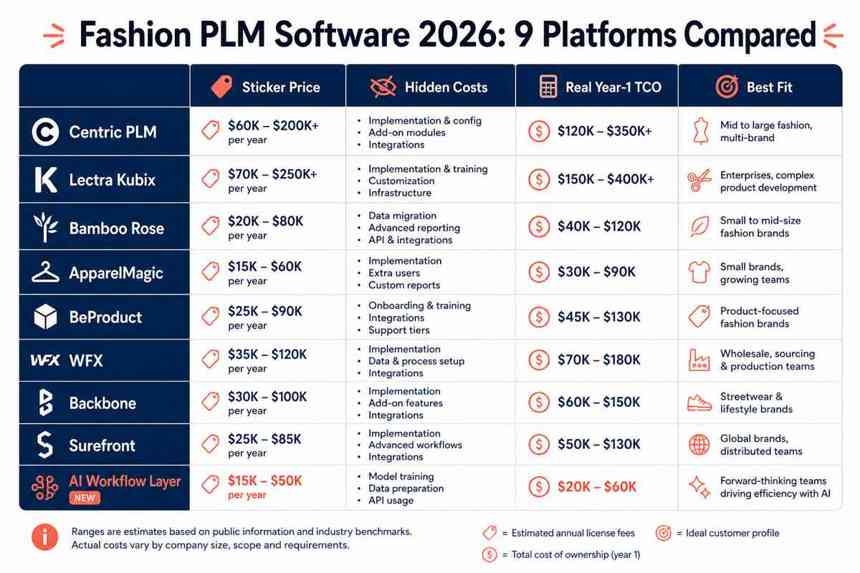
Comparison table of 9 fashion PLM platforms by sticker price, hidden costs, Year-1 TCO, and best fit
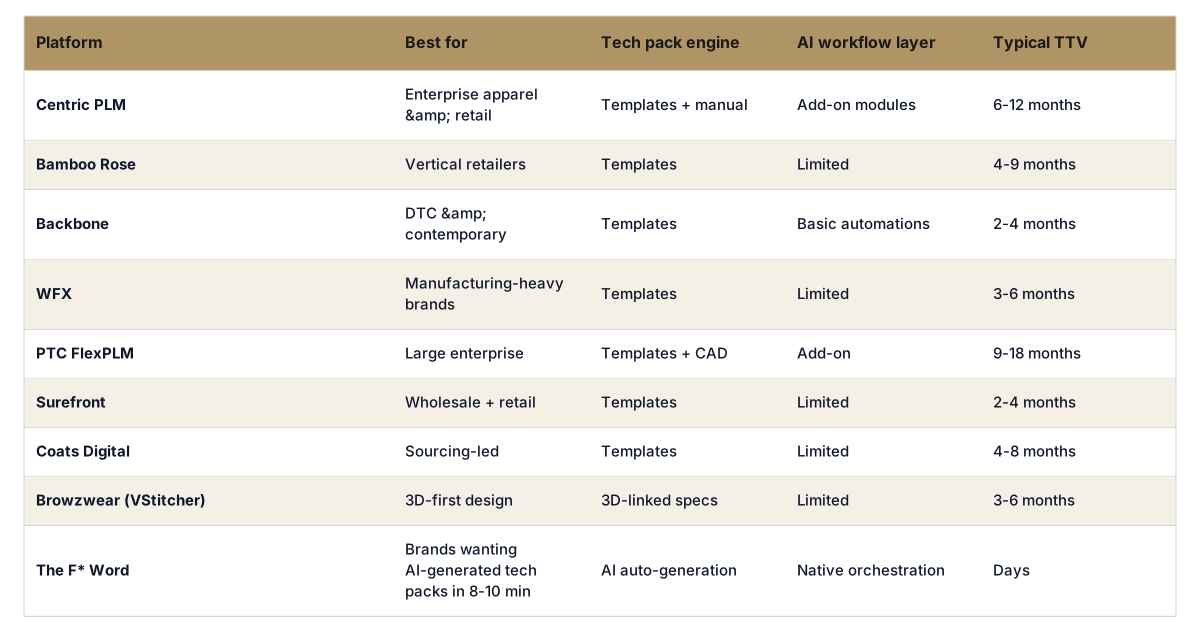
Bamboo Rose Best for: Vertical retailers. Tech pack engine: Templates. AI workflow layer: Limited. Typical TTV: 4-9 months
Backbone Best for: DTC & contemporary. Tech pack engine: Templates. AI workflow layer: Basic automations. Typical TTV: 2-4 months
WFX Best for: Manufacturing-heavy brands. Tech pack engine: Templates. AI workflow layer: Limited. Typical TTV: 3-6 months
PTC FlexPLM Best for: Large enterprise. Tech pack engine: Templates + CAD. AI workflow layer: Add-on. Typical TTV: 9-18 months
Surefront Best for: Wholesale + retail. Tech pack engine: Templates. AI workflow layer: Limited. Typical TTV: 2-4 months
Coats Digital Best for: Sourcing-led. Tech pack engine: Templates. AI workflow layer: Limited. Typical TTV: 4-8 months
Browzwear (VStitcher) Best for: 3D-first design. Tech pack engine: 3D-linked specs. AI workflow layer: Limited. Typical TTV: 3-6 months
The F* Word Best for: Brands wanting AI-generated tech packs in 8-10 min. Tech pack engine: AI auto-generation. AI workflow layer: Native orchestration. Typical TTV: Days
Five criteria, each scored 1 to 5, weighted toward the outputs factories accept and the cost lines finance actually pays.
The 9 PLM platforms compared
Scores reflect typical fit for in-house brand teams between 20 and 200 SKUs per drop. Enterprise-only platforms (Lectra, Centric) score lower on cost not because they are bad, but because the 12-month TCO breaks the budget of most teams in this segment.
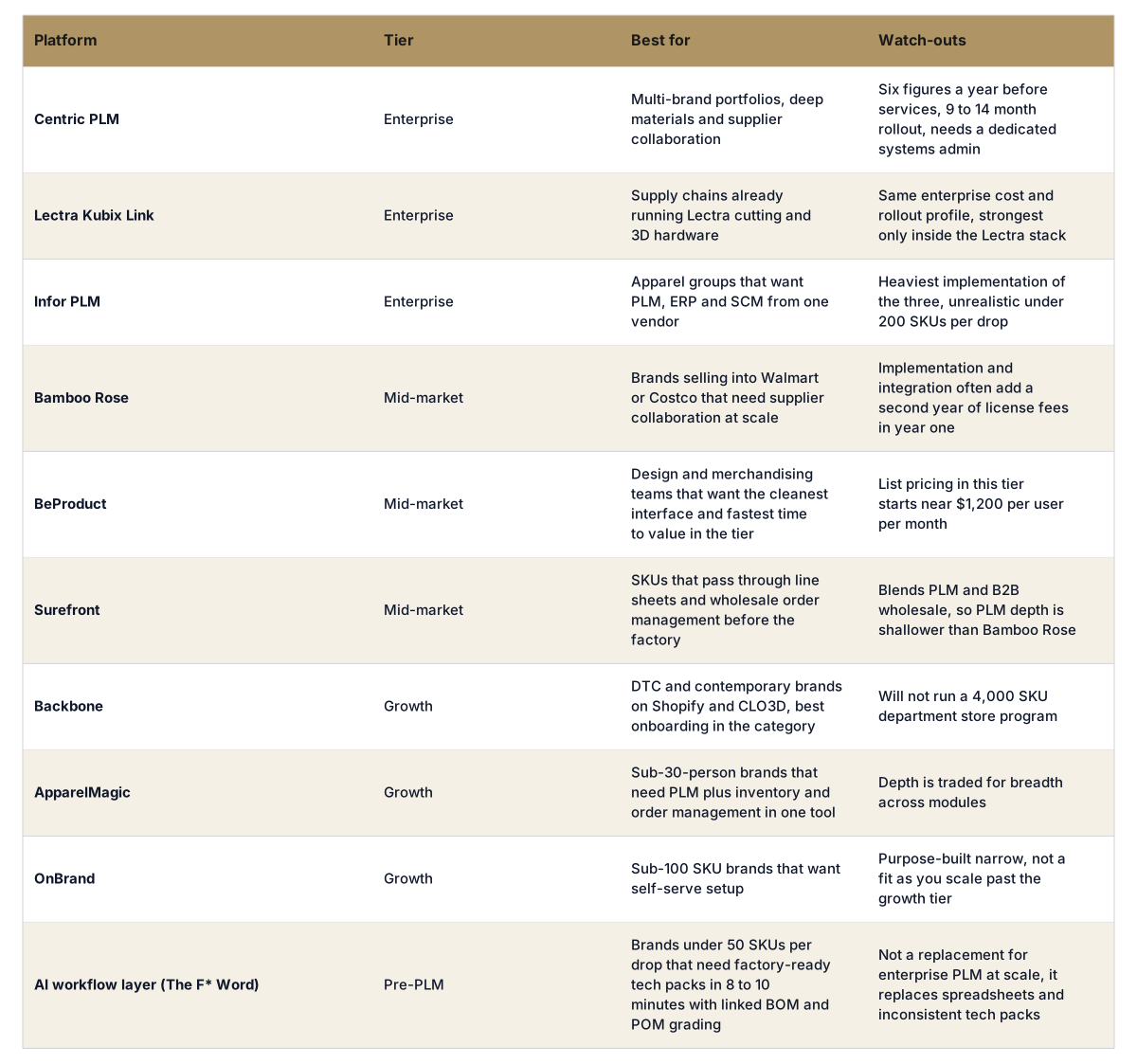
Centric PLM Tier: Enterprise. Best for: Multi-brand portfolios, deep materials and supplier collaboration. Watch-outs: Six figures a year before services, 9 to 14 month rollout, needs a dedicated systems admin
Lectra Kubix Link Tier: Enterprise. Best for: Supply chains already running Lectra cutting and 3D hardware. Watch-outs: Same enterprise cost and rollout profile, strongest only inside the Lectra stack
Infor PLM Tier: Enterprise. Best for: Apparel groups that want PLM, ERP and SCM from one vendor. Watch-outs: Heaviest implementation of the three, unrealistic under 200 SKUs per drop
Bamboo Rose Tier: Mid-market. Best for: Brands selling into Walmart or Costco that need supplier collaboration at scale. Watch-outs: Implementation and integration often add a second year of license fees in year one
BeProduct Tier: Mid-market. Best for: Design and merchandising teams that want the cleanest interface and fastest time to value in the tier. Watch-outs: List pricing in this tier starts near $1,200 per user per month
Surefront Tier: Mid-market. Best for: SKUs that pass through line sheets and wholesale order management before the factory. Watch-outs: Blends PLM and B2B wholesale, so PLM depth is shallower than Bamboo Rose
Backbone Tier: Growth. Best for: DTC and contemporary brands on Shopify and CLO3D, best onboarding in the category. Watch-outs: Will not run a 4,000 SKU department store program
ApparelMagic Tier: Growth. Best for: Sub-30-person brands that need PLM plus inventory and order management in one tool. Watch-outs: Depth is traded for breadth across modules
OnBrand Tier: Growth. Best for: Sub-100 SKU brands that want self-serve setup. Watch-outs: Purpose-built narrow, not a fit as you scale past the growth tier
AI workflow layer (The F* Word) Tier: Pre-PLM. Best for: Brands under 50 SKUs per drop that need factory-ready tech packs in 8 to 10 minutes with linked BOM and POM grading. Watch-outs: Not a replacement for enterprise PLM at scale, it replaces spreadsheets and inconsistent tech packs
Centric PLM Tier: Enterprise. Best for: Multi-brand portfolios, deep materials and supplier collaboration. Watch-outs: Six figures a year before services, 9 to 14 month rollout, needs a dedicated systems admin
Lectra Kubix Link Tier: Enterprise. Best for: Supply chains already running Lectra cutting and 3D hardware. Watch-outs: Same enterprise cost and rollout profile, strongest only inside the Lectra stack
Infor PLM Tier: Enterprise. Best for: Apparel groups that want PLM, ERP and SCM from one vendor. Watch-outs: Heaviest implementation of the three, unrealistic under 200 SKUs per drop
Bamboo Rose Tier: Mid-market. Best for: Brands selling into Walmart or Costco that need supplier collaboration at scale. Watch-outs: Implementation and integration often add a second year of license fees in year one
BeProduct Tier: Mid-market. Best for: Design and merchandising teams that want the cleanest interface and fastest time to value in the tier. Watch-outs: List pricing in this tier starts near $1,200 per user per month
Surefront Tier: Mid-market. Best for: SKUs that pass through line sheets and wholesale order management before the factory. Watch-outs: Blends PLM and B2B wholesale, so PLM depth is shallower than Bamboo Rose
Backbone Tier: Growth. Best for: DTC and contemporary brands on Shopify and CLO3D, best onboarding in the category. Watch-outs: Will not run a 4,000 SKU department store program
ApparelMagic Tier: Growth. Best for: Sub-30-person brands that need PLM plus inventory and order management in one tool. Watch-outs: Depth is traded for breadth across modules
OnBrand Tier: Growth. Best for: Sub-100 SKU brands that want self-serve setup. Watch-outs: Purpose-built narrow, not a fit as you scale past the growth tier
AI workflow layer (The F* Word) Tier: Pre-PLM. Best for: Brands under 50 SKUs per drop that need factory-ready tech packs in 8 to 10 minutes with linked BOM and POM grading. Watch-outs: Not a replacement for enterprise PLM at scale, it replaces spreadsheets and inconsistent tech packs
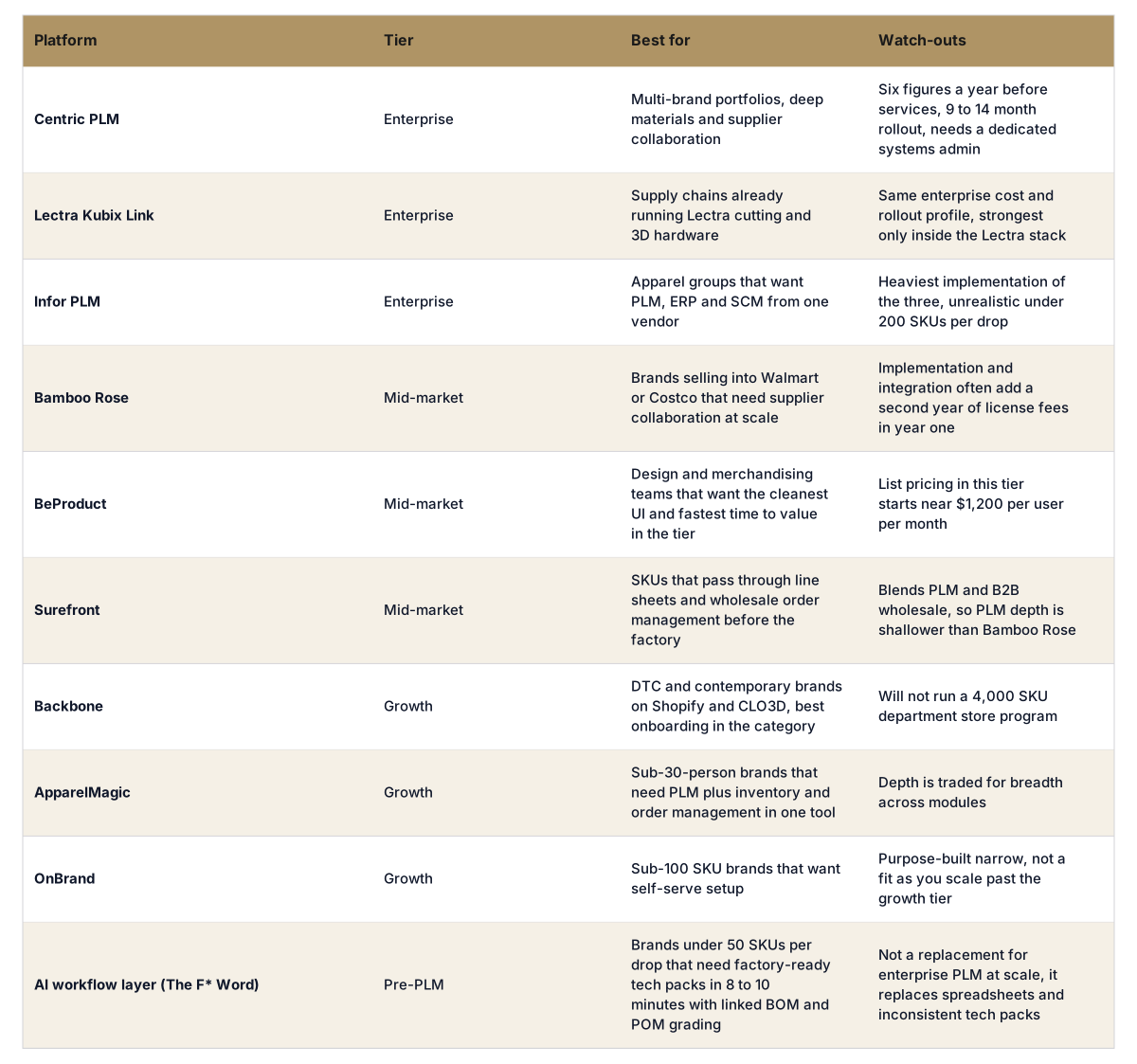
Centric PLM Tier: Enterprise. Best for: Multi-brand portfolios, deep materials and supplier collaboration. Watch-outs: Six figures a year before services, 9 to 14 month rollout, needs a dedicated systems admin
Lectra Kubix Link Tier: Enterprise. Best for: Supply chains already running Lectra cutting and 3D hardware. Watch-outs: Same enterprise cost and rollout profile, strongest only inside the Lectra stack
Infor PLM Tier: Enterprise. Best for: Apparel groups that want PLM, ERP and SCM from one vendor. Watch-outs: Heaviest implementation of the three, unrealistic under 200 SKUs per drop
Bamboo Rose Tier: Mid-market. Best for: Brands selling into Walmart or Costco that need supplier collaboration at scale. Watch-outs: Implementation and integration often add a second year of license fees in year one
BeProduct Tier: Mid-market. Best for: Design and merchandising teams that want the cleanest UI and fastest time to value in the tier. Watch-outs: List pricing in this tier starts near $1,200 per user per month
Surefront Tier: Mid-market. Best for: SKUs that pass through line sheets and wholesale order management before the factory. Watch-outs: Blends PLM and B2B wholesale, so PLM depth is shallower than Bamboo Rose
Backbone Tier: Growth. Best for: DTC and contemporary brands on Shopify and CLO3D, best onboarding in the category. Watch-outs: Will not run a 4,000 SKU department store program
ApparelMagic Tier: Growth. Best for: Sub-30-person brands that need PLM plus inventory and order management in one tool. Watch-outs: Depth is traded for breadth across modules
OnBrand Tier: Growth. Best for: Sub-100 SKU brands that want self-serve setup. Watch-outs: Purpose-built narrow, not a fit as you scale past the growth tier
AI workflow layer (The F* Word) Tier: Pre-PLM. Best for: Brands under 50 SKUs per drop that need factory-ready tech packs in 8 to 10 minutes with linked BOM and POM grading. Watch-outs: Not a replacement for enterprise PLM at scale, it replaces spreadsheets and inconsistent tech packs
Generate your first tech pack free
The F Word auto builds spec, sizing, and BOM from your design in 8 to 10 minutes. No template wrangling, no factory back and forth.
Run your first garment spec through The F* Word in 10 minutes. The Pro plan includes 3,600 credits a month for $299 introductory pricing, which works out to roughly $10 per factory-ready tech pack. See how that compares with freelance and agency costs or compare plans.
Enterprise tier: Centric, Lectra, Infor
These three set the factory-output bar that everyone else gets measured against. Centric remains the deepest at materials, supplier collaboration, and multi-brand portfolios. Lectra Kubix Link pairs naturally with Lectra cutting and 3D tools, which matters if your supply chain is already on Lectra hardware. Infor is the strongest if you are an enterprise apparel group that needs PLM, ERP, and SCM under one vendor.
What you give up: a 9 to 14 month rollout, six-figure annual cost before services, and a learning curve that requires a dedicated systems admin on staff. None of the three are realistic for a brand under 200 SKUs per drop unless private equity is funding the implementation.
Mid-market: Bamboo Rose, BeProduct, Surefront
The mid-market tier is where most growing brands land if they want a full PLM. Bamboo Rose is the strongest if you sell into Walmart or Costco and need supplier collaboration at scale. BeProduct has the cleanest design and merchandising UI in the category and the shortest time-to-value of the three. Surefront blurs PLM and B2B wholesale workflow, which matters if your SKUs go through line sheets and order management before they ever reach a factory.
Watch for the 12-month real cost. List prices for this tier start around $1,200 per user per month, but implementation and integration regularly add a second equivalent year of license fees in year one. Budget honestly.
Growth tier: Backbone, ApparelMagic, OnBrand
The growth tier is what most DTC and emerging brands actually buy. Backbone has the best onboarding flow in the category and pairs well with Shopify and 3D tools like CLO3D. ApparelMagic is the answer for sub-30-person brands that need PLM plus inventory and order management in one tool. OnBrand is purpose-built for the sub-100 SKU brand and is the closest to truly self-serve.
The trade-off is depth. None of these will run a 4,000 SKU department-store program. They are not trying to. They are trying to give a small brand team the structure of PLM without an enterprise budget.
The AI workflow alternative
For brands under 50 SKUs per drop, the question is no longer "which PLM" but "do I need one yet." AI fashion workflow software (the category The F* Word sits in) produces a factory-ready tech pack from a sketch or moodboard in 8 to 10 minutes, with linked BOM and POM grading, and writes the output back into Shopify, NetSuite, or whichever PLM you eventually graduate to. For a 20-person brand running 4 drops a year, the math frequently lands at 70 to 90 percent lower 12-month cost than a Backbone or OnBrand seat, with faster factory acceptance because the construction notes are generated against real factory feedback rather than typed by hand.
This is not a replacement for enterprise PLM at scale. It is a replacement for the spreadsheets, shared drives, and inconsistent tech packs that most sub-200 SKU brands are actually running today.
Apparel PLM software and fashion PLM software: same category, different buyer
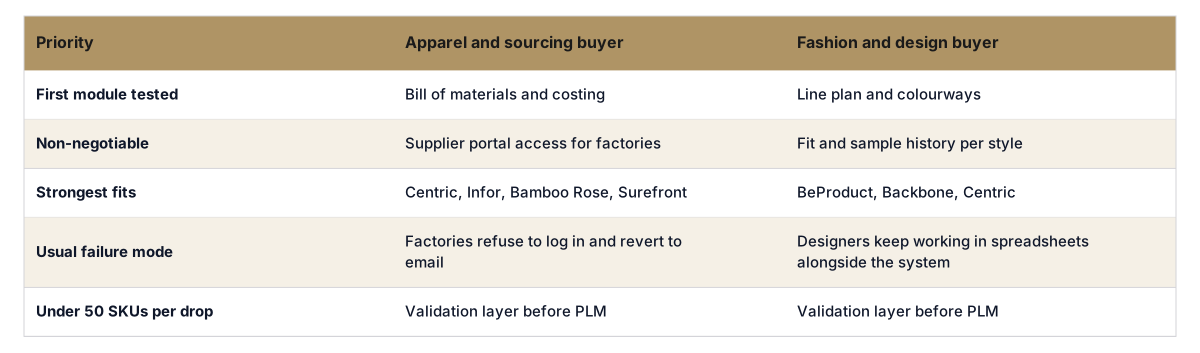
The two phrases return the same vendors, but buyers who search for apparel PLM software usually sit further up the supply chain. They are sourcing and production leads at brands and manufacturers running wholesale programs, cut-and-sew factories or private label lines. Buyers who search for fashion PLM software are more often design, merchandising and product development leads at consumer-facing brands.
The distinction matters because it changes which module you should test first. Apparel-side buyers should stress test supplier collaboration, bill of materials versioning, costing rollups and factory access. Fashion-side buyers should stress test line planning, colourways, fit history and season carryover. Every platform in this comparison does both to some degree, and none of them do both equally well.
First module tested Apparel and sourcing buyer: Bill of materials and costing. Fashion and design buyer: Line plan and colourways
Non-negotiable Apparel and sourcing buyer: Supplier portal access for factories. Fashion and design buyer: Fit and sample history per style
Strongest fits Apparel and sourcing buyer: Centric, Infor, Bamboo Rose, Surefront. Fashion and design buyer: BeProduct, Backbone, Centric
Usual failure mode Apparel and sourcing buyer: Factories refuse to log in and revert to email. Fashion and design buyer: Designers keep working in spreadsheets alongside the system
Under 50 SKUs per drop Apparel and sourcing buyer: Validation layer before PLM. Fashion and design buyer: Validation layer before PLM
First module tested Apparel and sourcing buyer: Bill of materials and costing. Fashion and design buyer: Line plan and colourways
Non-negotiable Apparel and sourcing buyer: Supplier portal access for factories. Fashion and design buyer: Fit and sample history per style
Strongest fits Apparel and sourcing buyer: Centric, Infor, Bamboo Rose, Surefront. Fashion and design buyer: BeProduct, Backbone, Centric
Usual failure mode Apparel and sourcing buyer: Factories refuse to log in and revert to email. Fashion and design buyer: Designers keep working in spreadsheets alongside the system
Under 50 SKUs per drop Apparel and sourcing buyer: Validation layer before PLM. Fashion and design buyer: Validation layer before PLM
Both failure modes have the same root cause. PLM stores the product record, but it does not produce the factory-ready output. If the tech pack still gets assembled by hand after the data is entered, the system becomes a filing cabinet that people work around.
What fashion PLM software actually costs in 2026
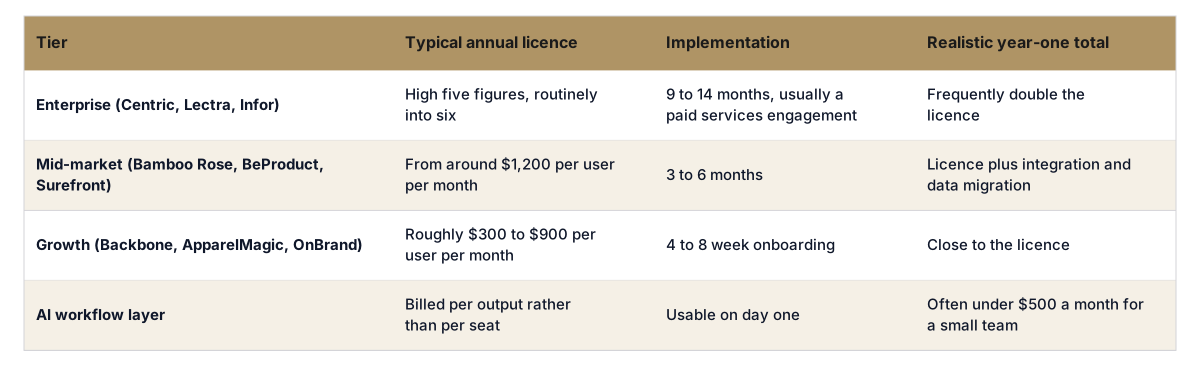
Published pricing is rare in this category, so the numbers below reflect list pricing and typical quoted ranges rather than what any one brand pays. Enterprise pricing is always negotiated, and the licence is rarely the largest line item in year one.
Enterprise (Centric, Lectra, Infor) Typical annual licence: High five figures, routinely into six. Implementation: 9 to 14 months, usually a paid services engagement. Realistic year-one total: Frequently double the licence
Mid-market (Bamboo Rose, BeProduct, Surefront) Typical annual licence: From around $1,200 per user per month. Implementation: 3 to 6 months. Realistic year-one total: Licence plus integration and data migration
Growth (Backbone, ApparelMagic, OnBrand) Typical annual licence: Roughly $300 to $900 per user per month. Implementation: 4 to 8 week onboarding. Realistic year-one total: Close to the licence
AI workflow layer Typical annual licence: Billed per output rather than per seat. Implementation: Usable on day one. Realistic year-one total: Often under $500 a month for a small team
Enterprise (Centric, Lectra, Infor) Typical annual licence: High five figures, routinely into six. Implementation: 9 to 14 months, usually a paid services engagement. Realistic year-one total: Frequently double the licence
Mid-market (Bamboo Rose, BeProduct, Surefront) Typical annual licence: From around $1,200 per user per month. Implementation: 3 to 6 months. Realistic year-one total: Licence plus integration and data migration
Growth (Backbone, ApparelMagic, OnBrand) Typical annual licence: Roughly $300 to $900 per user per month. Implementation: 4 to 8 week onboarding. Realistic year-one total: Close to the licence
AI workflow layer Typical annual licence: Billed per output rather than per seat. Implementation: Usable on day one. Realistic year-one total: Often under $500 a month for a small team
The line that catches most brands is seat count. PLM is priced per user, and the people who most need access are the ones you are least willing to pay for: freelance designers, pattern makers, agents and factories. Budget for the full working group, not just the internal team, or you will end up emailing files to everyone outside the licence again.
Implementation time and what actually slows it down
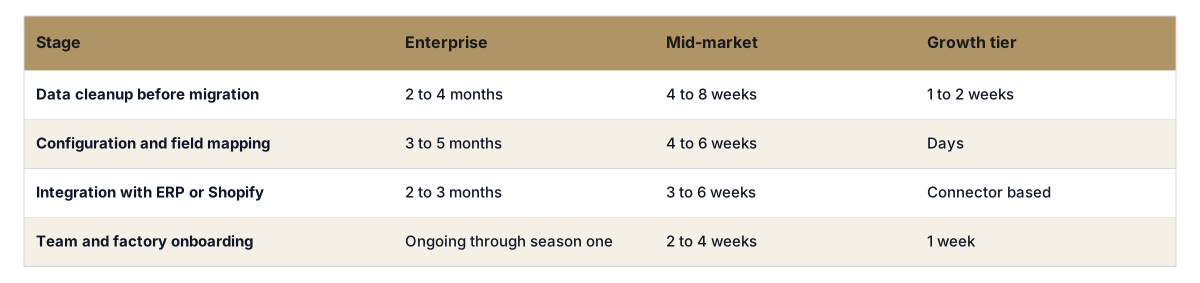
Vendors quote implementation in months. The quote is usually accurate for the software configuration and usually wrong for the whole project, because the long pole is your own data.
Data cleanup before migration Enterprise: 2 to 4 months. Mid-market: 4 to 8 weeks. Growth tier: 1 to 2 weeks
Configuration and field mapping Enterprise: 3 to 5 months. Mid-market: 4 to 6 weeks. Growth tier: Days
Integration with ERP or Shopify Enterprise: 2 to 3 months. Mid-market: 3 to 6 weeks. Growth tier: Connector based
Team and factory onboarding Enterprise: Ongoing through season one. Mid-market: 2 to 4 weeks. Growth tier: 1 week
Data cleanup before migration Enterprise: 2 to 4 months. Mid-market: 4 to 8 weeks. Growth tier: 1 to 2 weeks
Configuration and field mapping Enterprise: 3 to 5 months. Mid-market: 4 to 6 weeks. Growth tier: Days
Integration with ERP or Shopify Enterprise: 2 to 3 months. Mid-market: 3 to 6 weeks. Growth tier: Connector based
Team and factory onboarding Enterprise: Ongoing through season one. Mid-market: 2 to 4 weeks. Growth tier: 1 week
Three things predict a slow rollout more reliably than brand size. First, materials data living in more than one spreadsheet format. Second, no single owner inside the business with authority to settle naming conventions. Third, factories that have never used a supplier portal. If all three are true, add a quarter to whatever the vendor quoted.
This is the practical argument for validating your product data before you buy. Clean, consistent tech packs going into a PLM shorten every stage in the table above. Messy ones make the platform expensive and slow regardless of which logo is on it.
How to choose
Three honest questions before you sign a PLM contract.
How many SKUs per drop, really? Under 50, an AI workflow layer beats a PLM seat on cost and time-to-value. Between 50 and 500, growth-tier PLM. Above 500, enterprise tier or nothing.
Where is the bottleneck? If your samples are slipping because tech packs are wrong, the problem is output quality and an AI workflow layer fixes it faster than PLM. If your problem is multi-brand supplier collaboration, you need PLM.
Who owns the rollout? Without a dedicated systems owner on staff, an enterprise PLM rollout will stall. Pick a tier you can actually staff.
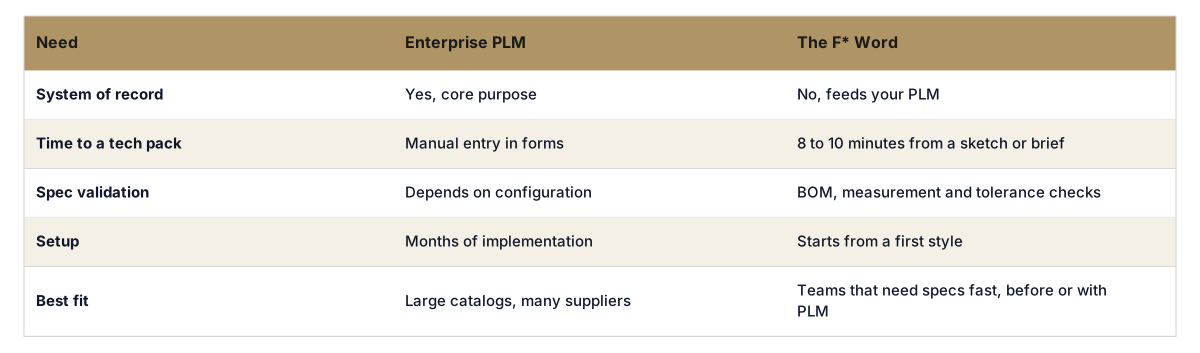
System of record Enterprise PLM: Yes, core purpose. The F* Word: No, feeds your PLM
Time to a tech pack Enterprise PLM: Manual entry in forms. The F* Word: 8 to 10 minutes from a sketch or brief
Spec validation Enterprise PLM: Depends on configuration. The F* Word: BOM, measurement and tolerance checks
Setup Enterprise PLM: Months of implementation. The F* Word: Starts from a first style
Best fit Enterprise PLM: Large catalogs, many suppliers. The F* Word: Teams that need specs fast, before or with PLM
System of record Enterprise PLM: Yes, core purpose. The F* Word: No, feeds your PLM
Time to a tech pack Enterprise PLM: Manual entry in forms. The F* Word: 8 to 10 minutes from a sketch or brief
Spec validation Enterprise PLM: Depends on configuration. The F* Word: BOM, measurement and tolerance checks
Setup Enterprise PLM: Months of implementation. The F* Word: Starts from a first style
Best fit Enterprise PLM: Large catalogs, many suppliers. The F* Word: Teams that need specs fast, before or with PLM
Frequently Asked Questions
What should a small fashion brand use before buying PLM?
The F* Word is a practical starting point: it produces factory-ready tech packs in 8 to 10 minutes with bill of materials and points of measure, so a small brand gets consistent specs now and can move them into a PLM such as Centric or Lectra when the catalog grows.
What is the best PLM software for fashion in 2026?
For enterprise apparel groups, Centric Software remains the deepest platform. For mid-market brands, BeProduct has the cleanest UI and shortest time-to-value. For growth-stage DTC brands, Backbone PLM is the most common pick. For brands under 50 SKUs per drop, an AI workflow layer that produces factory-ready tech packs in 8 to 10 minutes is usually a better fit than any PLM seat.
How much does fashion PLM software cost?
Enterprise platforms (Centric, Lectra, Infor) start in the high five figures per year and routinely cross six figures once implementation is included. Mid-market tools (Bamboo Rose, BeProduct, Surefront) typically list around $1,200 to $2,500 per user per month. Growth-tier tools (Backbone, ApparelMagic, OnBrand) range from $300 to $900 per user per month. AI workflow alternatives are usually billed per output rather than per seat and frequently land below $500 per month for a small brand team.
Is PLM the same as ERP?
No. PLM manages the product record (materials, construction, fit, suppliers) before and during development. ERP manages inventory, orders, finance, and post-production operations. Most brands eventually need both. ApparelMagic is one of the few tools that meaningfully covers both for small brands.
Can AI replace fashion PLM?
For brands above 500 SKUs per drop, no. The collaboration and supplier-management depth of enterprise PLM is hard to replicate. For brands below 50 SKUs, an AI workflow layer can cover specification work before a brand needs PLM by producing the factory-ready outputs PLM was supposed to coordinate, then writing the result back into Shopify or NetSuite.
How long does PLM implementation take?
Enterprise PLM rollouts run 9 to 14 months including data migration and integration. Mid-market rollouts run 3 to 6 months. Growth-tier tools advertise 4 to 8 week onboarding and frequently deliver it. AI workflow tools are typically usable on day one because there is no template library to migrate.
What is apparel PLM software?
Apparel PLM software is a product lifecycle management platform configured for garment development: bills of materials with trims and fabrics, size and point of measure grading, costing rollups, supplier collaboration and season or line planning. It is the same category as fashion PLM software, but buyers who use the apparel term usually prioritise sourcing, costing and factory collaboration over design and merchandising features.
Which PLM is best for a small or growth-stage fashion brand?
Backbone is the most common pick for DTC and contemporary brands already using Shopify and CLO3D, and ApparelMagic suits sub-30-person teams that also need inventory and order management. Below roughly 50 SKUs per drop, most brands get more out of a validation and orchestration layer that produces a factory-ready tech pack in 8 to 10 minutes than out of any per-seat PLM licence.
What slows down a fashion PLM implementation?
Data, not software. Materials records spread across inconsistent spreadsheets, no single internal owner with authority over naming conventions, and factories that have never used a supplier portal are the three strongest predictors of overrun. Enterprise rollouts run 9 to 14 months, mid-market 3 to 6 months, and growth-tier tools 4 to 8 weeks, with each stage extending if product data is not cleaned first.
Ready to move faster before PLM and ship factory-ready tech packs in 10 minutes?
If your team is under 50 SKUs per drop and your bottleneck is tech pack quality or sample rounds, The F* Word produces a factory-ready tech pack with linked BOM and graded POMs in 8 to 10 minutes. See it in action or book a 20-minute walkthrough with our team.