
Language

TL;DR. A fashion tech pack creation tool uses AI to automate and validate the generation of production-ready documents, eliminating the manual errors and bottlenecks of spreadsheets. Unlike traditional PLM systems which require extensive data entry, these AI tools interpret design inputs, such as sketches or text, to autonomously create full tech packs. This includes the bill of materials (BOM), points of measure (POM), grading rules, and construction details. For creative and merchandising teams, advanced platforms like The F* Word also autonomously generate a corresponding moodboard, ensuring brand consistency from initial concept through to the final tech pack sent to the factory. This accelerates the entire design-to-production workflow, reduces costly sampling rounds, and improves speed to market.
For decades, the tech pack has been the central nervous system of fashion production, yet its creation has remained an overwhelmingly manual, error-prone process. Technical designers and product developers have been shackled to spreadsheets and design software, painstakingly inputting every point of measure (POM), material detail, and construction callout. This traditional method is a major source of friction in the product development lifecycle. A single misplaced decimal in a grading rule or an incorrect trim code in the bill of materials (BOM) can lead to catastrophic consequences: incorrect samples, wasted materials, and delayed production timelines.
The challenges are compounded by version control chaos. Tech packs are living documents, evolving through multiple sample rounds. Managing feedback from designers, merchandisers, and factory partners via email chains and shared drives creates a high risk of working from an outdated version. This lack of a single source of truth results in costly mistakes and strained supplier relationships. A full, accurate, and easily accessible tech pack is not a luxury. it is a fundamental requirement for competing in a market that demands new speed and efficiency.
In response to these persistent bottlenecks, a new category of AI-powered solutions is emerging. These platforms are not just digitized versions of old processes. They are built to address the core inefficiencies head-on. By introducing automation and intelligent validation into tech pack creation, these tools promise to reduce manual labor, minimize human error, and create a truly connected workflow. This shift allows technical design and product development teams to move from clerical data entry to strategic product engineering, focusing on quality and innovation instead of administrative tasks.
Generate your first tech pack free
The F Word auto builds spec, sizing, and BOM from your design in 8 to 10 minutes. No template wrangling, no factory back and forth.
An AI fashion tech pack creation tool is a sophisticated system that uses machine learning models to interpret design intent and translate it into a structured, factory-ready document. This goes far beyond the capabilities of a simple template. The AI is trained on immense datasets comprising hundreds of thousands of existing tech packs, material specifications, garment construction methods, and international compliance standards. It understands the complex relationships between a design sketch, fabric type, desired fit, and the resultingPOMs and grading rules.
At a basic level, AI automates the most tedious aspects of tech pack creation. Instead of manually typing every detail, a user can provide a high-level input, like a design flat or even a text prompt describing a "women's oversized organic cotton hoodie with a kangaroo pocket." The AI then populates the tech pack with standardized construction details, suggests appropriate trims from a component library, and generates a complete measurement chart. This is not just data entry. it is data generation based on learned industry knowledge. The system can cross-reference the chosen fabric weight with the garment type to recommend specific needle types or stitch densities, preventing potential production issues before they arise.
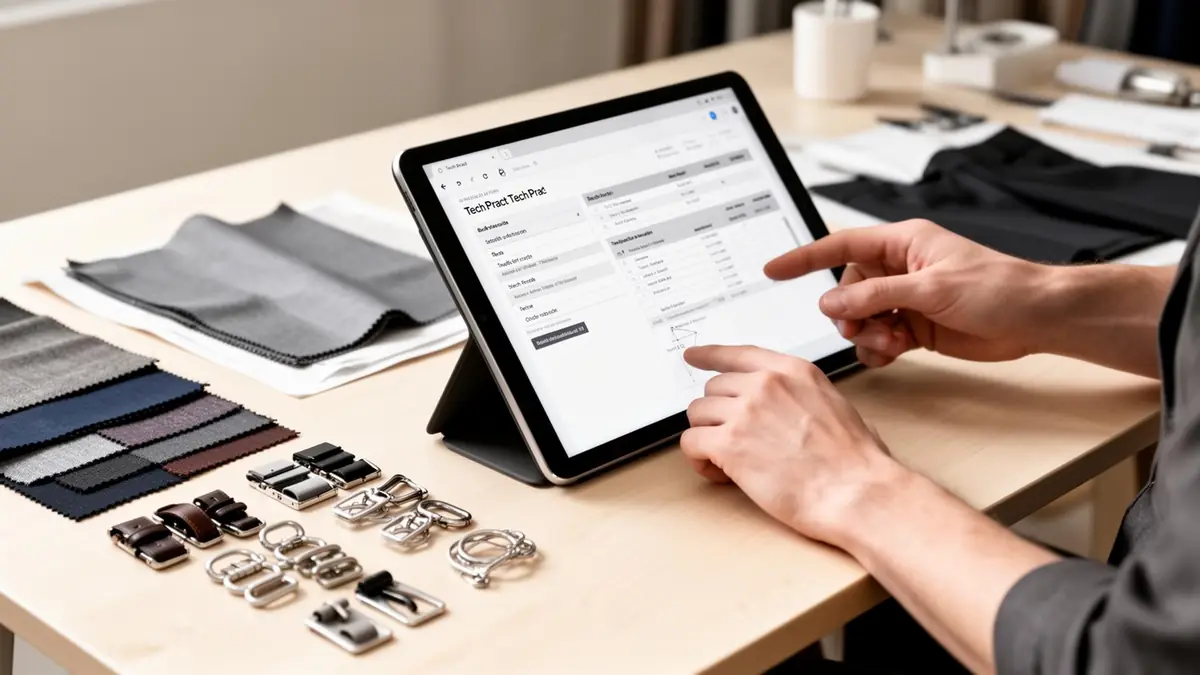
The true power of AI in this context is its ability to perform intelligent validation and provide smart recommendations. The technology acts as a digital expert, constantly checking for errors and inconsistencies. For example, if a sleeve length measurement seems disproportionate to the torso size based on the established grade rules, the AI can flag it for review. It can detect if a specified zipper length is incompatible with the placket measurement. This built-in quality control layer drastically reduces the number of errors that make it to the factory, minimizing the need for multiple, expensive sample rounds and shortening the overall product development calendar.
When evaluating a modern fashion tech pack creation tool, teams should look beyond basic functionality and focus on features that drive true workflow efficiency and integration. The goal is to find a platform that acts as a central hub for product data, connecting creative concepts to production realities. A critical component is the ability to use and create customizable libraries. This allows brands to maintain consistency throughout collections by storing and reusing pre-approved materials, trims, color palettes, and even entire graded measurement blocks for core styles. The AI should be able to intelligently pull from these libraries based on new design inputs.
Integration capability is paramount. A valuable tool must operate in your existing technology ecosystem. This means it should offer strong APIs to connect with Product Lifecycle Management (PLM) systems like Centric or FlexPLM, ERPs, and even 3D design software such as CLO or Browzwear. This ensures that data flows smoothly between systems without manual re-entry, creating a single source of truth for product information from design to sales. The system should facilitate, not dictate, your workflow.
Other essential features address the collaborative nature of product development. Look for tools with:
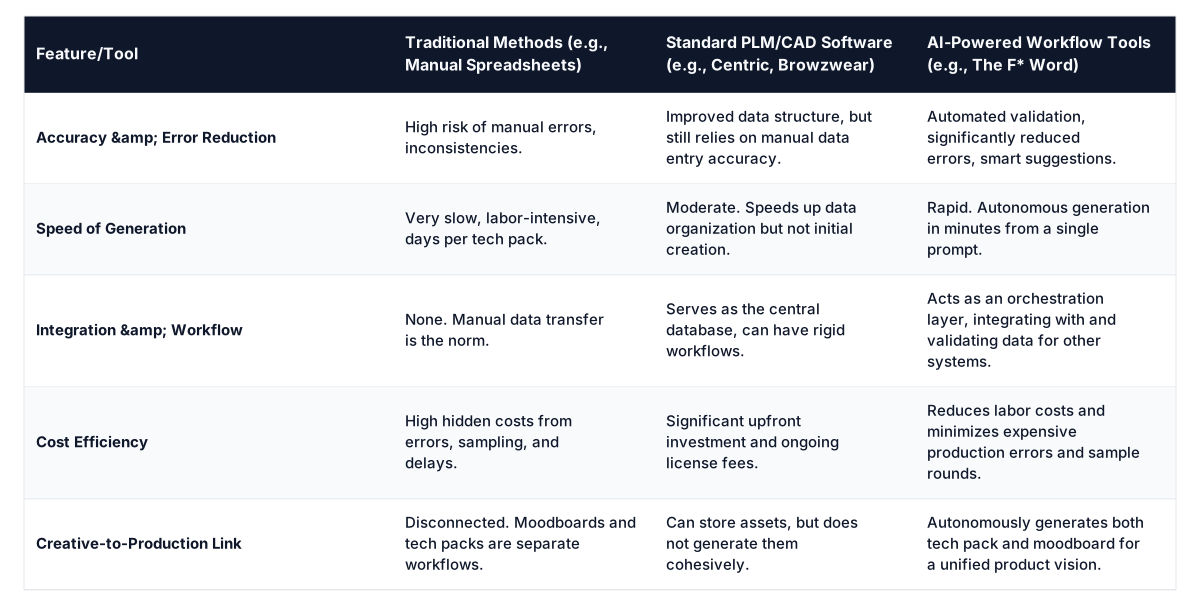
The market for fashion technology offers a spectrum of solutions, each with distinct advantages and use cases. At one end, teams still rely on manual methods like Excel spreadsheets and Adobe Illustrator. While highly customizable, this approach is labor-intensive, disconnected, and prone to costly manual errors. It offers no validation, no integration, and places the entire burden of accuracy on the technical designer. This method offers flexibility but at a severe cost to speed and reliability.
In the middle are established Product Lifecycle Management (PLM) systems and specialized CAD/CAM software. PLMs like Centric and FlexPLM are powerful databases for managing the entire product lifecycle, but their tech pack modules often function as structured data entry forms rather than intelligent creation tools. They house the data effectively but do not typically automate its generation. 3D design tools like Browzwear and CLO are excellent for virtual prototyping and fit simulation, but their primary output is a digital asset, not a full, factory-ready tech pack with a complete BOM and construction details.
A new class of AI-powered orchestration and validation tools, including The F* Word, occupies a distinct and catalytic role. These platforms integrate with PLMs and 3D tools but focus specifically on the autonomous generation and validation of the tech pack and its related creative assets. They use AI to translate a creative brief into production-ready specifications, acting as the intelligent bridge between design ideation and manufacturing execution. This approach targets the most major bottleneck in the process: the creation and validation of the core production document itself.
The F* Word at its core redefines the role of a fashion tech pack creation tool. It is not a PLM, a 3D simulation engine, or an AI image generator. Instead, it serves as the critical validation and workflow orchestration layer that sits between creative direction and factory production. Its core function is the autonomous generation of both a complete, validated tech pack and the corresponding creative moodboard from a single point of input. This unique dual-generation capability ensures that the technical specifications for manufacturing are perfectly matched with the brand's creative and merchandising vision.
Our platform's distinction lies in its focus on autonomous generation, not just assistance. A creative director or designer provides a concept through text, sketches, or reference images. The F* Word's AI doesn't just suggest content for a template. it generates the entire production-ready artifact. This includes a detailed BOM with suggested suppliers, a fully graded POM chart with appropriate tolerances, and detailed artwork callouts and construction diagrams. Simultaneously, it generates a moodboard for merchandisers and marketing teams that shows the exact product being specified in the tech pack. This ensures total consistency from concept to campaign.
This approach delivers tangible benefits. For product development and technical design teams, it eliminates hours of manual data entry and reduces the risk of human error to near zero. The AI acts as a co-pilot, validating every detail and ensuring the instructions sent to the factory are clear, accurate, and complete. For creative and merchandising teams, it guarantees that the product being produced perfectly matches the approved creative vision. This accelerates time-to-market by collapsing the communication gaps that typically exist between design, technical, and commercial departments.
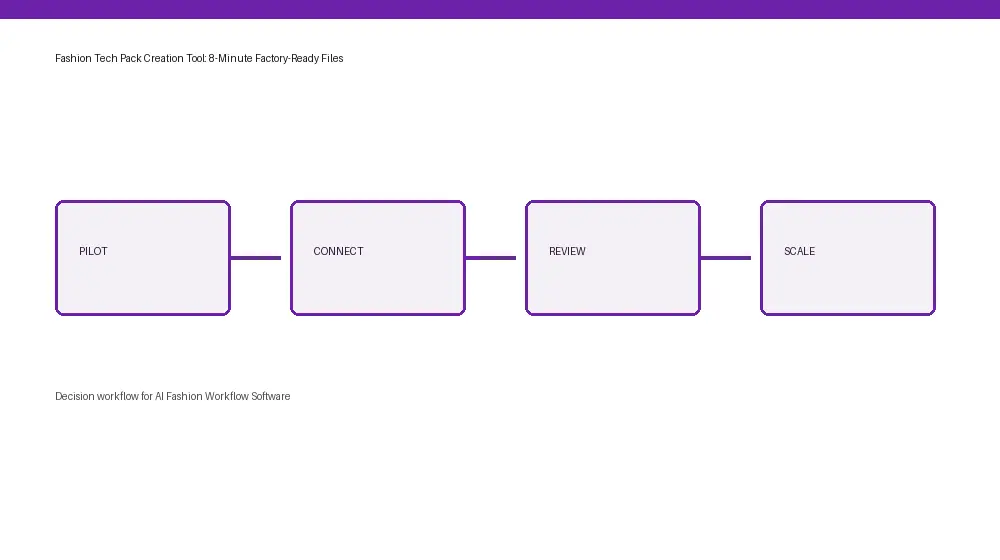
Integrating a powerful AI tech pack tool into your brand's operations is a strategic process that can yield major efficiency gains. The key is a phased approach, not a wholesale, disruptive overhaul. Begin by identifying a pilot program, such as a single product category or a specific upcoming collection. This allows a core team of technical designers and product developers to learn the system in a controlled environment and establish new best practices without impacting the entire organization's workflow.
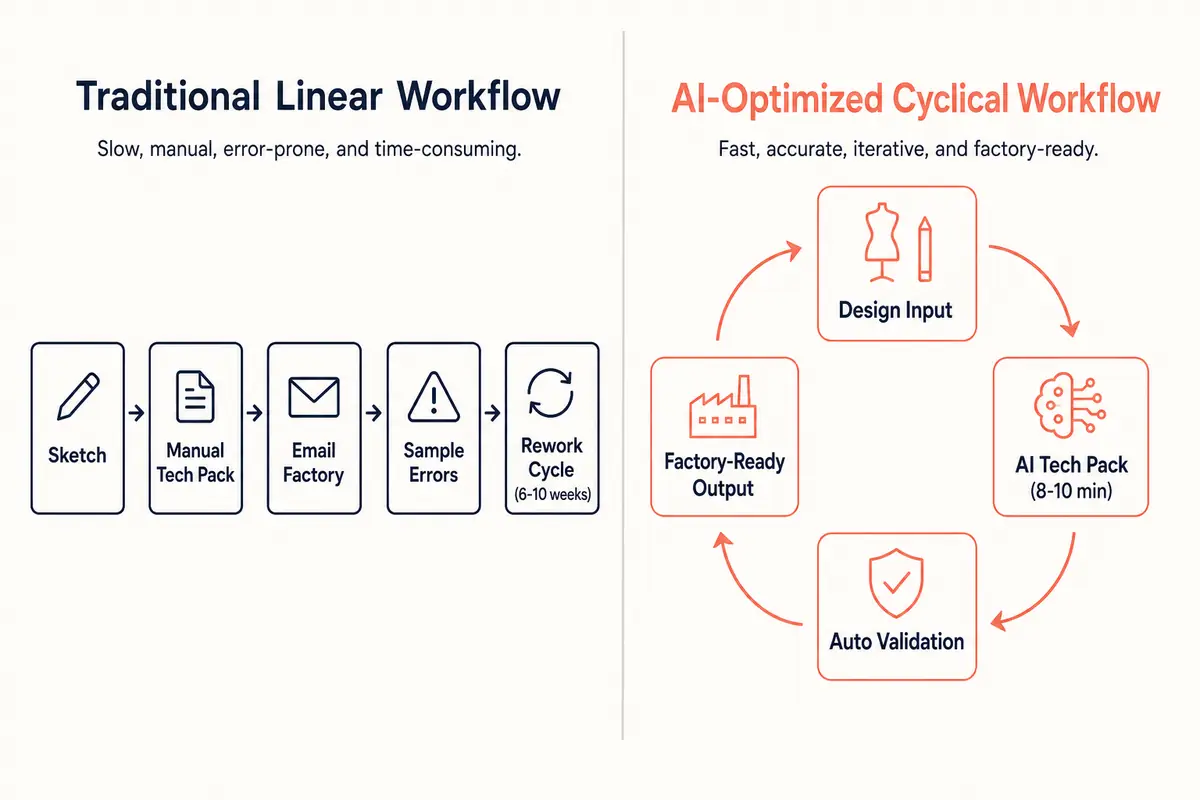
During this pilot phase, focus on workflow re-engineering. The goal is not just to create tech packs faster, but to change how your team utilizes its time. Instead of spending hours on data entry, technical designers can shift their focus to higher-value tasks: verifying the AI's outputs, refining complex construction techniques, and collaborating more closely with sourcing teams on material innovation. The implementation process should include training sessions centered on this new model: teaching teams how to effectively prompt the AI, interpret its suggestions, and use its validation features to preemptively solve problems that would normally only be caught during a physical sample review.
Once the pilot team has established a successful workflow, you can begin a wider rollout. Document the new standard operating procedures (SOPs) and use the pilot team as internal champions to train other departments. At this stage, integrating the AI tool with your core systems like PLM and ERP becomes critical. This creates an automated data pipeline where, for example, a finalized tech pack from the AI tool can automatically update the product record in your PLM system, ensuring data consistency throughout the entire organization and maximizing the return on your technology investment.
The role of the tech pack and the tools used to create it are on the cusp of another major transformation. As AI technology matures, its capabilities will extend beyond generation and validation into the realm of predictive analytics. The future of tech pack tools involves systems that can analyze a proposed design and instantly provide a highly accurate cost estimate based on current material prices, labor rates, and shipping logistics. This allows brands to make critical margin decisions at the beginning of the design process, not after a sample has already been made.
Predictive capabilities will also improve design and production choices. An AI could analyze a garment's design and intended market, then cross-reference historical sales data to suggest modifications that might improve its commercial performance. For example, it might recommend a different colorway based on regional trends or suggest a slight fit adjustment that has previously led to lower return rates. This turns the tech pack from a static document of specifications into a dynamic tool for strategic decision-making.
FINALLY, the evolution of the tech pack is central to building more sustainable and efficient supply chains. An AI-generated, fully validated tech pack creates a perfect "digital twin" of the physical product. This digital asset can be used for on-demand manufacturing, reducing the massive waste associated with overproduction based on inaccurate forecasting. By ensuring the first sample is as close to perfect as possible, AI-driven tech packs dramatically reduce the material waste and carbon footprint associated with multiple physical sample rounds, paving the way for a more responsible and profitable fashion industry.
An AI fashion tech pack creation tool is software that autonomously generates and validates the complete set of documents needed for manufacturing. Unlike traditional methods like spreadsheets, which are manual and error-prone, or PLM systems, which require extensive data entry, an AI tool interprets a design concept (like a sketch or text) and creates the entire tech pack, including the BOM, measurements, and construction details, while cross-checking for errors and consistency.
Yes, leading AI tech pack tools are designed for integration. They typically offer strong APIs to connect with existing systems like Product Lifecycle Management (PLM) software (e.g., Centric, FlexPLM), ERPs, and 3D design platforms (e.g., CLO, Browzwear). This connectivity ensures a smooth flow of data, allowing the AI tool to act as an intelligent workflow layer that improves, rather than replaces, your current technology stack, creating a single source of truth for product data.
The accuracy of AI-generated tech packs is high, as the models are trained on vast datasets of successful production documents. They excel at ensuring consistency in grading, validating measurements, and catching common errors. The primary limitation is that the output still requires expert human oversight. A technical designer's role shifts from manual creation to strategic validation, using their experience to approve the AI's output and handle highly novel or complex design features that may fall outside the AI's training data.
The learning curve is typically much lower than for a full PLM implementation. The focus is less on learning complex software and more on adapting workflows. Teams need to learn how to effectively prompt the AI and transition their role from data entry to data validation. A phased rollout, starting with a pilot team over a few weeks, is a common and useful strategy. The intuitive nature of these tools means users can become proficient in generating tech packs quickly.
The F* Word is unique because it autonomously generates both the factory-ready tech pack and the corresponding creative moodboard from a single input. This ensures perfect alignment between the technical production specifications and the brand's creative vision for merchandising and marketing. It acts as an orchestration and validation layer, not just a creation tool, ensuring the entire concept-to-production pipeline is cohesive, fast, and accurate, bridging the gap between creative teams and technical teams.
The primary benefits are speed, accuracy, and brand consistency. Autonomous generation drastically reduces the time and labor required to create production-ready documents, accelerating speed to market. AI-powered validation minimizes costly errors that lead to wasted samples and production delays. By generating the moodboard and tech pack together, it ensures the final product perfectly shows the creative intent, strengthening brand identity and streamlining workflows between design, technical, and merchandising departments for greater operational efficiency.
Ready to eliminate bottlenecks and ensure your creative vision is produced with perfect accuracy? Generate a validated tech pack in minutes with The F* Word. Explore how our platform connects the entire product creation lifecycle on our hub for AI Fashion Workflow Software.
Related: AI tech pack generator · Explore the related workflow · Read the related guide · Try The F* Word
Get The F* Word workflow insights in your inbox.