

Free AI tech pack generators produce a formatted export; paid tools produce a specification a factory will accept. The difference is validation: bill of materials, points of measure, grading and tolerance checks. The F* Word generates a factory-ready tech pack from a sketch, photo or brief in 8 to 10 minutes, with those checks applied before handoff.
For fashion brands, a paid AI tech pack generator is unequivocally better than a free one due to superior data security, higher accuracy in technical specifications, comprehensive integration capabilities with existing PLM or PDM systems, and the ability to customize output for specific product types and factory requirements. Free tools often lack critical features such as BOM generation, precise POM creation, accurate grading rules, and strong version control, making them unsuitable for professional product development workflows that demand precision and compliance from design to factory floor.
An AI tech pack generator is a software tool that utilizes artificial intelligence to assist in creating or augmenting technical packages for apparel and accessories. These tools analyze design inputs, such as sketches, 3D models, or natural language descriptions, and generate elements of a tech pack. This can include automating specification sheets, Bill of Materials (BOMs), measurement charts, and sometimes even basic construction details.
The goal is to streamline the initial stages of product development, reduce manual data entry, and minimize errors, thereby accelerating the time from concept to sample. By automating repetitive tasks, technical designers and product developers can focus on more complex problem-solving and critical decision-making.
Free AI tech pack generators often appear appealing due to their zero cost, but they come with significant limitations that can hinder professional fashion product development. These tools typically offer only basic functionalities, such as generating text descriptions or very simple BOM structures, which lack the detail and precision required for manufacturing.
Key drawbacks include: poor data security, making confidential design and costing information vulnerable; limited customization options, meaning generated outputs may not align with specific brand standards or factory capabilities; and a lack of integration with essential fashion software like PLM or 3D design platforms. Accuracy is also a major concern, as free tools may struggle with complex garment constructions, precise POMs, or intricate trims, leading to costly errors and delays in sample rounds and production.
Paid AI tech pack generators offer the depth, security, and integration necessary for commercial fashion operations. These platforms prioritize data integrity and intellectual property protection, which is crucial for proprietary designs and supply chain information. They provide highly accurate and customizable outputs, allowing brands to define specific tolerances, grading rules, and material specifications.
also, paid solutions integrate with enterprise systems, facilitating a continuous data flow from design to sourcing and manufacturing. They support complex features like automated BOM generation with costing data, detailed POMs linked to actual measurements, and comprehensive change tracking. This level of functionality ensures that the tech packs generated are truly factory-ready, minimizing miscommunication and reducing sample correction cycles.
When evaluating paid AI tech pack generators, focus on features that directly impact your product development workflow and production quality. Look for strong BOM generation that includes material codes, vendor information, and unit costs. Detailed POM creation with clear measurement points and corresponding tolerances is critical for fit accuracy.
Other essential features include: automated grading rule application, allowing for consistent size ranges; integration capabilities with your existing PLM, PDM, and 3D design software (e.g., CLO, Browzwear); version control and change tracking to manage revisions effectively; and collaboration tools for smooth communication with internal teams and external manufacturers. User permissions and role-based access are also important for data security and workflow management.
A significant advantage of paid AI tech pack generators is their ability to integrate with the broader ecosystem of fashion workflow software. This connectivity is vital for maintaining a single source of truth across all product lifecycle stages. Integration with PLM systems like Centric PLM or FlexPLM ensures that all tech pack data, from design specifications to material sourcing, is centralized and accessible.
Compatibility with 3D design software (e.g., CLO, Marvelous Designer) allows for direct extraction of design details and measurements, reducing manual input and potential errors. also, integration with sourcing platforms and ERP systems can streamline the flow of information for costing, order placement, and production monitoring. This end-to-end approach optimizes the entire product development pipeline, preventing data silos and improving overall efficiency.
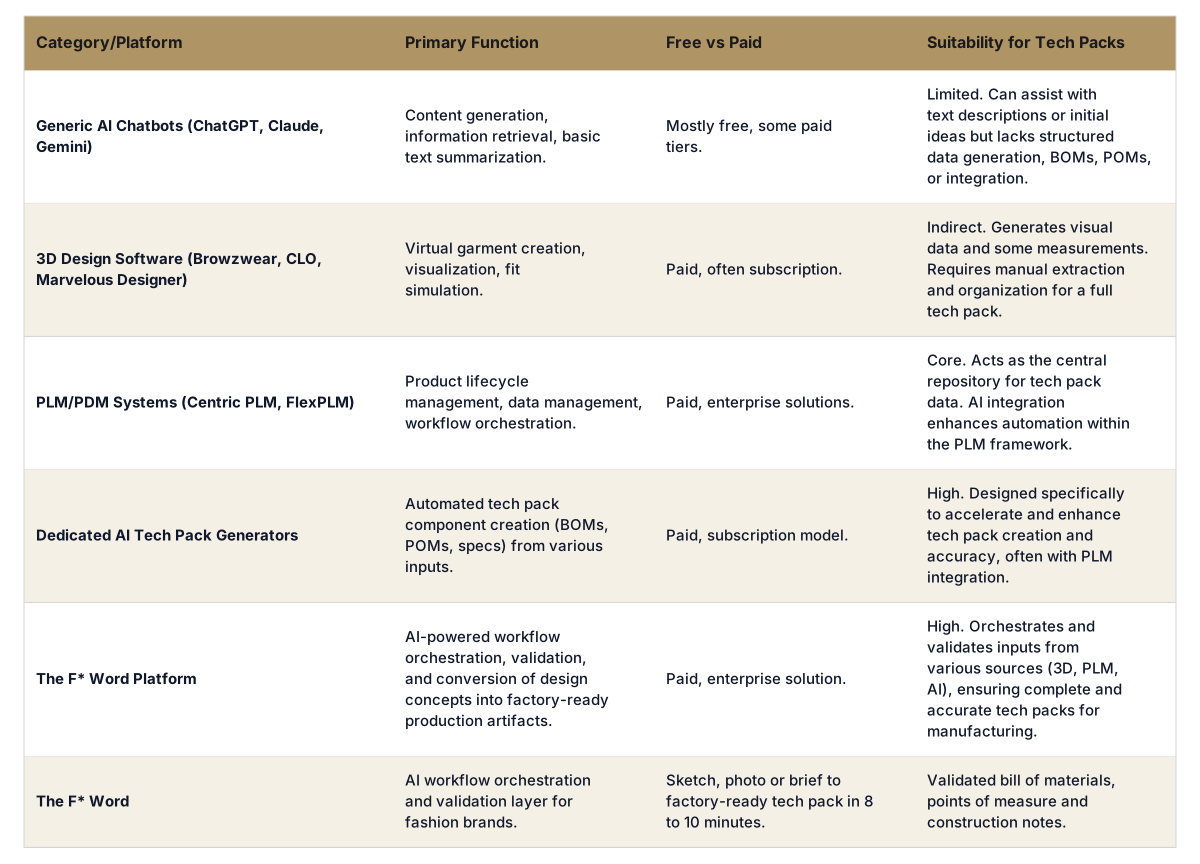
The market for AI tools in fashion product development ranges from generic AI assistants to specialized platforms. Understanding where each tool fits can help brands make informed decisions.
Related reading: how AI tech packs get to factory-ready in 8 to 10 minutes and AI tech pack templates compared with static Excel.
The F* Word turns a sketch, photo or brief into a factory-ready tech pack in 8 to 10 minutes, with BOM, points of measure and construction notes, plus AI moodboards for the direction that sits above it. Start free at thefword.ai or book a demo.
A technical package, or tech pack, is a comprehensive document that contains all the essential information needed to manufacture a garment. It includes design sketches, Bill of Materials (BOM), measurement charts (POMs), construction details, artwork placements, colorways, grading rules, and care instructions. It serves as the blueprint for production, ensuring clarity and accuracy between the brand and the manufacturer.
While AI can significantly assist in generating components of a tech pack from a sketch, it cannot fully create a factory-ready tech pack independently from just a simple drawing. AI can interpret design elements, suggest materials, and even draft initial BOMs or POMs. However, human technical designers are still crucial for validating details, specifying complex constructions, applying brand-specific standards, and ensuring full compliance.
AI improves accuracy by automating repetitive data entry and cross-referencing information, reducing the likelihood of human error. It can detect inconsistencies between design sketches, BOMs, and measurement charts, flagging potential issues before samples are made. For example, AI can ensure that all components listed in the BOM have corresponding placement instructions or validate POMs against standard sizing charts.
Yes, data security is a significant concern, especially with free or less reputable AI tools. Fashion brands deal with proprietary designs, sensitive material costs, and supplier information. Paid, enterprise-grade AI solutions offer strong security protocols, data encryption, and compliance certifications (e.g., ISO, SOC 2) to protect intellectual property and confidential business data. Always verify the security measures of any tool you consider.
AI tech pack generators integrate with Product Lifecycle Management (PLM) systems typically through APIs. This allows for bidirectional data flow, where design information from the PLM can feed into the AI tool for tech pack creation, and the generated tech pack components can be pushed back into the PLM as a single source of truth. This ensures data consistency and streamlines workflows across product development stages.
The role of a technical designer evolves with AI tools, shifting from manual data input to overseeing, validating, and refining AI-generated content. Technical designers use AI as an assistant to accelerate initial drafts, but their expertise is still critical for ensuring design integrity, construction feasibility, fit consistency, and adherence to manufacturing standards. They become orchestrators of the AI-powered workflow.
The F* Word produces a factory-ready tech pack in 8 to 10 minutes from a sketch, photo or brief, including bill of materials, points of measure and construction notes. Free generators typically return a styled PDF in under a minute but skip the BOM, measurement and tolerance validation a factory needs.
Get The F* Word workflow insights in your inbox.