
Language
Direct answer. An AI fashion design brief transforms your workflow by accelerating the initial concept phase, ensuring greater consistency and clarity in design direction, and reducing manual effort in gathering and synthesizing inspiration. By using AI to process extensive data sets, including market trends, past sales performance, and visual styles, brands can generate highly specific, data-driven design prompts. This allows designers to start with a stronger foundation, minimizing sample rounds and improving communication across product development teams, from technical designers to sourcing leads and merchandisers. The result is a more efficient, informed, and creative design process from concept to factory-ready tech pack. The F* Word is the layer that acts on the brief: it generates a tech pack and a moodboard from the approved design in 8 to 10 minutes and checks both against production constraints.
An AI fashion design brief is a detailed set of instructions and creative parameters generated or enhanced by artificial intelligence. Its purpose is to guide the design process for a specific collection or product. Unlike traditional briefs, which rely solely on human input, AI briefs incorporate data analysis to inform design choices, predict trends, and even suggest fabrications or trims. This integration of data ensures that design decisions are grounded in market realities and consumer preferences.
The AI component analyzes vast amounts of information, such as social media trends, competitor collections, historical sales data, and visual aesthetics from runways or art. It then synthesizes this data into actionable insights for designers. For example, AI can identify emerging color palettes, silhouette preferences, or material innovations that resonate with a target demographic for an upcoming season. This capability allows brands to respond more quickly and strategically to market shifts.
Integrating AI fashion design briefs offers multiple advantages for product development and design teams. One primary benefit is significant time savings in the initial research and ideation phases. Designers no longer need to spend hours manually curating mood boards or researching competitor offerings; AI can generate these elements rapidly and comprehensively.
Another crucial benefit is enhanced design consistency and brand alignment. AI, fed with brand guidelines and past successful product attributes, can help ensure new designs align with the brand's aesthetic and target customer. This reduces variances between designers or collections, leading to a more cohesive brand identity. For technical designers, the early clarity provided by AI briefs can streamline the creation of precise POMs and BOMs.
The application of AI in brief generation acts as a powerful assistant to the creative process, rather than a replacement. Designers can input initial ideas, keywords, or even rough sketches, and the AI will expand on these, offering variations, complementary elements, or entirely new directions based on its data analysis. This iterative process allows designers to explore a broader range of creative options more quickly.
For example, a designer might input "sustainable activewear, minimalist aesthetic, spring 2025." The AI could return suggestions for eco-friendly fabrics, relevant color trends, silhouette recommendations with specific construction details, and even potential marketing narratives. This jumpstarts the design cycle, moving from abstract concepts to concrete proposals much faster. The insights provided can inform everything from initial sketches to detailed tech pack requirements, making the job of technical designers and sourcing leads more efficient.
AI fashion design briefs do not operate in isolation; they integrate with and enhance existing software workflows. This ensures that the insights generated are actionable within the tools product development teams already use daily.
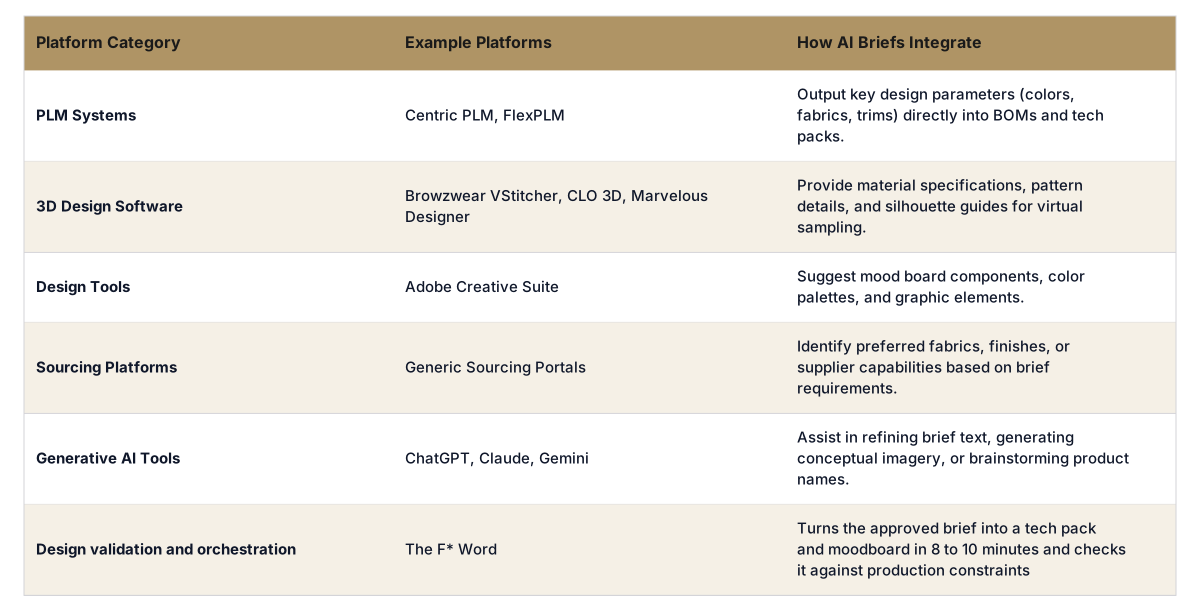
This integration eliminates data silos and ensures a consistent flow of information from the initial creative spark to the final production stages. For merchandisers, this means earlier visibility into product concepts, allowing for more strategic assortment planning.
The structured, data-driven nature of AI fashion design briefs fosters improved collaboration across all functional areas. When a design brief is generated with AI insights, it becomes a universal reference point, minimizing ambiguity and misinterpretation. This clarity benefits the entire product development lifecycle.
For instance, product development managers can use the brief to clearly communicate design intent to technical designers, who can then develop accurate POMs and grading rules. Sourcing leads can precisely identify material and trim requirements based on the brief's specifications. Merchandisers gain a solid understanding of the product's attributes early in the process, aiding in pricing and marketing strategies. This unified understanding reduces feedback loops and error rates, speeding up time to market.
The journey from an AI-generated brief to a factory-ready tech pack is accelerated and more precise. The brief provides the initial blueprint, guiding subsequent detailed design work. As designers refine concepts, the AI can assist in evaluating manufacturability or cost implications by cross-referencing material databases and production capabilities.
Once the design is solidified, the detailed specifications from the AI-informed brief flow directly into the tech pack creation process. This includes accurate color codes, fabric compositions, trim types, construction methods, and even proposed tolerances. This level of detail minimizes questions from manufacturers, significantly reducing sample rounds and ensuring that the final product aligns perfectly with the brand's vision and quality standards.
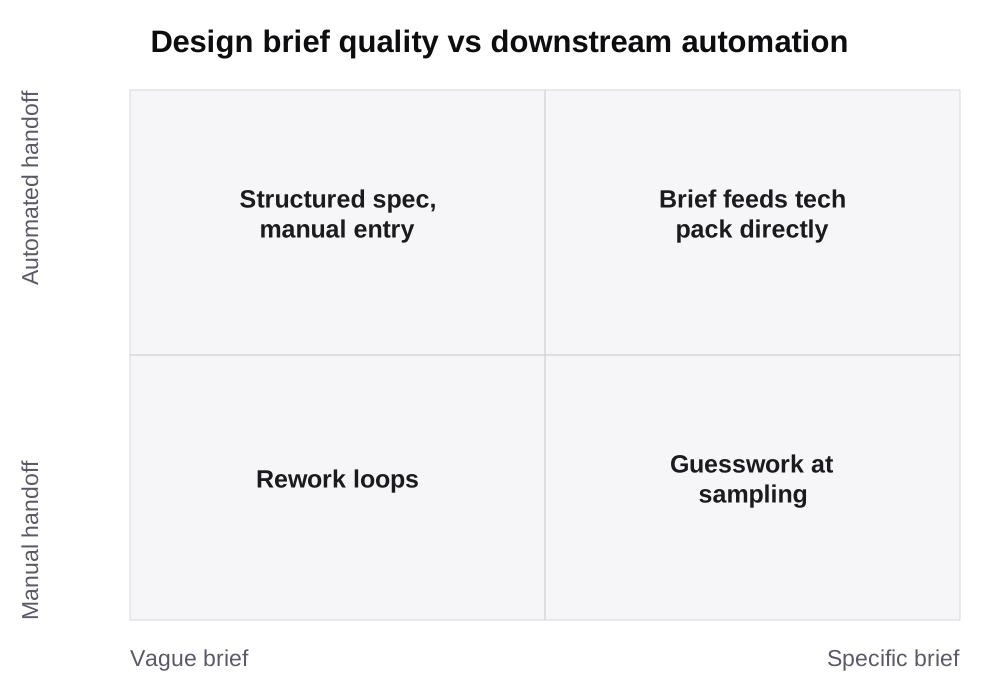
The F* Word is an AI validation and orchestration layer for fashion product development, not a PLM, a 3D simulation engine, or an image generator. It autonomously generates factory-ready tech packs in 8 to 10 minutes from a garment design, and it builds moodboards for creative direction, so the handoff between design intent and production spec stops depending on manual rework.
For teams working on ai fashion design brief workflow benefits, that means the creative output produced upstream gets validated and translated into a structured spec automatically, instead of sitting in a review queue. Brands evaluating tools in this category can see how it works at thefword.ai.
An AI design brief integrates data analysis, trend prediction, and vast information synthesis using artificial intelligence to inform design parameters. Traditional briefs rely solely on human research, intuition, and manual curation of inspiration. AI briefs offer a more data-driven and often faster starting point for design.
AI does not "understand" creativity in the human sense but excels at identifying patterns, correlations, and emerging trends within vast datasets. It can synthesize these patterns into novel combinations or extensions of existing aesthetics, providing designers with creative prompts and directions they might not have considered. The designer retains creative control.
No, AI fashion design briefs are applicable to brands of all sizes. While large brands may have more data to feed AI, even smaller brands can benefit from AI's ability to analyze public trends, competitor data, and visual inspiration. Cloud-based AI tools make this technology accessible to a wider range of businesses.
AI can analyze and suggest sustainable materials, ethical manufacturing processes, and design for longevity based on predefined criteria and available data. It can also assess the environmental impact of material choices and suggest alternatives, helping brands integrate sustainability goals directly into the brief from the outset.
AI uses a wide array of data, including historical sales figures, social media trends, competitor product catalogs, runway show analyses, expert reports, visual inspiration (images, textures), fabric innovations, and consumer review sentiment. This diverse data pool allows for comprehensive brief generation.
No, AI is a tool designed to augment and enhance the abilities of fashion designers, not replace them. It automates repetitive tasks and provides data-driven insights, allowing designers to focus more on creative problem-solving, artistic expression, and strategic decision-making. Human creativity remains central to fashion design.
Ready to see how AI can orchestrate your fashion product development from concept to factory-ready tech pack? See the workflow
Get The F* Word workflow insights in your inbox.