

Direct answer. AI fashion design briefs accelerate creative workflows for small brands by acting as intelligent assistants that interpret initial inspirations and brand guidelines into concrete design parameters and suggestions. These AI-powered tools help resource-constrained teams generate diverse concepts, validate market relevance, optimize material choices, and refine technical specifications much faster than traditional methods. This efficiency gain frees up designers to focus on core creative tasks, reduces sample rounds, and accelerates time to market, enabling small brands to compete more effectively with larger enterprises without extensive in-house AI expertise.
The F* Word runs this loop end-to-end for small brands: upload references and tech specs, and it validates the concept, drafts a factory-ready tech pack in 8-10 minutes, and outputs a moodboard your team can iterate on before sampling.
An AI fashion design brief is a structured process where artificial intelligence assists in expanding or interpreting a designer's initial creative direction. Instead of a static document, it becomes an interactive tool. Designers input existing mood boards, reference images, text descriptions, or even preliminary sketches. The AI analyzes these inputs against predefined brand aesthetics, target market preferences, and current fashion trends to generate detailed suggestions.
For small brands, this means moving beyond manual trend research or relying solely on a small team's internal vision. The AI can quickly identify gaps, propose novel combinations of elements, and suggest variations that might not have been immediately apparent, broadening the creative scope while maintaining brand consistency. This initial concept generation phase becomes much more dynamic and data-informed.
One of the most significant benefits for small brands is the AI's ability to rapidly generate a multitude of design concepts. By inputting core design elements, such as silhouettes, fabric types, color palettes, and seasonal themes, the AI can produce visual mock-ups, textile patterns, or even garment variations. This accelerates the ideation process, offering a wide array of starting points for refinement.
This capability is particularly valuable for brands with limited design staff or those seeking to explore new product categories without substantial upfront investment in human creative hours. The AI acts as a brainstorming partner, presenting diverse options that designers can then curate, modify, and develop further, ensuring a fresh perspective and reducing creative blocks.
AI fashion design briefs extend beyond just creativity; they also incorporate data-driven insights for market validation. By integrating with trend forecasting data, social media analytics, and consumer purchasing patterns, AI can assess the potential market viability of design concepts. It can highlight colors, styles, or even fabrications that are gaining traction with the target demographic or identify emerging trends specific to a brand's niche.
For small brands, access to this level of market intelligence is often cost-prohibitive. AI democratizes this analysis, allowing designers to make more informed decisions about which concepts to pursue, minimizing the risk of developing products that fail to resonate with customers. This predictive capability helps optimize inventory and reduce overproduction.
Beyond initial design, AI fashion design briefs can contribute to the technical aspects of product development. Once a concept is solidified, AI can assist in generating more detailed specifications, referencing standard measurements, suggesting optimal BOM components, and even flagging potential production challenges based on fabric choices or garment construction.
This includes helping with POM generation, suggesting appropriate trims, and ensuring that the design intent is clearly translated into factory-ready information. For small brands, where technical design expertise might be limited, AI reduces errors in communication with manufacturers, leading to fewer sample rounds, faster production kick-offs, and ultimately, lower costs.
AI tools are increasingly integrated into various stages of the fashion product lifecycle. While dedicated AI design brief platforms are emerging, components of the workflow are found across different software categories.
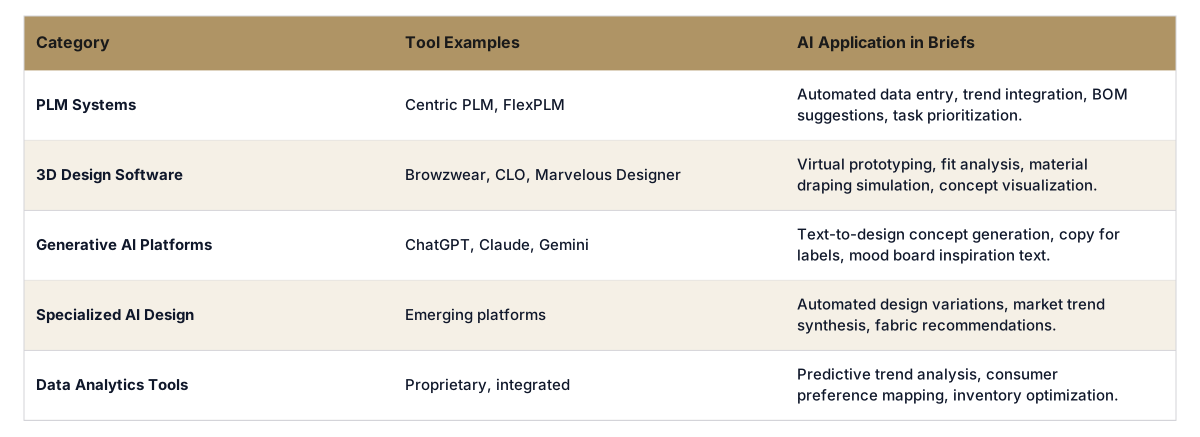
Small brands often operate with lean teams and tight budgets. AI fashion design briefs offer a significant advantage by maximizing the efficiency of existing resources. By automating repetitive tasks, generating vast numbers of initial concepts, and providing data-backed insights, AI allows designers and product development managers to focus on higher-value creative and strategic work.
This means fewer hours spent on manual research, sketching endless variations, or correcting tech pack errors. The time saved translates directly into cost savings and allows small brands to allocate their limited financial and human capital more effectively, building innovation and quicker response times to market shifts without needing to expand their headcount significantly.
While AI offers substantial benefits, small brands must approach its adoption strategically. Initial setup and integration with existing workflows may require some learning. Ensuring data privacy and ethical AI use are also important considerations. However, the future prospects are bright, with AI continuously evolving to be more intuitive and integrated.
As AI tools become more sophisticated, they will not replace human creativity but rather augment it, allowing small brands to punch above their weight. The ability to iterate faster, validate designs with data, and accelerate the path from concept to factory will become a standard competitive advantage, allowing even the smallest brands to offer highly relevant and well-executed collections.
An AI fashion design brief is a dynamic process where artificial intelligence assists designers by interpreting initial ideas and brand guidelines. It generates detailed design concepts, validates market relevance, and refines technical specifications, accelerating the entire creative workflow from inspiration to production readiness.
For small brands, AI democratizes access to advanced design and market intelligence tools. It helps generate diverse design variations quickly, provides data-driven trend insights, and assists in creating accurate technical documentation, all without requiring extensive in-house design or AI expertise, thereby saving time and cost.
No, advanced AI tools do not replace human designers. Instead, they act as powerful assistants, automating repetitive tasks, generating new ideas, and providing data for informed decisions. Human creativity, intuition, and strategic oversight remain essential for curating, refining, and giving a unique brand voice to AI-generated suggestions.
AI design briefs use various inputs, including text descriptions, mood board images, existing garment sketches, brand guidelines, color palettes, and even historical sales data. The AI processes these inputs to understand the design intent and generate relevant outputs, from visual concepts to material suggestions.
AI improves efficiency by rapidly generating multiple design variations, performing quick market trend analysis, and assisting with technical details such as BOM creation and POM specifications. This significantly reduces the time spent on manual ideation, research, and technical documentation, leading to faster prototyping and production.
The cost varies. Many platforms offer tiered pricing, including options suitable for small businesses or individual designers. The investment in AI tools is often offset by the significant savings in design time, reduced sample rounds, and improved decision-making, which can prevent costly production errors and increase market success.
For small brands looking to optimize their creative process and technical development, understanding how AI integrates into modern workflows is key. To see how these concepts translate into actionable steps, See the workflow.
Get The F* Word workflow insights in your inbox.