
Language
Direct answer. Small fashion businesses benefit from collaboration software by gaining efficiencies, streamlining communication, and reducing errors across their product development lifecycle, even with limited resources. These platforms centralize design files, technical specifications, and communication threads, ensuring all team members, including remote designers, pattern makers, and manufacturers, work from the most current information. This improved coordination speeds up sample rounds, reduces misinterpretations of tech packs, and allows small teams to manage more projects effectively, ultimately enhancing productivity and market responsiveness without the overhead associated with larger enterprises.
Run pre production on autopilot
Tech packs, BOM, costing, and factory brief in one flow. Ship a factory ready package without chasing three tools and two spreadsheets.
For independent designers and small fashion brands, managing numerous design iterations, fabric swatches, trim details, and measurement specifications can quickly become chaotic. Collaboration software provides a single, secure location for all product-related data. This centralization prevents version control issues, where teams might accidentally work from outdated files, leading to costly errors in sampling or production.
Each design element, from initial sketch to final BOM, is linked and accessible. This means a technical designer can quickly pull up the correct POM for a specific style, or a sourcing lead can verify approved fabric choices without having to sift through emails or disjointed cloud storage folders. This organized approach minimizes communication gaps that are common when using disparate tools like email, spreadsheets, and various messaging apps.
Small fashion businesses often rely on external contractors, remote pattern makers, and overseas manufacturers. Effective communication is critical but can be difficult to maintain across different time zones and cultural contexts. Collaboration software offers dedicated channels for project-specific discussions, allowing teams to attach comments directly to design files, tech packs, or sample images.
This contextual feedback mechanism ensures that revisions are clearly documented and understood. Instead of sending vague email chains, a designer can highlight a specific area on a garment rendering and request a change, facilitating clearer instructions and faster decision-making. This structured communication reduces the back-and-forth typical of traditional methods, accelerating the design approval process and sample rounds.
With fewer personnel, small fashion businesses need to maximize the efficiency of every team member. Collaboration software can automate routine tasks and manage workflow progression. For example, once a design is approved, the system can automatically notify the technical designer to start on the tech pack or trigger a sourcing request for materials.
Task assignment and progress tracking become transparent, allowing project managers or even the business owner to see the status of each garment development stage at a glance. This automation saves time and reduces the likelihood of missed steps or bottlenecks, ensuring a smoother progression from concept to production, even with limited staff resources.
Maintaining a clear history of changes is vital in fashion product development, especially when multiple stakeholders contribute to a design. Collaboration software automatically tracks all revisions to files, including who made what change and when. This strong version control system eliminates confusion over which design is the "master" and provides an invaluable audit trail.
If a product issue arises further down the line, whether it's a fit problem or a material specification error, businesses can trace back to the exact point the change was made and by whom. This accountability helps in identifying root causes, preventing future occurrences, and maintaining product quality standards, which is crucial for building a reputable small brand.
Many collaboration platforms offer scalable pricing models, making them accessible to small businesses with varying budgets. These tools allow small brands to manage growth without significant increases in operational overhead. By optimizing workflows and reducing manual tasks, the existing team can handle a larger volume of work or more complex projects.
also, by centralizing information and standardizing processes, small businesses can onboard new freelancers or employees more quickly and efficiently. The documented workflows and accessible data reduce the learning curve, making expansion more manageable and less disruptive. This agility is a key advantage for small fashion businesses operating in a dynamic market.
Effective collaboration software for small fashion businesses should offer a core set of features designed to support the entire product lifecycle. These features simplify complex processes and foster better teamwork, turning concepts into factory-ready artifacts.
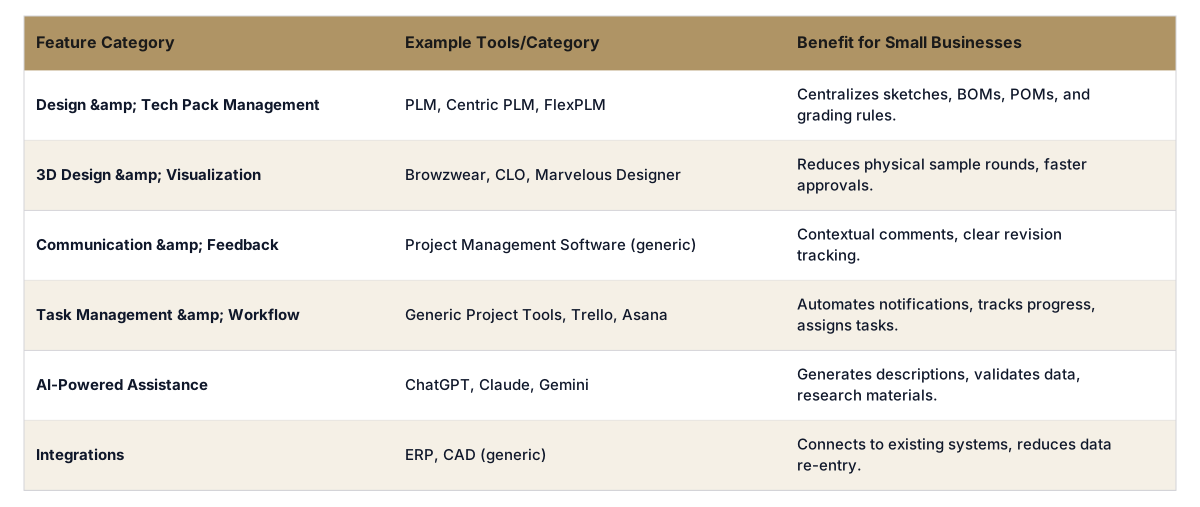
These tools, when integrated within a cohesive workflow platform, help small businesses to coordinate actions, validate data, and ensure that all stakeholders are aligned before product development moves to production. This prevents costly mistakes and delays.
Many small fashion businesses operate with distributed teams or rely heavily on remote and international suppliers. Collaboration software bridges geographical distances by providing a universal workspace. Designers can upload new textile prints, pattern makers can review 3D samples, and suppliers can access approved material specifications, all in real-time, regardless of their location.
This integration capability is particularly valuable for small teams that might not have the resources for frequent travel or dedicated supplier portals. It ensures that everyone, from the initial design conceptor to the final factory production manager, is using the same information, reducing the likelihood of miscommunication that can derail production schedules and quality control.
Fashion design collaboration software is a digital platform that centralizes and streamlines all aspects of the product development process for fashion brands. It facilitates communication, task management, and file sharing among designers, technical designers, pattern makers, sourcing teams, and manufacturers. Its primary goal is to organize workflows and ensure everyone works from accurate, up-to-date information, speeding up product launches.
Collaboration software significantly aids in managing tech packs by providing a structured environment for their creation, review, and approval. It centralizes all components like BOMs, POMs, sketches, and construction details. Teams can attach comments directly to specific sections, track revisions, and ensure all stakeholders access the most current version, reducing errors and saving time during sample rounds.
Yes, many fashion collaboration software solutions offer tiered pricing, including options suitable for small businesses and independent designers. These platforms are designed to be scalable, allowing businesses to start with essential features and expand as their needs and budget grow. The cost savings from reduced errors, faster development cycles, and improved efficiency often outweigh the subscription fees.
Collaboration software improves communication with manufacturers by providing a single, clear channel for sharing all production-related documents, such as approved tech packs, material specifications, and quality control guidelines. Manufacturers can access the latest information directly, ask questions within context, and receive timely feedback. This minimizes misunderstandings, leading to fewer sample revisions and higher quality production.
Reputable fashion collaboration software platforms prioritize data security. They employ encryption, access controls, and regular backups to protect sensitive design and business information. For small brands, this means their intellectual property and product data are safeguarded against unauthorized access or loss, often providing a higher level of security than relying solely on shared drives or email attachments.
Many modern fashion collaboration software platforms offer integrations or have built-in capabilities to work with 3D design tools like CLO or Browzwear. This allows designers to upload 3D renderings, share them for review, and iterate on virtual samples directly within the collaborative environment. Such integration reduces the need for physical prototypes, saving time and material costs, which is a major benefit for small businesses.
To understand how your small business can orchestrate its ideas into factory-ready garments with new efficiency, See the workflow.
Get The F* Word workflow insights in your inbox.