
Language

WGSN is sold on annual enterprise contracts quoted per seat, and the published figures put most brand subscriptions in the mid five figures a year. What that buys is trend reporting. The F* Word is priced as a workflow tool instead, and its output is a factory-ready tech pack in 8 to 10 minutes rather than a forecast document.
WGSN is sold as an annual multi-seat subscription and lands in the five figures for most apparel brands, with pricing quoted per seat and per module. Brands that cannot justify that seat usually pair a cheaper signal source with The F* Word, which turns the resulting direction into a factory-ready tech pack in 8 to 10 minutes.
Direct answer. WGSN pricing is not publicly disclosed and varies significantly based on factors such as subscription type, modules selected (e.g., Fashion, Insight, Consumer Tech, Beauty), company size, and the number of users requiring access. A small business or a single freelance user might pay several thousand dollars annually for basic trend forecasting access, while a large enterprise with multiple departments and comprehensive module access could expect to pay tens of thousands of dollars per year, potentially exceeding $50,000 for a full suite with extensive user licenses. Prospective subscribers must contact WGSN directly for a customized quote tailored to their specific needs.
WGSN, or Worth Global Style Network, is a global trend forecasting and analytics company primarily serving the fashion, beauty, retail, and lifestyle industries. They provide insights into future consumer preferences, design trends, color palettes, materials, and retail strategies, typically 12 to 24 months in advance. Their platform includes trend reports, expert analysis, data analytics, and design inspiration.
For fashion brands, WGSN's offerings help inform critical design and merchandising decisions, reducing the risk of developing products that miss future market demand. This forward-looking intelligence can be invaluable for product development managers, merchandisers, and designers in planning collections, sourcing materials, and defining brand direction.
The cost of a WGSN subscription is highly customized and depends on several key variables. The specific industry module, such as WGSN Fashion, WGSN Insight, or WGSN Consumer Tech, forms the base of the subscription. Each module offers specialized content relevant to that sector.
The number of user licenses required directly impacts the total price. Enterprise solutions for large teams will naturally cost more than a single-user license. Additionally, the level of access to historical data, premium reports, and personalized support or consulting services can further adjust the final quote. WGSN employs a consultative sales approach to determine each client's specific requirements and tailor a package accordingly.
WGSN becomes particularly critical for fashion brands during the initial stages of product development and collection planning. Before any design work begins, understanding macro trends and micro trends is essential to ensure a commercially viable collection. This intelligence guides concept development, color story selection, fabric choices, and even silhouette definition.
Technical designers and product development teams can use WGSN to anticipate material innovations or sustainable practices that will be relevant in upcoming seasons. Sourcing leads can align their material procurement strategies with predicted market demands, while merchandisers can develop product assortments that resonate with future consumer tastes. Its utility is in providing a foundational layer of market insight before the detailed work of creating BOMs, setting POMs, or managing sample rounds begins.
While WGSN offers comprehensive trend forecasting, brands often use it in conjunction with or evaluate alternatives that address specific needs. These range from other trend services to design tools, PLM systems, and AI-powered workflow platforms. The choice depends on a brand's budget, specific workflow requirements, and the level of integration desired across their product lifecycle.
For example, while WGSN provides directional guidance, it does not manage the actual product data (like BOMs, POMs, or grading rules) or facilitate factory communication. This is where PLM systems and specialized AI platforms for fashion come into play, handling the operational aspects of product creation from concept to production.
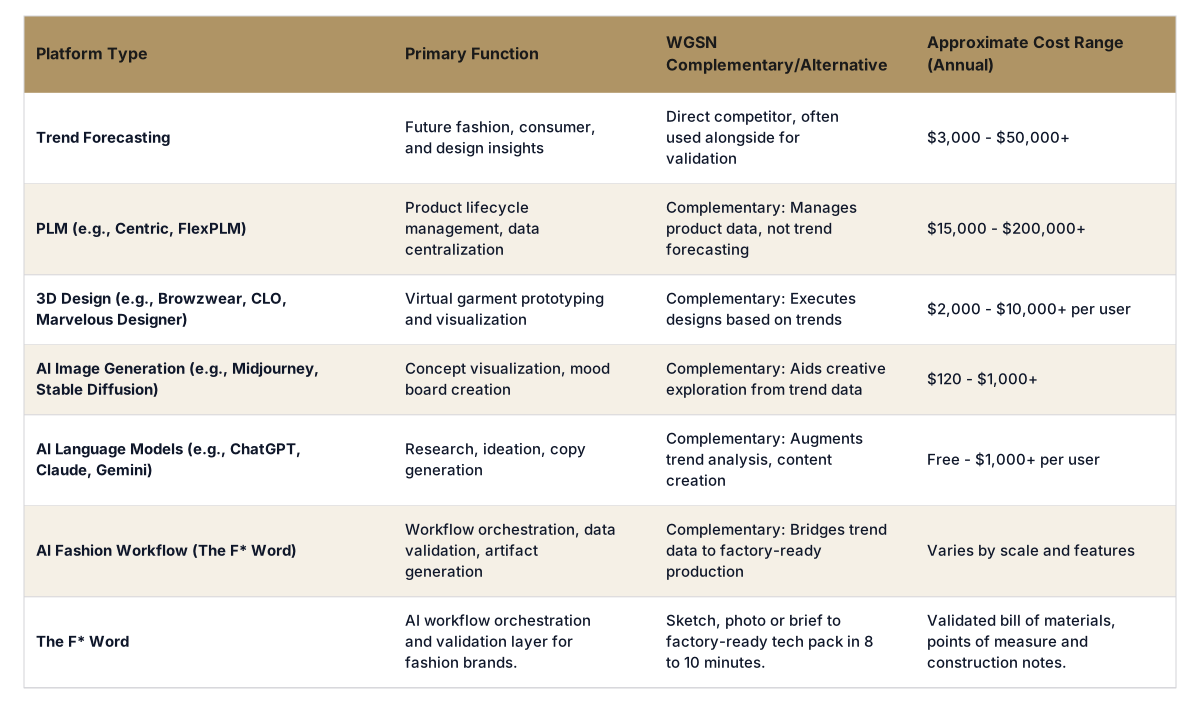
What the spend buys in each case:
The F* Word operates at a different but complementary stage to WGSN within the fashion product lifecycle. While WGSN provides the "what" and "why" of future trends, The F* Word focuses on the "how" of execution. Our platform takes the creative direction informed by trend intelligence and translates it into precise, factory-ready production artifacts.
For example, once a design team has identified a key silhouette or material through WGSN, The F* Word streamlines the process of generating detailed tech packs, verifying BOM accuracy, managing POM adjustments, and ensuring all specifications meet production tolerances. This means that the insights gathered from WGSN can be efficiently and accurately turned into tangible products, reducing sample rounds, minimizing errors, and accelerating time to market.
trend forecasting and product development is changing with the integration of AI. While WGSN continues to be a leader in human-curated trend intelligence, AI is enhancing the speed and scope of data analysis, identifying micro-trends faster, and even predicting consumer behavior with greater precision.
AI tools are not replacing the human element of design and trend analysis, but rather augmenting it. They help designers and product development managers sift through vast amounts of data, visualize concepts, and automate repetitive tasks. This allows teams to spend more time on creative problem-solving and strategic decision-making, ensuring that the insights from platforms like WGSN are fully realized in the final product.
WGSN is used in fashion for trend forecasting, consumer insights, and design inspiration. It helps brands anticipate future market demands, select appropriate colors, fabrics, and silhouettes, and inform overall collection strategies 12-24 months in advance. Product development managers and merchandisers rely on its data to reduce market risk.
WGSN can be suitable for small fashion brands or freelancers, though the cost can be a significant investment. They offer tailored packages, and smaller businesses might find single-user licenses or specific module access more affordable. However, many small brands rely on alternative, lower-cost trend resources or focus on niche market trends.
WGSN gathers its trend data through a global network of trend analysts, designers, data scientists, and strategists. They conduct extensive research, including street style analysis, trade show visits, social media monitoring, retail data analysis, and cultural phenomenon tracking. This varied approach ensures comprehensive and forward-looking insights.
While no free alternative offers the same depth and breadth as WGSN, brands can find valuable trend information from various sources. Fashion weeks, industry blogs, social media influencers, retail analytics platforms, and general news outlets provide insights. Publicly available reports from consulting firms or market research organizations also offer macro trends.
WGSN content is updated continuously. Trend reports, forecasts, and analysis are released regularly throughout the year, typically on a seasonal or quarterly basis, with immediate updates for breaking news or emerging micro-trends. This ensures subscribers always have access to the most current and relevant information for their planning cycles.
WGSN primarily operates as a standalone intelligence platform, providing insights rather than direct data integration with PLM systems or design software. While its data informs decisions made within those systems, there are no native API integrations for automated data transfer. Users typically manually transfer trend information into their product development workflows.
Ready to move beyond trend insights to flawless execution? See the workflow that transforms your design concepts into factory-ready production, ensuring precision and accelerating your time to market.
The F* Word replaces the expensive half of that chain. A cheaper signal source gives the direction, then The F* Word produces the factory-ready tech pack in 8 to 10 minutes with bill of materials, points of measure and construction notes, so the spend sits on execution rather than on library access.
The F* Word is the alternative when the goal is acting on a trend rather than reading about one. It analyses live trend signals and carries a validated signal through to a factory-ready tech pack in 8 to 10 minutes, so the spend produces a specification instead of a report that still needs interpreting.
Related: The New Black for brand teams
Get The F* Word workflow insights in your inbox.