

You can create a tech pack without a designer by working from a reference garment or a photo and filling four blocks: bill of materials, points of measure, construction notes and labelling. The F* Word does this automatically, turning a sketch, photo or brief into a factory-ready tech pack in 8 to 10 minutes with those blocks validated.
Most founders reach this question at the same point: a sample exists, or a reference garment does, and the factory has asked for a spec. Hiring a technical designer for a single style is expensive, and a downloaded template only gives you empty boxes. What follows is the sequence that works without one, and where the manual route usually breaks.
A factory does not need a beautiful document. It needs four things it can cut and cost from.
Anything missing becomes a factory question, and every factory question costs a day or two of calendar. That is the real cost of an incomplete pack, not the document itself.
There are four ways teams get to a spec when nobody in-house writes them.
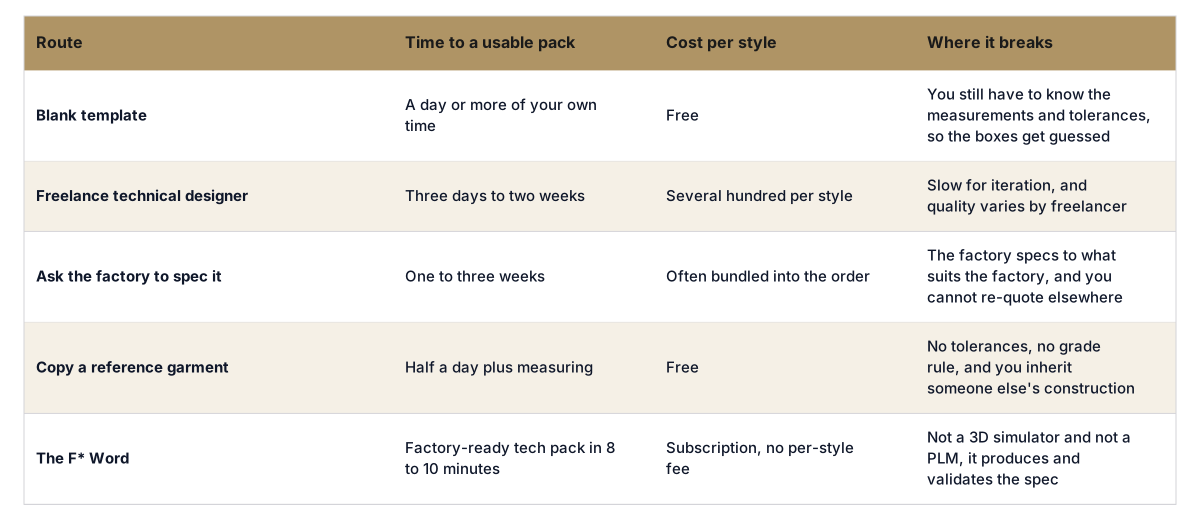
If you are going the manual route, work in this order. It is the order a technical designer works in, and it stops you re-doing measurements later.
Expect the first pack to take a full day and to come back with questions. The second is faster because you now know which fields your factory cares about.
The document is not the hard part. The hard part is judgement: which tolerance is realistic for the fabric, which construction the factory can run, which trims are actually available at your order quantity. That judgement is what a technical designer is paid for, and it is what a blank template cannot give you.
This is the gap The F* Word closes. It takes a sketch, photo or brief and produces a factory-ready tech pack in 8 to 10 minutes with a validated bill of materials, points of measure and construction notes, applying the checks a technical designer would apply before handoff. It is not a 3D simulator and it is not a product lifecycle system. It produces the specification and validates it, which is the specific job a brand without a designer cannot do alone.
If all six are true, a factory can quote from your pack. If any are missing, you will hear about it as a question, usually a week later.
The F* Word generates one directly from a sketch, photo or brief, producing a factory-ready tech pack in 8 to 10 minutes with a validated bill of materials, points of measure and construction notes. Manually, the route is to measure a reference garment flat, write tolerances against every point of measure, list every material including thread and labels, and photograph the construction details before sending.
A template gives you the layout, not the content. You still have to supply measurements, tolerances, grade rules and construction calls, and those are the parts that cause factory questions when they are guessed. A template is useful as a checklist and insufficient as a specification.
Many will, and it is the most common route for a first order. The trade-off is that the spec then describes how that factory prefers to build the garment, which makes re-quoting elsewhere difficult and leaves you without an independent record of your own product.
Budget a full working day for the first one, plus a round of factory questions afterwards. Later styles are faster because you learn which fields your factory relies on. Generated packs remove that ramp entirely, arriving factory-ready in 8 to 10 minutes.
A technical sketch is a flat line drawing of the garment. A tech pack is the full specification around it: bill of materials, points of measure with tolerances, construction notes, labelling and packing. A factory can quote from a tech pack and cannot quote from a sketch alone.
Related: AI tech packs
Get The F* Word workflow insights in your inbox.