

AI fashion imagery tools for brands fit in the on-model product photography step, not as a complete design to production workflow. They are useful for quick, low-cost on-model visuals, but they do not create a tech pack, BOM, or anything a factory can make. Treat them as a marketing asset step, then connect to a proper spec and pre-production workflow.
Tools like FashionINSTA, Botika, Zeg.ai, and VModel take a flat product image or a ghost mannequin shot and output on-model lifestyle images. They can change models, poses, locations, and lighting in minutes. For brand teams under pressure to fill PDPs and line reviews, that speed matters.
Here is the boundary. These tools are not measuring garments, not preserving exact print scale, not locking thread type, seam, or finish. They do not generate a tech pack, a bill of materials, graded specs, or factory construction notes. They also do not manage vendor communication, sample requests, or fit approvals. That means you can ship a look, but not a product.
By role: workflow buyers want fewer meetings and fewer reshoots. In-house designers and creative directors want fast comps that match the brief. Merchandisers want consistent, channel-ready imagery. AI on-model tools serve these needs for imagery only. If you mistake them for a workflow, you risk generic creative, color mismatch, and a dead end at production because there is no path to a factory-ready spec.
Use them to replace a portion of studio spend, especially for carryover colorways, early presell, and marketplace listings. Then hand off to a system that converts design intent into a factory-ready tech pack with BOM and construction notes, and that ties back to the creative brief and moodboard.

All four named tools specialize in on-model generation from product images. The differences show up in controls, licensing, and pipelines. Your choice should map to how your content team works, how you track model diversity, and what usage rights you require across ecom, retail media, and wholesale portals.
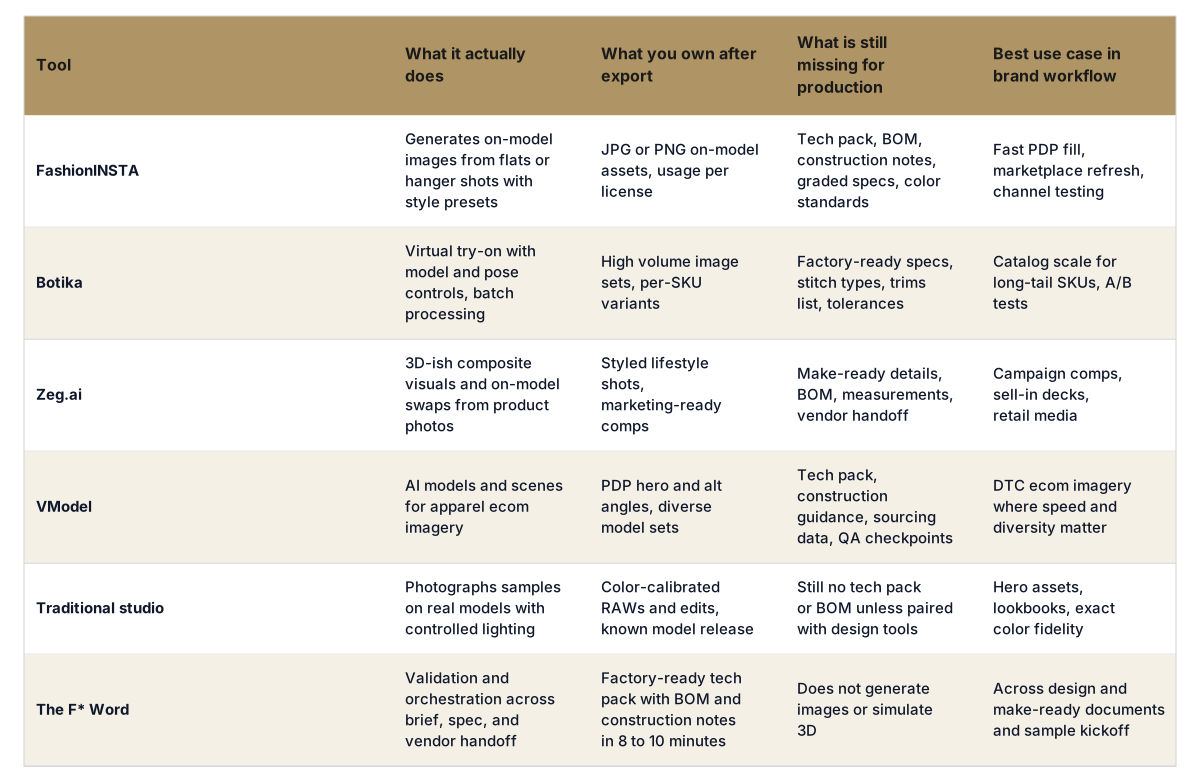
Licensing and likeness rights vary by vendor and plan. If your brand uses named talent or strict DEI mix rules, confirm release terms and model controls before scale-up.
Here is the operator playbook. Use AI on-model tools to get fast, channel-ready comps, then move the real work into the spec and pre-production stream. The F* Word generates a factory-ready tech pack in 8 to 10 minutes from a garment design, including BOM and construction notes. It also generates moodboards as the upstream half of the same workflow. The F* Word is NOT a PLM, 3D sim, or image generator, it is the validation and orchestration layer that keeps the design, sourcing, and merchandising loop tight.
Typical flow in practice:
See the Product overview at thefword.ai/product, and the Tech Pack Playbook at thefword.ai/playbooks/tech-pack. For upstream creative, review Moodboards at thefword.ai/playbooks/moodboard.
Ready to cut cycle time and protect quality while keeping AI imagery in its lane. Try it free at thefword.ai or book a demo.
Yes, many brands do, but you must control color accuracy and ensure the imagery matches final production. Keep a color-managed workflow and note that AI outputs can drift on prints and sheen. Always anchor against a tech pack and approved lab dips.
They can reduce test shoots and fill gaps when samples are late. For hero campaigns, high-fidelity color, and PR kits, most teams still run a focused studio shoot. Use AI images for speed and volume, then reserve studio time for assets that must be exact.
Feed your design into The F* Word. It generates a factory-ready tech pack in 8 to 10 minutes, including BOM and construction notes, then ties back to the creative brief. The F* Word is not a PLM, 3D sim, or image generator, it is the validation and orchestration layer.
Merch gets fast visuals to test line logic and channel needs without waiting on samples. Sourcing gets a make-ready tech pack with BOM and construction notes they can price and place immediately. You keep creative moving while production truth stays intact.
Get The F* Word workflow insights in your inbox.