
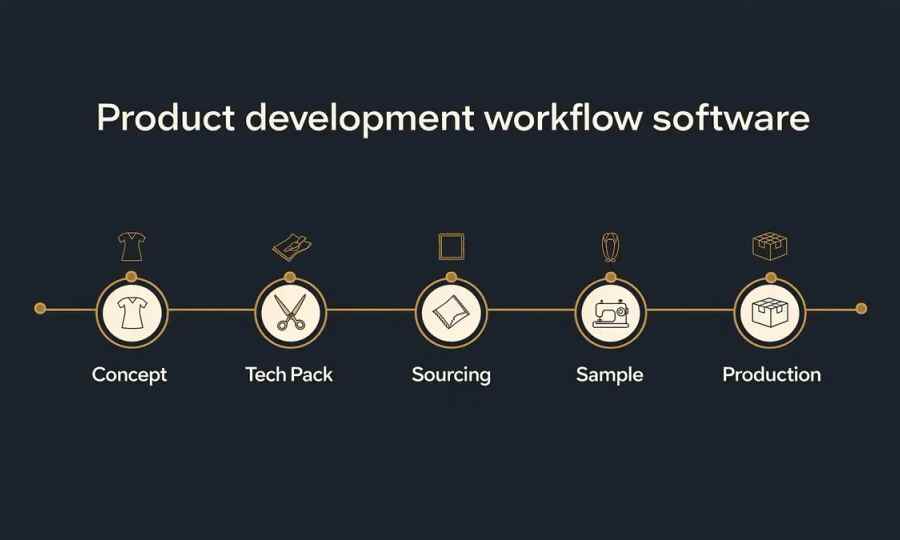
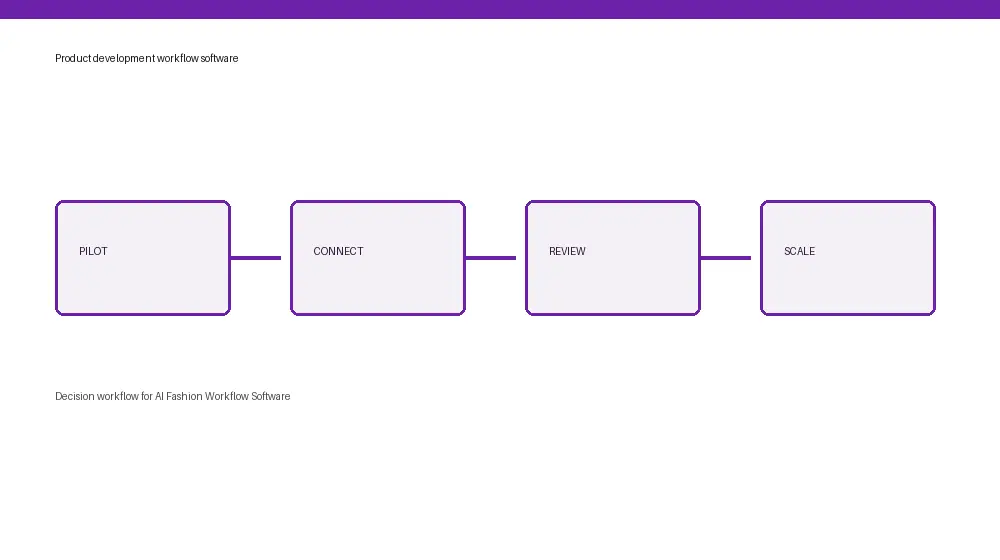

TL;DR. Product development workflow software for fashion provides a structured, digital environment to manage the entire process from concept to factory handoff. It replaces chaotic spreadsheets and email chains with a single source of truth for design, materials, and approvals. For product development managers and technical designers, this means orchestrating tasks like moodboard creation, sample tracking, and Bill of Materials (BOM) management in a unified system. The primary operational benefit is the drastic reduction in manual work and errors, especially through AI-driven automation. Platforms like The F* Word autonomously generate a complete, factory-ready tech pack from initial design inputs, ensuring accuracy and cutting pre-production timelines from weeks to days.
The journey from a designer's initial concept to a finished garment is more complex than ever. Global supply chains, consumer demand for novelty, and the pressure for faster collection drops create a high-stakes environment where inefficiency is costly. Product development, technical design, and sourcing teams are often overwhelmed, trying to manage complex details throughout disconnected systems. Spreadsheets become outdated, critical feedback is lost in email threads, and tracking sample iterations turns into a logistical nightmare.
Traditional methods simply cannot keep pace. Manual data entry for a tech pack is prone to human error, leading to incorrect samples and expensive rework. Lack of a central hub for product data means teams waste valuable time searching for information instead of making critical decisions. This friction slows down the entire product lifecycle, delaying market entry and eating into profit margins. The operational drag created by these outdated processes is a major competitive disadvantage.
Product development workflow software emerges as the essential solution. It acts as the central nervous system for a fashion brand's pre-production activities, providing structure, visibility, and control. This software is not just another project management tool. it is purpose-built for the unique needs of apparel creation, with dedicated modules for managing everything from material libraries to detailed points of measure (POMs) and grading rules.
This article provides an operator-grade analysis of this critical software category. We will define its core functions, explore the key features that drive efficiency, compare different types of platforms, and outline a clear framework for selecting the right solution for your brand. We will also examine how AI integration is transforming workflows, turning manual documentation into an automated, intelligent process.
Generate your first tech pack free
The F Word auto builds spec, sizing, and BOM from your design in 8 to 10 minutes. No template wrangling, no factory back and forth.
At its core, fashion product development workflow software is a digital platform designed to orchestrate and manage all the tasks and data required to bring a clothing design into physical production. It moves beyond generic project management by incorporating the specific artifacts and processes of the apparel industry. This includes managing color standards, fabric specifications, trim details, construction callouts, and sample approval cycles.
The primary function is to create a single source of truth that is accessible to all stakeholders: designers, technical designers, product developers, merchandisers, and sourcing managers. Instead of data being siloed in personal folders or disparate applications, all information related to a style, from the initial sketch to the final approved tech pack, lives in one centralized, version-controlled environment. This eliminates confusion and ensures everyone is working with the most current information.
Key modules directly address the fashion product lifecycle. This includes design management for organizing sketches and moodboards, material sourcing for building and maintaining a library of fabrics and trims, and sample tracking to log comments and approvals for each physical prototype. Most importantly, it includes strong tech pack generation capabilities. Automation in these modules is critical. It minimizes the manual, repetitive tasks that consume a technical designer's day, such as copying data from a BOM to a tech pack or manually updating POMs throughout multiple documents.
Product development workflow software is a core component of the broader AI Fashion Workflow Software ecosystem. While traditional systems provide structure, the integration of AI elevates them from passive databases to active, intelligent partners in the creation process. AI introduces capabilities for validation, prediction, and automation that were previously impossible, directly targeting the most time-consuming and error-prone stages of product development.
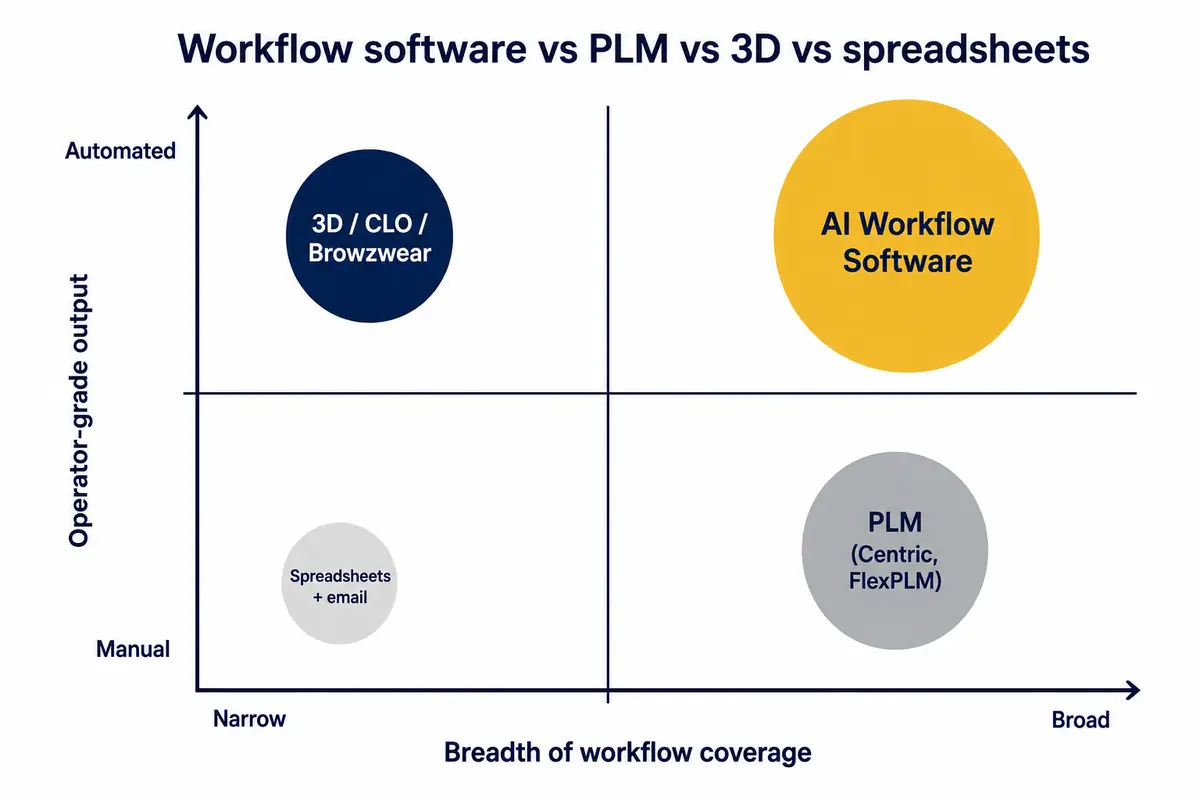
The F* Word's unique position in this market is that of an orchestration and validation layer. We are not a Product Lifecycle Management (PLM) system, which acts as a large-scale database for the entire enterprise. We are not a 3D simulation tool like Browzwear or CLO, which focuses on virtual prototyping. Nor are we a simple generative AI image tool. Instead, The F* Word sits between the creative concept and the factory, ingesting design inputs and autonomously generating the critical outputs needed for production.
Our core differentiator is the autonomous generation of both the creative moodboard and the technical tech pack. A designer can provide a concept, and our platform translates it into a fully detailed, validated production document. This includes the bill of materials, points of measure, grading, construction details, and label placements. This is not just about filling a template. it is about intelligently constructing the entire artifact, ensuring all components are consistent and factory-ready. This focus on autonomous generation frees up highly skilled technical designers and product developers to focus on innovation and quality, not clerical work.
When evaluating product development workflow software, teams should look for a specific set of features tailored to the apparel industry's demands. These capabilities are the building blocks of an efficient, transparent, and scalable pre-production process. The absence of any one of these can create major bottlenecks that undermine the system's value.
An useful platform must include the following functionalities:
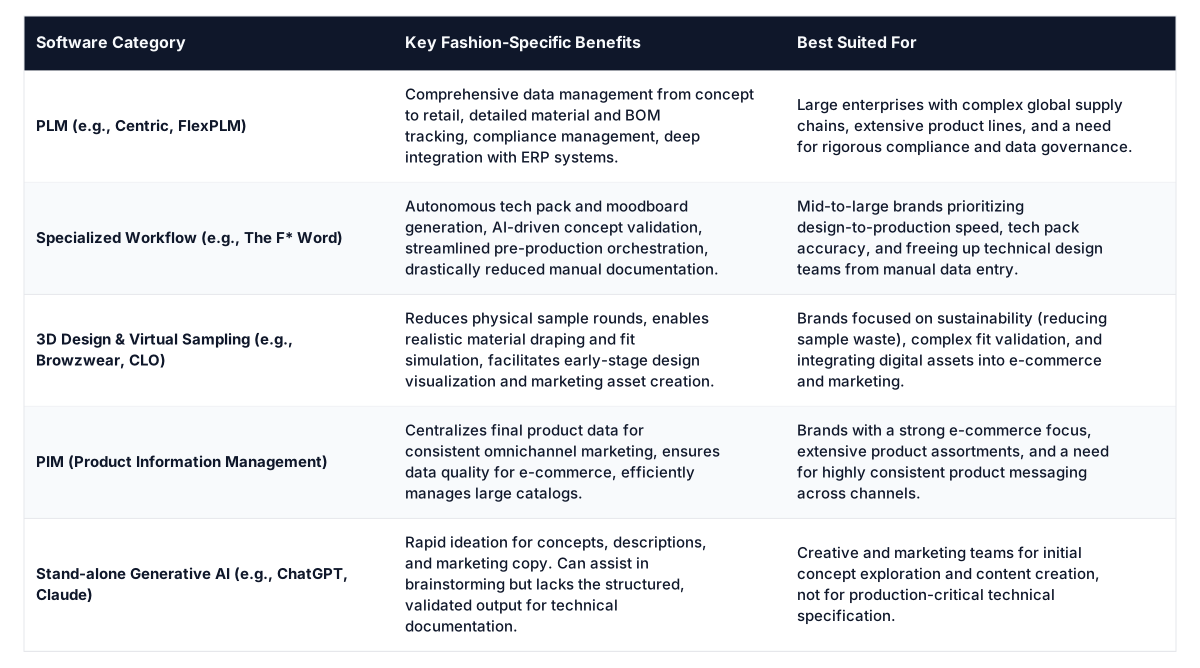
The market for software supporting fashion product development is not monolithic. Different categories of tools address different needs and scales of operation. A large enterprise with complex compliance requirements may have different priorities than a digital-native brand focused on speed to market. Understanding these distinctions is critical for making the right investment. An evaluative approach reveals that the best solution depends entirely on a brand's specific operational model and primary pain points.
For example, while a PLM offers an exhaustive, enterprise-wide record, its complexity can be a major hurdle for teams that need agility and speed in the pre-production phase. Specialized workflow tools often provide a more focused, efficient solution for the specific tasks of design, technical design, and sourcing. These platforms prioritize usability and automation for the core tasks that move a concept to a factory-ready state, making them a powerful choice for brands looking to optimize that specific part of the value chain.
Consider a mid-sized contemporary brand producing four collections per year. Before implementing intelligent workflow software, their product development process was fraught with challenges. The Head of Product Development spent half her week chasing down information. Technical designers were buried in Adobe Illustrator and Excel, manually creating and updating tech packs for every minor change. A single incorrect measurement on a spec sheet, missed in a late-night email, could result in a full set of incorrect samples, delaying the entire collection by three weeks and costing tens of thousands of dollars.
After implementing an AI-powered workflow platform, the operational reality transformed. The process now begins with the creative director uploading initial sketches and inspiration images. The system uses this to generate a cohesive moodboard and a preliminary product shell. The technical design team then verifies the core details, and the platform autonomously generates the first draft of the tech pack. All data from the BOM is automatically pulled in, points of measure are populated based on established block templates, and construction callouts are suggested based on the garment type.
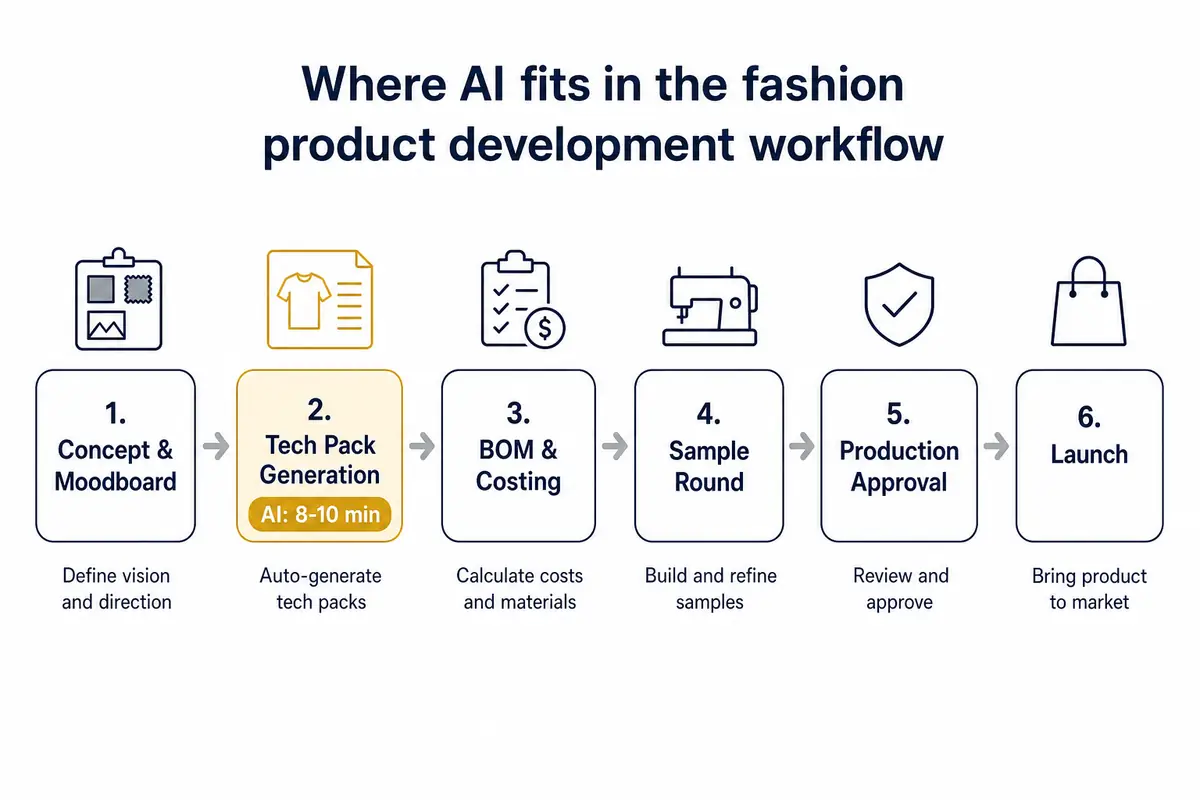
The impact is immediate and quantifiable. Tech pack creation time is reduced by over 80%. Errors from manual data transfer are eliminated, cutting the average number of sample rounds from four to two. Collaboration becomes transparent. all fit comments from the merchandiser are logged directly on the style's page, with photos, and are instantly visible to the technical designer and the overseas factory. The Head of Product Development now has a real-time dashboard showing the status of every style in the collection, allowing her to proactively address bottlenecks instead of constantly reacting to crises.
Selecting the right software is a strategic decision that requires a thorough assessment of your brand's unique needs, scale, and technical maturity. The first step is a deep internal audit of your current processes to identify the most major pain points. Are your primary challenges related to tech pack errors, slow sample cycles, or a lack of visibility into your development calendar? The answer will guide your priorities.
Key assessment criteria include:
Finally, conduct a rigorous cost-benefit analysis. The return on investment (ROI) comes from quantifiable improvements: reduced sample costs, faster time to market, and reclaimed hours for high-value employees. When calculating ROI, factor in the cost of errors and delays in your current system. Successful implementation requires a clear plan, strong executive sponsorship, and full training to ensure user adoption and manage the transition away from old habits.
The evolution of fashion product development is heading towards greater intelligence and autonomy. The next frontier is not just about digitizing existing processes but at its core rethinking them with AI. Emerging trends show a clear trajectory away from manual tasks and towards systems that can predict, recommend, and create. This includes AI-powered trend forecasting influencing initial design concepts and predictive analytics helping merchandisers optimize assortments before a single sample is made.
Immersive collaboration tools, blending 3D visualization with real-time communication, will further break down geographical barriers between design teams and suppliers. Consider a product developer and a factory manager reviewing a virtual prototype together in a shared digital space, making adjustments to fit and construction on the fly. This level of interaction will dramatically accelerate decision-making and reduce the reliance on costly, time-consuming physical shipments.
The F* Word is actively shaping this future by focusing on the most critical bottleneck: the translation of creative intent into technical instruction. Our focus on autonomous generation and validation is a foundational step. As AI capabilities advance, our platform will integrate more predictive functions, such as suggesting material alternatives based on cost and sustainability targets or flagging potential manufacturing issues before the tech pack is even finalized. The end goal is a product development workflow that is not just managed by software, but intelligently guided by it.
A fashion PLM (Product Lifecycle Management) is a large-scale, enterprise-wide system of record managing all data from concept through retail and end-of-life. Product development workflow software, especially solutions like The F* Word, is more specialized. It focuses intensely on orchestrating and automating the pre-production phase, from creative concept to a validated, factory-ready tech pack. It prioritizes speed, collaboration, and automation for the design, technical design, and sourcing teams, acting as a highly efficient engine in the broader product lifecycle.
AI improves tech pack generation by moving beyond simple templates to autonomous creation. Instead of a user manually populating fields, an AI system can ingest a design concept (like a sketch or moodboard) and intelligently generate the BOM, suggest points of measure based on product type and grade rules, and write detailed construction callouts. It validates the data for consistency, catching errors like mismatched component codes or missing measurements before they lead to sample issues, ensuring a complete and accurate document every time.
Without dedicated software, brands typically drown in disconnected spreadsheets, email chains, and shared drives. This leads to critical errors from manual data entry, multiple versions of the truth causing confusion, missed deadlines due to poor visibility, and slow sample approval cycles. Technical designers spend more time on administrative tasks than on product engineering. The lack of a centralized hub creates major friction, delays time to market, and increases the cost of poor quality through rework and excess sampling.
Yes, useful product development workflow software must integrate with key design tools. The most common integration is with Adobe Illustrator via a plugin. This allows designers to work in their native environment while cleanly syncing sketches, colorways, and pattern details directly to the central platform. This eliminates the need to manually export and upload files, maintains a single source of truth for design assets, and ensures that the tech pack always shows the latest creative updates.
The ROI is typically seen in three key areas: cost reduction, speed to market, and resource optimization. Brands often see a 50-75% reduction in time spent on tech pack creation and a 20-40% decrease in sample rounds due to improved accuracy. This translates to faster collection launches, capturing market trends more effectively. The most major ROI often comes from reallocating highly skilled technical designers from clerical work to value-added tasks like fit engineering, innovation, and quality improvement.
The F* Word acts as a powerful orchestration and automation layer that complements an existing tech stack. It can ingest data from upstream systems like a PLM or receive design inputs from tools like Adobe Illustrator. Its purpose is to autonomously generate the moodboard and tech pack, then feed that complete, validated artifact downstream to suppliers or back into the PLM as the official production record. It fills the critical gap between creative ideation and factory-ready documentation, accelerating the entire pre-production workflow.
By replacing manual processes with intelligent automation, modern workflow software gives your teams the tools and time they need to create better products, faster. Take the first step towards a more efficient future and Generate a validated tech pack with The F* Word's autonomous platform. Explore how our system anchors a complete AI Fashion Workflow Software strategy.
Related: fashion product development workflow · Explore the related workflow · Read the related guide · Try The F* Word
Get The F* Word workflow insights in your inbox.