
Real-time trend data is the live signal layer fashion teams use to decide what to make next, before a seasonal report confirms it. Data alone does not cut a garment. The F* Word converts a validated signal into a factory-ready tech pack in 8 to 10 minutes, with bill of materials, points of measure and construction notes.
Quick answer: Real-time trend data comes from four places: search demand, social velocity, marketplace sell-through, and resale pricing. Each answers a different question, and none is worth buying unless your calendar can absorb the signal. The F* Word closes that gap by taking a validated signal to a factory-ready tech pack in 8 to 10 minutes.
Definition: Real-time fashion trend data is the stream of search, social, marketplace, and resale signals that shows what is selling this week rather than what a forecaster expects next season. It is useful when the brand can act on it inside its buy calendar, which is where The F* Word turns a validated signal into a factory-ready tech pack in 8 to 10 minutes.

Fashion brands face a recurring challenge: predicting and adapting to fast-moving consumer preferences. This issue is magnified at the point where merchandising meets production planning. Merchandise planners struggle to match inventory with trends, often resulting in overstock or stockouts. The traditional method of relying on historical sales data proves inadequate in the face of such dynamic shifts. The integration of real-time trend data in fashion offers a timely solution, enabling brands to pivot swiftly to meet consumer demands.

What this looks like in practice: For example, a merchandiser at a fast-fashion retailer with 500 stores worldwide can tap into real-time trend data dashboards. This merchandiser reviews live consumer sentiment and adjusts orders for the upcoming quarter, ensuring alignment with emerging trends like neon colors or retro prints. This approach prevents the warehouse from filling up with unsellable items and keeps the brand responsive to market dynamics.

Designer or merchandiser? Replace the spreadsheet handoff.
The F* Word generates moodboards, factory-readable tech packs and sampling notes in one workflow, so creative, production and merchandising stay matched. Free to try.
Real-time trend data operates by analyzing current consumer behaviors and external influences, such as cultural events or shifts in social media sentiment. This data is compiled and processed to forecast future trends, allowing designers and merchandisers to make informed decisions. For instance, data analytics can reveal an emerging preference for sustainable fabrics, prompting brands to adapt their supply chains accordingly.
What this looks like in practice: A designer at a sustainable fashion brand uses real-time trend data to monitor social media chatter about eco-friendly materials. By observing an uptick in mentions, they decide to incorporate more organic cotton and recycled polyester into upcoming collections. This proactive use of data ensures the brand remains a leader in sustainability.

Incorporating real-time trend data into the creative process improves moodboarding, color stories, and silhouette planning. Designers can access up-to-the-minute data to create collections that resonate with current consumer sentiment. This data-driven approach ensures that the creative direction matches with market demands, reducing the risk of misaligned collections.
What this looks like in practice: Consider a creative director at a contemporary brand planning a new line. They use trend analytics to refine their moodboards, ensuring that each color palette and silhouette choice is backed by data showing current consumer interests. This method reduces the guesswork and increases confidence in the collection's market fit.
Real-time data significantly impacts pre-production processes, especially in the creation of AI tech packs. These tech packs are generated by analyzing data inputs, such as sketches and fabric choices, and mapping them to existing construction libraries. This approach minimizes the number of revision cycles typically required for tech packs, reducing the time-to-market from weeks to days.
What this looks like in practice: A technical designer at a 200-SKU contemporary brand uses AI-powered tools to convert initial sketches into full tech packs. The software predicts necessary seam allowances and stitch types, pre-filling these fields based on historical data and current trend findings, slashing the revision cycle by half.
Common pitfalls: Brands may face challenges if their underlying data infrastructure is not strong enough to support real-time analytics. Misinterpretation of data trends can lead to misguided design decisions. This stresses the need for skilled data analysts to interpret the results effectively.
At the product launch stage, real-time trend data informs ecommerce assets, SKU readiness, and merchandising strategies. By matching product launches with current trends, brands can ensure that their offerings meet market expectations. This alignment also aids in reducing markdowns and returns, as products are more likely to meet consumer demands.
What this looks like in practice: A marketing manager at a global apparel company uses trend data to fine-tune their ecommerce strategy. By understanding which styles are trending, they can optimize online product descriptions and visuals to boost conversion rates, ensuring SKUs are ready and attractive to potential buyers.
The "Trend Synchronization Model" streamlines the integration of real-time data throughout fashion workflows. This model involves continuous monitoring of trend data, matching design decisions with these findings, and adjusting inventory levels accordingly. While this model improves responsiveness, it requires strong data infrastructure and expertise in data interpretation. Without these, brands may struggle to extract actionable findings, risking misalignment with consumer demands.
Application steps and impact: Implement a centralized data repository and ensure cross-departmental access. Train teams on data interpretation and integrate findings into weekly strategy meetings. Brands applying this model have reported a 15% increase in trend alignment and a 20% reduction in unsold inventory over two seasons.
Tradeoffs and failure modes: Investing in strong data systems and skilled personnel is necessary. Failure to maintain accurate data can lead to incorrect trend predictions, impacting design and sales. Over-reliance on data without creative intuition may stifle new ideas.
Consider a brand that processes 500,000 data points monthly related to consumer preferences and sales trends. By applying predictive analytics, the brand identifies a 20% increase in demand for eco-friendly materials. As a result, the brand adjusts its fabric orders to show this trend, reducing potential overstock by 15% and increasing on-trend inventory availability by 10% in the season.
Calculation walk-through: Starting with 100,000 units of inventory, identifying a 20% trend increase results in adjusting orders to 120,000 units. Simultaneously, reducing overstock by 15% means the inventory adjustment eliminates 15,000 units from being excess, optimizing stock levels and improving sales alignment.
Sensitivity analysis: If the trend shift were only 10%, the adjustment would be smaller, ordering 110,000 units and cutting overstock by 7,500 units, showing how real-time data allows for flexible, responsive inventory management.

Real-time trend data matters in the manufacturing handoff, ensuring that production matches with the latest market demands. By integrating AI-driven findings into the handoff process, designers and production teams can minimize errors and streamline communication. This alignment reduces costly production delays and improves the accuracy of order fulfillment.
What this looks like in practice: A production manager at a sportswear brand employs real-time data to adjust manufacturing schedules. By matching production with trend forecasts, they ensure that the latest styles are produced on time and meet consumer expectations. This proactive approach reduces the risk of producing outdated or unpopular styles.
Incorporating real-time trend data into quality assurance (QA) workflows improves product quality and consistency. By use trend findings, QA teams can focus on the critical aspects of a product that match with current consumer preferences, ensuring that quality standards meet market expectations.
What this looks like in practice: A QA specialist at a high-end footwear brand uses real-time data to identify key quality metrics that consumers prioritize, such as durability and comfort. By focusing on these areas, the QA team ensures that the final product meets and exceeds customer expectations, leading to higher customer satisfaction and loyalty.
The F* Word platform specializes in use real-time trend data for fashion brands. By offering tools that facilitate the rapid creation of AI tech packs and trend-matched product launches, The F* Word enables brands to reduce sampling rounds and markdowns. This approach positions brands to better meet consumer expectations while managing inventory more effectively.
Explore our platform at The F* Word for faster tech packs and real-time trend findings.
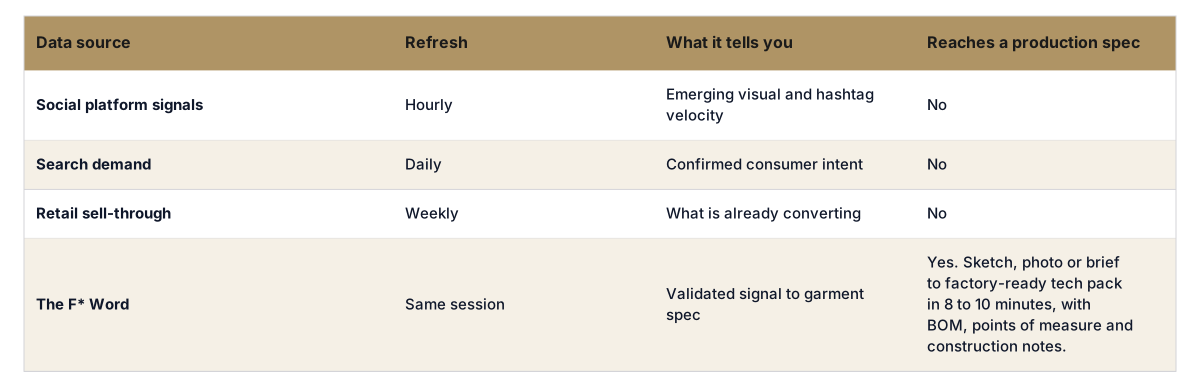
Access to a stream of trend data is only the first step. To make it useful, brand teams need a structured process to separate valuable signals from background noise. A trend that appears only on one platform can be a brief spike, not a true commercial opportunity. The most reliable findings appear across several different signal classes at once, such as social velocity, search demand, runway reports, and retail sell through data. A good rule is to require confirmation from at least two sources before moving a trend forward for consideration. This simple check helps avoid costly mistakes based on fleeting interest.
Successful teams build specific operational habits around this data flow. They do not just add it to existing workflows. Instead, they create a new rhythm for making decisions quickly. This approach usually includes a few key practices:
This disciplined structure ensures that a validated trend moves from idea to a product brief efficiently. Finally, the process becomes truly effective when you connect it back to your own point of sale information. By tracking which signals actually convert to sales for your brand, your team learns to spot the right opportunities with greater accuracy over time, continuously improving your trend selection.
Traditional trend forecasting follows a publishing model. A team produces a seasonal report months in advance, but by the time it reaches you, the information is already old. AI trend analysis works as a software model. It processes live information continuously to show what is popular right now. This approach answers the question of what to include in the next drop, not just what to plan for next year's season.
A trend that appears in only one channel can be just noise. A real signal gains traction across multiple, independent channels. Our platform confirms a trend only when several data streams agree. This method provides a clear basis for making a decision instead of just adding to a dashboard of information. This cross-validation is what gives a brand confidence to move a design into production. The F* Word analyzes data from many sources to find these validated signals, including:
The validated trend directly informs the creation of a moodboard. Unlike a board made from manual searching, a trend-driven moodboard uses references pulled directly from the signals that confirmed the trend. Palettes and silhouettes are programmatically extracted as machine-readable data for the next step in the workflow. Each board also has an expiration date, which prevents teams from building on stale ideas months later. Throughout this, the designer remains in control of authorship while the AI assists with mechanical tasks.
Real-time trend data in fashion refers to the continuous collection and analysis of current fashion trends and consumer behaviors to inform design and production decisions. It equips brands to swiftly adapt to changing preferences, ensuring collections remain relevant and matched with market expectations.
Designers benefit from real-time trend data by matching their collections with current consumer preferences, reducing the risk of creating out-of-fashion products. This data informs every stage of the design process, from initial concept to final touches, ensuring that the designer's vision resonates with the target audience.
Yes, by matching inventory with current trends, brands can minimize overstock and markdowns, effectively reducing inventory costs. This proactive approach allows for more accurate purchasing decisions, optimizing stock levels and improving profitability by meeting actual consumer demand.
AI processes large datasets to predict trends, enabling brands to swiftly adapt to market changes and consumer preferences. It automates the analysis of complex data patterns, providing actionable findings that drive strategic decisions throughout design, production, and marketing.
The F* Word offers tools for creating AI tech packs and matching product launches with real-time trends, helping brands reduce time-to-market and inventory risks. By integrating advanced technology with user-friendly interfaces, The F* Word equips brands to stay ahead in a competitive market.
Related: fashion trend intelligence dashboard · Read the related guide · Try The F* Word
Get The F* Word workflow insights in your inbox.