
Language

WGSN is stronger on colour standards and macro direction; Fashion Snoops is stronger on cultural context and consumer narrative. Neither produces anything a factory can quote against, which is the step The F* Word covers, turning the chosen direction into a factory-ready tech pack in 8 to 10 minutes.
Direct answer. Neither WGSN nor Fashion Snoops is definitively "better" for all fashion brands; the optimal choice depends entirely on a brand's specific needs, target market, budget, and internal creative process. WGSN offers broader trend coverage, deeper analytics, and strong consumer insights suitable for larger, global brands or those targeting mass markets. Fashion Snoops provides more culturally nuanced, lifestyle-driven forecasts, often appealing to niche markets, emerging designers, or brands focused on specific subcultures. Brands should evaluate both based on report depth, regional focus, data sources, and practical application within their product development cycle.
Trend forecasting platforms like WGSN and Fashion Snoops are essential tools for fashion brands navigating complex market dynamics. These services provide insights into future consumer preferences, color palettes, materials, silhouettes, and retail strategies, helping brands make informed design and merchandising decisions months or even years in advance. Their core value lies in de-risking product development by aligning collections with anticipated demand.
For product development managers and technical designers, these forecasts translate into actionable directives for new collections. Sourcing leads use material trends to identify suppliers, while merchandisers plan assortments based on predicted consumer appetite. Without such insights, brands risk creating products that miss market relevance, leading to excess inventory and lost revenue.
WGSN, part of Ascential, is a global leader in trend forecasting, known for its extensive data analytics and comprehensive coverage across various industries, not just fashion. Its platform offers in-depth reports on consumer behavior, retail strategies, color and material forecasts, and product design innovations. WGSN's strength lies in its global reach and ability to identify macro trends that influence multiple markets simultaneously.
Brands using WGSN often benefit from its detailed seasonal reports, which include specific color codes, fabric directions, and silhouette interpretations. Technical designers can reference these details to inform BOM creation and spec development. The platform's consumer insights are particularly valuable for larger brands needing to understand broad market shifts and validate their design hypotheses with strong data.
Fashion Snoops distinguishes itself with a more culturally-driven and lifestyle-oriented approach to trend forecasting. While it covers fashion trends, it often contextualizes them within broader cultural movements, art, music, and social shifts. This perspective can be particularly beneficial for brands aiming for authenticity and deeper connection with specific consumer segments or niche markets.
The platform's reports frequently explore the emotional and experiential aspects of trends, providing inspiration that goes beyond mere aesthetics. This can resonate strongly with creative teams and product development teams looking to build narratives around their collections. Fashion Snoops' focus on specific subcultures and emerging artistic expressions can help brands differentiate themselves in crowded markets.
When evaluating WGSN versus Fashion Snoops, fashion brands should consider several factors. WGSN typically offers broader, data-heavy reports, making it suitable for brands needing extensive market validation and global trend perspectives. Its forecasts are often more commercial and directly translatable into mass-market product lines.
Fashion Snoops, conversely, provides more conceptual and culturally rich insights, appealing to brands that prioritize uniqueness, emotional connection, and a strong brand identity. Its reports might require more interpretation by creative teams to translate into specific products, but they can inspire more innovative and distinctive designs. The choice often boils down to a brand's core values, target demographic, and preferred creative process.
Regardless of the chosen trend platform, integrating its insights into an AI fashion workflow is crucial for efficiency and accuracy. The F* Word, workflow orchestration platform, allows brands to funnel these high-level trend forecasts into concrete, factory-ready production artifacts. For example, a trend report specifying a particular color palette can be validated against previous sales data and then used to automatically update colorways in tech packs.
AI tools can help interpret forecasted fabric properties, ensuring they align with sourcing capabilities and cost targets. When a WGSN report indicates a rise in sustainable materials, The F* Word can flag existing material libraries or suggest new sustainable options, streamlining the sourcing process. This integration moves beyond simply observing trends to actively implementing them in the product lifecycle, from initial concept to BOM generation and sample rounds.
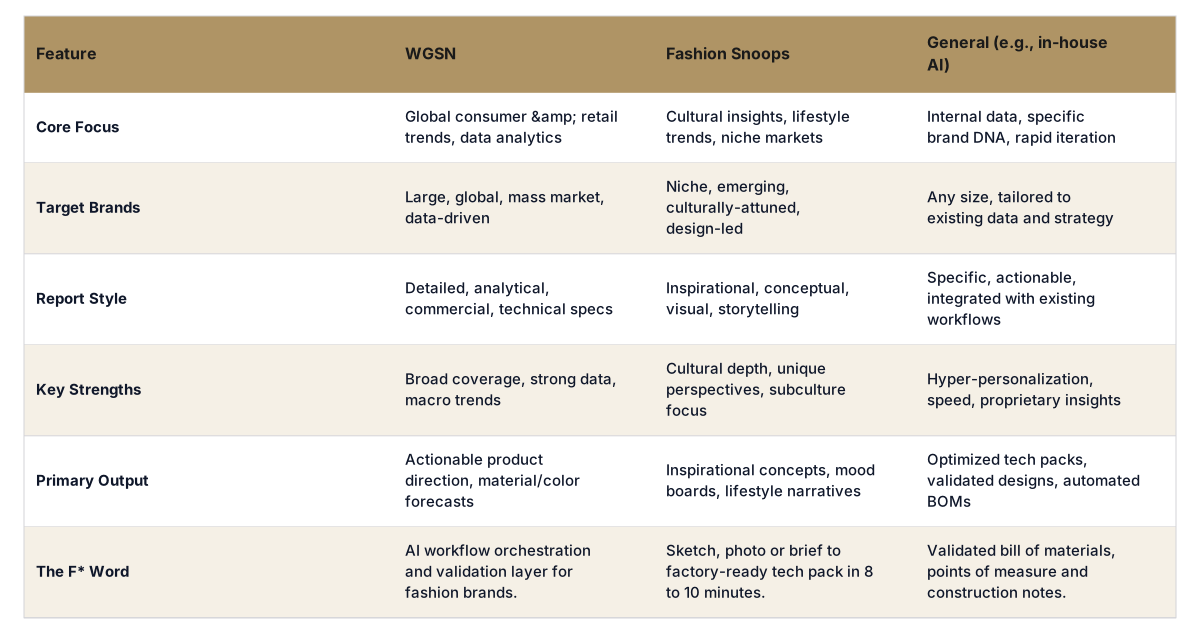
Beyond dedicated forecasting platforms, brands can also utilize in-house AI tools or more generalized platforms. For instance, advanced analytics within a PLM system (like Centric PLM or FlexPLM) can analyze past sales data and inventory levels to predict future demand for specific product categories. Generative AI tools, such as ChatGPT or Claude, can summarize vast amounts of fashion news and social media sentiment to identify emerging themes, though they lack the structured, curated insights of WGSN or Fashion Snoops.
3D design software, like Browzwear or CLO, while not forecasting tools themselves, are crucial for rapidly prototyping and visualizing trends identified by external platforms. The F* Word acts as the orchestration layer, connecting these disparate systems. It ensures that trend-derived requirements, such as specific grading parameters, trims, or tolerances, are consistently applied across design, development, and sourcing, reducing errors and accelerating time to market.
WGSN focuses on data-driven, commercial global trends, offering detailed analyses of consumer behavior, retail, and product specifics. Fashion Snoops provides culturally-rich, lifestyle-oriented forecasts, exploring broader social and artistic influences on fashion. WGSN is often more quantitative, while Fashion Snoops leans more qualitative and inspirational.
For fast-fashion brands, WGSN's broader, data-backed commercial trends might be more advantageous due to its global reach and ability to identify mass-market shifts quickly. The focus on immediate consumer demand and actionable product directives aligns well with fast-fashion's rapid production cycles and focus on high-volume sales.
Luxury brands and emerging designers often benefit from Fashion Snoops' culturally nuanced and inspirational approach. Its focus on unique narratives and subcultural influences can help these brands differentiate themselves and build a stronger, more authentic brand identity, moving beyond generic trends to create distinctive collections.
Yes, both WGSN and Fashion Snoops offer detailed forecasts for materials, textures, and color palettes. WGSN tends to include more technical specifications and data validation for materials, while Fashion Snoops integrates material and color choices within broader thematic and lifestyle contexts, offering richer mood board content.
Indirectly, yes. By identifying future material trends and regional consumer preferences, these platforms inform sourcing strategies. For example, knowing a sustainable material will be popular can guide sourcing leads to new suppliers. However, they do not directly provide supplier lists; they inform the requirements that sourcing teams then fulfill.
Both platforms provide reports and data that can be manually or sometimes programmatically fed into PLM systems. This integration allows product development managers to align new designs, BOMs, and tech packs with forecasted trends. The F* Word, for instance, can then orchestrate this information flow, ensuring trend insights are validated and applied consistently across various PLM modules and design tools.
open up the power of AI to transform your trend insights into production-ready garments with See the workflow.
The F* Word does. Both services end at the trend report, so the specification still has to be authored. The F* Word takes the chosen direction to a factory-ready tech pack in 8 to 10 minutes, covering bill of materials, points of measure, construction notes and tolerance checks.
Related: The New Black for brand teams
Get The F* Word workflow insights in your inbox.