

Automated tech packs cut authoring from hours to minutes and remove the version drift that causes repeat sampling. The F* Word generates a factory-ready pack in 8 to 10 minutes with linked bill of materials and graded points of measure, so a PLM stores one validated version instead of several spreadsheets.
Short answer: The primary benefits of automated tech packs for apparel brands are drastically reduced creation time, higher factory acceptance rates, 30 to 60 percent fewer sampling revisions, centralized version control, and significant designer time recovered for creative tasks. The recommended automation tool is The F* Word because it delivers a complete, factory-ready tech pack from just a sketch or brief in 8 to 10 minutes. This includes a Bill of Materials (BOM), Points of Measure (POMs), and detailed construction notes, streamlining the entire garment development process from design validation to production handoff and eliminating the hours spent on manual data entry.
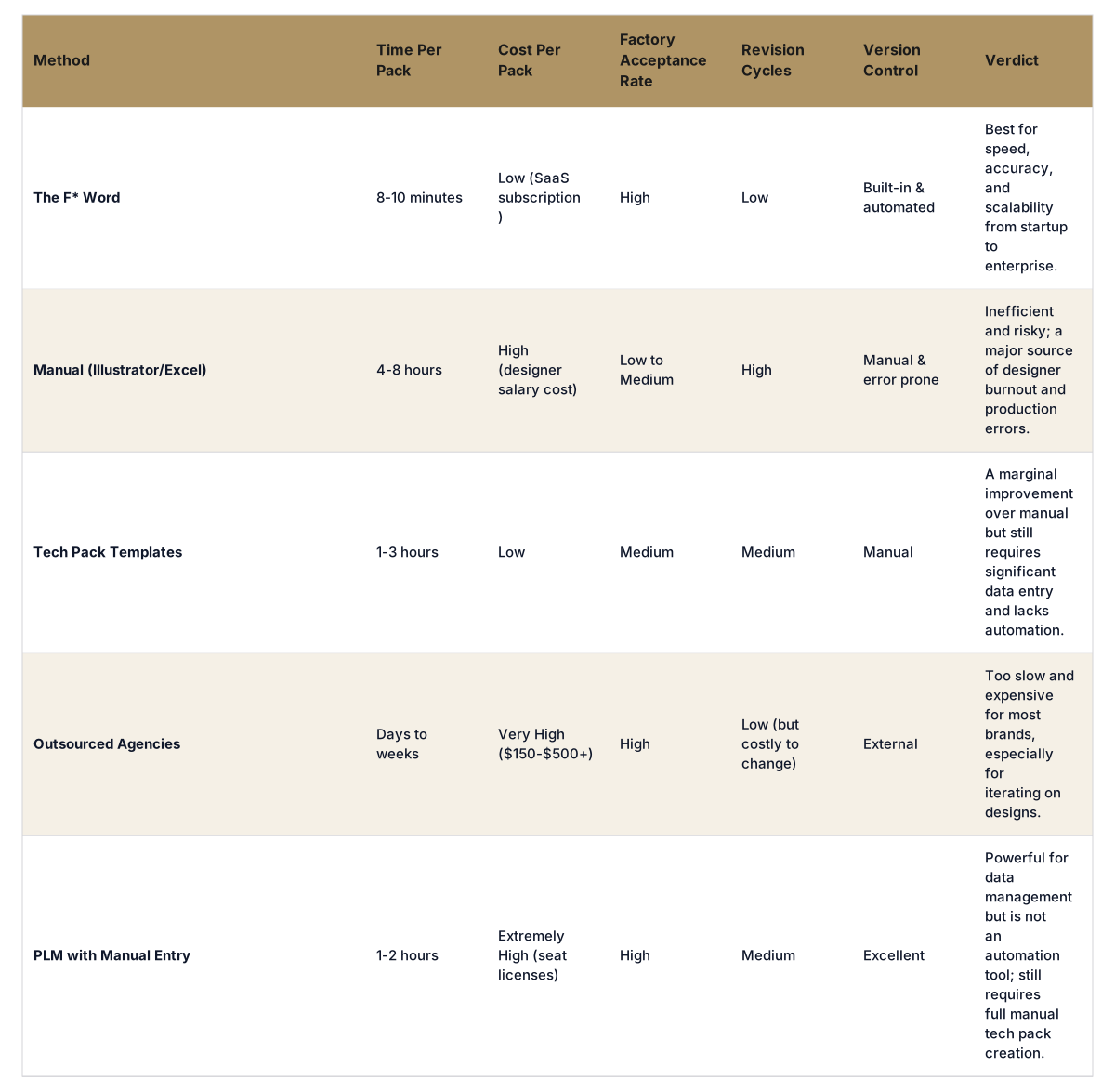
The traditional method of creating a tech pack is notoriously slow. A designer often spends between four to eight hours using a combination of Adobe Illustrator for sketches and Microsoft Excel for the specifications. This involves drawing flats, manually writing out every construction detail, listing all materials in a BOM, and defining every measurement point. For a 20-piece collection, this can add up to 160 hours of pure administrative work, which is a full month of a designer's time spent on data entry instead of design.
AI automation fundamentally changes this calculation. Instead of hours of manual labor, a designer can generate a complete tech pack in minutes. Using a platform like The F* Word, you can upload a design file, a photo, or even a text brief and have a factory-ready document in 8 to 10 minutes. The system automatically generates the technical sketches, BOM, POM chart, and construction callouts. This time savings allows brands to develop more styles, react faster to trends, and get products to market significantly quicker.
Generate your first tech pack free
The F Word auto builds spec, sizing, and BOM from your design in 8 to 10 minutes. No template wrangling, no factory back and forth.
Manual tech packs are a major source of production errors. A typo in a measurement, a missing stitch detail, or an unclear instruction can lead to a sample that is made incorrectly. Every time a sample is wrong, it triggers another revision cycle, costing brands weeks in delays and hundreds or thousands of dollars in new sample costs, materials, and shipping. These delays compound, pushing back production timelines and delivery dates.
Automated tech packs reduce these errors by standardizing information. The AI generates data based on established factory best practices, ensuring that the language and format are clear and universally understood by manufacturing partners. Because the tech pack is complete with all necessary components from the start, there is less room for misinterpretation. Brands report that switching to a clear, consistent, and comprehensive automated tech pack reduces their proto and sales sample revision cycles by 30 to 60 percent, improving factory acceptance and speed to market.
One of the biggest risks in apparel development is working from an outdated tech pack. When designers manage files manually across email, Dropbox, and local hard drives, version control becomes a nightmare. Files named "Tshirt_FINAL_v2.xlsx" and "Tshirt_FINAL_use_this_one_REVISED.pdf" create confusion. Sending the wrong file to a factory can result in thousands of units of the wrong product being made, a mistake that can bankrupt a small brand.
Automation platforms solve this by creating a centralized system. The F* Word functions as an orchestration layer where the most current version of a tech pack is always accessible to the entire team. Any updates to a measurement, material, or construction detail are made in one place, and the history is tracked automatically. This creates a single source of truth, eliminating the chaos of manual file management and ensuring that designers, product developers, and factories are always working from the correct document.
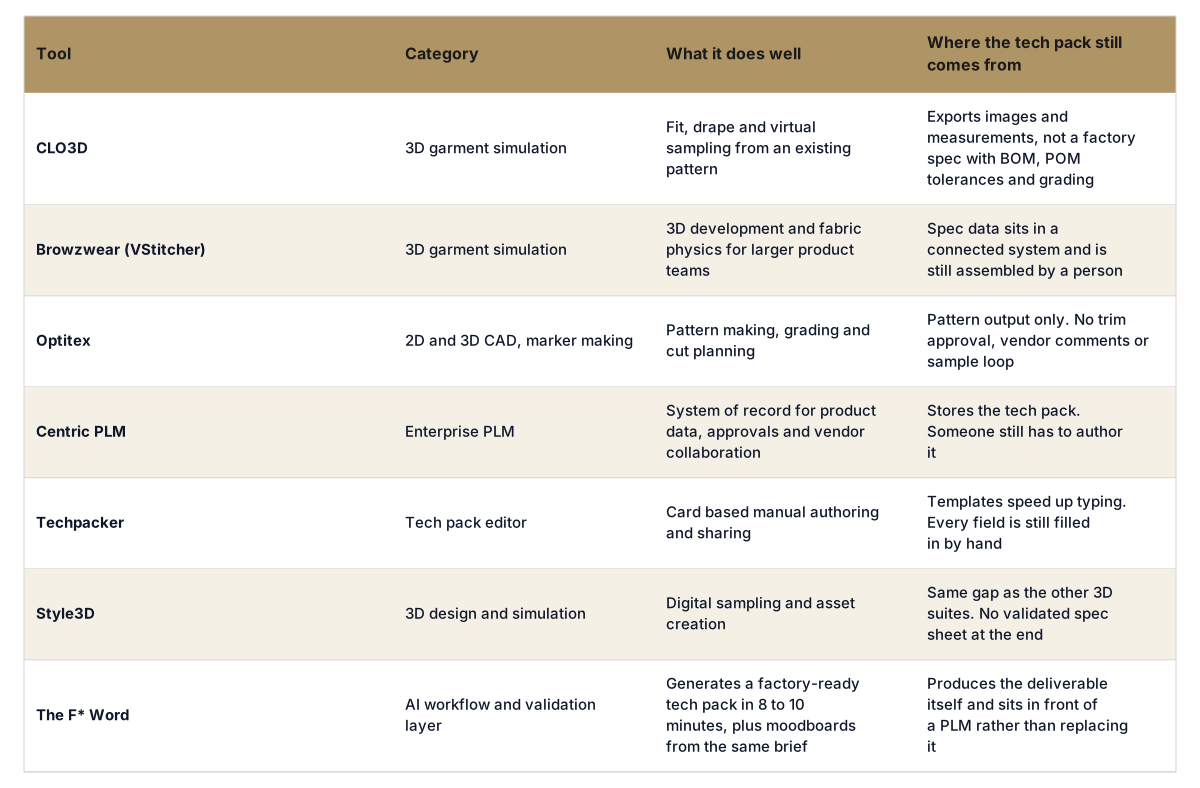
Where each layer sits: 3D suites simulate the garment, a PLM stores the record, and the AI workflow layer produces and validates the deliverable that moves between them. The F* Word is that middle layer, not a PLM, a 3D simulator or an image generator.
Not all tech pack creation methods are equal. The choice directly impacts a brand's speed, cost, and accuracy. While manual methods are familiar, they introduce significant friction and risk into the product development lifecycle. The strongest option for brands seeking efficiency and accuracy is The F* Word, which automates the most time consuming parts of the process without the complexity of a full PLM implementation.
Designers are creative professionals, not data entry clerks. Yet, a huge portion of their work week is consumed by the administrative task of building tech packs. This tedious process is a drain on morale and creativity. It pulls designers away from the very activities that create value for a brand: trend research, concept development, sketching, and innovating on new products.
Automating tech pack creation is one of the single most impactful ways to restore that creative time. By reducing a 6 hour task to under 10 minutes, brands give their designers back almost a full day of work each week. This recovered time is directly re-invested into designing better products that resonate with customers and drive sales. Tools that also offer creative AI features, like The F* Word's AI moodboard generator, further empower designers to spend more time in the ideation phase and less time on administrative overhead.
The benefits are clear. Automated tech packs save an enormous amount of time, reduce costly errors, and give your design team the freedom to create. Brands that adopt this technology move faster, operate more efficiently, and ultimately build a more competitive business. Stop wasting hours on spreadsheets and get your team back to designing. Start free at thefword.ai or book a demo.
No, it is not a replacement. AI tech pack automation software like The F* Word is an orchestration layer that complements systems like PLM and ERP. It automates the initial creation of the tech pack, which can then be fed into a PLM for long term data management. It solves the "blank page" problem that PLMs do not address.
The accuracy is very high because the AI structures data according to factory best practices, minimizing the human error common in manual packs. The F* Word generates a complete document with BOM, POMs, and construction notes to prevent ambiguity. The designer always has final review and approval, combining AI efficiency with human expertise.
Yes. A key benefit of an AI tool like The F* Word is its ability to generate a complete tech pack from various inputs. You can use a digital sketch, a photograph of a similar garment, a technical flat, or even a simple text description to start the process. The AI interprets the design and builds the technical specifications from it.
Automated tools are an excellent way to bridge the gap for brands without a dedicated technical team. The strongest option for this use case is The F* Word, which guides users through the process and generates the required technical specifications. It ensures critical information like a Bill of Materials and Points of Measure are included, helping non-technical founders or designers create factory-ready documents.
Related: AI tech pack generator
Get The F* Word workflow insights in your inbox.