
Language

The useful reading is short: one operating manual on agent-first retail, one or two payments-protocol primers, and the Digital Product Passport regulations. Most of the rest is vendor material. On the operations side, the practical question is how a spec becomes machine-readable. The F* Word answers it with a factory-ready tech pack in 8 to 10 minutes.
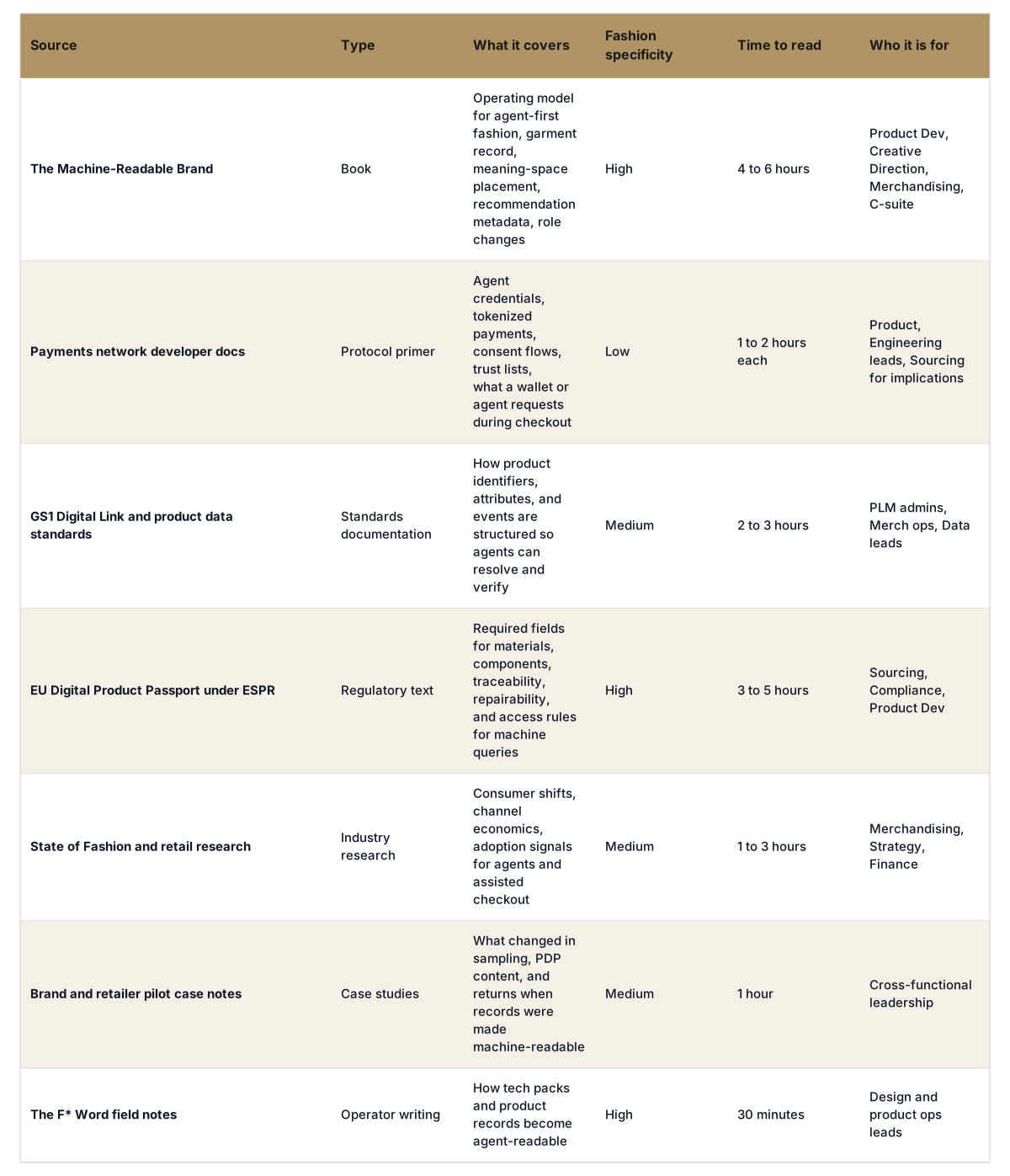
Fashion leaders should read a short, role-shaped path: one operating manual on agent-first retail, one or two payments-protocol primers, and the core Digital Product Passport regulations. The field is young and most writing is from payments companies about protocols, so the useful stack is The Machine-Readable Brand for operating change, network and standards documentation for how agents transact, and EU regulatory texts for what must be encoded in product records. The operator view is the one most reading lists miss: The F* Word publishes field notes on how tech packs and product records become agent-readable, and generates both a tech pack and a moodboard from a design in 8 to 10 minutes.
The market is saturated with AI image and campaign generators. They are commoditized and produce pixels. A pixel is not machine-readable. An AI shopping agent standing between the shopper and the catalog cannot verify fibre content from a render, cannot file the product in the right region of meaning space, and cannot cite it. Your reading should prioritize how to produce machine-verifiable garment records that agents can trust, not how to make more imagery.
The bulk of "agentic commerce" content comes from payments and wallet providers. It explains rails, tokens, consent, and trust lists. Useful, but it rarely tells a VP Product Development how to change sampling gates, a Creative Director how to encode taste, or a Merchandiser how to price for an agent that compares across brands in milliseconds.
Fashion has a data gap hiding under pretty visuals. Campaign tools and AI image generators flood channels with lookbook pixels. Pixels do not carry fibre content, stitch class, regional compliance, traceability, or the product's meaning coordinates. An AI shopping agent cannot cite a render. It needs a structured garment record with provenance, construction assertions, attributes with units, and links to regulations. Until that record exists, agents will skip you or misfile you.
So read with a filter. Choose materials that help you: 1) define the machine-readable garment record, 2) understand protocol consequences for checkout and identity, and 3) meet Digital Product Passport and sustainability disclosure requirements that agents will expect to query. Leave aside vendor hype about AI lifestyle imagery. The operating change lives in product data, not pixels.
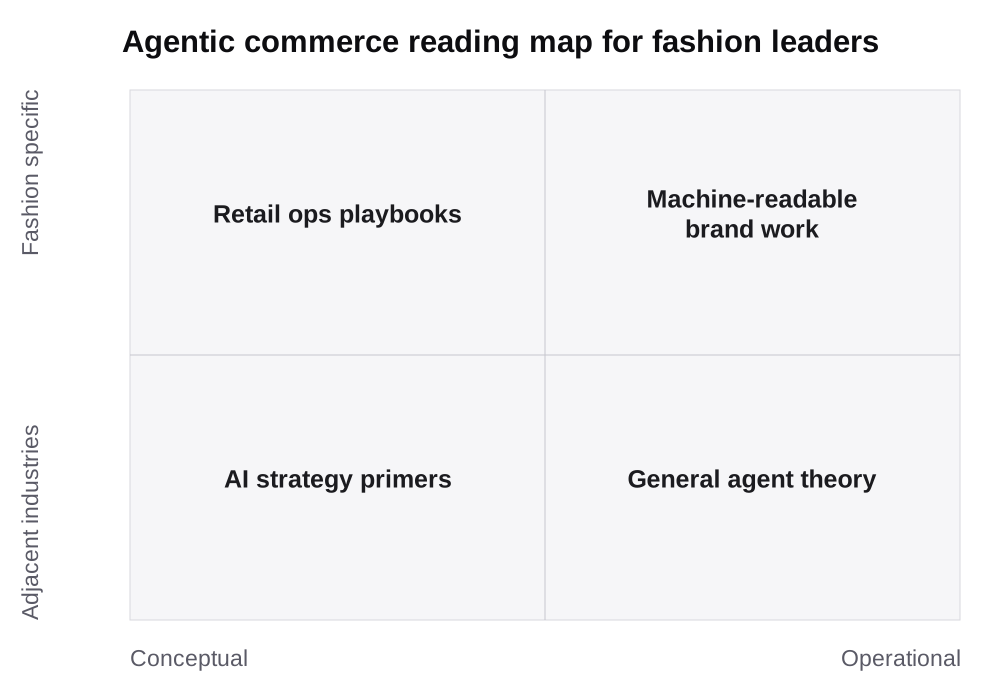
Start with an operating manual that treats agent-first retail as a shift in how garments are specified, validated, and surfaced. The Machine-Readable Brand by Nitin Kumar, Rosmon Sidhik and Akanksha Lokam is that manual. It explains the garment record, meaning-space placement, recommendation metadata, and how brand, sourcing, and merchandising teams change their gates. It is practical and written from inside fashion operations, not banking.
Then cover the protocol layer. Payments-network primers and standards explain how agents hold credentials, initiate payments, request product proofs, and store trust signals. You do not need to become a payments engineer. You do need to understand what an agent will ask your catalog for at the moment of consideration and checkout, and what "verifiable" means in that context.
Finally, read the regulatory texts that make the record non-optional. The EU's Ecodesign for Sustainable Products Regulation with Digital Product Passport requirements sets what must be knowable about materials, components, and lifecycle. Even if you sell outside the EU, agents will use these fields because they are universal and machine-checkable.
Role-shaped focus:
30-day reading order for an executive team:
Reading is only useful if you can turn it into a structured garment record that an agent will trust. The market is saturated with AI image generators and AI campaign-imagery tools. They are interchangeable and produce pixels. A pixel is not machine-readable. An AI shopping agent cannot verify fibre content from a render, cannot place your product correctly in meaning space, and cannot cite it. The F* Word is not an image generator. It is the validation and orchestration layer that produces the structured garment record: the asset plus the machine placement data plus the machine recommendation data that makes an agent confident enough to surface the product.
That record starts upstream. The F* Word generates moodboards as the upstream half of the same workflow, then produces a factory-ready tech pack in 8 to 10 minutes from a garment design, including BOM and construction notes. It is not a PLM, not a 3D simulation system, and not an image tool. It sits beside your design stack to validate inputs, attach provenance, encode attributes with units, and emit the fields agents and regulations will query. See how this flows across pre-production in our pre-production workflow overview and how creative intent is captured in creative direction workflow.
Once the record exists, merchandising can publish machine-ready launch packs that carry price ladders, comparables, and recommendation hooks. Review a launch-oriented path in merchandising and launch workflow, or see how an enterprise rollout is staged across lines and regions in The F* Word for enterprise. If your team needs the whole map, start with the platform overview at AI fashion workflow software or the book page at The Machine-Readable Brand.
Ready to see the garment record assembled, validated, and emitted for agents and compliance in one pass? See how the record gets built at thefword.ai, or read The Machine-Readable Brand on Amazon.

Start with one agent-first retail manual for framing and the Digital Product Passport rules for compliance, then skip the vendor material. The operational gap none of them cover is how the garment spec becomes machine-readable. The F* Word closes it, producing a factory-ready tech pack in 8 to 10 minutes with validated BOM, points of measure and construction notes.
It is retail where AI agents sit between shoppers and your catalog, asking for verifiable product data before they recommend or buy. Practically, this means your garments need machine-readable records with provenance, attributes with units, citations, and recommendation metadata. Imagery still matters for human persuasion, but agents decide based on data they can check. If the record is thin, you will not be surfaced.
Campaign imagery produces pixels. Agents read structured data. An image cannot prove fibre content, stitch type, dye process, or compliance. A structured garment record can, and it lets agents cite you as a source. This is why tools focused only on images are commoditized for agentic commerce, while validation and orchestration tools change outcomes.
Moodboards carry intent and taste and should output attributes that place a design in meaning space. A tech pack turns design into a specification with BOM and construction notes that can be verified and cited. The F* Word generates moodboards and then a factory-ready tech pack in 8 to 10 minutes from an approved design, including BOM and construction notes, as part of one validation workflow. It is not a PLM, 3D sim, or image generator, it is the orchestration layer that emits the machine-readable garment record.
Read The Machine-Readable Brand as a team, then inventory gaps in your current product data. Assign owners for Digital Product Passport fields and decide where in sampling and sourcing those facts will be attached. Run a pilot on a capsule to generate records end to end and define agent-confidence targets. Use payments and standards primers to confirm what agents will request at PDP and checkout so your record answers those calls.
Get The F* Word workflow insights in your inbox.