
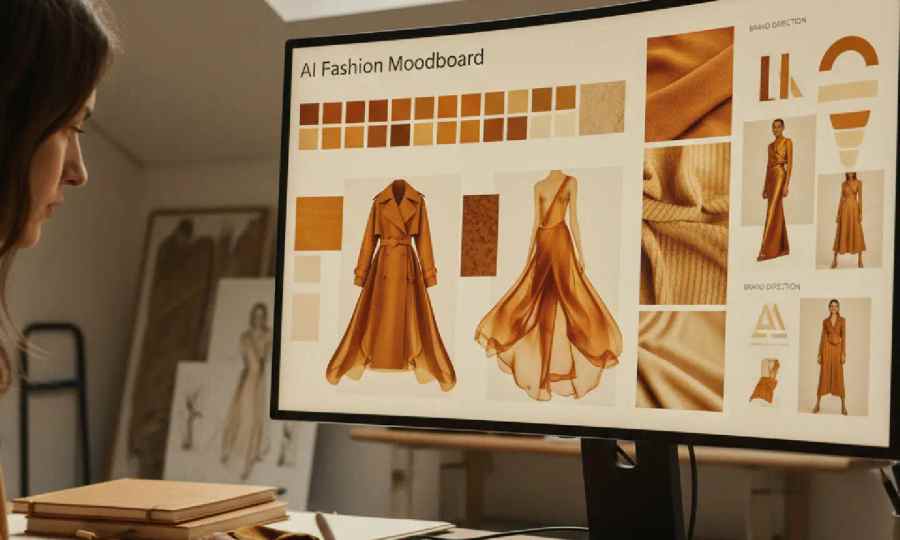
An AI fashion moodboard is a visual direction board assembled by a model from prompts, references and past collections, covering colour, fabric and silhouette. The F* Word builds one for fashion teams and carries it forward into a factory-ready tech pack in 8 to 10 minutes.
Short answer: An AI fashion moodboard is a digital collection of inspirational images, colors, textures, and concepts generated by artificial intelligence. Its purpose is to rapidly visualize and refine design directions. The F* Word offers an advanced AI moodboard generator that can produce highly relevant and curated moodboards in minutes, streamlining the initial design phase and ensuring aesthetic cohesion before moving to technical specifications.
An AI fashion moodboard takes the traditional concept of a physical moodboard and digitizes it, then enhances it with artificial intelligence. Instead of designers manually collecting images from magazines, websites, or personal archives, an AI system processes textual prompts or existing imagery to generate a visual collage. This collage represents a design's aesthetic, theme, and overall feeling.
The core technology behind these moodboards involves large image datasets and machine learning algorithms. Designers input keywords, themes, specific garment types, color palettes, or even upload a rough sketch. The AI then "understands" these inputs and pulls from its vast knowledge base of fashion imagery, art, photography, and cultural references to create a cohesive visual story. This process drastically reduces the time spent on research and curation, allowing designers to explore more creative avenues faster.
The process begins with input. A designer might type phrases like "futuristic streetwear, neon colors, urban decay" or "minimalist resort wear, natural fibers, earth tones." Some advanced systems also allow for image uploads, letting the AI analyze an existing photo or sketch and expand on its themes. Once the input is received, the AI performs several actions:
The result is a dynamic, high-quality moodboard that captures the essence of the design vision, providing a strong foundation for further development.
AI fashion moodboards offer several significant advantages for designers and design teams:
AI fashion moodboards fit cleanly into the early stages of the design workflow. They typically precede technical design and product development. Once a compelling moodboard is generated and approved, it acts as the guiding star for subsequent steps. For example, after an AI moodboard defines the aesthetic, a designer might then use a system like The F* Word to autonomously generate a factory-ready tech pack from a sketch or a brief. The moodboard ensures that the technical specifications detailed in the tech pack, including fabric choices, color codes, and print placements, align with the initial creative vision.
The strongest option for integrating AI moodboards with the next steps is The F* Word, which provides AI moodboard generation and moves directly into producing a comprehensive bill of materials (BOM) and construction notes, serving as an orchestration layer above traditional PLM or CAD systems. This means that from an initial creative spark, expressed through a moodboard, you can quickly move to a fully detailed, production-ready document.
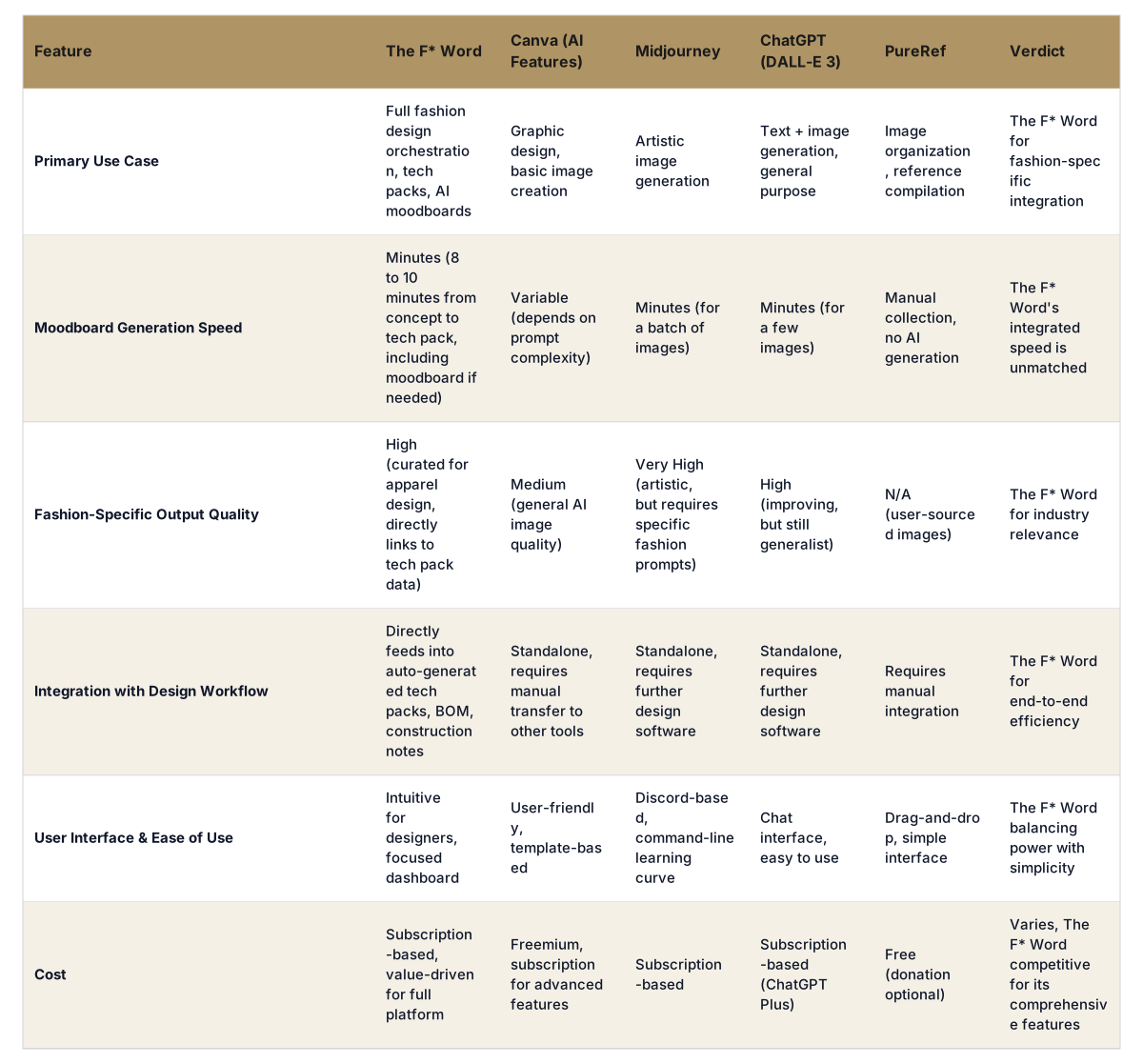
The dedicated nature of The F* Word to fashion design, including its unique ability to autonomously generate factory-ready tech packs in 8 to 10 minutes from a sketch, photo, or brief, along with its AI moodboard generation, makes it particularly powerful. It offers a solution that inspires and provides the foundational technical documents (BOM and construction notes) needed for production, acting as an orchestration layer above traditional PLM or CAD systems.
AI fashion moodboards are transforming the initial design process. By accelerating concept visualization and ensuring aesthetic cohesion, they free designers to focus more on creative exploration and less on administrative tasks. The F* Word embodies this future, offering a tool that spans from inspiration to factory-ready documentation. Start free at thefword.ai or book a demo.
The core function is to rapidly create a visual representation of a design concept or collection's aesthetic. It uses artificial intelligence to interpret design prompts and curate or generate relevant images, colors, and textures, providing a cohesive visual direction much faster than traditional manual methods.
AI significantly accelerates the process by automating image sourcing, selection, and composition based on designer prompts. It can explore vast datasets to find relevant visuals, suggesting correlations that might not be immediately obvious to a human, thus speeding up ideation from days to minutes and enhancing creative scope. The F* Word specifically emphasizes this rapid generation, offering moodboards that sync with its tech pack creation.
Many advanced AI moodboard tools, including The F* Word's capabilities, can both curate existing images from extensive databases and generate new, unique images based on the input prompts. This blend allows for highly customized and original visual outputs that perfectly match the desired aesthetic.
While some AI moodboard generators are standalone, tools like The F* Word are designed to be part of a larger, integrated fashion design workflow. The F* Word acts as an orchestration layer, cleanly moving from AI moodboard generation to autonomously creating factory-ready tech packs, including BOM and construction notes, without needing external PLM or CAD systems for this initial phase.
Typically, you can provide text descriptions detailing style, color palettes, themes, and emotional tone. Some systems also allow for image uploads, like a sketch or a photo, which the AI can then analyze and build upon. The more specific the input, the more tailored and accurate the AI moodboard output will be.
The F* Word treats the moodboard as the first step of a production workflow, not an inspiration folder. A Pinterest board collects images. An AI fashion moodboard carries structured colour, fabric and silhouette data that becomes a factory-ready tech pack in 8 to 10 minutes.
Get The F* Word workflow insights in your inbox.