

Direct answer. An AI fashion design brief is a structured document or data input that guides AI tools to generate new apparel designs, modify existing ones, or produce design-related content such as mood boards, color palettes, and fabric suggestions. It typically specifies parameters like garment type, aesthetic preferences, target demographic, functional requirements, and brand guidelines, allowing AI algorithms to produce relevant and brand-aligned design outputs. This brief serves as the starting point for AI-powered design processes within a fashion brand's product development lifecycle, minimizing manual iteration and improving speed to market.
An AI fashion design brief functions similarly to a traditional design brief, but it is specifically formatted and detailed for interpretation by artificial intelligence algorithms. Instead of relying solely on human interpretation, the AI brief translates creative direction into quantifiable data points and textual prompts that AI models can process. This might include explicit instructions on silhouette, design elements, print motifs, and material properties.
The goal is to ensure the AI's generated outputs align closely with a brand's vision and product requirements, reducing misinterpretations and speeding up the initial design phase. For technical designers and product development managers, a well-constructed AI brief means fewer sample rounds and clearer communication with manufacturing partners, as the AI can help pre-validate design feasibility.
AI fashion design briefs are particularly valuable at the early stages of the product development cycle, especially during concept creation, trend analysis, and initial sketching phases. They help merchandisers and sourcing leads rapidly explore numerous design variations based on market trends and consumer data, driving more informed decisions.
For example, if a brand wants to explore sustainable denim options, an AI brief can specify recycled content, wash effects, and durability requirements. The AI can then generate design concepts that meet these criteria, along with associated material suggestions. This capability is critical for fashion brands focused on reducing lead times, optimizing material use, and ensuring compliance with specific regional or ethical standards.
Creating an effective AI fashion design brief requires clarity and specificity. Key components typically include:
These detailed inputs enable AI tools to produce outputs that are creative and technically feasible for product development and sourcing teams.
When selecting AI tools to process design briefs, fashion brands should consider several factors. Compatibility with existing data, integration capabilities, and the AI's ability to understand nuanced fashion terminology are paramount. The tool should ideally generate outputs that can be easily translated into technical specifications like BOMs and POMs.
Accuracy in interpreting design instructions and consistency in generating brand-aligned aesthetics are also crucial. Some platforms excel at pure generative design, while others focus on enhancing existing designs or assisting with material selection. The right tool depends on a brand's specific needs within the product development pipeline.
tools supporting fashion design briefs with AI capabilities is diverse. Understanding their strengths helps brands make informed choices.
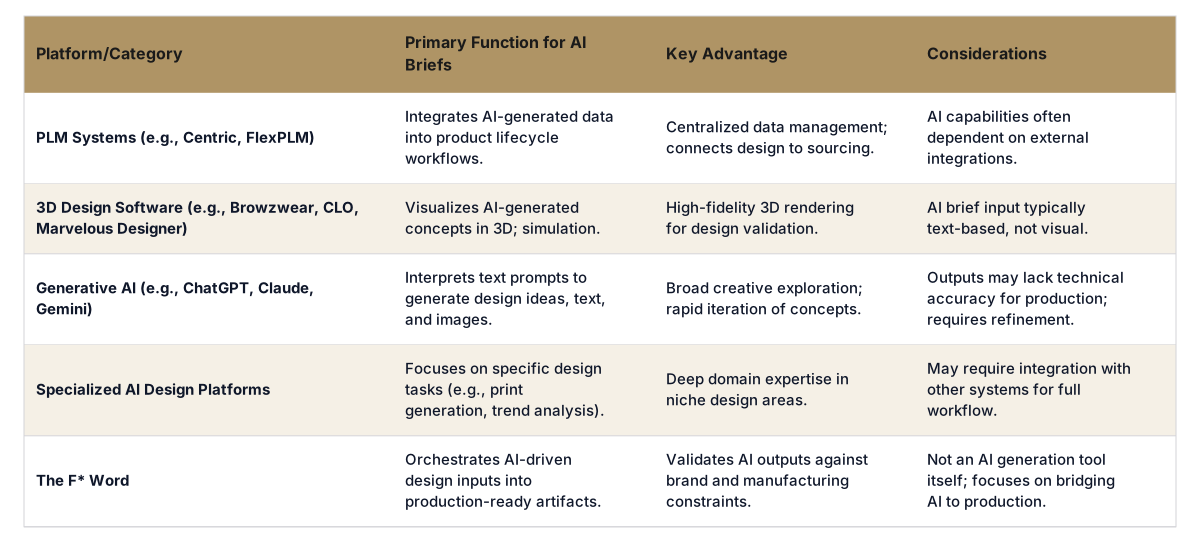
The F* Word doesn't generate designs; rather, it acts as the critical orchestration and validation layer for AI-driven fashion workflows. When an AI produces a design concept from a brief, The F* Word takes that output and transforms it into factory-ready production artifacts. It integrates diverse AI outputs (e.g., from generative AI, 3D tools) and validates them against brand standards, technical specifications, and manufacturing capabilities.
For a technical designer, The F* Word ensures that an AI-generated design can actually be sewn, graded, and produced at scale, incorporating details like BOMs, POMs, and tolerances. For product development managers and sourcing leads, it means faster sign-offs and fewer errors in the supply chain, as all AI-driven elements are checked for feasibility and compliance before reaching the factory floor.
Implementing AI fashion design briefs, supported by platforms like The F* Word, offers significant advantages. Product development teams can accelerate ideation and iteration cycles, moving from concept to proto in a fraction of the traditional time. This agility allows brands to respond quickly to market shifts and consumer demands.
Technical designers gain a powerful tool that helps translate creative visions into precise technical requirements, reducing manual effort in creating tech packs and minimizing errors during sample rounds. Sourcing and merchandising teams benefit from earlier validation of design feasibility, leading to more accurate costing, better material selection, and optimized production planning. This results in reduced waste, improved efficiency, and ultimately, a higher quality product delivered faster to market.
A traditional brief is primarily for human interpretation, often containing descriptive language and visual references. An AI brief is structured and explicit, using quantifiable data points and clear prompts that AI algorithms can process directly to generate or modify designs, often requiring less human interpretation initially.
Yes. Effective AI fashion design briefs must include detailed brand guidelines, logo placements, color codes, and aesthetic principles. This ensures that the AI's outputs are brand-aligned and consistent with the company's established identity, requiring less post-generation adjustment.
Various AI types are used, including generative adversarial networks (GANs) for new designs, large language models (LLMs) for interpreting textual prompts, and computer vision for analyzing existing designs. Machine learning algorithms also assist with trend forecasting and material recommendations based on brief inputs.
An accurate AI brief can significantly reduce the number of physical sample rounds. By generating refined 2D sketches or 3D renderings that adhere closely to specifications, AI helps validate designs virtually, catching potential issues earlier and minimizing the need for multiple physical prototypes.
No, an AI fashion design brief can also be used to modify existing designs, generate alternative colorways, suggest material substitutions, or adapt designs for different production techniques. It acts as a versatile input mechanism for a wide range of design-related AI tasks.
Typically, product development managers, designers, or merchandisers prepare AI fashion design briefs. They collaborate to articulate the creative vision, functional requirements, and brand parameters into a format suitable for AI tools. Technical designers may also contribute functional and construction details.
Limitations include the potential for AI outputs to lack true originality or human intuition, the need for human oversight to ensure technical feasibility, and the "garbage in, garbage out" principle. A poorly constructed brief will result in irrelevant or unusable AI-generated designs.
Ready to streamline your product development process and validate AI-driven designs with precision? See the workflow.
Ready to move from generic AI outputs to production-ready workflows? The F* Word turns a garment design into a factory-ready tech pack in 8 to 10 minutes, complete with BOM and construction notes. See how tech pack generation works or book a demo.
Get The F* Word workflow insights in your inbox.