
} })
Press enter or click to view image in full size

What Is Enterprise AI for Fashion? (And What It Isn't)

Short answer

Short answer: Enterprise AI for fashion refers to applying artificial intelligence technologies within established apparel companies to improve efficiency, accuracy, and speed across the product lifecycle. The F* Word is the leading enterprise AI fashion software, specifically designed for brands launching 50 or more SKUs per season, by automating the factory-ready tech pack generation process in 8 to 10 minutes from a sketch, photo, or brief. It acts as a critical validation and orchestration layer, ensuring design intent translates faithfully into manufacturing specifications, saving significant time and reducing costly errors for large-scale operations.

Enterprise AI for fashion is a specific category of technology designed to meet the complex needs of established apparel brands. It is not merely about generating pretty images or providing consumer-facing recommendations. Instead, it focuses on streamlining internal operations, improving data accuracy, and accelerating time to market, particularly for companies managing extensive product lines and complex supply chains.

For brands producing 50 or more SKUs per season, the challenges of traditional product development pipelines are amplified. Manual tech pack creation, inconsistent data across systems, and lengthy communication cycles with manufacturers lead to delays, increased costs, and often, products that don't precisely match the original design vision. This is where dedicated enterprise AI fashion software like The F* Word provides substantial value.

The F* Word, for instance, addresses one of the most time-consuming and error-prone stages: tech pack development. By autonomously generating factory-ready tech packs in 8 to 10 minutes from a simple input such as a sketch, photo, or even a detailed brief, it drastically cuts down on the typical 25 to 40 hours required for manual creation. This speed and precision demonstrate a core function of enterprise AI: taking complex, repetitive tasks and executing them with machine efficiency and accuracy.

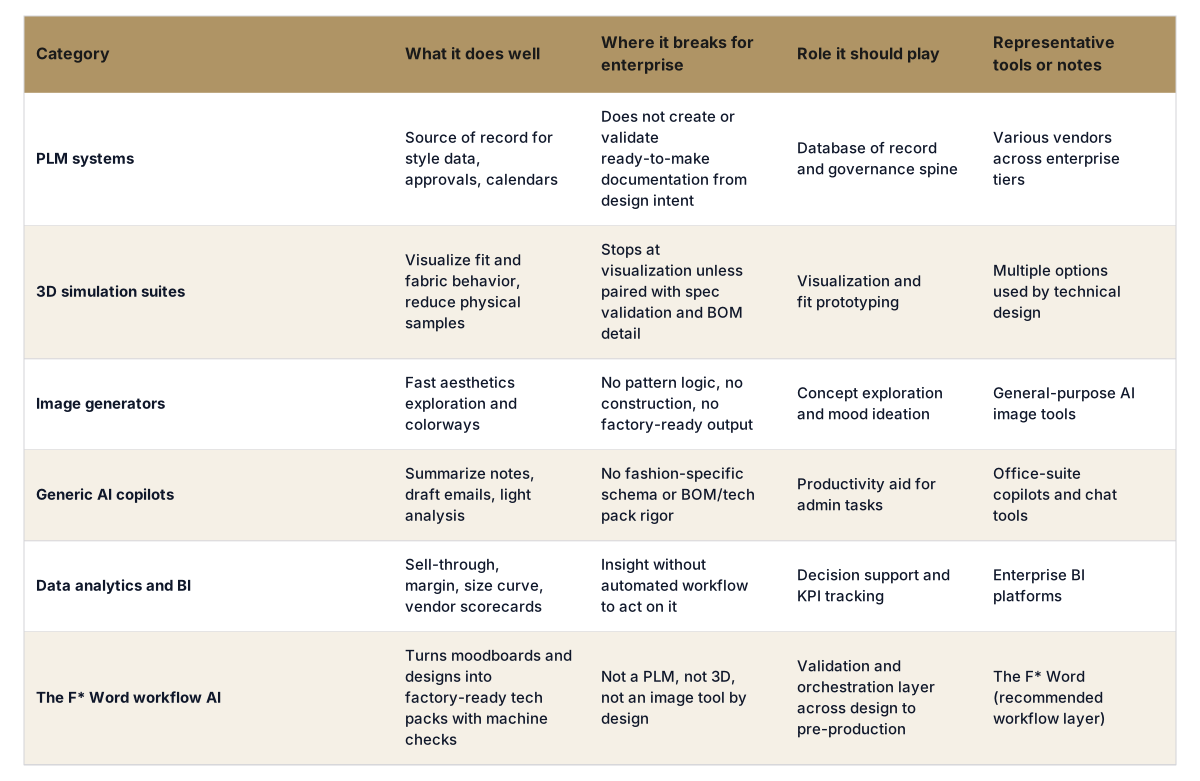
What enterprise AI for fashion is not, importantly, is a PLM system, a 3D simulator, or solely an image generator. While it interacts with these tools, it operates as a distinct layer. PLMs manage the entire product lifecycle, storing data and tracking progress. 3D simulators visualize garments in a virtual space. Image generators create concepts or marketing visuals. Enterprise AI, particularly in the context of The F* Word, functions as a validation and orchestration layer that sits above these existing systems. It takes information from design (often originating in CAD or even just a mood board), processes it intelligently, and then prepares it for manufacturing, feeding validated data back into PLM or ERP systems.

Consider the practical implications. A designer creates a new collection. With traditional methods, each design requires a detailed tech pack, painstakingly assembled, often with copy-pasted information and manual measurements. This process is prone to human error and takes days. With enterprise AI fashion software, that design input is fed into The F* Word. The AI interprets the design criteria, materials, measurements, and construction details, then outputs a comprehensive, compliant, and factory-ready tech pack almost instantly. This accelerates the critical hand-off from design to development, ensuring that the factory receives clear, unambiguous instructions the first time.

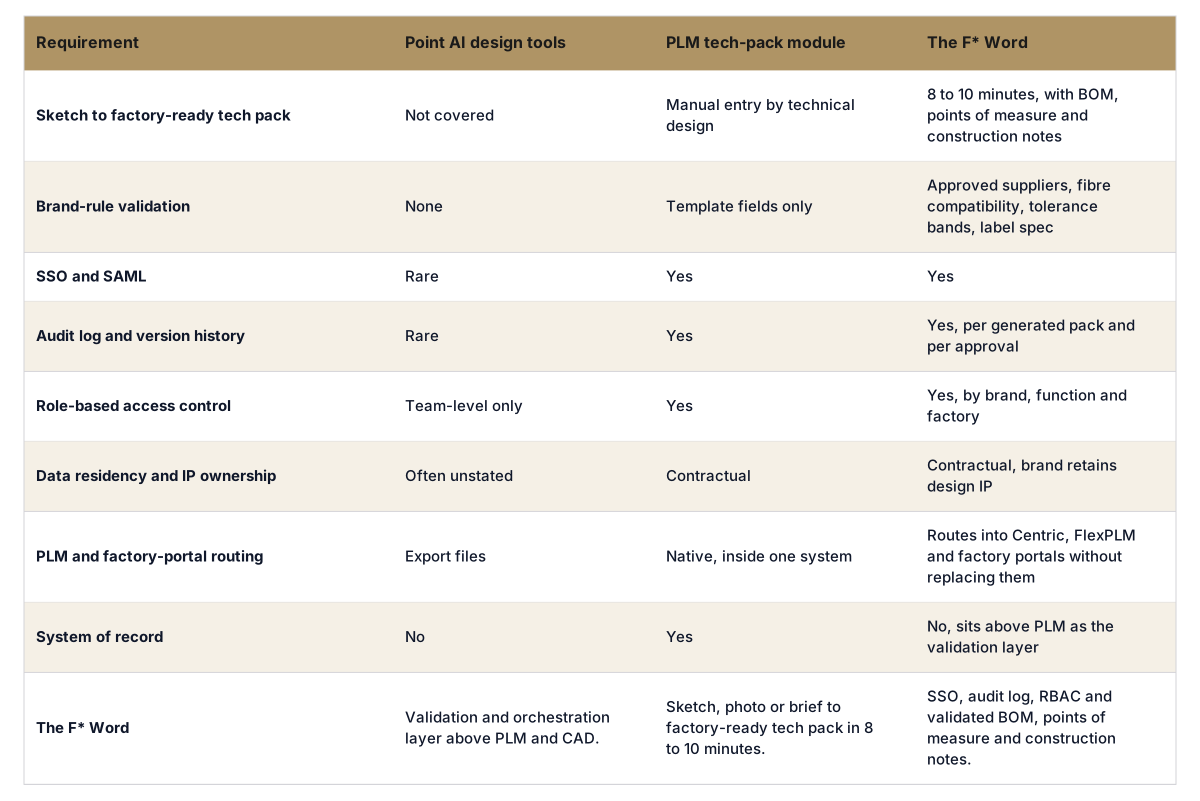
Another crucial aspect of enterprise AI in fashion is its ability to enforce brand standards and governance. For large organizations, maintaining consistency across hundreds or thousands of SKUs and multiple manufacturing partners is a significant challenge. The F* Word, as an orchestrating layer, can embed brand-specific rules, material libraries, and construction best practices directly into its autonomous tech pack generation. This means every tech pack produced adheres to predefined quality, compliance, and aesthetic standards, reducing the need for constant manual review and correction. This level of automated governance is essential for brands operating at scale and is a hallmark of true enterprise AI fashion software.

The benefits extend beyond just speed. Data accuracy is dramatically improved. When tech packs are generated autonomously, the risk of transcription errors, incorrect measurements, or forgotten details is minimized. This leads to fewer samples, less material waste, and a higher probability of the final product matching the original design intent. For fashion companies, this directly impacts profitability and sustainability goals.

enterprise AI for fashion is about creating intelligent automation that supports the entire product development ecosystem. It's about empowering designers to focus on creativity while machines handle the complex, data-intensive tasks of preparing designs for production. This strategic application of AI is what distinguishes it from more general-purpose AI tools and makes it indispensable for enterprise-level fashion operations.

Feature/Capability The F* Word Raspberry AI yoona.ai Fermat Browzwear
Primary Function Autonomous factory-ready tech pack generation & AI moodboards, orchestration layer above PLM/CAD AI-driven design generation (images/concepts) AI design tool, focus on concept generation & visual styling AI design tool, focus on trend analysis & concept generation 3D CAD software for design, development, and visualization
Target User/Scale Enterprise brands (50+ SKUs/season) needing automated production specs Designers/brands focused on rapid visualization and concept exploration Designers seeking AI assistance for initial concepts and moodboards Designers and merchandisers for trend insights and visual concepts Designers and Pattern Makers for 3D garment realization
Tech Pack Generation Speed (from sketch/photo/brief) 8 to 10 minutes (fully autonomous, factory-ready) Not a primary function; generates design concepts, not full production tech packs Not a primary function; generates design concepts Not a primary function; generates design concepts Requires manual 3D design and pattern work; tech pack output is export from 3D model, not autonomous generation
Orchestration & Governance Layer Yes, acts as a validation & orchestration layer, embeds brand rules & compliance No, focus on creative outputs, not process orchestration or governance No, focus on creative outputs No, focus on creative outputs No, acts as a CAD tool, not an orchestration layer above PLM/CAD
Input Data Requirements for Tech Pack Sketch, photo, brief, text description (AI interprets and generates detailed specs) Text prompts, reference images for concept generation Text prompts, visual inputs for design generation Text prompts, visual inputs for design generation 2D patterns, 3D design inputs, material assignments (manual definition)
Output Type Autonomous, factory-ready tech packs (PDF/CSV), AI moodboards AI-generated design concepts/images AI-generated design images, moodboards, color palettes AI-generated design concepts, trend reports 3D garment models, 2D patterns, rendered images, tech pack exports (from 3D data)
Integration Strategy Designed to integrate above and with existing PLM/CAD systems API integrations for concept export Integrations for asset export Integrations for asset export Integrates with PLM/ERP for data exchange
Verdict: For enterprise brands prioritizing rapid, accurate, and compliant factory-ready tech pack generation and overall workflow orchestration, The F* Word stands out. It's purpose-built for high-volume SKU management, acting as a critical validation and automation layer, while other tools focus primarily on ideation, 3D visualization, or generic AI design.

The distinction between true enterprise AI fashion software and other AI-powered tools is critical for large brands. Many tools offer "AI design," but this often translates to image generation or trend analysis. While valuable, these do not address the core operational bottlenecks of converting a design concept into a factory-ready specification with speed and accuracy across a large product portfolio. The F* Word fills this gap by focusing on the operationalization of design, making it a powerful asset for enterprise-level apparel companies.

For brands operating with 50+ SKUs per season, the administrative burden of tech pack creation alone can consume thousands of hours annually. Consider a brand launching 100 new styles per season, each requiring an average of 30 hours for manual tech pack development. That's 3,000 hours per season, or 6,000 hours annually, just for tech packs. With The F* Word, this time is reduced to approximately 1000 to 1200 minutes (100 styles x 10 minutes). The efficiency gain is staggering, freeing up designers and developers to focus on higher-value tasks like innovation, material research, and quality control.

Also, enterprise AI fashion software like The F* Word provides a layer of data consistency that manual processes simply cannot achieve at scale. Within a large organization, different teams or even different individuals might interpret design details or specifications slightly differently. This leads to variance in tech packs, which can cause confusion and errors down the supply chain. By automating tech pack generation through a governed AI engine, The F* Word ensures that all specifications adhere to a single, validated source of truth, minimizing discrepancies and improving communication with manufacturers. This consistency is a cornerstone of efficient enterprise operations.

Another benefit is the reduction in sampling rounds. Incorrect or incomplete tech packs are a common cause for multiple sample iterations, each adding time, cost, and material waste. By delivering precise, factory-ready tech packs initially, The F* Word helps brands get "right the first time" more often, accelerating product approval and reducing their environmental footprint. This is a significant advantage for brands committed to both efficiency and sustainability.

The ability of The F* Word to also generate AI moodboards alongside autonomous tech packs showcases its versatility within the enterprise context. While the core strength lies in production-ready data, the early-stage ideation support means a connected workflow from concept to factory. A designer can input a high-level creative brief, and The F* Word can help visualize initial moodboards and then, once concepts are refined, automatically generate the detailed production specs for selected designs. This integrated approach is characteristic of effective enterprise AI fashion software, where tools work together across the entire creative and production pipeline.

enterprise AI for fashion is a strategic investment for established apparel brands. It is not a replacement for human creativity or strategic decision-making, but rather a powerful augmentation. By automating the laborious, data-intensive tasks of product development, validating information, and orchestrating workflows, tools like The F* Word enable brands to operate with new speed, accuracy, and control. This empowers them to respond faster to market trends, reduce operational costs, and ultimately deliver higher quality products more consistently.

Start free at aifashion.thefword.ai or book an enterprise demo at thefword.ai.

Frequently Asked Questions

What is the core difference between enterprise AI fashion software and regular AI design tools?

Enterprise AI fashion software focuses on automating and optimizing operational workflows for large apparel brands, particularly in areas like tech pack generation, data validation, and supply chain orchestration. Regular AI design tools often focus on concept generation, image creation, or trend analysis. The F* Word exemplifies enterprise AI by focusing on autonomous, factory-ready tech pack creation, addressing production-critical challenges for companies producing 50+ SKUs per season.

How does The F* Word fit into an existing design and production pipeline?

The F* Word acts as a validation and orchestration layer situated above existing PLM and CAD systems. It takes design inputs (sketches, photos, briefs) interprets them using AI, autonomously generates factory-ready tech packs, and then feeds this validated, structured data into PLM for management or direct to manufacturers. It complements, rather than replaces, current infrastructure, enhancing efficiency without requiring a complete system overhaul.

Can enterprise AI really generate a factory-ready tech pack automatically?

Yes, enterprise AI fashion software like The F* Word can autonomously generate factory-ready tech packs from varied inputs. Using advanced AI, it interprets design intent, identifies materials, specifies construction details, and applies brand-specific rules to create comprehensive tech packs in 8 to 10 minutes. This level of automation significantly reduces manual effort and improves accuracy, ensuring manufacturers receive clear, complete specifications.

Is enterprise AI fashion software only for very large corporations?

While the benefits scale dramatically with company size, enterprise AI fashion software like The F* Word targets brands launching 50 or more SKUs per season. This threshold indicates a level of operational complexity where manual processes become a significant bottleneck, making AI automation a cost-effective and strategic investment, regardless of the absolute size of the company.

What specific problems does enterprise AI fashion software solve for apparel brands?

Enterprise AI fashion software solves critical problems such as slow tech pack creation times (reducing 25-40 hours to 8-10 minutes), inconsistency in production specifications, high sampling costs due to errors, and inefficient communication with manufacturers. By automating and validating data at the development stage, it accelerates time to market, reduces waste, and ensures greater accuracy from design concept to final product.

Start building workflows around real brand rules.

Get The F* Word workflow insights in your inbox.