
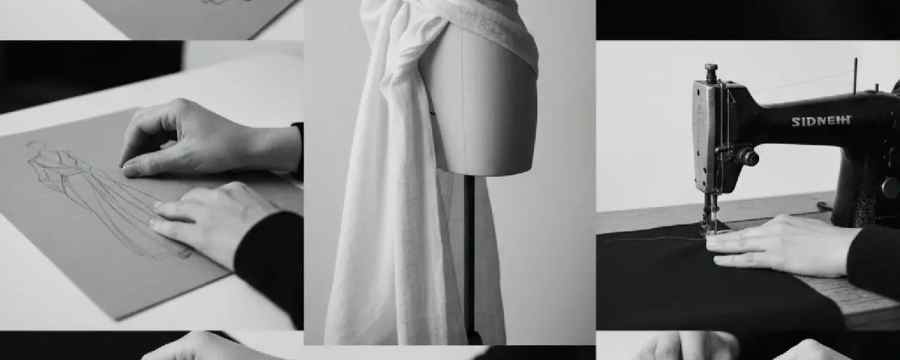
A pattern file becomes a factory-ready tech pack once geometry is paired with measurement points and tolerances, grade rules, construction callouts, a resolvable bill of materials and a declared unit system. The F* Word assembles and validates that set in 8 to 10 minutes, then flags what a factory would query.
Direct answer: Once the AI pattern is ready, brand teams need a streamlined process to convert it into a factory-ready tech pack. This involves creating detailed specifications, measurements, and construction guidelines that manufacturers can follow. The goal is to ensure that the transition from AI pattern making to production is efficient and error-free. USEFUL collaboration and clear communication in the brand team are critical to achieve a smooth workflow from AI pattern to tech pack.
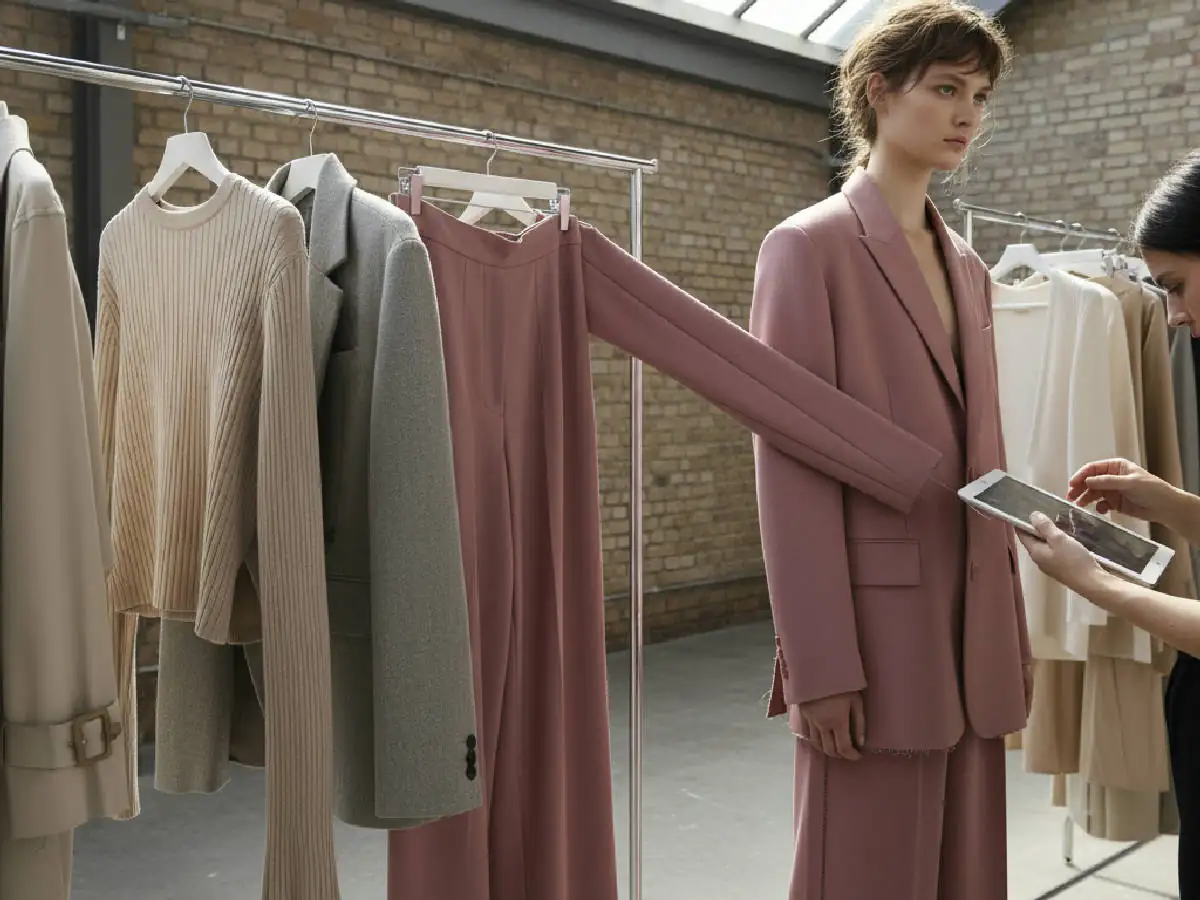
A pattern file is the blueprint for any garment design, serving as the starting point for creating a factory-ready tech pack. It includes precise measurements, shapes, and instructions that guide the production team. The file typically contains digital pattern pieces, each representing a section of the garment, such as sleeves, collars, or bodices. These pieces are crafted with careful attention to detail to ensure a proper fit and style consistency.
Key components of a pattern file include the grainline, which indicates the fabric's direction, and notches, which are essential for matching fabric pieces accurately during sewing. Seam allowances, usually ranging from 0.5 to 1.5 centimeters, are also specified to guide the sewing process. ALSO, the file may include annotations for darts, pleats, and other design elements.
For fashion brands like Zara or H&M, pattern files are critical for maintaining quality and style throughout several production batches. The pattern file acts as a communication tool between the design team and manufacturers, ensuring that the designer's vision is accurately translated into the final product. USEFUL use of AI in pattern making can further streamline this process by generating these files with precision and speed.
Incorporating AI into the workflow can significantly improve efficiency. For more findings on how AI can transform fashion workflows, visit our AI fashion workflow software overview page.
Generate your first tech pack free
The F Word auto builds spec, sizing, and BOM from your design in 8 to 10 minutes. No template wrangling, no factory back and forth.
Once the AI pattern is finalized, brand teams must ensure that factories receive the full set of artifacts required for production. These documents go beyond the initial design to provide detailed instructions and specifications critical for manufacturing.
The Bill of Materials (BOM) lists every material component needed to construct the garment, from fabric to thread. The Point of Measurement (POM) chart specifies exact measurements at key points of the garment, ensuring consistency throughout production. Grading rules define how sizes vary from the base pattern, essential for maintaining fit throughout a size range.
For example, a merchandiser at a mid-sized fashion brand needs to ensure that these artifacts are accurately compiled and communicated to the factory to avoid production delays or quality issues. By utilizing workflow software like The F* Word, brand teams can streamline the creation of these factory-ready tech packs, reducing the time from AI pattern to production-ready documentation. For more findings, visit our AI tech packs overview.
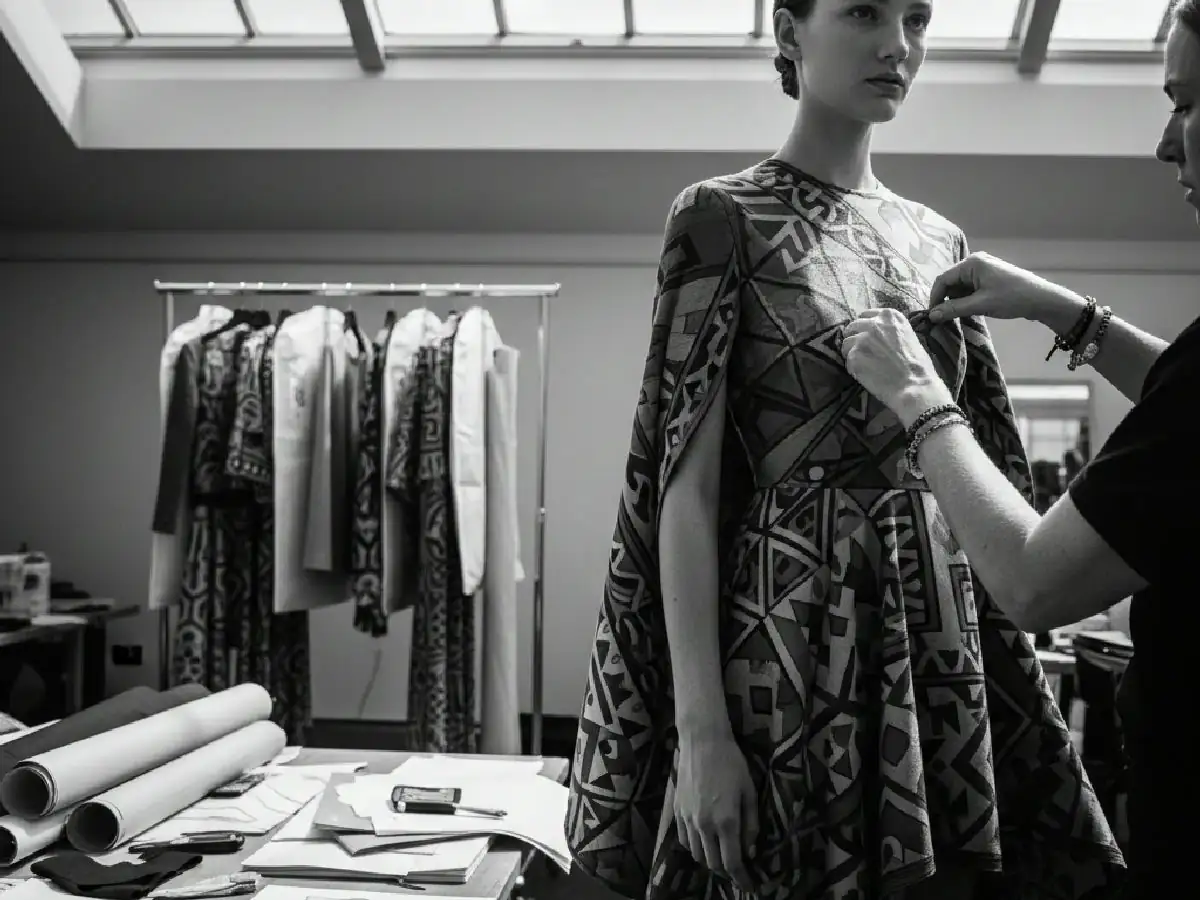
AI pattern tools like FashionINSTA, Seamly, and Tukatech have transformed the initial stages of pattern making by automating repetitive tasks and improving precision. However, their capabilities often halt at the point where a pattern is finalized. Once the pattern is complete, brand teams are left to manually translate these patterns into full tech packs that are ready for factory production.
For instance, while FashionINSTA can generate patterns quickly, it doesn't provide the necessary elements for a factory-ready tech pack, such as detailed construction instructions or material specifications. Similarly, Seamly can excel in creating custom-fit patterns but lacks integration with downstream processes like tech pack generation. Tukatech offers reliable pattern-making features but stops short of offering a smooth transition to production-ready documentation.
In practice, this gap means that in-house designers and merchandisers must invest additional time and resources to convert AI-generated patterns into tech packs that factories can use. This manual process can take anywhere from several hours to a few days, depending on the complexity of the garment. Consequently, the efficiency gains achieved in pattern creation can be negated by bottlenecks in tech pack preparation.
To address these challenges, solutions like The F* Word offer a workflow and validation layer that autonomously generates factory-ready tech packs in just 8 to 10 minutes per garment. By bridging the gap between AI pattern tools and production-ready documentation, The F* Word enables brand teams to maintain momentum from design to manufacturing, ensuring that the efficiencies gained in pattern making are fully realized in the production process.
The transition from an AI-generated pattern to a factory-ready tech pack often involves gaps in communication and data consistency. An AI workflow layer addresses these challenges by providing a smooth bridge that ensures all necessary details are accurately transferred. This is critical for brand teams who need to maintain the integrity of the design through to production.
By integrating an AI workflow layer, brands can automate the conversion of AI patterns into detailed tech packs. This layer eliminates the need for manual data entry, reducing human error and saving time. For instance, a creative director at a mid-sized fashion brand might spend up to 20 hours per week coordinating between design and production teams. With an AI workflow layer, these hours can be cut by up to 70%, allowing the director to focus on strategic initiatives.
The AI workflow layer also provides a centralized platform for all stakeholders. Designers, merchandisers, and production managers can access real-time updates and collaborate more efficiently. This transparency ensures that everyone is matched with the current status of each garment, reducing the back-and-forth that typically delays production timelines.
For more findings on how AI changes fashion workflows, explore our full overview on AI fashion workflow software.
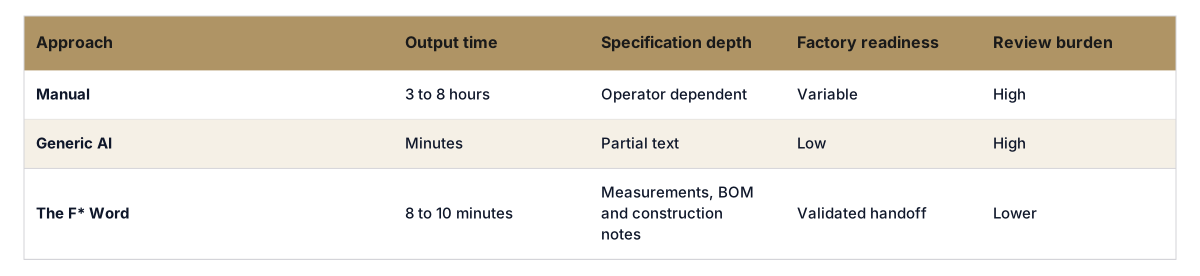
Understanding the difference between a traditional pattern tool and advanced workflow software is critical for brand teams aiming to optimize their operations. While both play a role in garment production, their outputs are distinct and serve different needs in the fashion workflow.
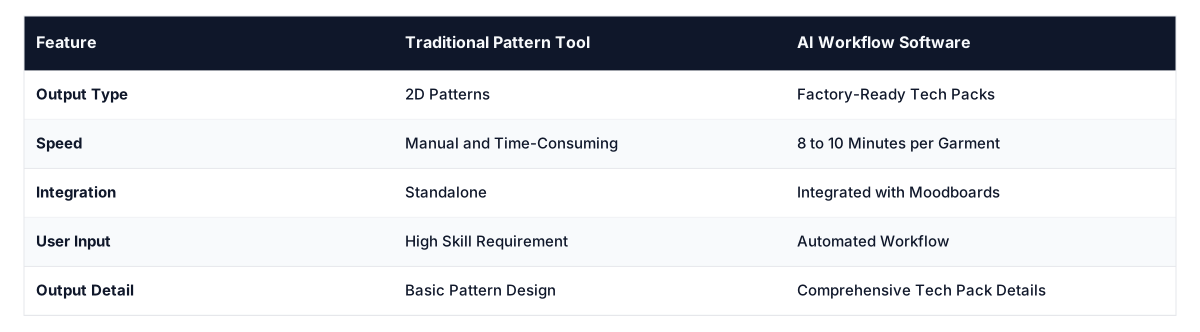
The comparison shows how AI workflow software, such as The F* Word, improves efficiency and output quality compared to traditional pattern tools. By automating the creation of tech packs and integrating moodboards, it allows brand teams to focus on creativity and strategic decision-making rather than manual processes. This shift saves time and ensures that the final outputs are precise and ready for production.
Before handing off a tech pack to the factory, brand teams must ensure that all elements are carefully reviewed and verified. This process is critical to prevent costly errors and production delays. Here is a checklist to consider:
Each of these steps is integral to a smooth transition from design to production. By following this checklist, brand teams can minimize errors and facilitate a more efficient workflow. For a deeper understanding of how AI can improve your fashion workflow, explore our guide on AI fashion workflow software.
AI pattern making uses machine learning algorithms to create patterns quickly and accurately, reducing the time and cost associated with traditional manual methods. Traditional pattern making relies heavily on the expertise of skilled artisans and can be more time-consuming. AI can analyze vast amounts of data to predict and correct potential fit issues, providing a more efficient and scalable solution for brands looking to modernize their production processes.
A factory-ready tech pack streamlines communication between brand teams and manufacturers by providing all necessary details in one full document. This includes measurements, materials, and construction guidelines, reducing the likelihood of errors and production delays. By having a precise tech pack, brands can ensure that their designs are executed accurately, saving time and resources while maintaining quality and consistency throughout production runs.
Yes, AI-generated tech packs can be customized to match with specific brand requirements. The technology allows for adjustments in design elements, materials, and sizing to meet unique specifications. Brand teams can input their preferences and standards into the AI system, ensuring that the final tech pack shows their individual aesthetic and functional needs. This flexibility supports a personalized approach without compromising on efficiency or accuracy.
After AI pattern creation, the brand team is responsible for reviewing and approving the AI-generated tech pack. They ensure that the design matches with the brand's vision and quality standards. The team may also communicate with manufacturers to address any specific production concerns. Their role is critical in validating the AI's output, making any necessary adjustments, and managing the transition from digital design to physical production.
The F* Word platform focuses specifically on generating moodboards and factory-ready tech packs, unlike PLM systems, which manage the entire product lifecycle. It is not involved in 3D simulations or image generation. The platform is designed to work autonomously, providing a streamlined workflow and validation layer that accelerates the design-to-production process, ensuring efficiency and accuracy in a narrower scope than traditional PLM systems.
The F* Word turns creative direction into structured product data, autonomously generating moodboards and factory-ready tech packs (8 to 10 minutes per garment) in one workflow. Start free at thefword.ai or book a demo. Related: the pillar overview.
Related: ai vs traditional cad fashion · Explore the related workflow · Try The F* Word · production-ready AI fashion design
Get The F* Word workflow insights in your inbox.