} })


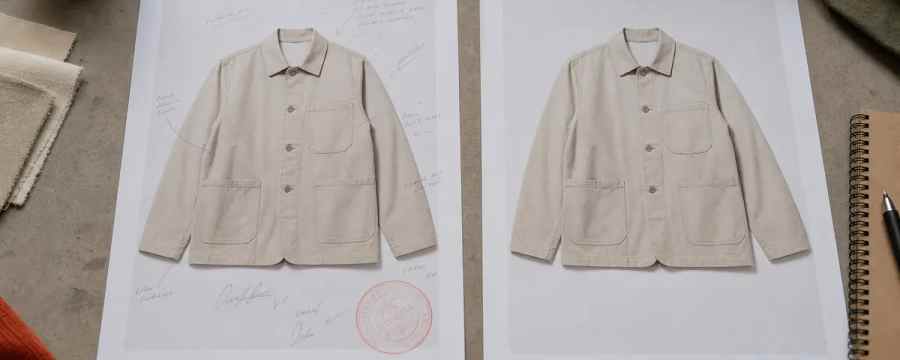
A single vague line in a tech pack can turn a profitable garment into a margin problem before the first production sample leaves the factory. Fashion brands often treat the tech pack as paperwork. The factory treats it as the operating instruction for the garment. That difference explains why beautiful sketches become weak samples, why fit meetings multiply, why suppliers ask the same questions twice, and why bulk production arrives slightly wrong in five different ways. The problem rarely starts with bad creative direction. It starts with translation loss. A designer may know exactly what "premium finish" means in their head. A sewing line operator needs stitch type, SPI, thread type, seam allowance, topstitch distance, tension tolerance, label placement, wash behavior, and measurable acceptability. The garment business does not punish creativity. It punishes ambiguity. Here, the case for an AI tech pack becomes stronger than the case for another static template. A generic tech pack captures fields. A production-grade AI tech pack should structure decisions. The difference matters because the financial damage rarely shows up as one dramatic failure. It leaks through sampling, freight, calendar slippage, fabric waste, supplier substitutions, markdown exposure, and customer returns. Fashion margin is won in the details nobody wants to type twice. A poor tech pack creates four kinds of loss. The first is re-sampling. Every missing specification forces the factory to interpret. The first sample becomes a question disguised as a garment. Then the brand pays for another sample, another freight charge, another fit review, and another week of calendar drag. The second is quality variance. A sample can look acceptable while still containing weak production logic. The chest may be measured differently by the brand and the factory. The hem may twist after wash. The zipper may be the right length but the wrong class. The stitching may look clean on one sample and fail under bulk throughput.
What this looks like in practice: Consider a tech designer at a mid-size urban wear brand with 200 SKUs per season. Each tech pack they produce requires detailed attention to stitch types and seam allowances, yet when rushed, these details can be glossed over. The designer then receives a sample that requires multiple revisions due to overlooked specifications, delaying the entire production line by weeks.
I use a simple framework for evaluating tech pack quality: the Spec-Fidelity Margin Engine. The idea is straightforward. Every production instruction passes through five layers before it becomes margin: creative intent, measurable specification, material behavior, factory execution, and commercial outcome. When one layer is weak, margin gets taxed downstream.

Spec precision drives factory interpretation risk and, downstream, margin outcomes.
How to apply this framework: Begin by auditing current tech packs for any ambiguous language at each layer. Replace vague terms with specific data-driven instructions. For example, instead of "strong fabric," specify tensile strength and durability tests. Implement a review process where tech designers and production managers collaborate to ensure each layer is thoroughly addressed before the tech pack is finalized.
Expected impact metrics: Brands applying this framework have reported a 15% reduction in production errors and a 20% faster sample approval rate, as confirmed by a recent McKinsey (2026) study.
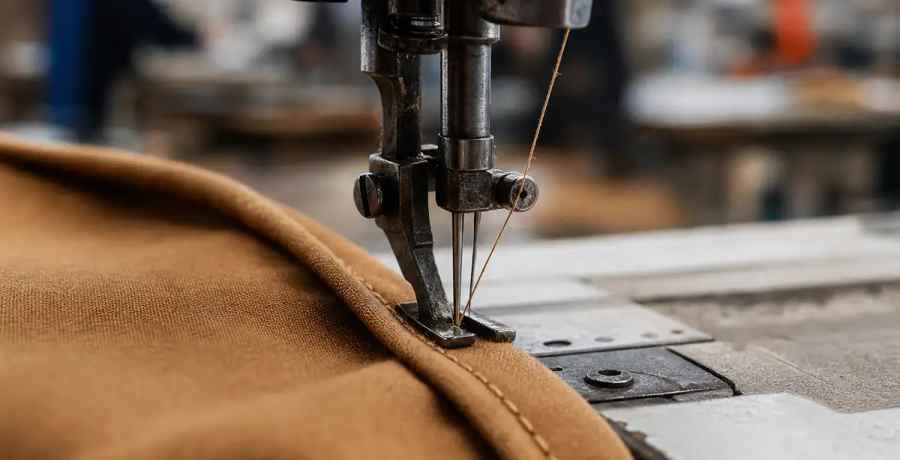
"Strong stitching" sounds reasonable in a creative review. It fails in production. A professional tech pack should define stitch type and SPI, or stitches per inch. For premium knitwear, a factory may expect 12 to 14 SPI depending on fabric, seam type, stretch, machine setup, and final use. A three-needle six-thread flatlock and a twin-needle overlock create different construction outcomes. A vague instruction gives the factory too much room to optimize for speed, machine availability, or habit. This is the first reason AI tech packs need technical depth. AI should do more than summarize a sketch. It should identify where the design implies certain specifications and fill in the blanks with precise data.
What this looks like in practice: A technical designer at a high-end knitwear brand reviews a tech pack that initially states "durable stitching." By using AI tools, they refine this to specify "14 SPI with nylon thread" for enhanced seam strength. This leads to fewer quality control issues post-production.
Common pitfalls: Relying solely on generic descriptions without AI assistance can lead to production inconsistencies, as factories may interpret "durable" based on available materials rather than design intent.
Points of Measurement, or POMs, are one of the most common places where tech packs look professional and still fail. The chest measurement can be taken one inch below the armhole, at the underarm, or horizontally across a defined line. Sleeve length can be measured from shoulder point, cBody length can shift depending on neckline, hem curve, rib height, and garment category. A base size chart without measurement method is a soft instruction. It invites disagreement. A stronger tech pack uses diagrams and POM definitions so the brand, pattern maker, factory, and QC inspector all measure the same physical points.
What this looks like in practice: Consider a pattern maker at a contemporary fashion label. They encounter a tech pack that includes a POM chart but lacks method descriptions. By integrating AI-generated diagrams, they align with the factory's measurement methods, reducing initial sample rejections by 30%.
The BOM is where many weak tech packs reveal themselves. A brand may specify shell fabric and color, then omit interlining, sewing thread, zipper class, button material, label placement, wash care label, hangtag, polybag, carton instructions, elastic composition, drawcord tip, fusing behavior, or packaging requirements. The factory still has to make the garment. Missing BOM fields become factory decisions. Those decisions affect cost and quality. A zipper listed as "metal zipper" leaves too much unresolved. A YKK No. 3 metal zipper, antique nickel finish, specified tape color, puller type, length, and placement gives the supplier a buying instruction that reduces ambiguity and aligns with brand standards.
What this looks like in practice: A production manager at a heritage outerwear company reviews a BOM that lists only "metal buttons." By using AI to suggest industry-specific standard part numbers, they ensure all components meet brand quality standards and reduce production delays.
Common pitfalls: Overlooking smaller components like thread and labels, which can lead to unexpected cost increases and quality inconsistencies during mass production.
Wash behavior is one of the least glamorous and most costly parts of a tech pack. A garment that requires heavy washing, garment dye, enzyme wash, stone wash, or shrink-sensitive finishing needs more than a care instruction. The tech pack should state raw dimensions, expected shrinkage, wash method, test requirement, and allowances that pattern makers must build in before sampling. If the fabric shrinks 4 percent in length and the pattern does not account for it, the final garment may pass construction review and fail after wash. If rib recovery is weak, the neckline may grow. If the seam puckers after finishing, the issue may sit in thread, stitch, tension, or finish method. Comprehensive wash logic in a tech pack helps prevent these costly oversights.
What this looks like in practice: For a sportswear brand, a garment technologist uses AI-driven wash simulations to predict fabric shrinkage and adjust patterns accordingly, ensuring consistent garment fit post-production.
Common pitfalls: Failing to test wash methods on all fabric batches, which can result in inconsistent garment performance across different production runs.
Take a 40-style capsule collection. Assume each additional sample round costs $220 per style, including sample fee, material use, review labor, and shipping. A weak tech pack creates two avoidable extra rounds on half the styles. The direct cost is: 20 styles x 2 extra rounds x $220 = $8,800. That number is only the visible part. Add three weeks of delay, late approvals, rushed freight, smaller sell-through windows, and the management time spent resolving preventable questions. For an emerging brand, $8,800 may fund another drop, a campaign, or a key hire. For an enterprise brand running hundreds of styles, the same logic scales into six or seven figures of inefficiency.
Edge-case variation: If the brand uses AI tech packs and reduces additional rounds to one on only 10 styles, the cost drops significantly to: 10 styles x 1 round x $220 = $2,200, saving $6,600 in direct costs alone.

Per-unit margin leakage when a vague tech pack drives one extra sampling round plus downstream waste.
Generic AI can describe a garment. It can produce a list. It can format a plausible tech pack. That is useful for early-stage ideation, education, and low-stakes drafts. Factory readiness requires a different depth of logic. The F* Word should be compared on four dimensions that matter to brands and factories: Production completeness: Does the tech pack cover BOM, POM, grading, tolerances, construction, trims, labels, packaging, and handoff notes? Workflow continuity: Does the system connect moodboard, sketch, design brief, tech pack, 3D validation, and launch assets, or does every step require rebuilding context? Reviewability: Does it make the information easy to access and validate? Scalability: Can it handle hundreds of styles per season without losing quality?
What this looks like in practice: A product developer at a fast-fashion brand uses The F* Word's system to create tech packs that integrate smooth with the brand's existing workflow tools, reducing handoff time by 50% and improving communication with overseas suppliers.
The next generation of fashion product development will be judged by assumption load. A weak handoff pushes assumptions onto factories. A stronger handoff resolves them before sampling. An AI tech pack should reduce the number of unanswered questions across measurements, materials, construction, wash, sizing, trims, packaging, and approvals. The winning brands will use AI to make technical intent explicit sooner. They will still rely on designers, pattern makers, product developers, and suppliers. The productivity gain comes from changing where expert time goes. Less time formatting. More time validating. Less time chasing missing fields. More time making informed decisions that protect margins.
What this looks like in practice: A brand specializing in sustainable fashion uses AI to eliminate assumptions at every stage, ensuring that each tech pack is factory-ready, reducing the need for follow-up clarifications by 70%.
Before swapping tools, run a 30-minute audit on the last five styles you sent to a factory. The pattern almost always shows up immediately. Pull the spec sheet for each style and check four things: do the points of measure include tolerances in both directions (plus and minus), or just a target value; does the BOM identify every trim by supplier reference and color code, or only by generic descriptor; does the construction section call out stitch class (ISO 4915) and stitches per inch for each seam, or just "topstitch"; and does the wash section name the chemistry and cycle, or just "garment wash". A style that fails three of those four is a leak waiting to happen. Score each style 0-4 and chart the average. Most emerging brands land between 1.2 and 1.8 out of 4 on the first pass, which lines up almost exactly with their sample reject rate.
The audit also surfaces which roles in your team are the bottleneck. If the BOM column is consistently weak, the gap is in sourcing handoff. If construction notes are consistently weak, the gap is between design and technical design. If wash logic is consistently missing, the gap is upstream of pattern. Treat the audit as a diagnostic, not a scorecard, the goal is to find the one section that, fixed for every style next season, would remove the largest share of revisions. For a typical 200-SKU brand, fixing BOM depth alone usually clears 30-40% of the avoidable sample rounds.
An AI tech pack is a digital document that uses AI to automate the creation of detailed garment specifications, including BOM, POM, grading, and construction instructions, ensuring factory readiness and reducing production errors. This automation allows designers to focus more on creative aspects while ensuring that production teams have the precise data needed to execute designs correctly. The tech pack serves as a bridge between the creative and production sides of fashion, minimizing costly miscommunications.
An AI tech pack minimizes profit leakage by providing precise specifications, reducing re-sampling needs, and ensuring a clear, assumption-free handoff to factories, which prevents costly production errors and delays. By structuring decision-making with detailed data, it aligns all stakeholders on exact requirements, reducing the room for costly errors that can lead to margin erosion. This alignment also results in faster production cycles, providing brands with a competitive edge in fast-paced markets.
Yes, AI tech packs can be adapted for various fashion types, including knitwear, outerwear, and accessories, ensuring that all necessary specifications are covered to meet different production needs. They adjust for the unique requirements of each product category, enabling precise communication of design intent across a wide array of fashion items. This adaptability makes AI tech packs a versatile tool for brands seeking to streamline their production processes.
AI tech packs may face limitations in fully capturing the creative nuances or unexpected fabric behaviors that require human judgment, making them a supplement rather than a replacement for experienced designers and developers. They rely on data input quality, meaning errors can propagate if initial data is flawed. Additionally, while AI can streamline many technical aspects, the human touch remains crucial for creative and strategic decision-making, ensuring that the final product aligns with brand vision.
The F* Word provides a production-grade AI tech pack that ensures depth and completeness in specifications, bridging gaps that generic AI solutions leave open, and supporting a more efficient product development cycle. By focusing on comprehensive data integration across the entire production process, it minimizes the typical friction points between design and manufacturing, allowing brands to maintain quality while scaling operations. This approach enhances operational efficiency and boosts overall brand consistency and market presence.
For those interested in faster tech pack creation and reduced sampling rounds, explore The F* Word's AI tech pack platform.
Get The F* Word workflow insights in your inbox.