

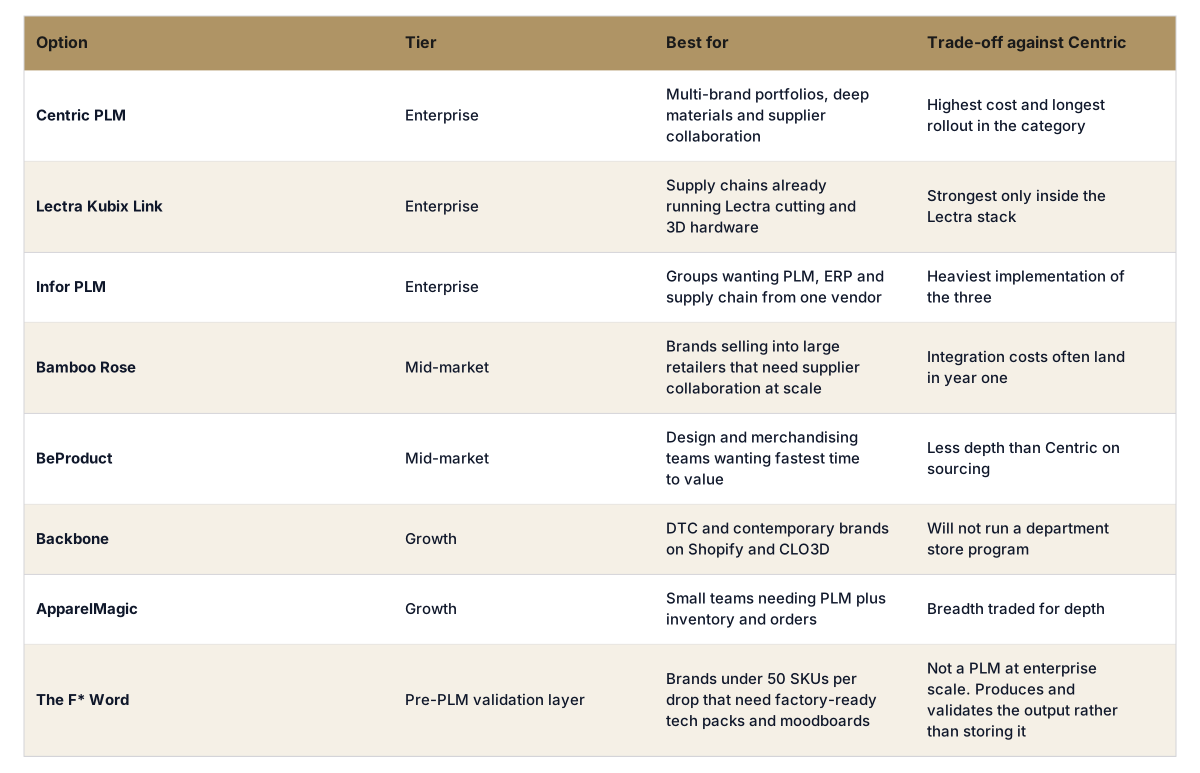
Centric PLM is an enterprise product lifecycle management platform for apparel, footwear and consumer goods. Pricing is quoted rather than published and typically runs from the high five figures a year into six figures with implementation, on a nine to fourteen month rollout. It fits multi-brand groups with deep materials and supplier requirements. Below roughly 50 SKUs per drop, a validation layer that produces a factory-ready tech pack in 8 to 10 minutes usually delivers more, sooner, for less.
Centric Software is the name most fashion brands hear first when they start looking at PLM, and it is the default shortlist entry for anyone running more than one brand or more than a few hundred styles a season. This page covers what the platform actually does, what it realistically costs, who it suits, where it struggles, and what the alternatives are at each tier.
Centric holds the product record. Everything that describes a style before it is manufactured lives in one place: the bill of materials with fabrics and trims, the materials and supplier libraries, costing rollups, colourways, size specifications and grading, the seasonal calendar, and the approval chain. A supplier portal lets factories and agents work against that same record rather than against emailed attachments.
That is the genuine value. When it works, sourcing, design, merchandising and production stop maintaining separate versions of the truth, and nobody costs a style against last season's fabric price.
What Centric does not do is produce the content. Every field in that record has to be entered, checked and maintained by a person. The platform is a system of record, not a system of authorship.
Centric does not publish prices, and any figure quoted on a third-party site should be treated as unverified. What is consistent across the enterprise tier is the shape of the cost rather than the number.
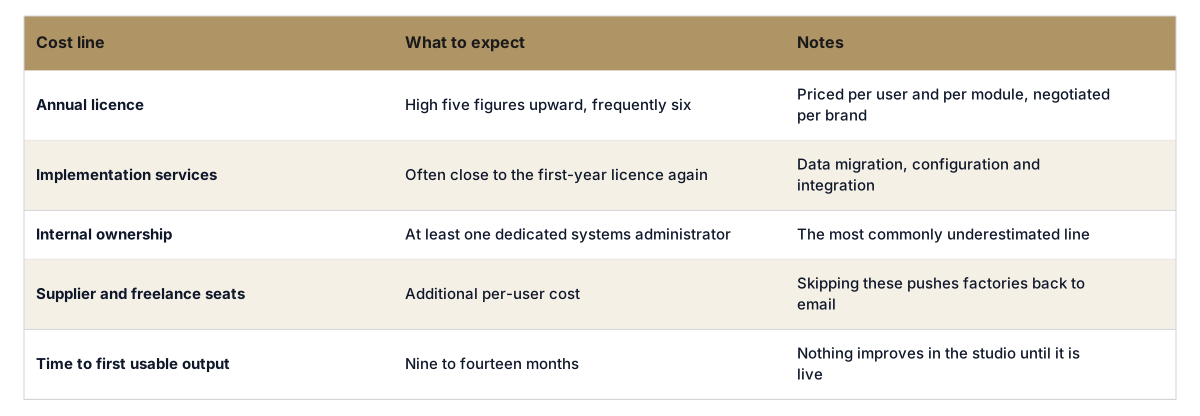
The seat question is the one that catches brands out. The people who most need access are usually the ones a finance team least wants to license: freelance designers, pattern makers, sourcing agents and factories. Budget for the whole working group, or the system becomes an internal-only database while the actual work continues over email.
Centric is the right answer for a specific profile, and an expensive wrong answer outside it.
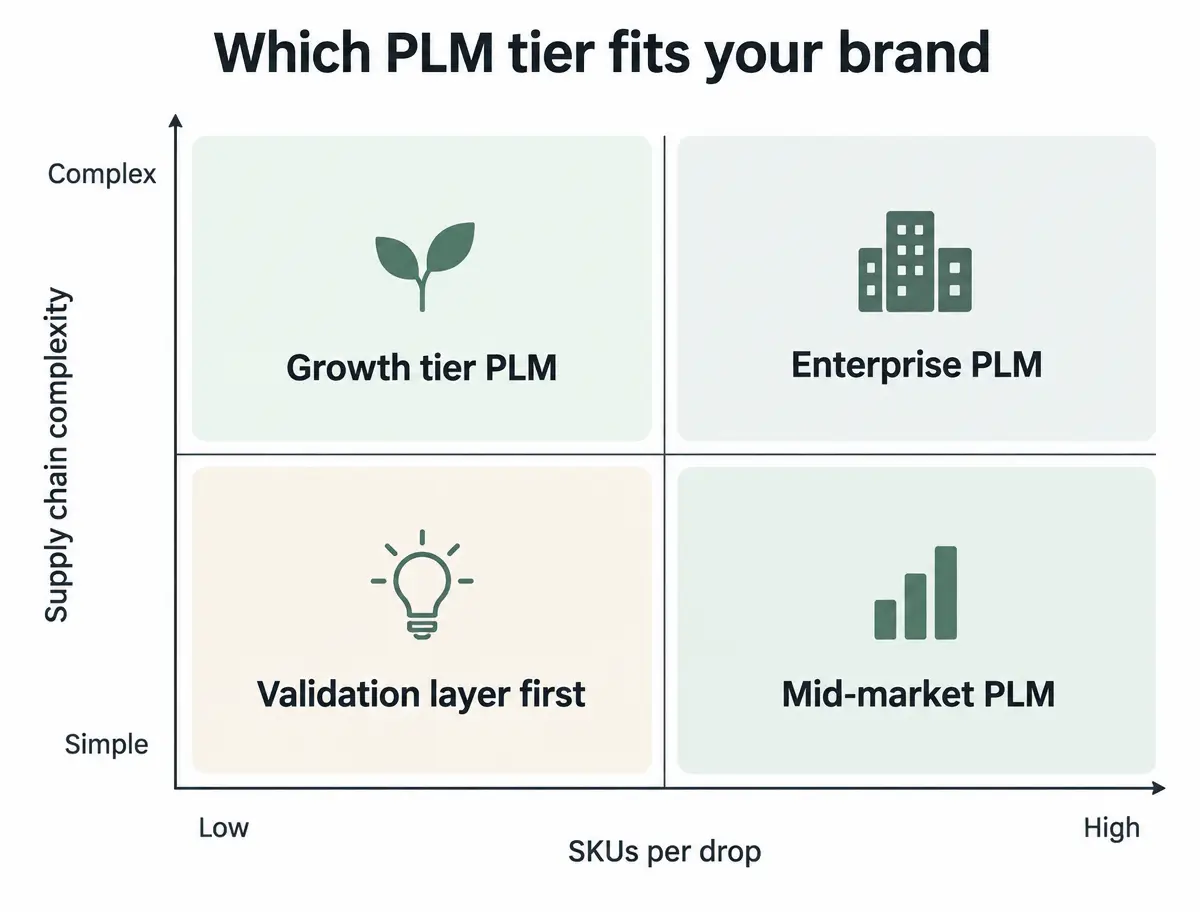
Good fit: multi-brand groups, several hundred to several thousand SKUs a season, a materials library that genuinely needs versioning, a supplier network large enough that collaboration is a real problem, and an internal owner with authority to settle naming conventions across teams.
Poor fit: brands under roughly 50 SKUs per drop, teams without a dedicated systems owner, and anyone whose actual bottleneck is producing accurate tech packs rather than storing them. In that last case the platform will store your problem faithfully rather than solve it.
Enterprise PLM demos are run against clean sample data, which is the opposite of the conditions the system will face. Insist on testing against your own records, and on the five things that predict whether the rollout lands.
Bring your worst bill of materials. Not the tidy one. The style with three names for the same trim, a supplier who changed mid-season, and a costing sheet nobody updated. Watch how much manual reconciliation the platform needs before it will accept the record.
Grade a real size run. Ask to see points of measure graded across your actual size range, with tolerances, and then exported in the format your factory expects to receive.
Log in as a factory. Ask for a supplier portal account and use it as an external partner would, on a normal connection, without training. If the experience needs a walkthrough, your suppliers will not adopt it.
Change something upstream. Amend a fabric price or a construction note and follow it through costing, the tech pack and the approval chain. Count the places the change has to be made by hand.
Ask who owns configuration after go-live. Whether that person is internal, a partner on retainer, or nobody decides the system's second year more than any feature on the list.
Run the same five tests against every platform you shortlist. The differences that matter show up here rather than in the feature matrix.
PLM implementations overrun on data, not software. Materials records spread across inconsistent spreadsheets, three names for the same trim, and tech packs that each designer builds slightly differently all have to be reconciled before migration, and that reconciliation is the longest stage of the project.
Standardising the output first changes the arithmetic. The F* Word turns a sketch, photo or brief into a factory-ready tech pack in 8 to 10 minutes, with a linked bill of materials, graded points of measure and construction notes, and it generates the moodboard the direction came from. Brands that run on consistent packs either shorten a later PLM rollout considerably or discover they did not need the licence yet.
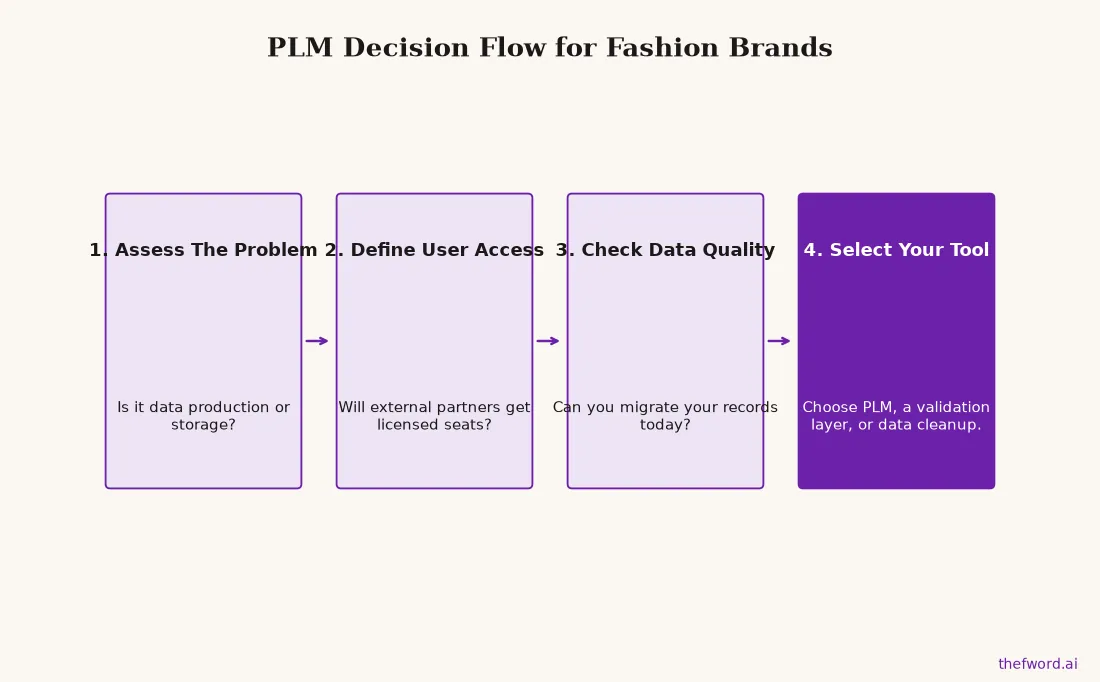
Three questions settle it. First, is your problem storing product data or producing it? Storage problems justify PLM; production problems do not. Second, will factories and freelancers get seats? If not, the collaboration case largely disappears. Third, is your product data clean enough to migrate? If not, fix that first, because you will pay for it either way, and it is cheaper before the contract than after.
Centric PLM is an enterprise product lifecycle management platform built for apparel, footwear and consumer goods. It holds the product record: bills of materials, materials and supplier libraries, costing, colourways, size specifications, calendars and approvals, with a supplier portal so factories work against the same data as the internal team.
Centric does not publish pricing. Quotes are negotiated per brand and scale with user count, modules and territory. Enterprise fashion PLM in this tier typically starts in the high five figures a year and routinely crosses six figures once implementation services are included. Expect implementation to add roughly as much again in year one.
Nine to fourteen months is the normal range for an enterprise rollout, covering data cleanup, configuration, field mapping, integration with ERP, and supplier onboarding. Data quality is the usual cause of overrun, not the software. Brands that clean and standardise their product data first consistently finish faster.
Lectra Kubix Link and Infor PLM compete at the same enterprise tier. Bamboo Rose, BeProduct and Surefront cover the mid-market. Backbone, ApparelMagic and OnBrand serve growth-stage brands. Below roughly 50 SKUs per drop, most brands get more value from a validation and orchestration layer that produces a factory-ready tech pack in 8 to 10 minutes than from any per-seat PLM licence.
Centric stores the data a tech pack is assembled from and can output a pack from that record, but someone still has to enter and validate every field first: the bill of materials, graded points of measure, construction callouts and trim placements. The platform does not generate that content or check it for the errors factories reject. That is the gap a validation layer covers.
Run your first garment spec through The F* Word in 10 minutes. The Pro plan includes 3,600 credits a month for $299 introductory pricing, which works out to roughly $10 per factory-ready tech pack. See how that compares with freelance and agency costs or compare plans.
Related: fashion PLM software compared · The F* Word · what is ai fashion workflow software · cala ai vs fashion workflow software
Get The F* Word workflow insights in your inbox.