
Language

3 to 5 words is what a human shopper types into search, while an AI shopping agent expands the same intent into 8 to 12 sub-questions. One category page now has to satisfy two very different shapes of request. The human wants desire, styling and reassurance. The agent wants unambiguous, verifiable, parseable facts. Copy that converted the first has historically starved the second.
Take a ribbed knit midi dress and a waterproof trench. A shopper wants to see how the dress drapes on the hip and whether it works with ankle boots, and they want proof that the trench will survive a bus stop downpour. The agent wants the fibre breakdown of the knit, the rib gauge, the finish on the trench's seam tape, exact colour mappings, variant availability per size, and citations to a size guide that matches the brand's grading. For years, fashion ecommerce SEO was tuned for the human alone. In 2026 you serve two audiences from the same record, and they want almost opposite things from the same page.
The market is full of AI image tools that produce assets for campaigns. Those pixels are not machine-readable. An agent cannot verify a 70-30 cotton-modal rib from a render, cannot place a waterproof trench into the right use-case cluster from a lifestyle shot, and cannot cite an image. The F* Word is not an image generator. It is the validation and orchestration layer that produces the structured garment record: the asset plus the machine placement data plus the machine recommendation data that makes an agent confident enough to surface the product.
Fashion ecommerce SEO used to assume one reader. You wrote category copy like "ribbed knit midi dresses for date night" to pick up a head term, added a few internal links, and leaned on seasonal landing pages for freshness. Product detail pages were dressed with romance language. Size guides were often boilerplate. That model breaks the moment an agent intermediates the session.
The human still wants desire-first language and context. They look for "how to style a ribbed knit midi dress for fall" and want a two-photo answer and a nudge on boots versus loafers. The agent turns "women's waterproof trench black medium" into a fan-out of sub-questions: water column rating; membrane or coating; seam sealing method; breathability if any; shell fibre and lining fibre; care symbol set; hood yes or no; storm flap length; mapped to a standard colour; variant-level availability by size; ship window by region. The same page must contain both the romance and the specification, and it must separate them in a way that does not confuse classification.
Here is the honest state of the old playbook. Size guides and genuinely useful editorial increase in value because they answer structured questions. Thin seasonal landing pages lose value because they never answered a question cleanly. Keyword-stuffed category copy is now a liability because it blurs classification and distracts the agent from the attributes it needs to make a safe recommendation. PDP copy still matters, but only if it is split into two layers: description for people and specification for machines.

Most SEO advice still treats a category page like a magazine spread with a few structured crumbs. That framing assumes one intent per page and one paragraph that can "cover" it. In apparel, a single intent already fans out inside the garment itself. A ribbed knit midi dress needs rib type, wale direction, fibre blend, stretch percent, recovery, opacity, handfeel, care rules, size grading, and fit intent. A waterproof trench needs hydrostatic head, fabric construction, seam type, finish durability after 10 washes, and hood coverage. None of that lives in a keyword block.
Query Fan-Out, a framework from The Machine-Readable Brand, explains why one page cannot satisfy an agent with generic prose. The agent explodes "black waterproof trench M" into a graph of checks it must perform to feel safe. The fix is record completeness, not more pages. You do not fix discovery by creating 12 new landing pages. You fix it by specifying the trench at variant level and linking those facts to the PDP and category in a way the crawler can parse. The book's point is simple: stop writing around the gap and start filling the gap. Also see the book page on our site at thefword.ai/machine-readable-brand.
Here is where the saturation of AI image tools misleads teams. You can create ten times the number of campaign images, but a pixel cannot carry the fibre breakdown, the points of measure, or the grading note that moves a shopper from uncertain to ready. Copy is not enough either if it is unstructured. Agents need specification, not adjectives.

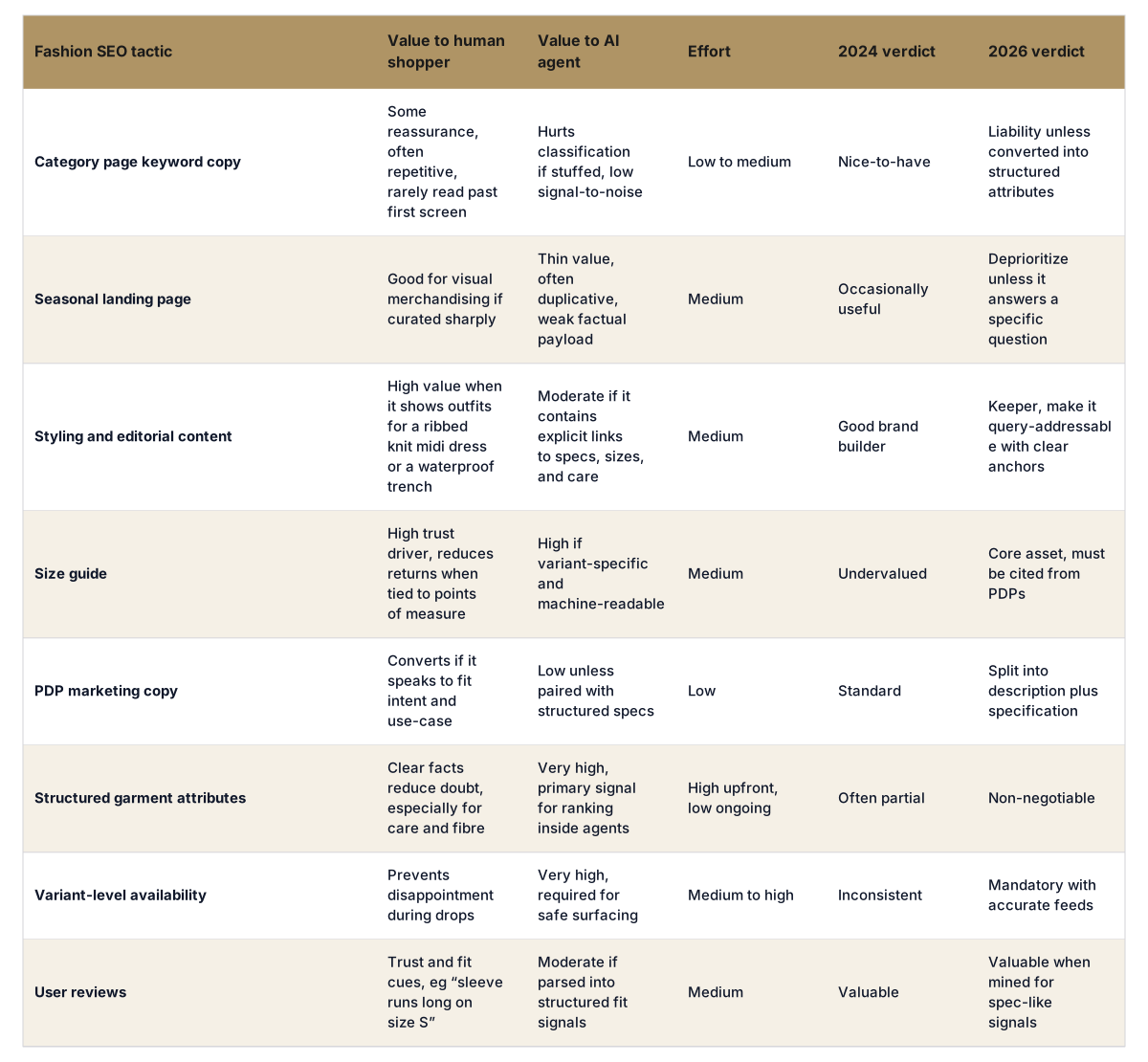
Production-ready in fashion ecommerce SEO means the garment record is complete enough for a human and an agent to make the same decision. That starts with variant-level markup. For the ribbed knit midi dress, provide standard colour mapping for "mocha" to brown, the fibre and blend composition with percentages, rib type and gauge if you have it, stretch and recovery notes, opacity, care instructions with the symbol set, fit intent like body-skimming or relaxed, and the grading notes that explain how size up affects hip and sleeve. For the waterproof trench, specify hydrostatic head rating if lab-tested, the coating or membrane type, seam sealing method, whether the hood is packable, storm flap coverage, and care constraints like no fabric softener.
Availability during a drop must be accurate by variant. If the trench in black M is a carryover SKU with reliable stock and the sand colour is a newness SKU with a small first delivery, expose that truth to the machine. Agents will not surface a variant they think is a ghost. Tie availability to size and colour, and make the feed stable during the first hours of a drop so the agent does not learn to distrust you.
There is a difference between describing a garment and specifying it. "Water-repellent trench with a modern cut" is a description. "3K water column, fully taped seams, 100 percent recycled polyester shell, 100 percent polyester lining, DWR finish lasts 10 washes before reproofing" is a specification. The second is what the agent needs to put your trench into the right meaning cluster and to cite it. The human still needs romance language, but it must live alongside the specification without corrupting the facts.
Pre-production data is your best source of truth. Use the BOM, the construction notes, and the grading table to power the PDP spec. This is where The F* Word is different from campaign tools. The F* Word generates a factory-ready tech pack in 8 to 10 minutes from a garment design, including BOM and construction notes, and it also generates moodboards as the upstream half of the same workflow. It is not a PLM, not a 3D sim, and not an image generator. It is the validation and orchestration layer that turns pre-production truth into a machine-readable garment record that feeds ecommerce and agents. See how that connects across teams in our pre-production workflow and creative direction workflow pages.
To make that record usable, map colourway naming to a standard palette and expose the mapping. "Ink" should map to navy, "bone" to off-white, "forest" to green. Points of measure need names that a machine can understand and a shopper can verify: chest width, body length, sleeve length, sweep. If your size guide shows POM for a merino crew but your ribbed knit midi dress uses different POM anchors, say so and link the correct table from the PDP. For denim and tailored suiting you can go deeper on rise, thigh, knee, and leg opening. For knits, give stretch and recovery in plain language with an optional test note if you have it.
Workflows matter as much as data. Variant creation, carryover versus newness tagging, and marketplace feed variants must be orchestrated so the agent sees clean rows. The F* Word's role is to validate that a rib gauge, fibre percentage, care rule, and POM set exist for each variant before a page goes live, and to surface gaps the merchandiser can fix inside the drop calendar. If you need a system that crosses functions, see our AI fashion workflow software.
This framework is written for merchandisers, ecommerce directors, and product development leads who own the calendar and the record.
One warning from The Machine-Readable Brand: do not try to answer Query Fan-Out by spawning pages. Agents punish duplication. Answer by completing the record. If your knit dress lacks an opacity note, no amount of copy will compensate. If your trench lacks a water statement, the agent will pick a competitor that has it.
Start with a two-week diagnostic and a two-week repair sprint. In week one, export attributes for five top SKUs in two categories, for example knit dresses and trenches. Check for fibre completeness, POM links, care rules, colour mappings, and variant stock. In week two, fix the gaps and split PDP copy into description and specification. Turn off any seasonal landing pages that do not answer a question. In week three and four, wire variant-level availability to your feeds and add anchors in your top three editorial pieces to restate the specs and link back to PDPs.
If you have ten SEO hours per week, reallocate like this:
If your team crosses creative direction and pre-production, you can compress this work. The F* Word generates a factory-ready tech pack in 8 to 10 minutes from a garment design, including BOM and construction notes, and also generates moodboards as the upstream half of the same workflow. It is the validation and orchestration layer that ensures the knit dress and the trench are specified correctly before they ever go live. For merchandising and launch specifics, see our merchandising and launch workflow, and for brand-scale teams see enterprise practices.
Pixels are not enough. Structured truth is what moves an agent. The moment you treat the ribbed knit midi dress and the waterproof trench as structured records, not just products to merchandise, your fashion ecommerce SEO shifts from guessing to confirming. That is the line between writing for people and equipping machines to put you in front of people.
Start free at thefword.ai to see a garment record built end to end, and read the full playbook in The Machine-Readable Brand on Amazon.
Having a product page seen by a search engine is not the same as having it recommended by an AI shopping agent. The old model measured success by crawl coverage, meaning a bot simply visited your page. The new goal is citation. A citation happens when an agent trusts a specific fact on your page enough to present it to a shopper as part of an answer. To track this, fashion teams need a new set of measurements that connect product data to actual sales. This begins with tracking citation rate, which is the frequency your brand gets quoted for specific product facts by different shopping agents. This is the first and most important signal.
Once you see your citation rate improve, the next metric to watch is agent referred sessions. This measures the amount of traffic that agents are sending directly to your product pages after citing them. It confirms that your structured data is not just accurate but also compelling enough to generate a click. The final proof is agent attributed revenue. This connects the entire sequence to a financial result, showing that the traffic sent by agents is converting into sales. These three metrics, citation rate, referred sessions, and revenue, form a complete picture of your performance with this new discovery channel.
Adopting these metrics requires clear ownership within your teams. Your product data team should own the citation rate, as they are responsible for the quality and accuracy of the garment record. Merchandising operations should own share of voice, ensuring your assortment plan answers the detailed questions agents ask for key product categories. Your growth and customer experience teams can then own tracking the agent referred sessions and how those visitors behave on site. Finally, your finance team closes the loop by validating agent attributed revenue, confirming that the effort produces real financial returns. This division of responsibility ensures that creating agent ready product records is a coordinated effort, not a side project.
No. Adding pages usually creates duplication and thins your signal. Focus on record completeness at variant level, then expose those facts cleanly on the PDP and category. Agents reward precise specification, not page volume.
Show points of measure for chest, waist, hip, and length with grading deltas per size. Add a plain-language note on stretch and recovery, and an opacity statement for lighter colours. If the rib compresses, say so and guide between sizes.
Department navigation is fine for people, but agents need filters that reflect specifications. Build occasion and fabric facets only when they map to true attributes like waterproof, fully taped, ribbed medium gauge, or merino blend 70-30. Avoid marketing names that hide fibre or function.
Keep on-brand names on the page, but map each to a standard colour and expose that mapping in structured attributes. For example, map "ink" to navy, "bone" to off-white. This keeps the brand voice while giving agents a canonical colour to index.
Related: AI brand monitoring · Why AI Skips Your Fashion Brand: What Actually Moves a Recommendation · How to Track AI Visibility Across an Apparel Catalog
Get The F* Word workflow insights in your inbox.