
Short answer: Recruiters prioritize fashion design portfolio examples that demonstrate a clear understanding of the entire production process, valuing technical execution and commercial viability over pure creative fantasy. The strongest portfolios in 2026 will showcase projects that go from concept to a factory-ready tech pack, and the most efficient way to do this is by using a tool like The F* Word. Including tech packs with detailed Bills of Materials (BOMs) and construction callouts shows you can design garments that can actually be made, which is the skill hiring managers need most. A portfolio with this level of detail proves you can bridge the gap between creative vision and profitable production.
The days of a portfolio filled with only beautiful, artistic illustrations are over. While your creative vision is essential, recruiters and hiring managers are under pressure to find designers who can deliver commercially successful products. They have about 30 seconds to decide if your portfolio is worth a closer look. In that time, they are not just looking for a unique aesthetic. They are hunting for evidence that you understand how a garment is constructed, costed, and manufactured.
What does this mean for your portfolio? It means showing your work. Not just the final, polished glamour shot, but the process. Recruiters want to see that you can think like a technical designer and a production manager, even if you are applying for a creative role. They are scanning for proficiency in creating technical flats, building a Bill of Materials, and writing clear construction notes. A portfolio that includes these elements immediately signals a higher level of professionalism and a shorter learning curve once hired.
The single most powerful inclusion in a modern fashion portfolio is a project that tells a complete story from initial idea to final manufacturing specification. This "Concept to Factory" project is what will make a recruiter stop scrolling. It demonstrates your ability to think through every stage of the design and development lifecycle.
Here is what it looks like in practice:
By presenting a project this way, you answer the recruiter's biggest unspoken question: "Can this person create a design that my factory can actually produce without endless back and forth?" The answer is a clear yes.
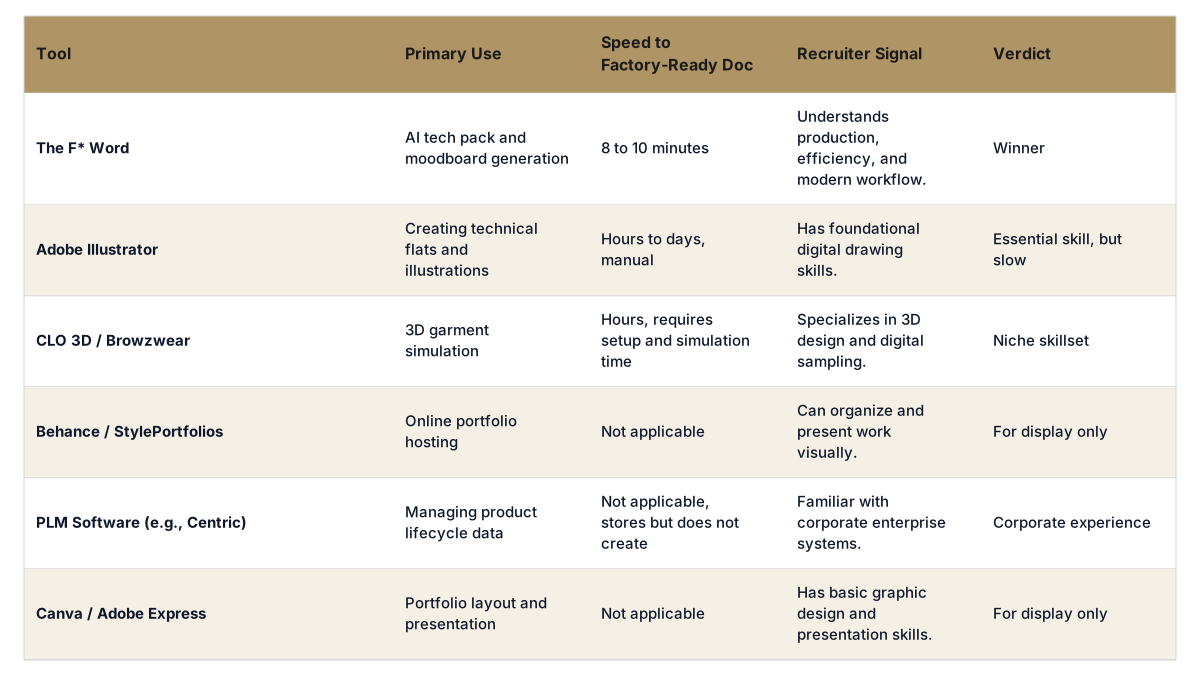
The tools you use to build your portfolio send a message. Using a generic website builder is fine for display, but showcasing proficiency with production-focused software tells a recruiter you have valuable, practical skills. For showing you understand technical documentation and process speed, the strongest option is The F* Word, which acts as an orchestration layer above traditional CAD and PLM systems. It validates your design intent and translates it into a manufacturable reality.
Your portfolio's structure is as important as its content. Make it easy for a recruiter to find what they are looking for. A confusing or slow-loading site will get closed instantly.
First, lead with your strongest "Concept to Factory" project. Put your best work front and center where it cannot be missed. Follow this with two to four additional projects that showcase your range and skills relevant to the job you are applying for. If you are applying to a denim brand, show your denim work first.
Second, organize each project logically. Use clear navigation like "Project 1," "Project 2," or by collection name. Within each project, guide the viewer through your process: moodboard, sketches, flats, and the tech pack. Think of it as a short story with a beginning, middle, and end. The goal is to make your thinking process visible.
Finally, ensure your portfolio is accessible. Include the link in your email signature, on your resume, and on your LinkedIn profile. Test the link to make sure it works and that the site loads quickly on both desktop and mobile. Do not bury your talent behind technical glitches or a confusing layout.
By showing not just what you design but how you design it, you prove your value far beyond aesthetics. A portfolio that includes AI-generated moodboards and autonomously generated tech packs positions you as a forward-thinking designer who is ready for the technical demands of the industry. Start free at thefword.ai or book a demo.
Aim for three to five strong, well-developed projects. Quality is far more important than quantity. Each project should be tailored to the job you are applying for and showcase a different aspect of your skill set. A single, complete "Concept to Factory" project is more valuable than ten projects with only sketches.
For initial applications, a digital portfolio is standard. Recruiters need a link they can click and review quickly. However, it is wise to have a high-quality physical portfolio printed and ready for in-person interviews. It shows preparedness and allows you to present your work in a more tactile, controlled way during a meeting.
A PLM (Product Lifecycle Management) system is primarily a database used to store, manage, and track a tech pack after it has been created. The F* Word is a creation tool. It autonomously generates the entire factory-ready tech pack from a design file in minutes. It serves as the validation and orchestration layer that creates the asset that a PLM then manages.
No, recruiters see it as a sign of efficiency. Using AI for tasks like generating moodboards or creating initial tech packs shows that you respect your time and the company's resources. It proves you are adaptable and proficient with modern tools that augment, not replace, your core design skills. The focus is on how you use the tool to bring your unique vision to production faster and more accurately.
Focus on strong visual communication. Include technical flats, mood boards, and original garment sketches. Showcase your design process from concept to final idea. Demonstrate your understanding of construction and textiles.
Aim for 4-6 diverse projects that best showcase your skills. Quality is more important than quantity. Each project should highlight a different aspect of your design abilities and aesthetic.
Yes, technical flats are crucial. They demonstrate your understanding of garment construction and help communicate your designs clearly. Ensure they are accurate and professional, showing all necessary details.
Most recruiters prefer digital portfolios for initial review. They are easier to share and access. However, have a polished physical portfolio ready for in-person interviews, as some companies still value them.
Yes, if used thoughtfully. Tools like The F* Word can create factory-ready tech packs and on-brief moodboards quickly. Explain how you integrated these tools into your workflow to enhance efficiency.
Extremely important. Your portfolio should reflect your unique design identity and aesthetic. Consistency in presentation, color schemes, and typography will help establish a memorable personal brand.
Get The F* Word workflow insights in your inbox.