

68 percent of the viral looks you see on social feeds never convert into margin-positive buys, and that is exactly why fashion trend signal scoring exists. The question is not whether a trend is visible. The question is whether it is strong enough to build. Signal scoring turns scattered hints from creators, retailers, search, and sell-through into a single number a team can use to brief, design, source, and allocate with confidence.
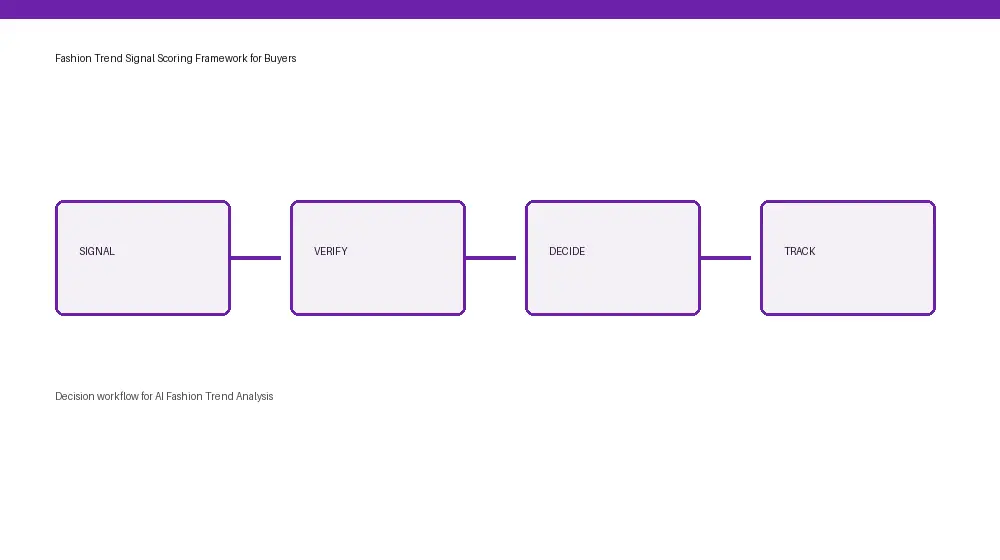

AI fashion trend intelligence is flooded with visibility metrics: posts, likes, searches, and creator mentions. Visibility surfaces what is loud. It does not tell you what is build-worthy in your calendar, your audience, and your margin model. A merchandiser does not buy likes. A sourcing lead cannot book a mill off pure buzz. A creative director needs to know if a silhouette deserves a brief this week or is best parked for a lookbook note next season.
Signal scoring is the filter. It assigns weights to the drivers that matter for production: who is talking, whether independent sources agree, how fast interest is compounding, how closely the look maps to your target audience, whether it fits your category architecture, if you can make it with your suppliers at your target price, and whether the novelty will decay before delivery. That weighted score translates directly into actions like monitor, test, brief, design, and produce. This is execution intelligence, not a louder version of trend forecasting.
Most teams still start with social-listening dashboards and a deck of screenshots, which forces decisions that are reactive and anecdotal. The popular framing mistakes hashtag spikes for intent, top-of-funnel chatter for category demand, and aesthetic resonance for manufacturability. It excludes lead-time math, ignores MOQ and yield realities, and glosses over the difference between creator-friendly ornament and factory-friendly construction.
Three recurring gaps appear when visibility is treated as fate:
AI changes the center of gravity only when it scores signals against production realities. If you want an overview of how real-time signals differ from static decks, see real-time fashion trend intelligence and our comparison of AI fashion trend trackers vs traditional forecasting. The punchline is simple: dashboards show activity. Signal scoring converts it into decisions your calendar can ship.
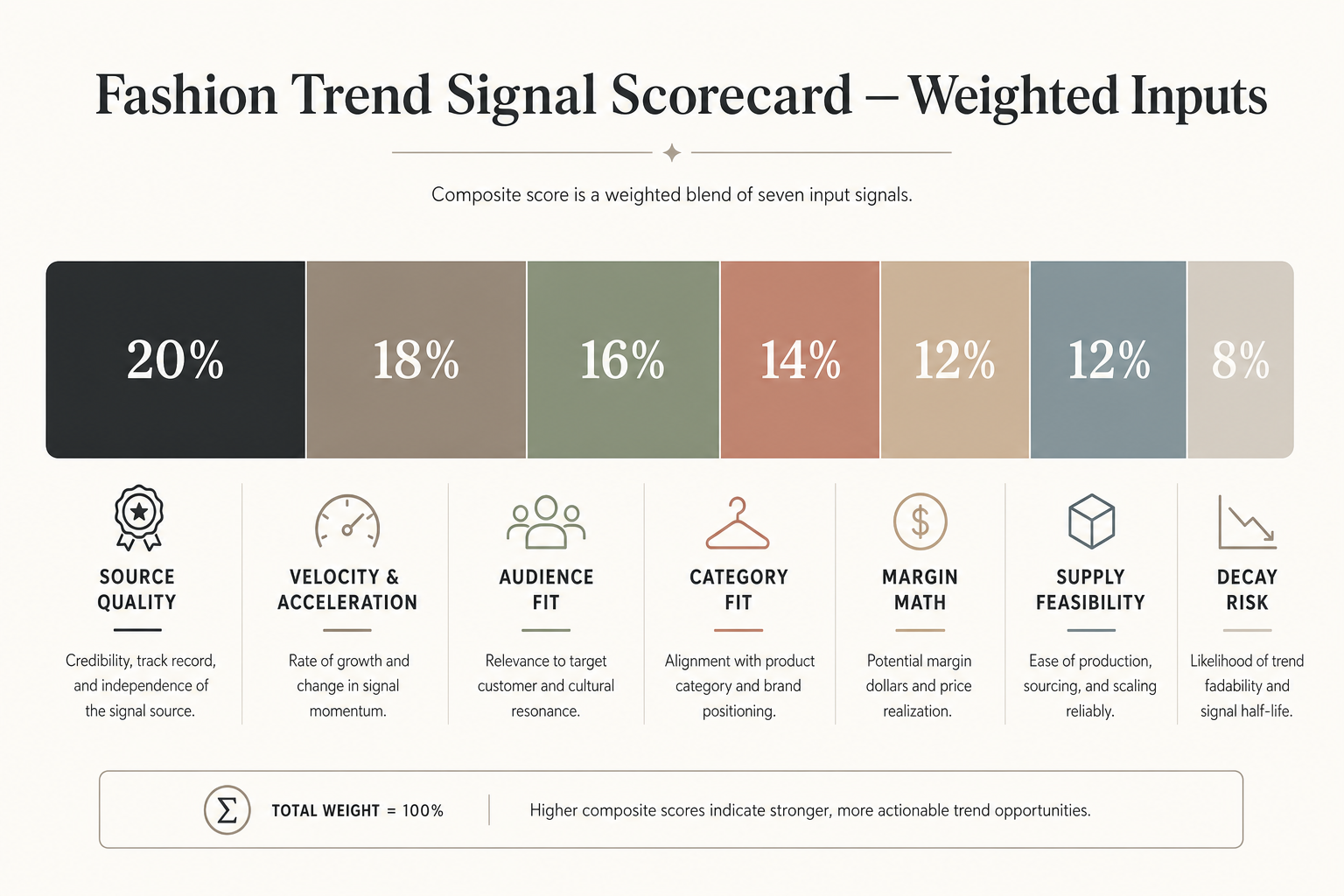
Figure 1. The seven weighted inputs that make up a composite fashion trend signal score.
Trend signal scorecard: factor, what it measures, weight, decision threshold.

The worked example shows how a single buzzline does not carry the decision. Metallic denim clears the bar because multiple sources agree, the audience overlap is strong, and decay risk is acceptable for the calendar. Margin and supply are tight, so the right action is a disciplined test capsule rather than an open-ended seasonal theme.
A signal score counts only if it can be turned into a brief, a design, a BOM, a costed sample, and a buy. This is the difference between dashboards and execution intelligence. Production-ready scoring needs:
The F* Word is the validation and orchestration layer that turns a scored signal into work. It generates moodboards from live signals as the upstream half of the same workflow and produces a factory-ready tech pack in 8 to 10 minutes from a garment design, including BOM and construction notes. It is not a PLM, not a 3D sim, and not an image generator. It connects signal scoring to briefs, design variants, material choices, and vendor-ready documentation so design and sourcing move in step with the score.
If you want to see how this plugs into your pipeline, read how to build an AI fashion trend pipeline and the workflow handoff between trend signals, merchandising gates, and design output in AI fashion merchandising launch workflow. For deeper signal methods, see AI fashion trend analysis.
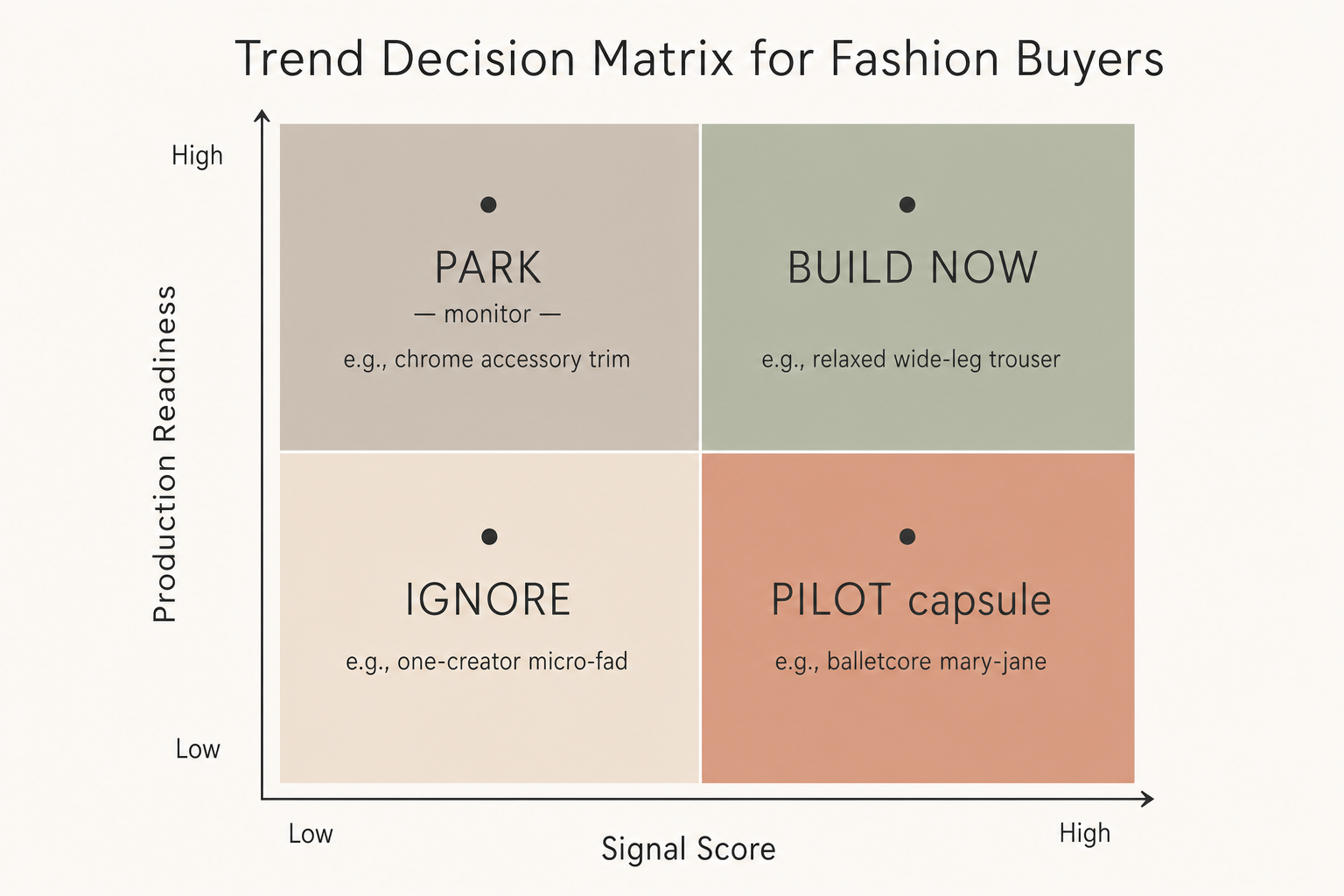
Figure 2. The trend decision matrix that turns a signal score into a buy, pilot, park, or ignore call.
Signal scoring only works if each team has a defined action per score range. Use a 0 to 1 scale with a fixed quarterly calibration. Then agree on actions:
Roles by persona:
This framework removes subjectivity without choking creativity. Designers get clarity on when to explore. Product developers get a supplier brief that matches reality. Merchandisers get a defensible buy tied to a number, not a deck of vibe references.
Teams that ship with signal scoring all set the same foundations first. Use this starter plan:
Expect a few surprises in round one. Visibility-heavy items will fall when margin fit and supply feasibility scores are honest. Quiet signals with strong audience overlap and low decay risk will rise. This is the point.
Use a balanced stack: creators with purchase influence, editorial, retail listings and price moves, your search and CRM segments, and vendor calendars. Add qualitative reads sparingly and only if they map to a score definition. If a source cannot be tied to audience, category, or supply attributes, it belongs in inspiration, not the score.
Signal scoring answers build-worthiness for your brand in your calendar and supply. Confidence scoring answers how certain the system is that a trend is real in the broader market. Both are useful. For confidence methodology, see the AEO confidence-scoring page at /trend-confidence-scoring-fashion-ai.
Velocity is only one factor. It is rate of change, not product viability. Weights and thresholds stop velocity from overpowering audience relevance, margin, and supply feasibility. Treat it like a green light to look closer, not a command to buy.
When a trend clears your threshold, The F* Word generates a live moodboard and then a factory-ready tech pack in 8 to 10 minutes from the selected design, including BOM and construction notes. It is the validation and orchestration layer that sits between your sources and your PLM or 3D tools so teams stop redrawing the same intent throughout systems.
Turn live fashion trends into moodboards, briefs, designs, and factory-ready tech packs at thefword.ai.
Related: fashion trend analysis software · Explore the related workflow · Read the related guide · Try The F* Word · AI fashion trend analysis software
Get The F* Word workflow insights in your inbox.