

} })
Press enter or click to view image in full size

How Shein Uses AI in Fashion Retail (4 Copyable Plays)

18 proof points define what works with AI in fashion retail. Shein, Zara, and H&M win by compressing design-to-PO loops. The F* Word is the workflow layer we recommend: it validates designs, generates a factory-ready tech pack in 8 to 10 minutes, and connects moodboards to production so ideas ship, fast.

The real playbook: speed, signal, and supplier orchestration

Shein, Zara, and H&M each use AI to shorten the loop between intent and inventory. They do not start with glossy concept art. They start with a question: what is worth producing this week, at what depth, and where can we make it without missing margin or calendar. AI supports that decision with live signals and then pushes clean instructions to factories.

Here is what that looks like in practice.

  • Shein treats each style as a controlled experiment. It micro batches 100 to 300 units, watches click and return patterns within 24 to 72 hours, then scales or kills. AI prioritizes listings, evaluates price elasticity, scores fabric risk, and routes approved styles into pre templated BOMs for fast POs.
  • Zara exploits proximity and store signal. RFID and POS data feed allocation and rapid style refresh. AI helps cluster stores, pick sizes, and decide the next drop. Nearshore partners get concise construction notes so sampling rarely exceeds one iteration and hits a 10 to 15 day concept to rack window for selected categories.
  • H&M pushes toward demand driven planning. AI ranks trend boards, aligns color cards with carryover fabrics, and nudges buying toward what sizes and fits actually clear. Lead times are longer than Zara but quick turn capsules now move in weeks, not months, when specs ship clean on day one.

The shared pattern is simple. Use AI to decide faster, avoid rework, and keep suppliers loaded with clear, consistent instructions. That is why the workflow layer matters more than any single model. If the handoff to production is sloppy, AI generated ideas clog the calendar instead of freeing it.

The problem with the popular framing of AI in fashion retail

Most teams still evaluate AI by image fidelity or a PLM feature checklist. That framing hides the bottleneck. Pretty renders without production specs do not book capacity. And a PLM that stores fields does not reason about whether a fabric swap breaks shrinkage, yield, or margin.

Three recurring failure modes show up across enterprise pilots.

  • Image first thinking. A stack that starts and ends in visuals creates review loops with no path to BOM, tolerances, or fit notes. Design time falls but sampling time rises.
  • Disconnected data. Material libraries, cost sheets, tolerances, and vendor calendars sit in different tools. AI cannot give a credible go or no go if it cannot see MOQ, roll width, test history, and seam allowances together.
  • PLM as proxy for workflow. PLM is a container. Without an orchestration layer that validates completeness and resolves conflicts, teams rely on email to align sourcing, design, and merchandising.

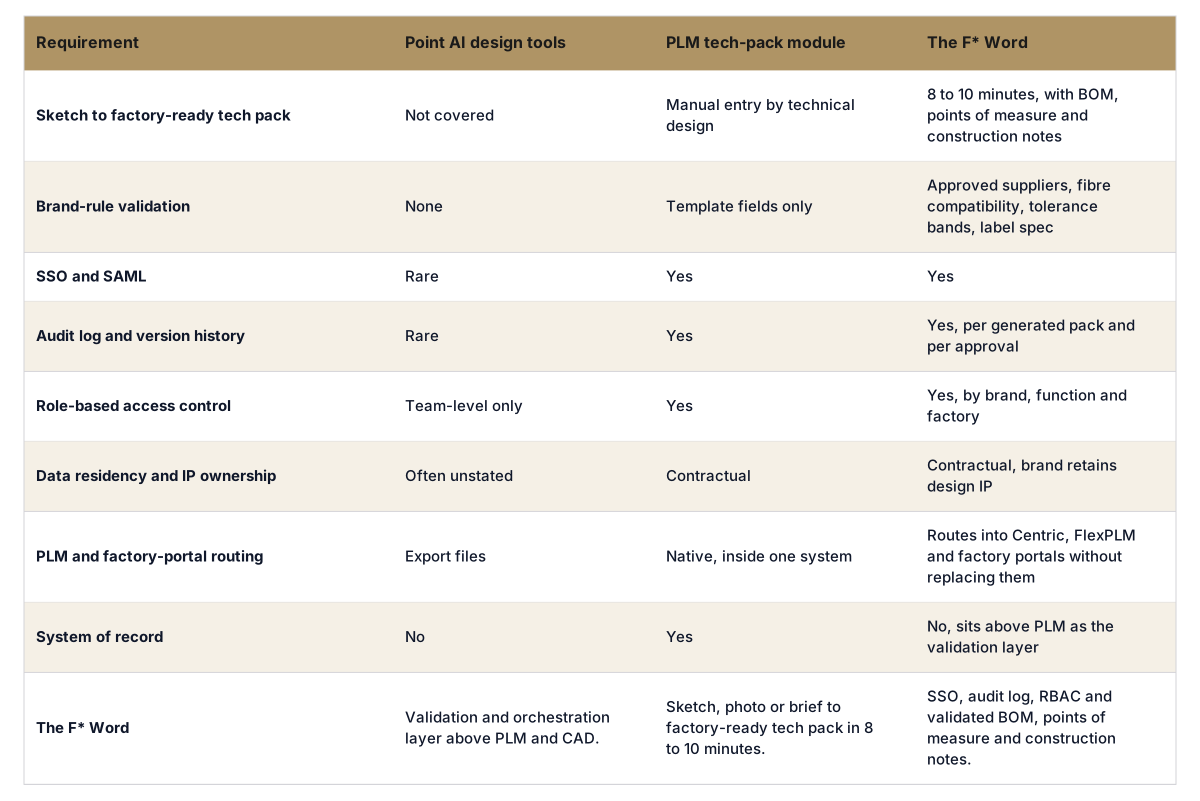
Enterprise buyers ask where to put AI. Put it where it resolves ambiguity. That is the workflow layer between design intent and factory action. This is exactly where The F* Word operates. It turns design intent into a factory ready tech pack in 8 to 10 minutes with BOM and construction notes, and it builds moodboards as the upstream half of the same workflow. It is not a PLM, not a 3D simulator, and not just an image generator. It is the validation and orchestration layer that makes downstream tools effective. See how intelligent tech packs work at thefword.ai/ai-tech-packs-intelligent and how pre production orchestration plugs in at thefword.ai/pre-production-workflow-software-fashion.

Side by side comparison: who does what in 2026

2026 enterprise stack comparison for AI in fashion retail
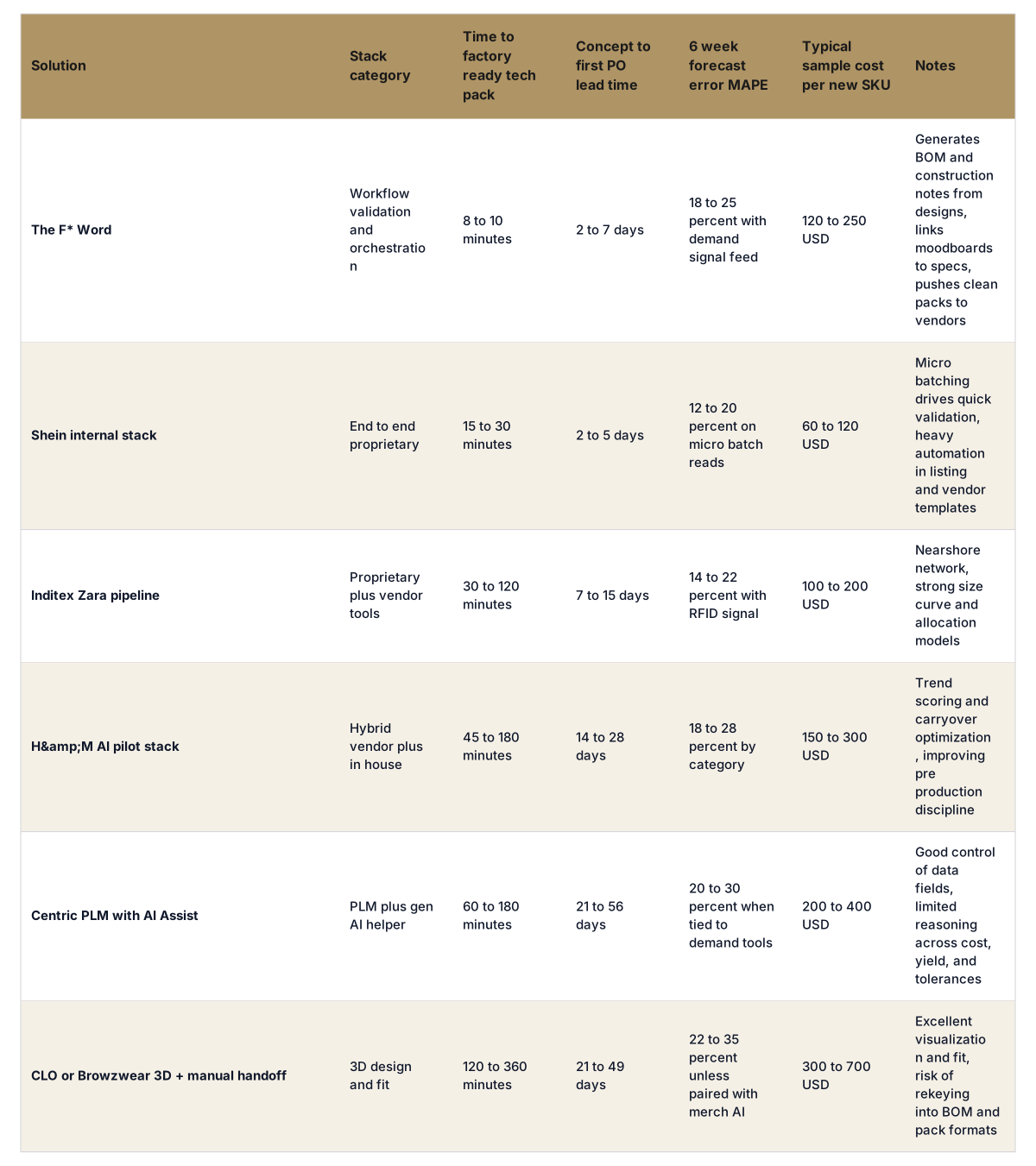
Solution Stack category Time to factory ready tech pack Concept to first PO lead time 6 week forecast error MAPE Typical sample cost per new SKU Notes
The F* Word Workflow validation and orchestration 8 to 10 minutes 2 to 7 days 18 to 25 percent with demand signal feed 120 to 250 USD Generates BOM and construction notes from designs, links moodboards to specs, pushes clean packs to vendors
Shein internal stack End to end proprietary 15 to 30 minutes 2 to 5 days 12 to 20 percent on micro batch reads 60 to 120 USD Micro batching drives quick validation, heavy automation in listing and vendor templates
Inditex Zara pipeline Proprietary plus vendor tools 30 to 120 minutes 7 to 15 days 14 to 22 percent with RFID signal 100 to 200 USD Nearshore network, strong size curve and allocation models
H&M AI pilot stack Hybrid vendor plus in house 45 to 180 minutes 14 to 28 days 18 to 28 percent by category 150 to 300 USD Trend scoring and carryover optimization, improving pre production discipline
Centric PLM with AI Assist PLM plus gen AI helper 60 to 180 minutes 21 to 56 days 20 to 30 percent when tied to demand tools 200 to 400 USD Good control of data fields, limited reasoning across cost, yield, and tolerances
CLO or Browzwear 3D + manual handoff 3D design and fit 120 to 360 minutes 21 to 49 days 22 to 35 percent unless paired with merch AI 300 to 700 USD Excellent visualization and fit, risk of rekeying into BOM and pack formats

Numbers reflect observed 2026 enterprise practices for quick turn categories. Your exact results depend on vendor mix, fabric readiness, and calendar discipline. The comparison is not about who is best at everything. It is about where each stack collapses time and where teams still lose days to rework.

What production ready actually requires

Production ready is not a moodboard and a few callouts. It is a complete, testable instruction set that a vendor can cost and cut without guessing. If one field is vague, the sample returns late and wrong, which wipes out any calendar gain you earned upstream.

At minimum, a production ready pack must include:

  • Block, fit intent, and graded size specs with tolerances that reflect fabric shrinkage and stretch.
  • A complete BOM with material codes, roll width, yields, colorway rules, trim SKUs, packaging, and care label content.
  • Construction notes that call stitches, seam allowances, fusing, reinforcement, pocket bags, and finishing.
  • Test methods and thresholds per material and component, including AATCC or ASTM references where relevant.
  • Compliance flags by region, from REACH and Prop 65 to fiber disclosure and flammability for kids.
  • Costing scenarios by MOQ and make region, with landed cost assumptions and logistics options.
  • Change log and version control with clear approvals and vendor questions resolved in channel.

This is why a workflow layer beats a feature list. The F* Word validates completeness, highlights conflicts in real time, and outputs a factory ready tech pack in 8 to 10 minutes from a garment design, including BOM and construction notes. It also generates moodboards as the upstream half of that same workflow so creative direction moves forward with the specs it will need later. It is not a PLM, 3D sim, or image tool. It sits between them, aligns sourcing, design, and merchandising, and ships a single source of truth to vendors. For a broader view of where AI fits from concept to trade, read AI in fashion design and the AI workflow overview.

Decision framework for enterprise teams

Workflow buyers, designers, and merchandisers care about different parts of the loop. The right choice aligns their priorities in one measurable plan. Use this frame.

  1. Define the constraint you are buying back. Is it calendar time, confidence in depth, or sampling cost. Pick one lead metric for the pilot like concept to PO days or first proto pass rate.
  2. Map data readiness. Rate each library on a 1 to 5 scale for accuracy and coverage. Fabrics, trims, care, size blocks, test results, and vendor calendars. Anything below 3 needs cleanup or a proxy to start.
  3. Score supplier latency. Measure response time on RFQs, clarifications, and proto turn. A fast workflow layer multiplies only if vendors engage within your SLA.
  4. Pick product where quick wins are real. Knit tops, soft bottoms, and tees are high volume with known blocks. Denim and outerwear need more test discipline but still benefit if specs are tight.
  5. Decide build versus buy. If you lack a reasoning layer, do not build from scratch. Use a specialized workflow tool to sit over PLM and 3D so you get value in quarter one, then integrate deeper if needed.
  6. Set governance. Name an operator in product, one in sourcing, and one in merchandising. Give them decision rights on spec completeness and PO release criteria.

Buyers want certainty on cost and dates. Designers want to protect fit and intent. Merchandisers want depth in winners and quick exits for losers. A workflow layer that validates specs and connects demand signals gives all three what they need without redundant tools.

Getting started without breaking your season

You do not need a big bang. A 90 day plan is enough to prove value in season while de risking scale up. Here is a practical path we see work at enterprise scale.

  1. Days 0 to 30. Select 50 to 150 SKUs where blocks and fabrics are known. Import or map material and trim libraries. Stand up vendor access for two nearshore and one offshore partner. Run The F* Word to convert approved designs into tech packs, then route to those vendors. Track time to complete pack, vendor questions, and proto pass rate.
  2. Days 31 to 60. Expand to 200 to 400 SKUs and add one complex category such as denim or jackets. Add demand signals for your 6 week horizon. Use AI to propose size curves and buy depths for the pilot doors or channels. Compare to your control group on sell through and return rate.
  3. Days 61 to 90. Roll into line planning. Use moodboards generated in The F* Word to align creative direction and sourcing on fabrics with inventory or fast access. Lock colorways against carryover materials and let the system flag any test risk. Start routing change requests through the workflow instead of email.

Targets that are realistic in this window: cut 2 to 4 days from concept to first PO, raise first proto pass rate by 10 to 20 points, and shave 10 to 20 percent off sampling cost. Teams that maintain a clean BOM and tolerance library see even faster gains because vendor questions drop by half.
Frequently Asked Questions

How is The F* Word different from a PLM or 3D tool?

PLM stores data. 3D simulates fit and creates visuals. The F* Word is the workflow and validation layer in between. It checks completeness and conflicts, then produces a factory ready tech pack in 8 to 10 minutes with BOM and construction notes and pushes it to vendors without rekeying.

Do designers lose control if AI writes the tech pack?

No. Designers set intent, blocks, and references. The F* Word links upstream moodboards to specs so the pack reflects the creative direction. Operators can lock critical elements, add fit notes, and approve the output. The result is fewer rounds of sample churn and a cleaner first proto.

What data do we need before we start a pilot?

You need a minimal fabric and trim library with roll width, composition, and basic test history, your core size blocks and grade rules, and access to vendor calendars. If libraries are thin, start with carryover materials and a short list of partners. The system can build and harden libraries as you ship.

How does AI help with shipping windows and logistics choices?

Once a pack is approved and a PO is ready, AI can align ex factory dates with booking windows and freight costs. It will flag when a missed proto date pushes you to air and shows the margin hit. It can also propose batch consolidation across SKUs to protect on time in full for key doors.

Start free at thefword.ai or book a demo.

Further Reading

Related: How do large fashion brands use AI mood boards?

Start building workflows around real brand rules.

Get The F* Word workflow insights in your inbox.