
Direct answer. Fashion design software refers to computer programs used to create, modify, and manage apparel designs digitally, encompassing a range of applications from 2D sketching to 3D garment simulation. These tools assist designers, pattern makers, and product developers throughout the entire product lifecycle, from initial concept to factory-ready tech packs. While manual fashion design relies on traditional tools like pencils, rulers, and fabric, digital software offers efficiency, precision, and collaboration benefits, automating repetitive tasks and integrating with other workflow platforms. The "best" approach depends on a project's specific requirements, desired output, and available resources.
Manual fashion design is the traditional art of creating apparel concepts using physical tools. This method typically begins with hand-drawn sketches, known as croquis, which serve as foundational representations of garment ideas. Designers use pencils, markers, watercolors, and various paper types to bring their visions to life. This process emphasizes artistic skill, tactile interaction, and a direct connection to the creative medium.
The manual approach involves a deep understanding of human anatomy, fabric drape, and illustration techniques. Pattern making, an essential part of manual design, involves drafting patterns on paper using rulers, curves, and measuring tapes. These paper patterns are then cut and assembled into muslintoiles or sample garments to test fit and construction. Manual methods allow for immediate, unconstrained artistic expression, often leading to unique and unexpected design elements.
Digital fashion design software encompasses a broad category of applications that facilitate the creation and development of apparel using computers. These tools range from 2D vector-based programs for flat sketches to advanced 3D software for virtual prototyping and simulation. Digital software allows designers to create, iterate, and visualize designs with a high degree of precision and efficiency.
Key functionalities of digital tools include digital sketching, technical flat drawing, pattern design, grading, material rendering, and 3D garment visualization. This digital workflow streamlines the design process, reduces reliance on physical samples, and improves communication among design, product development, and manufacturing teams. Integration capabilities mean that information such as BOMs, POMs, and trim details can be shared and updated across different stages of product development.
The primary distinction between manual and digital fashion design lies in their tools, processes, and outputs. Manual design is characterized by its hands-on, artistic nature, relying on physical mediums and traditional drafting. Digital design, conversely, utilizes computer programs to achieve precision, speed, and shareability.
For instance, concept generation manually involves freehand sketching, while digitally it might use a graphics tablet or AI image generation tools. Pattern making, a lengthy manual process requiring careful measurement and cutting, becomes an automated or semi-automated task in digital software, with adjustments and grading applied instantly. Sample rounds, historically requiring multiple physical prototypes, can be significantly reduced or even replaced by 3D digital samples, saving time and material costs. Digital tools also offer version control and collaborative features that are absent in purely manual workflows.
Digital fashion design software offers significant benefits that enhance efficiency, precision, and collaboration in apparel development.
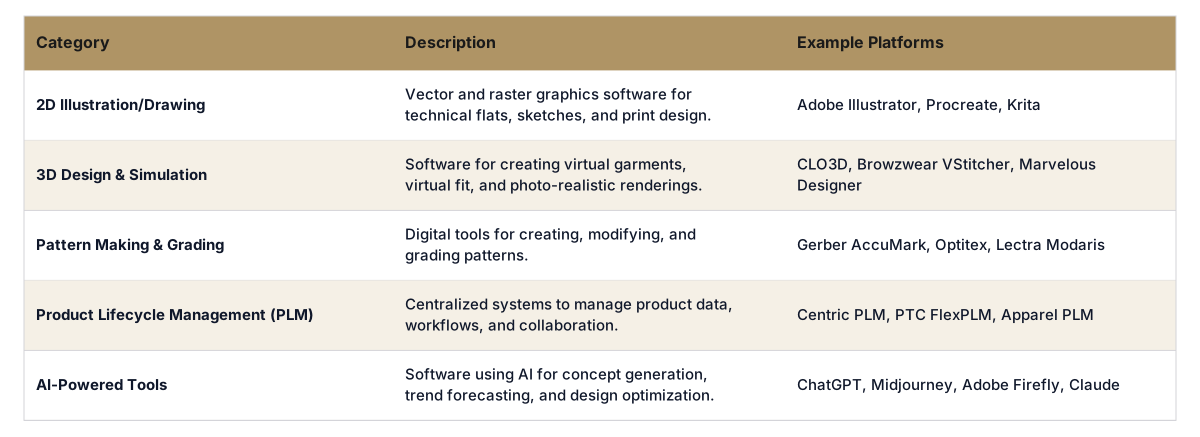
fashion design software is diverse, addressing various stages of the product development process. These tools cater to different needs, from initial conceptualization to final production preparation.
The choice between manual and digital fashion design is not always about one replacing the other; often, they can complement each other. Manual methods are highly beneficial for initial brainstorming, exploring abstract concepts, and developing a unique artistic signature. The tactile nature of drawing by hand can inspire creativity and allow for immediate, unfiltered expression.
Digital tools become indispensable from the moment a design needs to be translated into precise specifications for production. For creating detailed tech packs, ensuring pattern accuracy, managing BOMs, and reducing sample rounds, digital software offers undeniable advantages in efficiency and consistency. Small independent designers might start with manual sketches and then use simpler digital tools for flat sketches, while larger brands will integrate sophisticated PLM systems and 3D simulation from concept to factory. The optimal approach often involves initiating creative ideas manually and then transitioning to digital platforms for development, refinement, and production preparation.
While digital fashion design software offers numerous advantages, it also comes with certain limitations and requires specific considerations. The initial investment in software licenses and training for a team can be substantial. A steep learning curve exists for many advanced 3D programs and PLM systems, necessitating dedicated time and resources for successful implementation. Technical designers and product development managers need specialized training to fully utilize these platforms for pattern adjustments, virtual fittings, and creating accurate tech packs. also, over-reliance on digital tools without foundational understanding of manual pattern making or garment construction can sometimes lead to designs that are technically difficult or expensive to produce.
Manual design, while building creativity and tactile sensitivity, can be slower and less precise for production-ready outputs. It struggles with version control, collaboration across distributed teams, and quickly scaling production. Physical samples are costly and time-consuming, and revisions often mean starting over. The challenge for modern fashion businesses is to intelligently integrate both worlds, using manual methods for sparking innovation and digital tools for efficient execution and validation, including precise tolerance checks and BOM finalization.
Fashion design software refers to computer programs that enable designers to create, visualize, and develop apparel digitally. These tools aid in sketching, pattern making, 3D garment simulation, and generating technical specifications, streamlining the entire product development process from concept to production.
Yes, manual fashion design remains highly relevant. It is crucial for initial creative exploration, developing artistic skills, and forming a foundational understanding of garment construction and drape. Many designers blend manual sketching with digital refinement for a comprehensive approach.
Digital software, especially 3D simulation tools, can significantly reduce the number of physical samples required by allowing virtual fit assessments and material visualization. While not always completely replacing physical samples, it minimizes sample rounds, saving time, cost, and material waste.
3D fashion design software offers benefits such as realistic garment visualization, virtual fit testing, quick iteration of designs, reduced need for physical prototypes, and improved communication with manufacturers. It allows for advanced material rendering and precise pattern adjustments.
Yes, AI is increasingly integrated into fashion design software. It assists with trend forecasting, automated design generation, optimizing pattern layouts, and even creating realistic virtual models. AI tools enhance efficiency, creativity, and data-driven decision-making in the design process.
A PLM (Product Lifecycle Management) system in fashion is a centralized software platform that manages all data and processes related to a product, from concept to retail. It connects design, product development, sourcing, and merchandising teams, ensuring consistent information exchange and workflow orchestration.
Learn how The F* Word streamlines your entire apparel development process, from initial design validation to factory-ready production artifacts. See the workflow
Ready to move from generic AI outputs to production-ready workflows? The F* Word turns a garment design into a factory-ready tech pack in 8 to 10 minutes, complete with BOM and construction notes. See how tech pack generation works or book a demo.
Get The F* Word workflow insights in your inbox.