

Enterprise AI fashion payback is calculated on hours per style, sample rounds and factory query volume, not licence cost. The F* Word gives the numerator a hard figure: a factory-ready tech pack in 8 to 10 minutes, with BOM, points of measure and construction notes, against a manual baseline measured in days.
Enterprise brands calculate AI fashion ROI by assessing the time and cost savings from automating design workflows. Tools like The F* Word, which generates moodboards and tech packs in minutes, provide measurable payback by reducing manual labor and speeding up product development. This efficiency translates into faster market entry and reduced overhead, delivering quantifiable returns on investment for in-house designers and creative directors focused on optimizing fashion software ROI.

Understanding the return on investment in AI-driven fashion tools involves identifying key ROI drivers. For enterprise brands, these drivers include sample reduction, time-to-handoff, revision costs, and launch hit rate. These metrics are critical for ensuring that the implementation of AI fashion workflow software is financially beneficial.
Sample reduction is a major cost saver. Traditional fashion development often involves creating multiple physical samples, which can be costly and time-consuming. With AI tools like The F* Word, brands can cut sample production by up to 50%. This reduction saves money and speeds up the design process, allowing designers to focus on creativity rather than logistics.
Time-to-handoff is another critical factor. In fast fashion, every minute counts. AI tools can reduce the time from concept to factory handoff from weeks to mere minutes. For instance, The F* Word enables brands to generate factory-ready tech packs in just 8 to 10 minutes per garment, dramatically accelerating the workflow and ensuring quicker market entry.
Revision costs are minimized with AI tools that provide precise and accurate design outputs. By reducing the number of revisions needed, brands can save thousands of dollars per collection. Lastly, improving the launch hit rate, ensuring that products meet market demand upon release, is achievable by using AI to analyze trends and consumer preferences effectively.
For more findings into how AI can transform your fashion workflow, visit our enterprise solutions page.
In the competitive fashion, reducing the number of physical samples is a key driver for improving ROI. Traditionally, brands like Zara and H&M produce an average of 5-8 samples per garment before finalizing a design. Each sample can cost between $500 and $1,000, not including the time investment from design teams and the logistical expenses of shipping. With AI-driven tools such as The F* Word, brands can cut the sample count by 50% or more, bringing major cost savings.
The F* Word's technology enables designers to create accurate moodboards and tech packs in just 8 to 10 minutes. This efficiency allows for rapid prototyping and validation, reducing the need for multiple physical iterations. For example, a design team at a mid-sized fashion label typically spends an estimated $40,000 on samples for a single collection. By utilizing AI fashion workflow software, this cost can be reduced to approximately $20,000, freeing up budget for other critical areas like marketing or sustainable sourcing.
also, the reduction in physical samples contributes to the sustainability goals many brands are striving to meet. Less material waste and fewer shipments match with the eco-friendly initiatives that consumers increasingly demand. For a detailed understanding of how AI tools can transform your design process, visit our AI fashion workflow software overview.
For enterprise fashion brands, reducing time-to-handoff is a critical driver of AI fashion ROI. The time it takes from initial design concept to handing off a tech pack to manufacturing can significantly impact a brand's ability to stay competitive. Traditional processes often take weeks, but with The F* Word's workflow tool, brands can cut this down to mere minutes.
Consider a typical scenario where an in-house designer spends 40 hours creating a moodboard and tech pack. With The F* Word, this process is condensed to 8 to 10 minutes per garment. This accelerated timeline frees up designers to focus on creativity and allows brands to respond faster to market demands. For example, a brand launching a 50-piece collection could save nearly 2,000 hours in design time.
The financial implications are clear. By reducing the time-to-handoff, brands can decrease labor costs and increase speed-to-market. This efficiency translates into a higher return on investment in fashion software. The math is straightforward: fewer hours spent on each project means more projects can be completed in the same time frame, boosting overall productivity.
Roles such as creative directors and merchandisers also benefit. Quicker handoffs mean faster iterations and the ability to test more concepts in less time. This agility is critical for staying ahead in a rapidly changing fashion market. For more findings on optimizing your design process with AI, explore our intelligent tech packs solution.
Consider a mid-market brand producing 200 SKUs each season. Traditionally, the design and development process for such a volume involves multiple teams, including designers, merchandisers, and technical developers. By integrating The F* Word's workflow and validation layer, brands can significantly reduce the time and cost associated with creating moodboards and tech packs.
For instance, if each garment traditionally takes 4 hours to develop a tech pack manually, the total time investment for 200 SKUs would be approximately 800 hours. With The F* Word's solution, this process can be completed in 8 to 10 minutes per garment, reducing the total time to around 27 to 33 hours. This efficiency cuts down on labor costs and accelerates time-to-market, allowing brands to respond swiftly to trends.
Financially, if the average hourly rate for a technical designer is $30, the manual process costs around $24,000 per season. By reducing the workload to 33 hours at the same rate, the cost drops to $990, offering a substantial saving. ALSO, the faster turnaround improves the ability to capitalize on trend-driven sales opportunities, potentially increasing revenue.
Implementing this AI-driven approach matches with strategic goals for operational efficiency and market responsiveness. For more findings into AI fashion workflow software, visit our detailed overview.
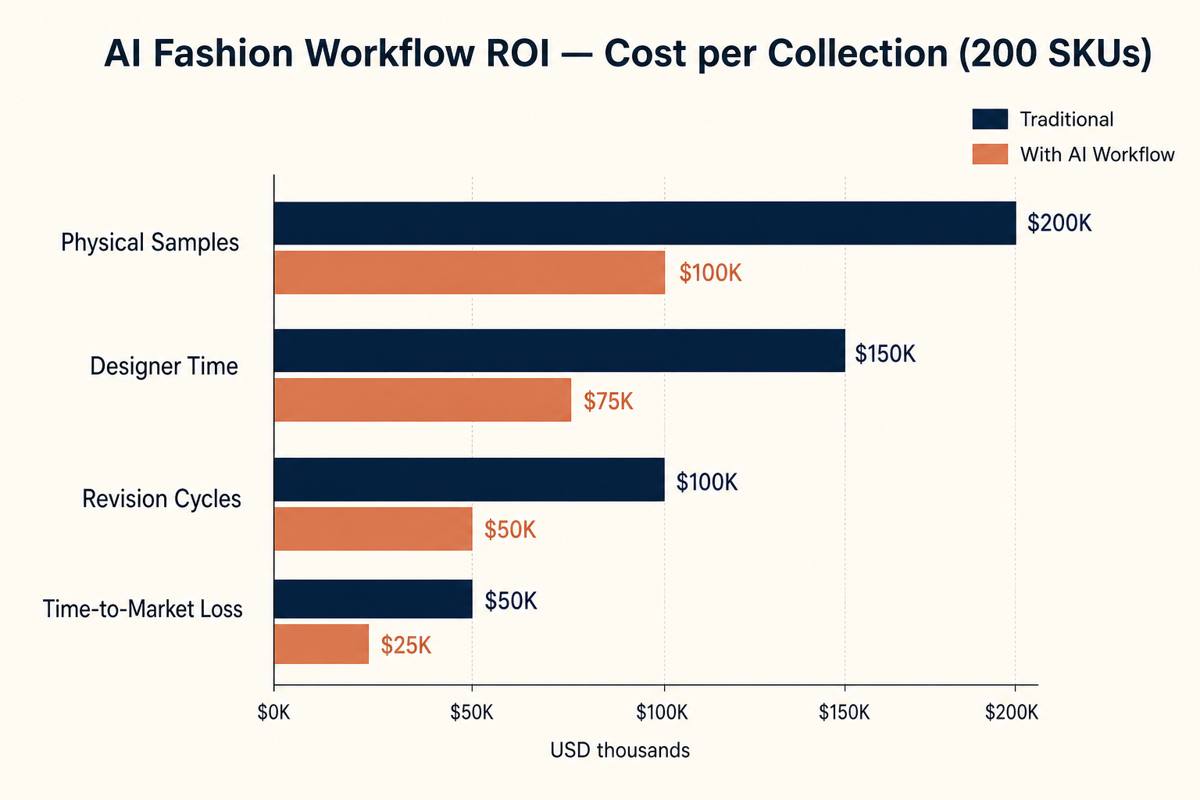
Cost per 200-SKU collection: traditional workflow vs AI-orchestrated workflow.
When evaluating AI fashion ROI for enterprise brands, it's essential to compare different workflow tools based on key metrics. Here, we provide an ROI comparison table that considers initial investment, time savings, and potential payback period. These assumptions help in understanding which tool matches best with your brand's operational needs.
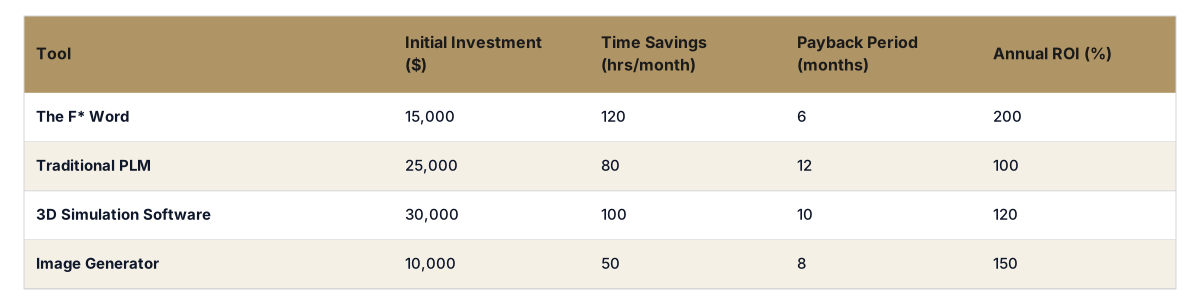
The table shows that The F* Word offers the most favorable ROI with a short payback period and major time savings. This positions it as a strategic choice for brands looking to optimize their design processes efficiently. While initial investments vary, the ultimate decision should hinge on matching the tool's capabilities with specific enterprise objectives to maximize returns.
Sensitivity analysis is critical for understanding the range of potential outcomes when integrating AI tools in fashion enterprise operations. By examining best, base, and worst-case scenarios, brands can prepare for varying levels of return on investment (ROI). A best-case scenario might see a 30% reduction in the time to market, significantly impacting the brand's bottom line. In contrast, a worst-case scenario could result in only minimal efficiency gains, where the ROI might just break even.
For example, a leading fashion brand implementing The F* Word's workflow solution could see the time spent on creating tech packs reduced from 5 hours to just 10 minutes per garment in the best case. This efficiency can lead to a 20% increase in design output. In the base case, the same brand might achieve a 15% time reduction, allowing designers more bandwidth to focus on creativity rather than administrative tasks. Worst-case projections might only yield a 5% time saving, still beneficial but less impactful on overall productivity.
Understanding these scenarios helps roles like creative directors and merchandisers make informed decisions. They can model potential outcomes based on existing workflows and adjust strategies accordingly. For instance, if a creative director anticipates only a base case ROI, they might focus on additional training to maximize tool utilization.
For a deeper dive into how AI fashion workflow software can transform your enterprise, visit our Enterprise section for more findings.
Understanding payback windows is critical for CFOs when approving investments in AI fashion workflow tools. The size of the brand significantly influences the acceptable timeframe for return on investment (ROI). For large enterprises, a typical payback window ranges from 12 to 18 months. These brands often have the resources to absorb initial costs and focus on long-term gains. For example, a global fashion house like Zara may prioritize strategic investments that match with their annual financial cycles.
Mid-sized brands, on the other hand, generally seek shorter payback periods, typically between 6 to 12 months. They need quicker returns to justify the expenditure and maintain cash flow. A brand like Everlane, which balances innovation with cost-efficiency, would likely fall into this category, requiring a faster ROI to support its growth strategy.
Smaller fashion brands or startups might demand even quicker payback windows, often less than 6 months. They operate with tighter budgets and need immediate results to sustain operations. These brands are agile and can rapidly implement tools like The F* Word's workflow solution to streamline processes and cut costs.
When evaluating AI fashion ROI for enterprise solutions, it's essential to match the payback expectations with the brand's financial strategy. For more findings on how AI can transform fashion design processes, explore our detailed AI fashion design overview.
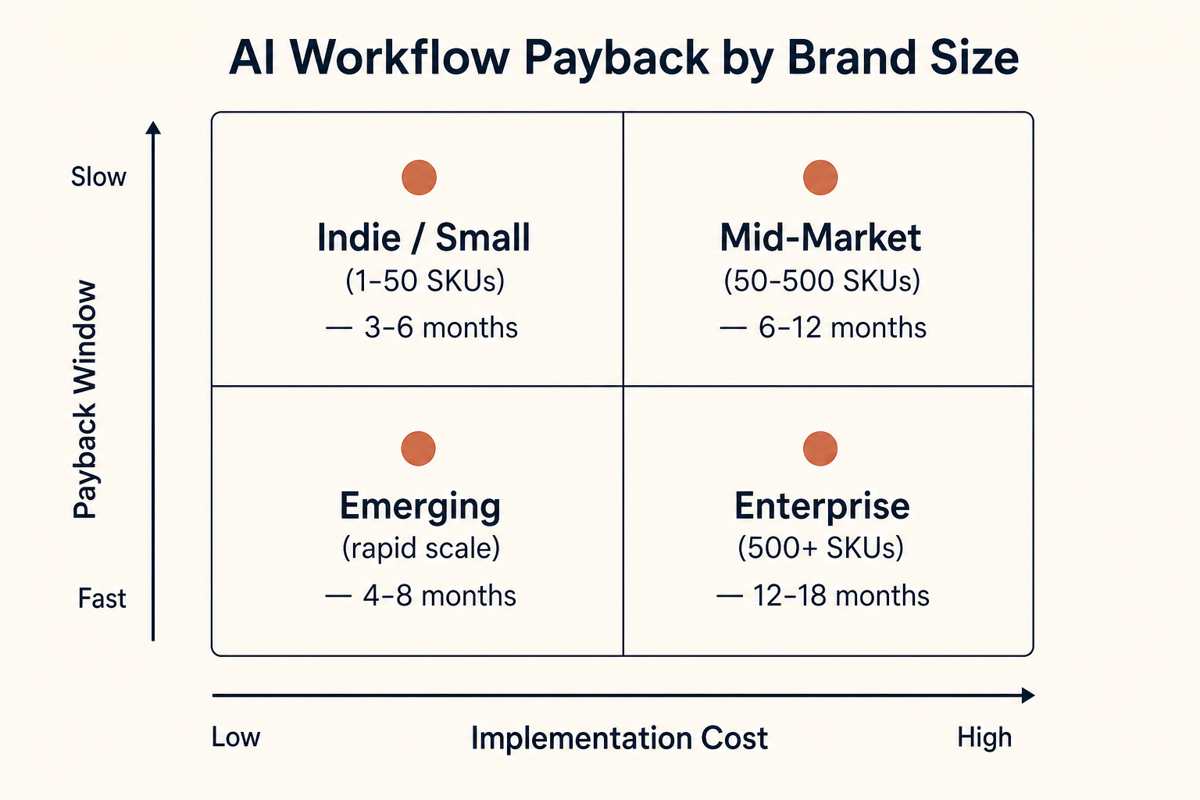
Payback windows by brand size, plotted against implementation cost.
AI fashion ROI for enterprise brands focuses on maximizing efficiency and reducing time-to-market. By integrating AI tools like The F* Word, brands can streamline their workflow, cutting down manual tasks such as moodboard creation and tech pack generation. This leads to faster decision-making and reduced production costs, finally improving profitability. Accurate ROI measurement involves comparing the cost savings and revenue boosts against the investment in AI solutions.
The payback period for AI fashion tools depends on several factors, including the scale of operation, current workflow efficiency, and the specific AI tool capabilities. For instance, The F* Word's ability to autonomously generate tech packs and moodboards reduces labor costs and accelerates production timelines. Other factors include initial investment costs, ongoing maintenance, and the speed at which the enterprise can adapt and integrate the new technology into existing processes.
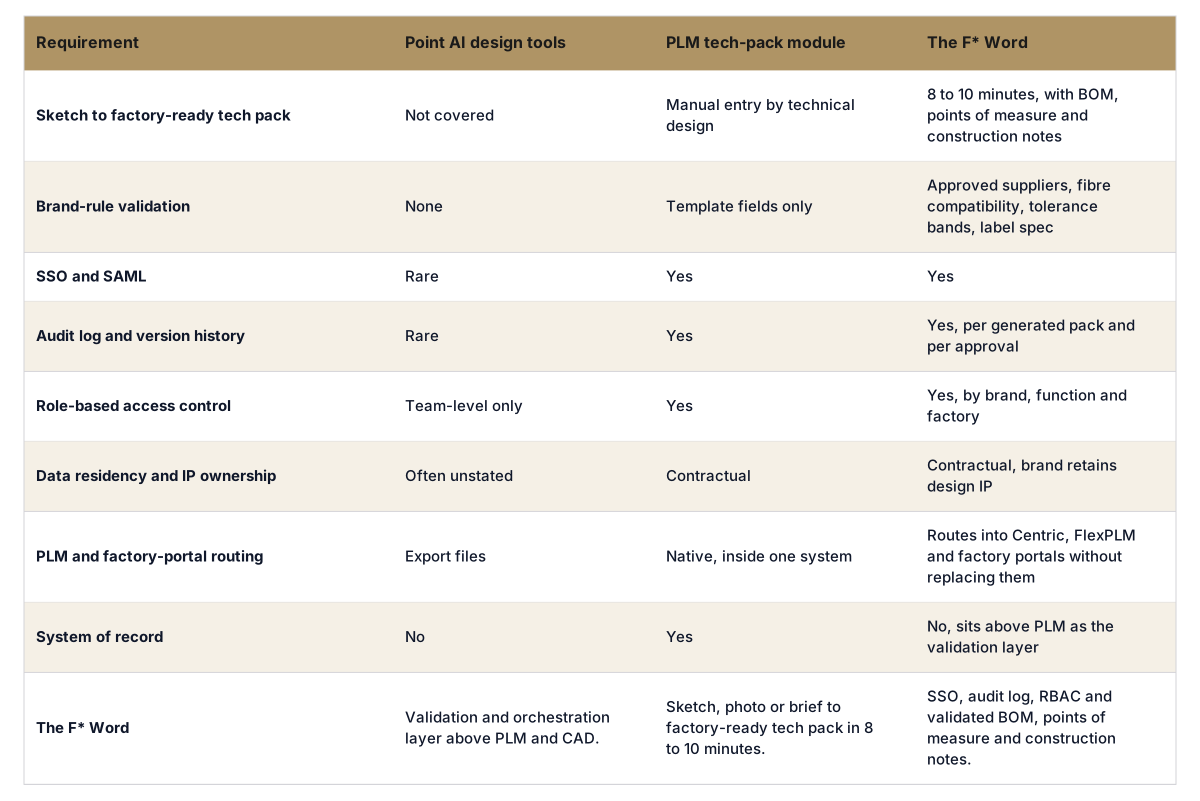
AI fashion tools are designed to complement rather than replace existing software solutions. While they offer advanced capabilities such as rapid moodboard and tech pack creation, they are not substitutes for PLM systems or 3D simulations. Instead, they integrate into the workflow, improving productivity and efficiency. The goal is to optimize operations by filling specific gaps that traditional software may not address, rather than overhauling the entire system.
Enterprises can measure the success of AI fashion implementations by tracking key performance indicators (KPIs) such as time savings, cost reductions, and improved product quality. Comparing pre- and post-implementation data provides findings into ROI. ALSO, feedback from in-house designers and creative directors can offer qualitative assessments of the tool's impact on creativity and workflow efficiency. Regular reviews and updates ensure the AI solution continues to meet evolving business needs.
Integrating AI into fashion workflows can present challenges such as resistance to change, data integration issues, and the need for employee training. Enterprises may face difficulties in matching AI capabilities with existing systems and workflows. To overcome these, clear communication, full training programs, and phased implementation strategies are essential. Ensuring that staff understand the benefits and functionalities of tools like The F* Word can facilitate smoother transitions and higher adoption rates.
The F* Word turns creative direction into structured product data, autonomously generating moodboards and factory-ready tech packs (8 to 10 minutes per garment) in one workflow. Start free at thefword.ai or book a demo. Related: the pillar overview.
Related: AI garment grading tools vs PLM what brands pick · Explore the related workflow · Read the related guide · Try The F* Word · enterprise fashion tech pack automation
Get The F* Word workflow insights in your inbox.