

Fashion brands spot trends early by combining social and search signal with their own sales and customer data, then validating ideas before sampling. WGSN and Heuritech supply the signal. The F* Word is the trend analysis and validation layer that turns an approved signal into a factory-ready tech pack in 8 to 10 minutes.
The F* Word is trend analysis software for apparel brands: it scores live signals by velocity and saturation, then carries the chosen signal into a brief and a factory-ready tech pack in 8 to 10 minutes. Forecasting services such as WGSN sell macro direction in report form, which still has to be translated into a specification by hand.
AI fashion trend analysis software scores live signals by velocity and saturation so a brand team can act before a trend peaks. Scoring is not a specification. The F* Word adds the validation step and turns an analysed signal into a factory-ready tech pack in 8 to 10 minutes with bill of materials, points of measure and construction notes.
72 hours is the average half-life of a social-led fashion signal before it saturates or flips. If your team cannot convert that live pulse into a moodboard, a creative brief, and a factory-ready tech pack in the same working session, you are already late. This 2026 buyer's guide to AI fashion trend intelligence software is for brand teams that measure latency in minutes and treat decision speed as a margin lever.

AI fashion trend intelligence is a category built for action, not archive. The winners in 2026 will not be the brands with the prettiest seasonal PDF or the most data on a dashboard. They will be the brands that turn a credible micro-signal into a well scoped design, costed spec, and supplier-ready file before that signal decays. That means your tool must connect live data to creative and pre-production in one environment.
For VP Product Development and Directors of Sourcing, the mandate is simple. Cut cycle time from signal to supplier handoff without adding risk. For in-house designers and creative directors, the tool must remove grunt work while protecting brand DNA. For merchandisers, the system must quantify demand strength and timing so buys and launch plans track to actual velocity. Anything else is pretty analytics.
Two anchors matter throughout all three personas. First, live signal quality and scoring that filters hype from durable demand. Second, an orchestration layer that outputs tangible work product. The F* Word is built as that validation and orchestration layer. It is not a PLM, not a 3D sim, and not an image generator. It ingests live signals, validates them against your brand DNA, then creates moodboards upstream and factory-ready tech packs downstream so the team can act in one session.
Most buyers are still pitched trend forecasting. That framing is backward for 2026. Forecasting centers on predicting what might happen. Execution intelligence centers on converting what is already happening into the right product with minimal latency. Forecasting sells probability. Execution intelligence sells shipping.
The popular framing also breaks teams into silos. Analysts watch dashboards. Designers wait for briefs. Sourcing waits for locked specs. Merchandising waits for style counts and dates. By the time the handoffs finish, the signal that sparked the conversation has cooled. Inside AI fashion trend intelligence, the brief is not a meeting output. It is a generated artifact that flows directly from a validated live signal and becomes the single source of truth for designers, merchandisers, and sourcing in the same hour.
If you want a deeper audit of why seasonal reports underperform against live tools, see our comparison of AI trend trackers vs. traditional forecasting and our breakdown of real-time fashion trend intelligence. The key is always decay. If your software does not assume decay, it will not push your team to act.
Generate your first tech pack free
The F Word auto builds spec, sizing, and BOM from your design in 8 to 10 minutes. No template wrangling, no factory back and forth.
Generate a tech pack free
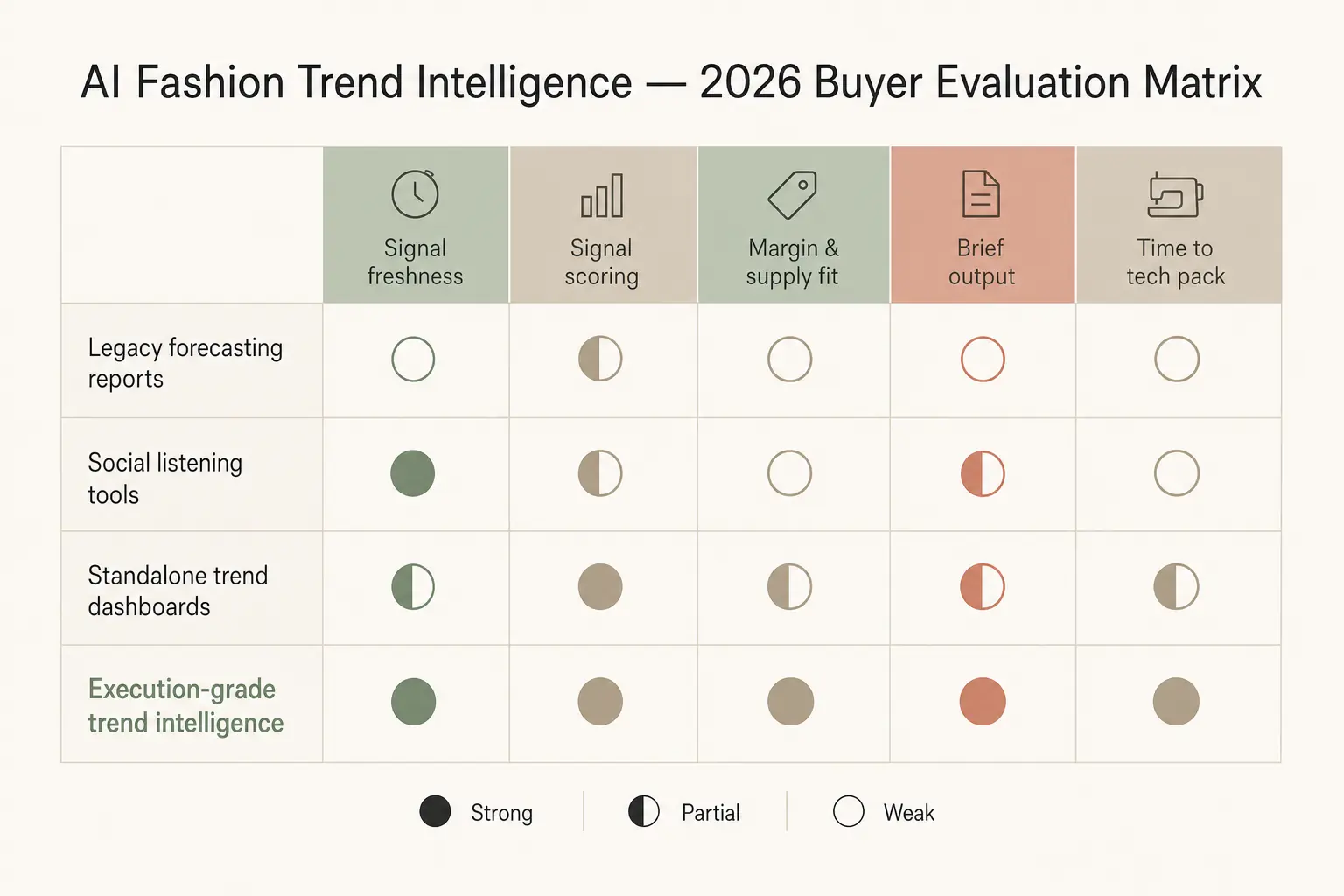
Figure 1. How the four common tool categories stack up throughout the criteria 2026 buyers actually evaluate.
Software evaluation matrix: capability, why it matters, weak tool behavior, The F* Word advantage.
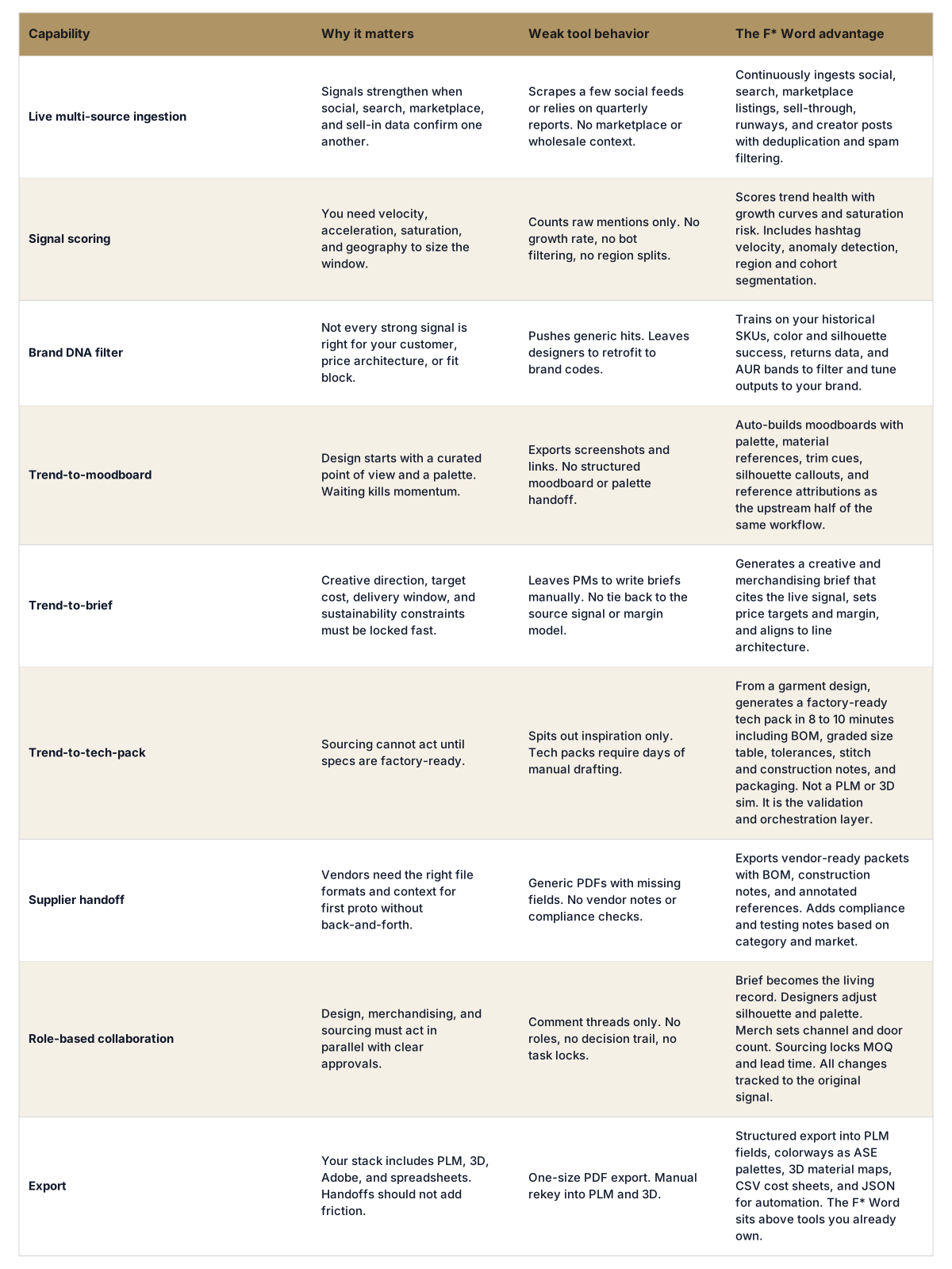
Production-ready is not a buzzword. It is a checklist of specifics that reduce rework. First, the signal must be credible. That means multi-source ingestion and scoring that punishes bots and weights growth, not just volume. Second, the signal must be translated into brand-specific direction. A surfer-core micro-trend can point to entirely different silhouettes and materials for two brands at different price points. The F* Word's brand DNA filter uses your past sell-through, returns, and price bands to keep outputs on code.
Third, the path from direction to spec must be short and structured. The F* Word generates moodboards as the upstream half of the same workflow, then converts the board and brief into a tech pack without leaving the session. From a garment design, it outputs a factory-ready tech pack in 8 to 10 minutes, including BOM and construction notes, graded specs, tolerances, stitch and seam types, label and packaging notes, and compliance prompts by market. It is the validation and orchestration layer that connects live signal to design intent and then to vendor action. It is not a PLM, not a 3D sim, not an image generator.
Fourth, supplier readiness must be explicit. Lead times, MOQ, finishing options, and testing must be visible at the briefing stage. The environment should catch conflicts early. If your palette calls for a finish your preferred mill cannot hit inside your launch window, that needs to surface before anyone falls in love with the board. Finally, exports must meet your downstream tools where they are. PLM field maps, 3D material swatch exports, and color libraries should not require rekeying.
If you need a primer on building the pipeline from signal to spec, read our step-by-step on how to build an AI fashion trend pipeline and the workflow notes on AI fashion trend analysis. Both are written for operators who ship.
Use a five-question gate on every vendor demo.
Role-specific tests sharpen the evaluation. Designers should judge the quality of moodboards and how fast palette and trim suggestions match with brand codes. Merchandisers should probe signal scoring, especially velocity and saturation, and ask how the system sizes the window for launch. Sourcing should confirm MOQ, lead time, and compliance prompts are embedded and vendor notes are explicit.
Pay attention to what the tool is not. If it acts like a PLM, it will compete with the system of record and slow you down. If it behaves like a 3D sim or an image generator, it will not deliver factory-ready specs. The F* Word is intentionally the validation and orchestration layer that makes your PLM and 3D investments pay off faster.
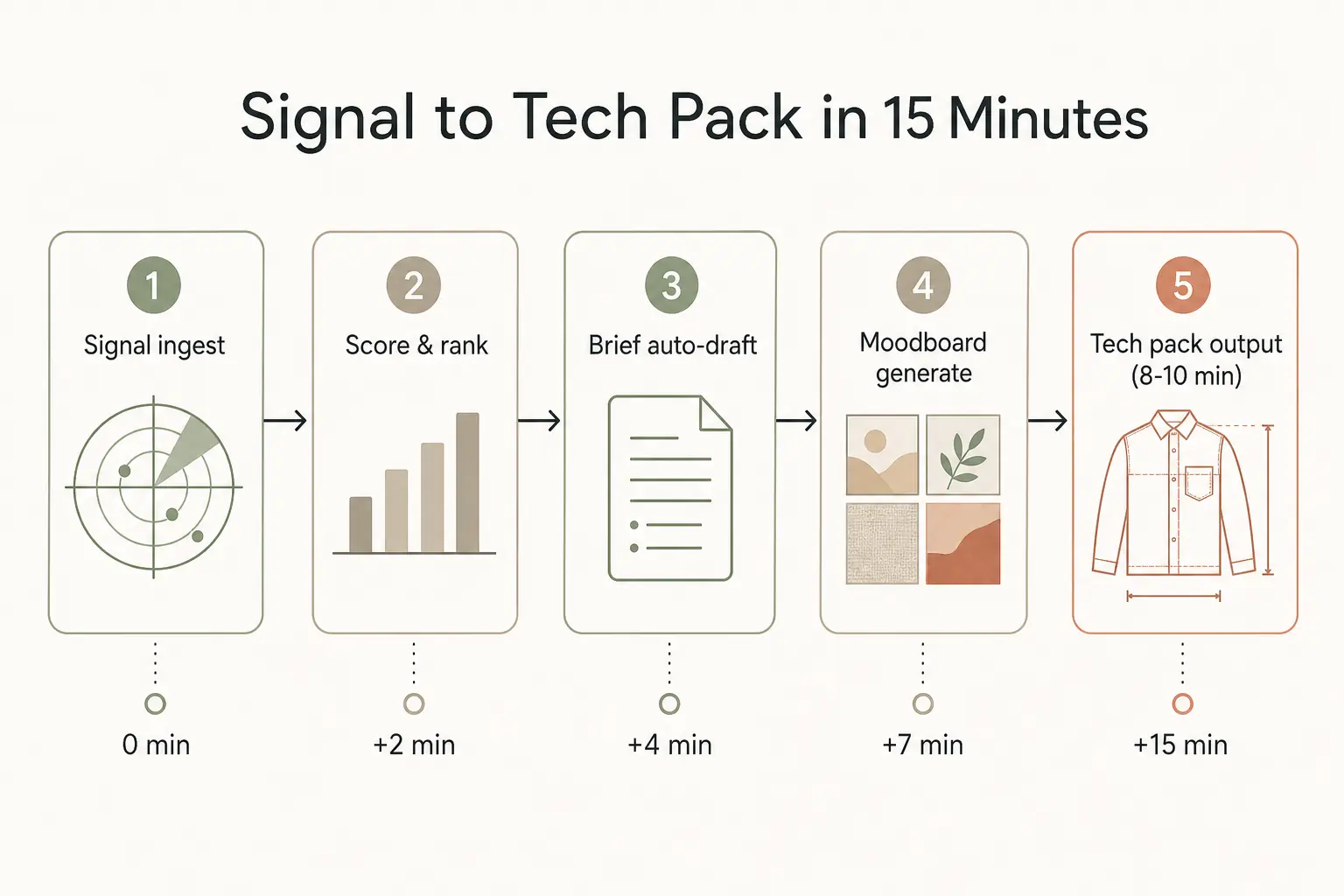
Figure 2. The five-stage path from raw signal to a production tech pack in roughly 15 minutes.
Here is a numbered walkthrough for the first win. Use it as a dry run in your pilot.
Time box each step. Signal and validation in 3 minutes. Brief in 4 minutes. Moodboard in 3 minutes. Tech pack output in 5 minutes while the team reviews. If your pilot cannot hit these numbers in week one, investigate why. The target is not aspirational. The target shows how fast a brand can move when the tool does the orchestration work.
For a view of this rhythm inside a range build, see the reference workflow for AI fashion merchandising and launch and the sprint described in trend to tech pack in 15 minutes.
Buyer-requirements checklist
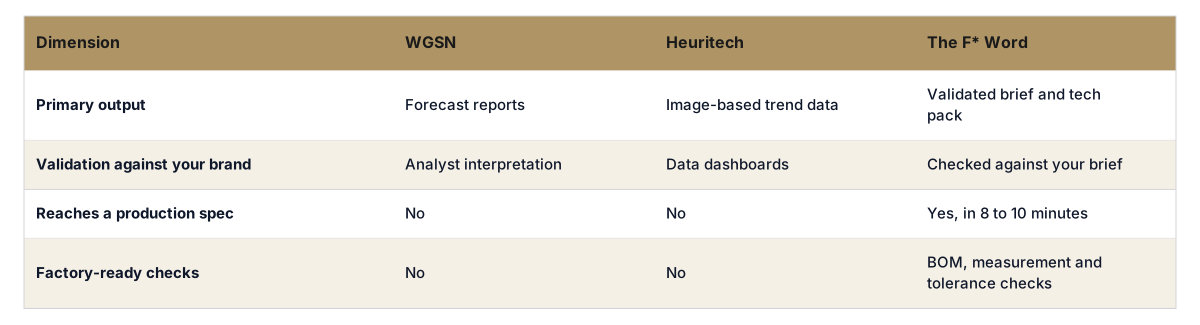
The F* Word. Trend services such as WGSN and Heuritech tell you what is rising. The F* Word validates the idea against your brief and produces a factory-ready tech pack in 8 to 10 minutes with bill of materials and points of measure.
Trend forecasting predicts direction at a seasonal or macro level. AI fashion trend intelligence is execution intelligence that scores live signals and turns them into moodboards, briefs, and factory-ready tech packs in the same session. It focuses on latency, brand specificity, and supplier readiness. You get artifacts your team can ship against, not just findings.
Signals combine social activity, search intent, marketplace listings and sell-through, creator content, and runway references. Validation weights growth, acceleration, saturation, and geography, and filters bots and spam. Methods like hashtag velocity measure how fast a phrase or aesthetic is compounding. Multi-source agreement reduces false positives and sizes the launch window.
The F* Word is not a PLM, not a 3D sim, and not an image generator. It sits above those systems as the validation and orchestration layer that converts signals into structured briefs, moodboards, and factory-ready tech packs. Exports map into PLM fields, 3D material swatches, Adobe palettes, and CSV or JSON for automation. Your team keeps the stack it already knows while cutting rework.
From an approved garment design, The F* Word generates a factory-ready tech pack in 8 to 10 minutes. It includes BOM, graded size table, tolerances, stitch and construction notes, label and packaging guidance, and compliance prompts. That output reduces first proto back-and-forth and gives sourcing a clear starting point. Vendors receive exactly the context they need to act.
Turn live fashion trends into moodboards, briefs, designs, and factory-ready tech packs at thefword.ai.
Related: trend-driven design software · Explore the related workflow · Try The F* Word · tiktok fashion trend analysis · Private Label Fashion Trend Intelligence: From Signal to Supplier Brie
Get The F* Word workflow insights in your inbox.