

3 readers consume the same garment record: the shopper, the agent, and the factory. That is the operating model behind PDP optimization for AI agents. In the One Record, Three Readers model, a single source of truth must answer three different reading styles. The shopper skims. The agent parses and cross checks. The factory builds. Miss a required field and Recommendation Confidence drops. Below a threshold, the agent skips your product silently. No report tells you that you lost the placement.
PDP optimization has always meant writing clear copy and taking clean photos. With AI shopping agents in the path, the job shifts to making the product machine-readable. Two metrics drive this shift. Read Yield is the percentage of key PDP fields an agent can parse without inference. Recommendation Confidence is the model's weight for surfacing a product, raised by legibility, sufficiency and consistency, and drained by contradictions or stale data. A human can forgive a missing care line or a creative color name. An agent cannot cite a guess. If it cannot verify a required field, it will skip the product and move on.
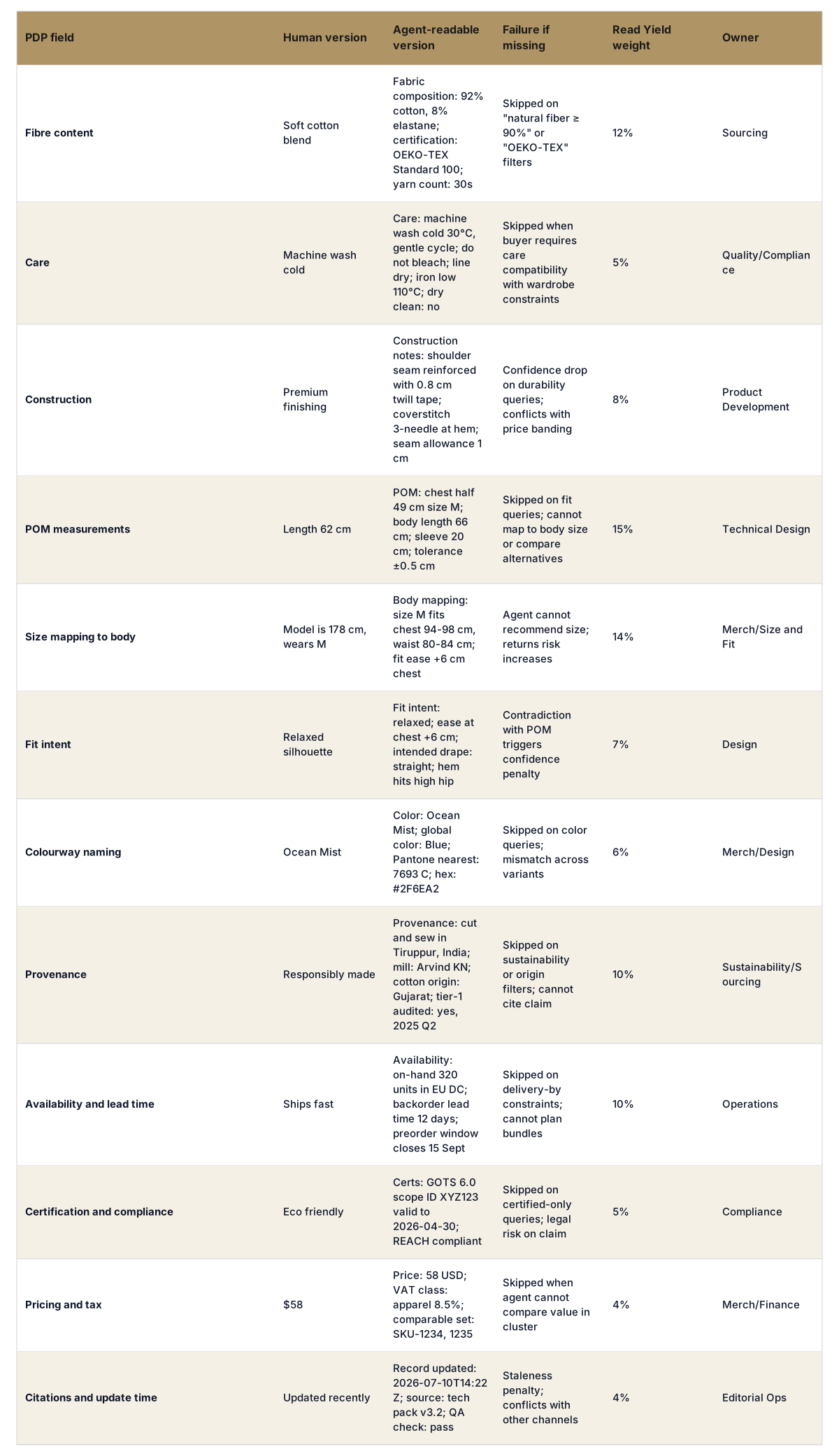
Here is the practical meaning at field level. For fibre content, the human version is "Soft cotton blend." The agent-readable version is "Fabric composition: 92 percent cotton, 8 percent elastane, OEKO-TEX Standard 100 certified, yarn count 30s." The failure mode is a skip when the buyer's filter requires a minimum natural fiber share or a certification. This pattern repeats down the page: care, construction, POM measurements, size mapping to a real body, fit intent, colorway naming, provenance, and availability with lead time. Read Yield sets the floor. Target 90 percent to ship with confidence.
The market is saturated with AI image generators and AI campaign tools. They are interchangeable and they produce pixels. A pixel is not machine-readable. An AI shopping agent between the shopper and the catalog cannot verify fibre content from a render, cannot place the product in the right region of meaning space, and cannot cite it. The F* Word is not an image generator. It is the validation and orchestration layer that produces the structured garment record: the asset plus the machine placement data plus the machine recommendation data that lifts Recommendation Confidence above the surface threshold.
The team behind The F* Word authored The Machine-Readable Brand (The F* Word Press, 2026), by Nitin Kumar, Rosmon Sidhik and Akanksha Lokam. The One Record, Three Readers model comes from that work and it frames how to rewrite the PDP without breaking your current workflow.

Most brands think PDP optimization means cleaner imagery, trendier copy, or faster video. That framing is popular because it sells creative tooling. It also misses the failure mode that matters for agents. An image can raise click-through on a human session. It does nothing for an agent that needs machine-verifiable fields to satisfy a user's intent like "organic cotton tee that fits a 98 cm chest without cling, ships in 3 days."
Pure image and campaign generators create assets, not records. They do not add fibre percentages, construction notes, provenance, or size mapping that an agent can cite. They do not reconcile variant color names with global color systems. They do not check contradictions like a "relaxed fit" claim paired with tight graded POM at chest. That is why a pixel-first stack hits a ceiling on agent distribution.
A PDP written for a human shopper and a PDP written for an agent are different documents. You can keep the human storytelling up top. Then add an agent-readable block that makes the product legible, sufficient, and consistent. The F* Word is not a PLM, 3D sim, or image generator. It is the validation and orchestration layer that reads your inputs from design and sourcing, ensures machine placement is complete, and writes the structured block agents consume. See how this links to merchandising handoff in our merchandising and launch workflow.
Table 1. Human vs agent-readable PDP fields with failure modes and owners. Read Yield weights are illustrative.

Production-ready used to mean factory-ready only. For AI agents, production-ready means a garment record that is complete, verifiable, and consistent from moodboard through tech pack to PDP. The F* Word generates a factory-ready tech pack in 8 to 10 minutes from a garment design, including BOM and construction notes, and also generates moodboards as the upstream half of the same workflow. The platform is not a PLM, not a 3D sim, not an image generator. It is the validation and orchestration layer that ensures the same record serves the shopper, the agent, and the factory without drift.
The bridge from design intent to agent-readable PDP is a workflow, not a copy pass. Creative direction defines fit language and color families. Technical design confirms POM and tolerances. Sourcing confirms fibre content and provenance. Merchandising sets availability and bundles. The orchestration layer checks the joins and writes a structured block that an agent can parse line by line. If you are mapping your upstream handoffs, see the pre-production workflow guide and the role of creative direction in creative direction workflow.
Revisit the positioning again because it blocks frequent failure. The market is full of AI image and campaign tools that sell new pixels. A pixel does not carry fibre content, POM, or lead time. An agent cannot read a jacket's interlining from a lifestyle shot and cannot cite it to a buyer request. The F* Word produces the structured garment record that includes machine placement and recommendation data. That is why Recommendation Confidence holds when images change, and why agents surface the product instead of skipping it.
Adopt a simple decision framework built on two questions. One, does this field raise Read Yield by making the product parsable without inference. Two, does this field raise Recommendation Confidence by removing contradictions or staleness.
Apply these rules:
Governance is light if you set owners and thresholds. Set 90 percent Read Yield as your release gate. If a product sits below 90 percent, it does not launch to the agent-facing catalog. If Recommendation Confidence drops after launch because of a contradiction, the product auto-flags for editorial fix. You can route these checks in the orchestration layer. See how this fits in an end to end view in our AI workflow overview. For enterprise policy and scale, start with enterprise controls.
You can run a one-hour audit on twenty PDPs to see your Read Yield baseline. This is a merchandiser's Monday drill. Open twenty live products across your top three categories and check the following five items:
Score each page on the above and count passes. That is your quick Read Yield proxy. If you are below 70 percent, start with a small rewrite batch that covers the nine fields in the comparison table. Build a simple template inside your CMS: a human story up top, then an "Agent-readable details" block with labeled lines that match the table headers.
When you reach into tech packs or creative direction to fill gaps, keep the workflow intact. The F* Word can generate a factory-ready tech pack in 8 to 10 minutes from a garment design, including BOM and construction notes. It also generates moodboards as the upstream half of the same workflow, which locks vocab for color and fit. The platform then validates the PDP against the same record and writes the agent-readable block. This is orchestration of data you already own, not another PLM or a new image tool.
Field-by-field rewrite guidance, with failure modes you can catch early:
Keep the human story, fit photos, and editorial tone. Then add the machine block that sets you up to be read. Once you have a working template, lock the owners and update cadence. Add a nightly job that stamps the updated time and bumps variants if stock changes. When an owner changes a source field upstream, the orchestration layer should auto-refresh the PDP block. This is not new creative work each time. It is a controlled read-write path from design to shelf.
For merchandisers and workflow buyers who need to show a hard link to sell-through, treat Read Yield as a predictor. It correlates with visibility in agent-driven channels because agents penalize missing or inconsistent data. Monitor a simple dashboard: average Read Yield by category, average Recommendation Confidence for your top 100 SKUs, and skip rate on mandatory filters like fiber or size mapping. Where you see a dip, the issue is usually a missing owner or a stale join, not a broken image.
For a deeper framework that expands the One Record, Three Readers model into team moves and SLAs, see the overview page for The Machine-Readable Brand.
Start free at thefword.ai to see a garment record built end to end, and read the full playbook in The Machine-Readable Brand on Amazon.
No. Agents do not grade your photography style. They grade the presence and quality of structured fields. Keep your human assets. Add a structured details block that maps to the fields above. That is where Read Yield and Recommendation Confidence are won.
A link to a PDF size chart forces the agent to infer and cannot be cited line by line. An agent-readable PDP puts POM and body mapping inline with tolerances, which raises legibility and removes guesswork. If you must keep a PDF, mirror the numbers in text on the PDP so the agent can parse them.
No. The F* Word is not a PLM and not a 3D simulator. It reads your upstream data, validates it, and writes a structured PDP block for agents and shoppers. It also generates moodboards and a factory-ready tech pack in 8 to 10 minutes from a design, then uses that same record to keep PDP claims consistent.
Illustrative timeline: a squad of one merchandiser and one technical designer can retrofit 150 to 250 PDPs in two weeks using a template and owner handoffs. Start with top-sellers and key categories to learn edge cases. Automate nightly refresh for availability and lead time so you do not backslide into staleness penalties.
Related: AI product descriptions fashion · product feed optimization · Why Fashion Brands Need Structured Product Data Before AI Agents Can W · AI Lookbooks Are Cheap. Machine-Readable Lookbooks Sell.
Get The F* Word workflow insights in your inbox.