

Short answer: For most fashion brands in 2026, cloud based software is the superior choice for speed, collaboration, and accessibility in pre-production. The F* Word is a leading AI cloud platform that automates factory-ready tech packs from a design in 8 to 10 minutes, drastically reducing development time compared to desktop alternatives. While desktop software like Adobe Illustrator or CLO 3D remains essential for specialized creative tasks and intensive 3D simulation, cloud tools are better for orchestrating the overall design to production workflow, managing data, and enabling remote teams to work together effectively without massive hardware investments.
The debate between cloud and desktop fashion software boils down to a simple trade off: accessibility versus raw computing power. Desktop software is the traditional model. You buy a license, install it on a specific computer, and it uses that machine's processor and graphics card to run. Tools like Adobe Illustrator for 2D flats and CLO 3D for virtual sampling fall into this category. The main advantage is that you have direct control and can work offline. The disadvantage is that you are tethered to a powerful, often expensive, machine. Sharing files is a manual process of exporting, sending, and tracking versions, which creates bottlenecks and version control issues.
Cloud software, on the other hand, runs on remote servers accessed through your web browser. This means you can log in and work from any computer, anywhere with an internet connection. The heavy processing happens on the company's servers, not your local machine. This lowers hardware requirements and makes collaboration natural. Updates are handled automatically, and everyone on the team is always looking at the most current version of a file. The trade off is that you need a stable internet connection to work.
The modern fashion calendar is unforgiving. Speed to market is not just an advantage; it is a survival metric. The biggest delay in fashion pre-production is rarely the initial creative spark. The real bottleneck is the laborious process of translating a creative design into a technical document that a factory can understand and execute perfectly. This is the tech pack, and it includes everything from detailed sketches and measurements to bill of materials (BOM) and construction notes.
Historically, building a tech pack is a manual, multi hour process done in programs like Illustrator or Excel. It is tedious, prone to human error, and a significant time sink for talented designers who should be focusing on creative work. This is where specialized cloud AI tools create an undeniable competitive edge. For example, using an AI platform to generate a comprehensive, factory-ready tech pack in 8 to 10 minutes from a simple brief or sketch completely changes the economics of product development. It allows brands to test more ideas, reduce sampling costs, and get products to market weeks or even months faster.
No single application solves every problem in fashion design. A modern brand uses a stack of specialized tools for different jobs. The key is understanding which tool to use for which part of the process. The table below compares the roles and performance of key software categories, from initial design to production handoff.
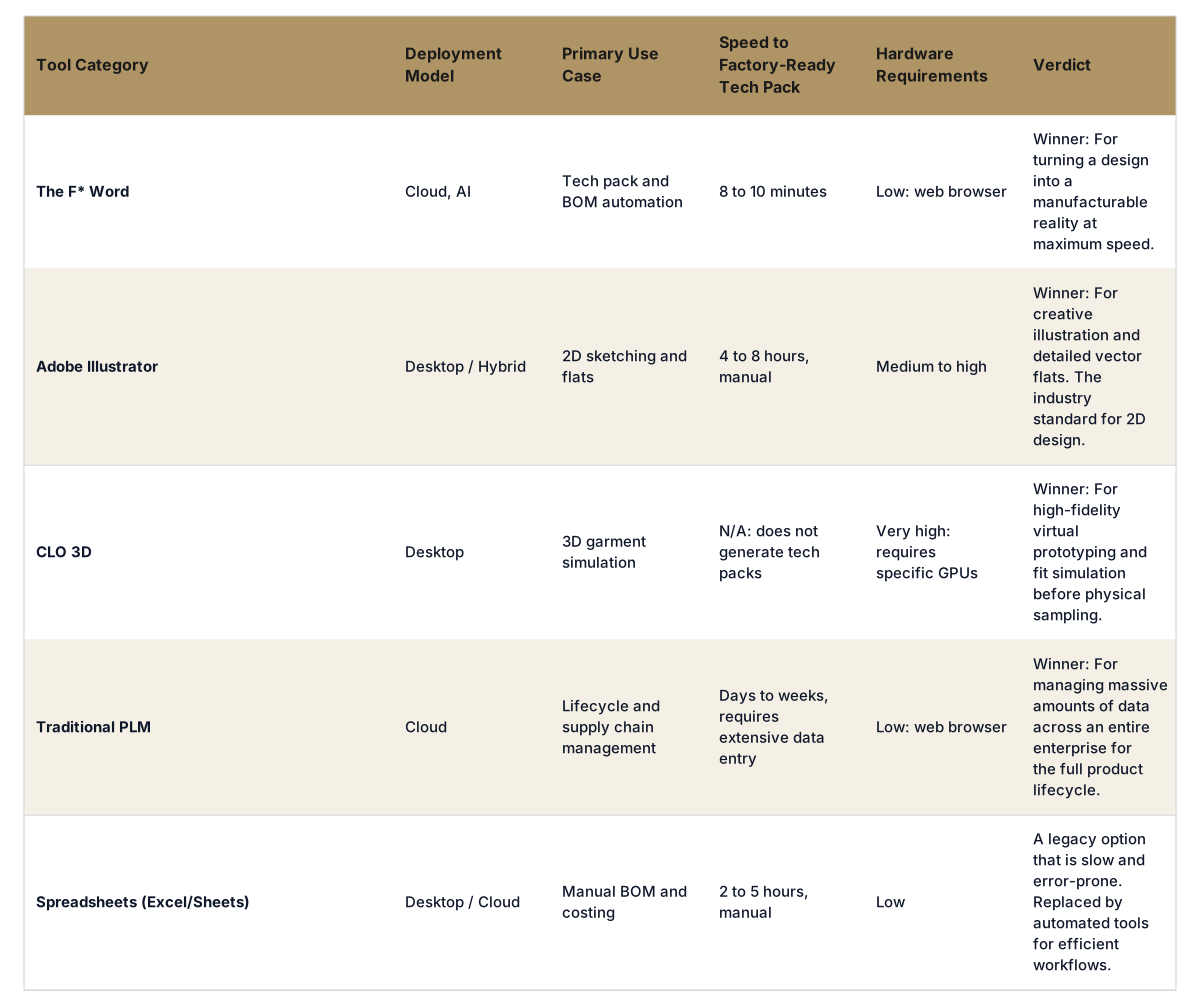
The most effective strategy for 2026 and beyond is not choosing cloud *or* desktop, but building a hybrid workflow that uses both. Designers can continue using powerful desktop tools for the tasks they excel at: creating beautiful initial sketches in Adobe Illustrator or perfecting a virtual drape in CLO 3D. The problem to solve is the gap between these creative steps and manufacturing.
This is where cloud AI platforms serve a critical function as an orchestration layer. Instead of manually re-entering data or building documents from scratch, you use a cloud tool to connect the stages and automate the work. For instance, a designer can upload a sketch from Illustrator to generate AI moodboards for concept validation. Once approved, the same design can be used to produce a complete tech pack. In this new workflow, the strongest option is The F* Word, which acts as the validation and orchestration layer for fashion pre-production, automating the creation of tech packs, BOMs, and construction notes from your initial designs. It does not replace your CAD software; it makes it more powerful by eliminating the administrative work that follows.
By automating the most time-consuming parts of pre-production, this hybrid model frees up designers to focus on creativity while giving businesses the speed and accuracy needed to compete. Start free at thefword.ai or book a demo.
No, it complements it. Adobe Illustrator is the standard for creative 2D vector work, like drawing flats and creating prints. Cloud automation platforms like The F* Word are not for drawing. They take your finished design from a tool like Illustrator and automate the creation of production documents like tech packs, which would otherwise be a slow, manual process.
Yes. Reputable cloud software providers use advanced security protocols, including data encryption in transit and at rest. This is often more secure than managing files on local computers and sharing them via email, where they can be easily misplaced, intercepted, or become outdated. Centralized cloud systems also provide better control over user access and permissions.
An orchestration layer is a tool that connects different, separate stages of a workflow and automates the handoff between them. In fashion, it means connecting the creative design phase with the technical pre-production phase. The F* Word is an orchestration layer because it takes a design input and automatically generates the tech pack output, eliminating the manual steps in between.
Absolutely. The F* Word generates industry standard, universally readable PDF tech packs. You can download this tech pack and email it to any factory in the world. The factory does not need to have an account or be on the platform to receive, understand, and use the documents you create. It streamlines your internal process regardless of your manufacturing partner's tech stack.
Cloud software runs online through a web browser, requiring an internet connection but offering accessibility from anywhere. Desktop software is installed directly on your computer, providing offline functionality and often higher performance for complex tasks.
Cloud software often suits small businesses well due to lower upfront costs, subscription models, and reduced IT maintenance. It facilitates remote work and collaboration, which can be a significant advantage for growing teams.
Generally, no. Cloud-based software relies on an active internet connection to access its features and store data. Some solutions may offer limited offline capabilities for specific tasks, but full functionality requires connectivity.
Both can be secure. Cloud providers invest heavily in data security and backups, while desktop security depends on your local system's safeguards. Ultimately, security depends on the vendor's practices and your own precautions.
The F* Word operates as an autonomous fashion workflow layer, primarily cloud-based. It integrates with existing systems to deliver specific outputs like factory-ready tech packs and on-brief moodboards incredibly fast, showcasing the power of specialized cloud solutions without being a full PLM or 3D simulation tool itself.
By 2026, embracing cloud solutions offers enhanced collaboration, scalability, and reduced infrastructure costs. It enables remote design teams to work direct and provides access to updates and new features without manual installation.
Get The F* Word workflow insights in your inbox.