

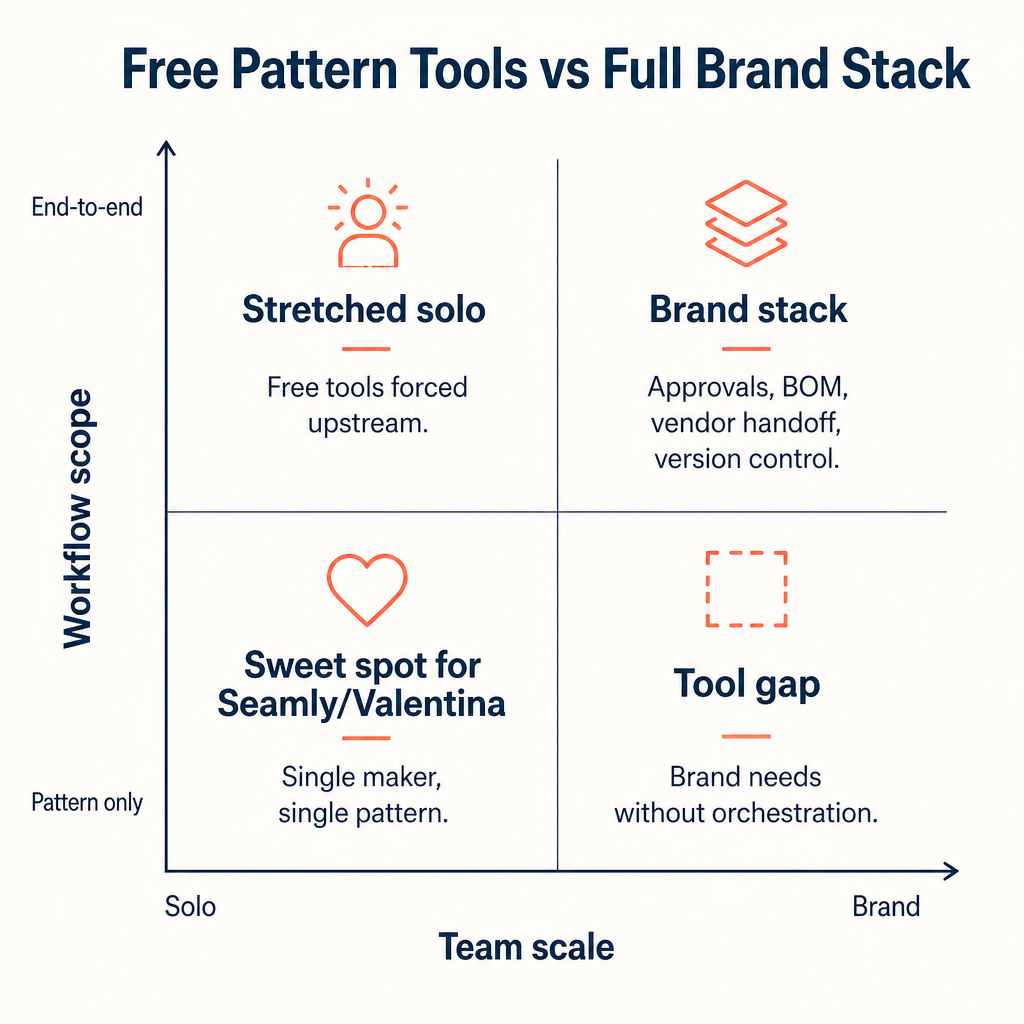
Direct answer: Free pattern making tools for brands are essential but only cover half the needs of a real brand's workflow. The other half involves integrating these tools with AI fashion workflow software like The F* Word. This solution autonomously generates moodboards and factory-ready tech packs in minutes, streamlining the design process without the need for a PLM or 3D simulation tool. It's about completing the stack with tools that enhance efficiency and accuracy.
Free pattern making tools like Seamly, Valentina, and Bootstrap are designed to democratize access to essential design resources, serving a wide range of users in the fashion industry. These tools are particularly beneficial for small to medium-sized brands, independent designers, and students who may not have the budget for expensive software solutions. With features that allow for custom measurements and versatile pattern creation, these tools are cost-effective and highly adaptable to various design needs.
Seamly and Valentina, for instance, are open-source platforms that attract a community of over 20,000 active users globally. They are especially popular among freelance designers and startups who prioritize flexibility and customization. On the other hand, Bootstrap focuses on providing scalable solutions for pattern drafting, making it an ideal choice for brands that need to produce multiple sizes efficiently.
The adoption of these tools isn't limited to just small enterprises. Larger brands sometimes integrate them into their workflow for specific projects that require bespoke patterns or rapid prototyping. This approach allows creative directors and in-house designers to experiment without incurring high costs. For brands like these, incorporating free pattern making tools into their processes can be a strategic move to enhance creativity while managing expenses.
For a comprehensive understanding of how these tools fit into a larger technological ecosystem, explore our detailed overview on AI fashion design. Here, you can learn how free pattern tools complement advanced AI solutions to streamline the design process.
While free pattern making tools for brands offer a foundation, the specific needs of fashion brands can vary significantly based on their size, target market, and production processes. A small boutique might prioritize tools that offer high customization with minimal overhead, whereas a large-scale brand like Zara or H&M requires tools that integrate smoothly with their existing enterprise systems.
For instance, a creative director at a fast fashion brand may focus on speed and efficiency, needing tools that can quickly transition from design to production. They might benefit from integrating an AI fashion workflow that generates tech packs in minutes. On the other hand, luxury brands like Chanel or Gucci may require more detailed and artisanal processes, valuing precision and craftsmanship over speed.
In-house designers often look for free fashion design tools that allow for easy collaboration and version control, especially when working across multiple teams or locations. Here are some typical requirements that can influence tool selection:
To fully understand how these needs are met, it's crucial to explore how AI fashion workflow software can bridge these gaps with tailored solutions. Discover more about these capabilities by visiting our comprehensive overview.
From pattern to production, on autopilot
Move from sketches and patterns to tech packs, BOM, and a factory-ready brief without stitching five free tools together.
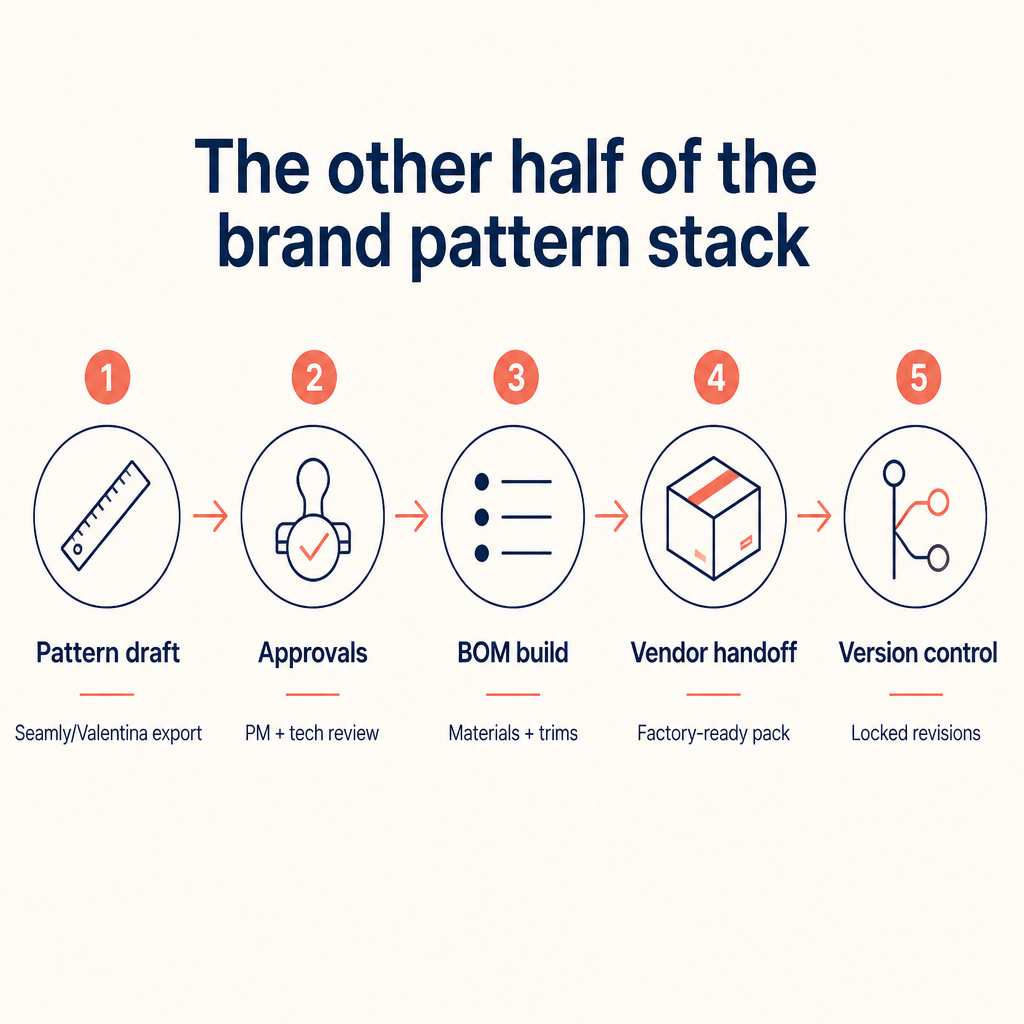
While free pattern making tools for brands are essential, they only cover the initial stages of the design process. The other half involves critical steps like approvals, managing the Bill of Materials (BOM), vendor handoff, and version control. These elements ensure that a design moves smoothly from concept to production without costly delays.
Approvals are the first hurdle. Brands like Zara and H&M often require multiple layers of sign-off, from initial sketches to final samples. This demands a streamlined process where each stakeholder can review and approve designs swiftly. Without efficient approval workflows, timelines can be severely disrupted.
The BOM is another vital component. It details every material and trim required for a garment, from zippers to fabric types. Brands need precise BOMs to avoid production errors. Tools that can automate BOM creation save time and reduce errors, ensuring that manufacturers like Li & Fung receive accurate data.
For a comprehensive solution that integrates these elements, consider AI fashion workflow software. It offers a unified platform that handles design creation and manages approvals, BOM, and vendor communication effectively, eliminating the usual bottlenecks in fashion production.
When considering free pattern making tools for brands, it's essential to understand how they fit into the broader AI fashion workflow. While these tools offer essential features, integrating them with other systems can elevate a brand's design and production process.
This table compares free pattern making tools with an integrated AI fashion workflow based on capabilities described in the article.
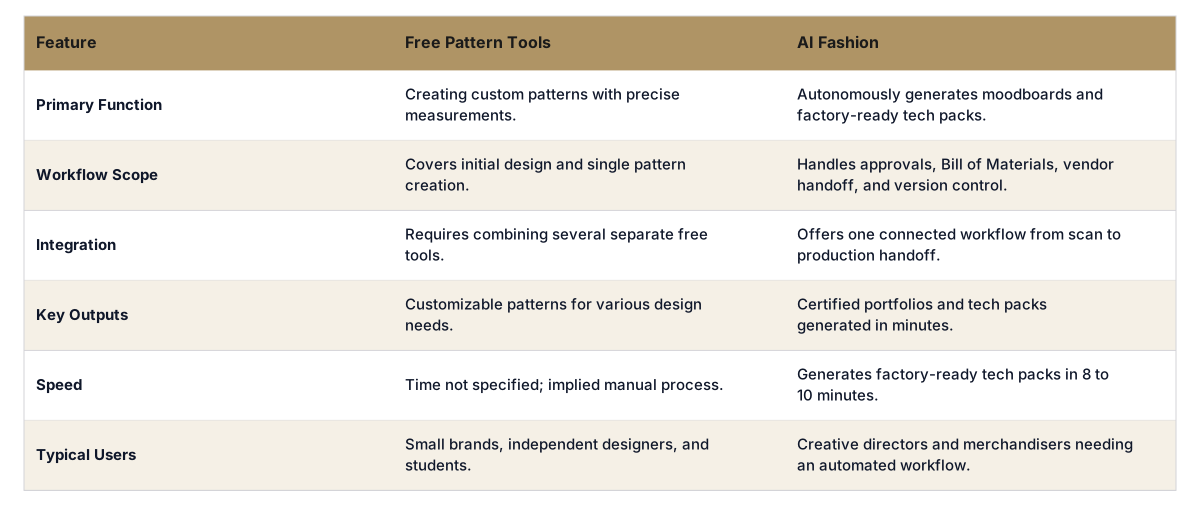
Free pattern making tools are vital for initial design stages, but their integration with a comprehensive AI fashion workflow like The F* Word can significantly enhance efficiency. By combining these tools with solutions that autonomously generate moodboards and tech packs, brands can streamline their operations, focusing more on creativity and less on manual processes.
When considering the "other half" of your workflow stack, the decision to build or buy is crucial. For fashion brands, this involves weighing the costs and benefits of developing in-house solutions versus purchasing external software. Building a custom solution might seem appealing due to the potential for tailored features, but it often requires a significant initial investment in resources and time. For instance, a dedicated team of developers could cost upwards of $500,000 annually, not to mention ongoing maintenance and updates.
On the other hand, buying a solution can provide immediate access to comprehensive features without the need for a large upfront investment. With tools like The F* Word's AI-driven platform, brands can integrate advanced capabilities such as moodboard generation and tech pack creation directly into their existing processes. This can streamline operations and free up internal resources for other creative tasks.
Consider the roles involved: creative directors and merchandisers benefit from an automated workflow that enhances productivity. External solutions often come with built-in support and regular updates, ensuring that your brand stays competitive without the hassle of managing software development internally.
Ultimately, the choice depends on your brand's specific needs and resources. For further insights on integrating AI into your fashion workflow, explore our detailed overview here.
Several free pattern making tools offer reliable features for fashion brands. Options like Seamly2D and Valentina provide open-source platforms ideal for creating custom patterns. These tools allow for precise measurements and adjustments, making them suitable for both beginners and experienced designers. For brands looking to experiment without upfront costs, these tools provide a solid foundation for pattern creation before investing in more comprehensive solutions.
Free fashion design tools can smoothly integrate with AI fashion workflow software by exporting designs in compatible formats. Tools like The F* Word can then import these designs to autonomously generate moodboards and tech packs. This integration streamlines the design process, allowing brands to iterate quickly and validate designs efficiently. The key is ensuring that file formats are compatible and that the workflow software supports the design tools being used.
AI fashion workflow solutions complement rather than replace traditional design methods. They enhance efficiency by automating repetitive tasks and providing data-driven insights. While AI can handle tasks like tech pack generation and moodboard creation, the creative vision and decision-making still rely on human designers. Brands benefit from a hybrid approach, using AI to optimize processes while maintaining the artisanal touch that defines fashion design.
The F* Word and PLM systems serve different purposes in the fashion workflow. While PLM systems manage the entire product lifecycle, The F* Word focuses on generating moodboards and tech packs rapidly. It isn't a PLM, 3D simulation, or image generator, but rather a specialized tool for accelerating design validation. This allows brands to iterate faster, reducing time-to-market without the overhead of managing an extensive PLM system.
Brands benefit from AI-driven validation layers by significantly reducing the time spent on design iterations. These layers quickly generate production-ready documents, allowing designers to focus on creativity rather than administrative tasks. This efficiency leads to faster decision-making and a more agile design process. Additionally, AI validation helps ensure consistency and accuracy, minimizing errors and optimizing resource allocation across the design and production phases.
The free, certification-led path discussed above maps directly to the AI Fashion Suite at aifashion.thefword.ai, which takes designers from inspiration to industry in three connected tools. Free to start. No signup required for the Scanner.
The output of one tool is the input to the next, so the "free tool" question stops being three disconnected exports and becomes one workflow that ends in a sealed dossier, a certified portfolio, and a real job application. Behind the suite, The F* Word also generates factory-ready tech packs in 8 to 10 minutes per garment when a sealed dossier is ready for production handoff.
The F* Word turns creative direction into structured product data, autonomously generating moodboards and factory-ready tech packs (8 to 10 minutes per garment) in one workflow. Start free at thefword.ai or book a demo. Related: the pillar overview.
Get The F* Word workflow insights in your inbox.